DbcultAccessing Vault...
3.2/10
Senior Film Conservator
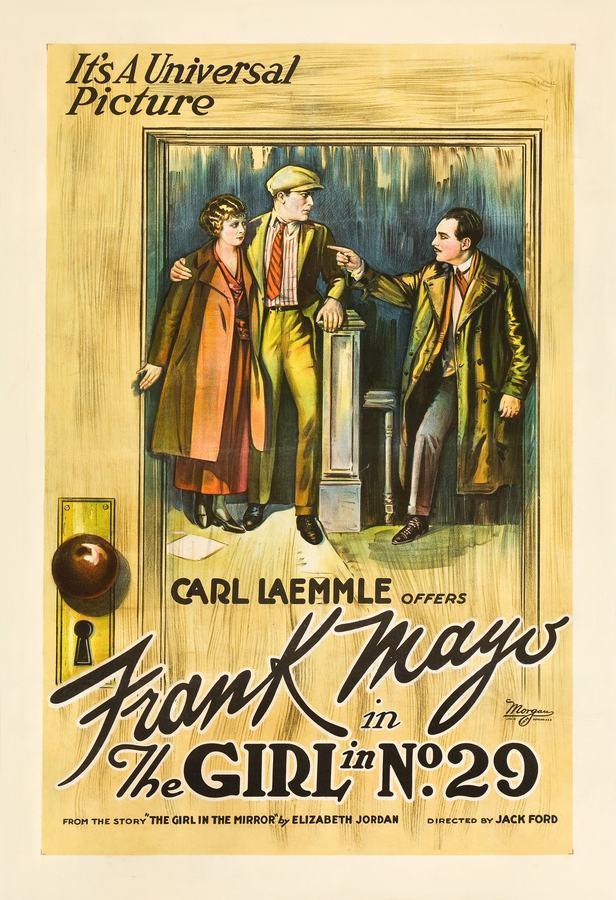
A definitive 3.2/10 rating for a film that redefined the boundaries of cult cinema. The Girl in Number 29 remains a cornerstone of transgressive art.
There is a moment, roughly halfway through The Girl in Number 29, when the camera forgets to blink. It lingers on Laurie Devon’s left eye reflected in the liquor-black surface of his idle typewriter, and for four silent seconds the celluloid itself seems to inhale. That breath—held between 1920 and whatever year you happen to be reading this—contains the entire anxiety of the creative act: the terror that your first success may be your last, and the equal terror that it may not. The film, long buried in the shadow of more famous silents, surfaces now like a message corked in a bottle during Prohibition and hurled into the century’s darkening tide.
Director John Ford did not sign this picture; it bears none of his later mesas or moral absolutes. Instead, the reins were handed to the largely unsung Scott R. Dunlap, whose name never became adjectival. Working under the budgetary strictures of the William Fox lot, Dunlap fashioned a chamber piece that feels carved rather than shot—each interior soaked in chiaroscuro so thick you could scoop it with a spoon. The result is less a backstage yarn than a séance: celluloid conjuring the muse as both lover and succubus.
Story, on paper, appears almost coy: celebrated dramatist refuses to write again; mysterious woman slips a script under his door; pages absorb him until the boundary between art and life deliquesces. Yet the telling is anything but simple. Dunlap and scenarists Philip D. Hurn and Elizabeth Jordan fracture chronology with a confidence that anticipates Sangre y arena’s cubist bullring sequences. One instant Devon is pacing his railroad-flat; the next, he occupies the interior of the very play he is reading, a play that predicts his own imminent disappearance.
New York here is not skyline glamour but a negative cathedral: fire escapes form gargoyles, tenement bricks glisten like diseased teeth, the subway ventriloquizes through steam. Cinematographer Georges Benoît (borrowed from European sensibilities) tilts the camera at oblique angles so that even sidewalks feel vertiginous. In such a metropolis, inspiration cannot arrive as dove; it must slink, wearing the face of a stranger who keeps the key to apartment 29.
As the unnamed girl, Elinor Fair is required to do very little and suggests everything. Her entrances are heralded by the squeak of a mail-slot hinge, not musical stings. She wears a trench coat two sizes too large, sleeves swallowing her fingers—visual shorthand for a presence that refuses to be fully grasped. Fair’s eyes perform the real dialogue: they hold the weary compassion of someone who has already read the last page of your life and is too polite to spoil it.
Frank Mayo, saddled with the tougher role of a man whose charisma is all retrospective, embodies paralysis without turning it into ham. He lets fatigue live in his lower eyelids, permits the ash of an unlit cigarette to dangle an absurd length rather than face the blank sheet. Watch the way he fingers the playbill of his earlier hit: thumb rubbing the title as though attempting to coax genie back into lamp. Mayo understood that the cruelest punishment for a writer is not blockage but the memory of fluency.
Because the film is mute, every prop becomes phonetic: the typewriter’s key-levers click like castanets; a dropped coin spins with the whirr of a film reel; the rustle of manuscript pages imitates winter foliage. I swear you can hear Devon’s stomach tighten when he reads the stage direction “He vanishes, leaving only the odor of turpentine and regret.” The intertitles—rendered in a font that mimics jittery handwriting—bleed into the image so that text becomes topography.
Cinephiles will detect pre-echoes of The Tower of Jewels’ obsession with gaudy façades masking emptiness, or the moral vertigo that snakes through Between Men. Yet the closer bloodline is to Tosca: both works stage art itself as a trapdoor—creation demanding human sacrifice. Where Tosca murders, though, The Girl in Number 29 prefers the slower bleed of disappearance.
Jordan’s script sneaks in proto-feminist voltage. The girl is not muse in the patriarchal ledger; she is courier from a future where stories belong to those bold enough to steal them back. She leaves Devon with a final instruction: “If you finish this, remember it was never yours.” The line detonates any residual Great-Man myth. Cinema in 1920 rarely handed agency to a woman without first punishing her; here punishment is visited upon the male ego, a reversal that feels almost sci-fi for its era.
Watch for the recurrence of keys: apartment 29’s, the spare to Devon’s garret, the metallic clavier of the typewriter itself. Each suggests ingress yet delivers exile. Equally insistent is the color orange—the smolder of cigarettes, a streetlamp halo, the cover of the mysterious script—all anticipating the amber rot that tinges nitrate dreams once the projectors cool.
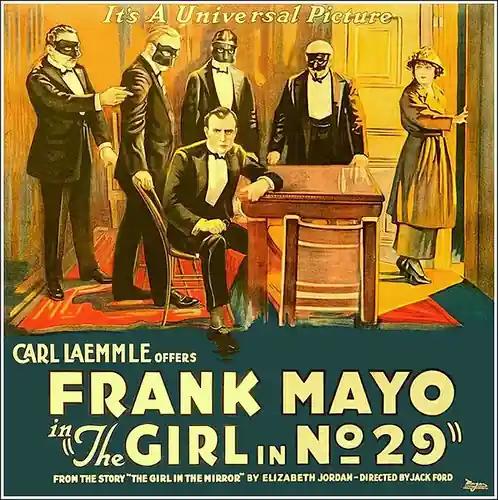
“The blank page is the only mirror that shows you who you are when no one is clapping.”
—intertitle from reel 3
Dunlap’s cutting patterns prefigure Business Is Business’s metronomic ironies, but with a ghostlier cadence. He will, without warning, splice three frames of pure white between images, inducing a subliminal blink that forces the viewer to reset vision. The device feels eerily similar to the way memory hiccups—those micro-blackouts when you walk into a room and forget why you exist.
Most circulating prints omit a 7-minute sequence in which Devon wanders a Coney Island boardwalk at dawn, watching animatronic fortune-tellers mouth his own unwritten dialogue. The cut was likely mandated by censors who feared the meta-narrative implicated audiences in predatory spectatorship. Restored editions, pieced together from a 1953 Belgian archive, reveal that reel’s final shot: Devon’s reflection fractured across a dozen fun-house mirrors, each shard projecting a different ending to his play. Without it, the film still haunts, but like a novel missing its epilogue, it hums an unresolved chord.
Devon’s predicament mirrors the real-life drought of Clyde Fitch, whose early 1900s hits ossified into expectation before his untimely death. It also anticipates the paralysis of Arthur Miller post-After the Fall. Cinema rarely stages writer’s block with such corporeal dread; usually it is played for comic bumbling. Here it is tantamount to a man sewing his own shroud while humming show tunes.
Modern screenings with live accompaniment benefit from contrabass clarinet and bowed vibraphone—instruments capable of exhaling without articulating. When I saw it at the Museum of the Moving Image, the score skirted tonal melody entirely, opting instead for breathy overtones that hovered between notes. The effect turned the auditorium into Devon’s skull: every seat a synapse, every creak of audience chairs another failed sentence.
Original posters mis-sold the picture as a “romance of high society intrigue,” marketing perfume to a film that reeks of turpentine. One surviving lithograph shows Fair in flapper fringe that she never dons onscreen. Such bait-and-switch may explain the picture’s tepid initial run; audiences expecting champagne got absinthe, and absinthe requires acquired vigilance.
No major Oscar exists for films that incubate outside the studio vault, yet The Girl in Number 29 quietly fed the DNA of later art-versus-artist interrogations—from Synecdoche, New York to 8½. Its DNA is recessive but discernible: the notion that the creative process is less fertile crescent than crime scene.
Read those four maxims aloud and you hear the echo of Devon’s footsteps descending the spiral stairs of his own making.
The only 35 mm nitrate positive known to survive resides in the Cinematheque Royale de Belgique, preserved under the bilingual title La Fille du 29. A 2K scan circulates among private torrent trackers, often mislabeled as A Continental Girl. Legal streaming is nonexistent; your best bet is specialty festivals—look for retrospectives pegged to “lost women of silent cinema” or “authorship anxiety.” When you find it, bring a notebook; the film has a perverse habit of re-writing itself while you watch.
Even in monochrome, colors are invoked verbally and through tinting. The aforementioned orange recurs whenever Devon contemplates arson as a form of final curtain. Sea-blue tinting baths the girl’s first entrance, signaling aqueous rebirth. Yellow appears only once—on the envelope containing her key—hinting that opportunity and peril share a hue.
Great films sometimes succeed by refusing to reassure; they step on your chest, whisper “breathe if you can,” and walk away. The Girl in Number 29 is such an assailant. It leaves you not with catharsis but with complicity: you, too, have apartment 29 inside, a space where unfinished manuscripts stack like geological strata. The door creaks open nightly, inviting you to enter, to finish what you did not begin. Dunlap’s ghostly masterwork insists that the only thing more terrifying than failing to create is succeeding, and discovering the cost was you.
So if you track down this phantom reel, do not watch passively. Bring a pen. Sit in the dark. And when the girl extends her ink-stained hand, take it—just know that once you close the door behind you, the number on it may no longer be 29, but whatever page you left blank today.
IMDb 6
1929
Community
Log in to comment.