DbcultAccessing Vault...
Cult Review
Senior Film Conservator
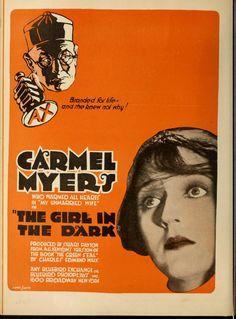
In the nascent, often tumultuous era of silent cinema, where narrative clarity frequently wrestled with melodramatic flourish, a film like The Girl in the Dark emerges from the mists of history as a fascinating, albeit perhaps elusive, artifact. Directed by Ashton Dearholt and penned by Albert Kenyon and Charles Edmonds Walk, this 1917 production plunges its audience into a labyrinthine world of secret societies, stolen legacies, and high-stakes rescues, all unfolding against a backdrop steeped in exoticized danger. It’s a testament to the era’s boundless appetite for adventure and mystery, a period when cinematic storytelling was still finding its footing, often borrowing heavily from popular dime novels and stage thrillers. The film, like many of its contemporaries, operates on a principle of escalating peril, ensuring that its protagonist, Lois Fox, is rarely afforded a moment's respite from the machinations of a shadowy underworld.
The narrative commences with a striking image: Lois Fox, bearing a mysterious Chinese ideograph, "A. Y.," branded upon her shoulder, a mark that immediately signifies a past shrouded in enigma. This indelible mark serves as a visible tether to a destiny she has yet to comprehend, a physical manifestation of an unknown heritage. Her initial rescue from a gang of menacing Chinese ruffians by Brice Ferris, a figure embodying the era's ideal of rugged heroism, sets the stage for a convoluted journey. Ferris, with his swift intervention, appears to be the quintessential rescuer, yet his involvement soon spirals into a far more intricate web of deceit and danger. The early moments establish a clear dichotomy: the vulnerable heroine and her valiant protector, a formula tried and true in early cinematic endeavors. However, the plot soon deepens, eschewing simplistic heroics for a more complex interplay of motives and revelations.
The unexpected treachery of Ferris's own servant, Ming, who attempts to pilfer a ring bearing a mysterious green seal from Lois’s finger, introduces a critical turning point. Ming’s swift demise in this failed theft underscores the immense value and perilous nature of this particular artifact, transforming it from a mere piece of jewelry into a potent symbol of ancient power and stolen heritage. This incident not only heightens the stakes but also signals that the danger emanates not just from external threats, but also from within the perceived circle of safety. The arrival of the enigmatic Strang, who is also in pursuit of Lois, further complicates the narrative, suggesting that Lois is not merely a random target, but a central figure in a much larger, pre-existing conflict. His presence hints at a deeper conspiracy, connecting Lois to a past she is only just beginning to uncover. This layering of intrigue, from straightforward abduction to a complex hunt for an artifact, showcases the writers' ambition to craft a story with multiple dimensions, a common characteristic of silent serials and feature films aiming for sustained audience engagement.
The cast of The Girl in the Dark embodies the archetypes prevalent in early 20th-century storytelling, each character serving a distinct, often exaggerated, narrative function. Lois Fox, portrayed by Betty Schade, is the quintessential damsel in distress, yet one whose very being is intrinsically linked to the central mystery. Her branding, her abduction, and her unwitting possession of the sacred ring make her more than a mere victim; she is the MacGuffin personified, a focal point around which the entire plot revolves. Her agency, typical for heroines of the era, is largely passive, relying on the heroic actions of others for her salvation. This trope, while perhaps dated by modern standards, was a powerful driver of melodrama and suspense for contemporary audiences, allowing for maximum emotional investment in her plight.
Brice Ferris, played by Frank Deshon, steps into the role of the valiant protector, a figure whose courage and determination are unwavering. His initial rescue of Lois establishes him as the primary hero, and his subsequent efforts to safeguard her, despite repeated failures, underscore his commitment. Ferris represents the Western ideal of heroism, contrasting sharply with the exoticized villains of the Tong. His character is designed to evoke sympathy and admiration, a steadfast beacon in the face of overwhelming odds. The rapid shifts in location and confrontation provide ample opportunity for his character to demonstrate physical prowess and moral fortitude, essential traits for a leading man in the adventure genre.
The supporting cast further fleshes out this dramatic tapestry. Ming, the treacherous servant, serves as a brief but crucial catalyst, his fatal attempt to steal the ring propelling the plot forward and signaling the true stakes involved. His swift and violent end is a stark warning of the Tong's ruthlessness and the ring's importance. The arrival of Strang, played by Ashton Dearholt himself, introduces an element of mystery that eventually resolves into a familial connection, transforming him from an ambiguous pursuer into Lois's uncle and an expositor of the ancient lineage. This revelation provides the narrative with its historical depth, connecting Lois's immediate peril to a long-standing family legacy and a stolen artifact.
Lao Wing, portrayed by Frank Tokunaga, and his secret Chinese society, the Tong, are presented as the primary antagonists. Their portrayal, while undeniably reflecting the prevalent Orientalist tropes of the era, serves to create a formidable and exoticized threat. These characters embody the "Other," a mysterious and dangerous force operating outside the conventional moral framework, driven by ancient customs and a fierce desire to reclaim what they believe is rightfully theirs. The Tong's headquarters, a labyrinthine den of nefarious activity, becomes the ultimate battleground, a symbol of the struggle between order and chaos, Western justice and Eastern intrigue. This kind of portrayal was not uncommon, seen in films that leveraged cultural anxieties for dramatic effect, much like the broader social narratives of the time.
At its core, The Girl in the Dark grapples with themes of identity and legacy, albeit filtered through the lens of early 20th-century melodrama. Lois Fox's branded shoulder, the "A. Y." ideograph, is more than a mere plot device; it is a physical manifestation of a stolen or forgotten identity, a constant reminder that her past is not her own to fully comprehend. This mark signifies a deeper connection to the very conflict that engulfs her, making her a living symbol of the ancient order's lost heritage. The quest to understand this mark and its origins drives much of the narrative's underlying tension, transforming Lois's personal struggle into a broader search for truth and belonging.
The mysterious green seal ring functions as the central MacGuffin, a powerful symbol of a sacred Chinese order. Its theft by Lois's father years prior establishes the historical context for the Tong's relentless pursuit, turning a seemingly random abduction into an act of reclamation. This artifact embodies the concept of a stolen legacy, a sacred item whose return is paramount to the aggrieved party. The ring's journey, from ancient order to Lois's finger, then becoming the object of Ming's fatal greed, and finally leading to the Tong's desperate efforts, illustrates how inanimate objects can become potent catalysts for human drama and conflict. The ring is not just a jewel; it is a vessel of history, tradition, and profound cultural significance.
Perhaps the most striking thematic element is the cultural collision between East and West. The film presents the Tong as an inscrutable, menacing force, driven by ancient customs and a sense of profound grievance. This portrayal, while characteristic of the era's Orientalist tendencies, highlights a societal fascination with, and often fear of, the unknown and the "Other." The Chinese characters are largely depicted through a lens of exoticism and danger, embodying a perceived threat to Western order. This dynamic creates a stark contrast between the straightforward heroism of Ferris and the shadowy, conspiratorial nature of the Tong. It's a reflection of early 20th-century anxieties and prejudices, where foreign cultures were often reduced to monolithic, threatening entities in popular entertainment.
The dramatic climax, a furious battle within the Tong's headquarters, serves as the ultimate confrontation of these opposing forces. It's a struggle not just for Lois's freedom, but for the restoration of a perceived balance, whether that be Western dominance or the return of a sacred artifact. The eventual revelation that Strang is Lois's uncle and that her father stole the ring provides a crucial layer of familial drama and moral ambiguity. It complicates the simple hero-villain dynamic, suggesting that the roots of the conflict lie within Lois's own lineage, making her an inheritor of both peril and legacy. This twist elevates the narrative beyond a simple rescue mission, imbuing it with a sense of karmic retribution and the weight of ancestral deeds.
Reviewing a silent film like The Girl in the Dark, especially one whose complete print might be elusive, requires an appreciation for the unique storytelling methods of its time. Silent cinema relied heavily on visual spectacle, exaggerated acting, and intertitles to convey narrative and emotion. The director, Ashton Dearholt, would have orchestrated scenes with a keen eye for dramatic composition, ensuring that every gesture, every facial expression, contributed to the audience's understanding of the plot and characters' internal states. The concept of "darkness" in the title would have been conveyed not just through literal low-key lighting (though that was certainly employed), but also through the pervasive sense of mystery and moral ambiguity surrounding the Tong and Lois's hidden past.
Writers Albert Kenyon and Charles Edmonds Walk crafted a plot that, while intricate, needed to be digestible through visual cues and concise intertitles. The pacing of silent thrillers was often relentless, moving from one perilous situation to the next with minimal exposition, allowing the action to speak for itself. The "furious battle" described in the plot summary would have been a highlight, showcasing the capabilities of early stunt work and special effects. The effectiveness of such a scene would have depended on dynamic camera angles, rapid cuts (for the time), and the visceral energy of the performers. The reliance on physical performance meant that actors like Frank Deshon and Betty Schade had to be adept at conveying complex emotions and motivations without dialogue, a skill that defined the silent film star.
To fully appreciate The Girl in the Dark, it's helpful to contextualize it within the broader landscape of early silent cinema. This film shares DNA with many adventure and mystery thrillers of its era, often featuring plucky heroines, dastardly villains, and daring rescues. The trope of the endangered woman, often central to an unfolding mystery, was a staple. One might draw parallels to films like The Little Terror, which similarly explores themes of a woman caught in circumstances beyond her control, relying on external forces for her salvation. While the specific plot points differ, the underlying dramatic engine – a protagonist entangled in peril – remains consistent.
The portrayal of Chinese secret societies, while problematic by today's standards, was a common feature in early Western pulp fiction and cinema, often reflecting societal anxieties about immigration and foreign influence. Films like The Devil Dodger, another silent adventure, might have employed similar exoticized villains or mysterious organizations to drive their plots, leveraging the unknown for dramatic effect. The fascination with ancient artifacts and their perilous recovery also finds echoes in many adventure narratives, from early serials to films like Heart of the Sunset, where valuable objects often become the catalysts for sprawling quests and moral dilemmas. These films, though distinct in their specifics, collectively built a cinematic language around high stakes, moral fortitude, and the triumph of good over perceived evil.
The element of a mysterious, powerful ring also brings to mind other fantastical narratives, though perhaps not direct comparisons in terms of genre. The search for a sacred, stolen item is a timeless narrative device, one that lends itself well to the visual medium of silent film, where the object itself can be imbued with symbolic power through close-ups and dramatic emphasis. The silent era was a fertile ground for such tales, where the absence of dialogue necessitated a more visual, often melodramatic, approach to storytelling. This film, therefore, stands as a representative example of how complex narratives, replete with twists and cultural commentary (intended or otherwise), were conveyed in an nascent art form.
The Girl in the Dark, even if only accessible through its synopsis and historical context, offers a valuable window into the popular entertainment and cultural sensibilities of the 1910s. It exemplifies the era's blend of thrilling adventure, romantic melodrama, and the sometimes problematic portrayal of foreign cultures. The film's intricate plot, with its layers of mystery, betrayal, and familial revelation, demonstrates the growing sophistication of silent film narratives, moving beyond simple chase scenes to encompass more complex backstories and character motivations.
Its legacy lies not just in its individual narrative, but in what it represents about the birth of cinema itself: a medium rapidly evolving, experimenting with genre, and captivating audiences with tales of daring and destiny. While its specific cinematic techniques might seem rudimentary by today's standards, it contributed to the foundational language of film, laying groundwork for future generations of filmmakers. For enthusiasts of film history, understanding films like The Girl in the Dark is crucial to grasping the full scope of cinematic evolution, appreciating how early storytellers grappled with universal themes of identity, justice, and the perennial struggle against forces both seen and unseen. It serves as a poignant reminder of the vast, often lost, treasures of the silent era, each a unique thread in the rich tapestry of film history.
IMDb 6.2
1937
Community
Log in to comment.