DbcultAccessing Vault...
Cult Review
Senior Film Conservator
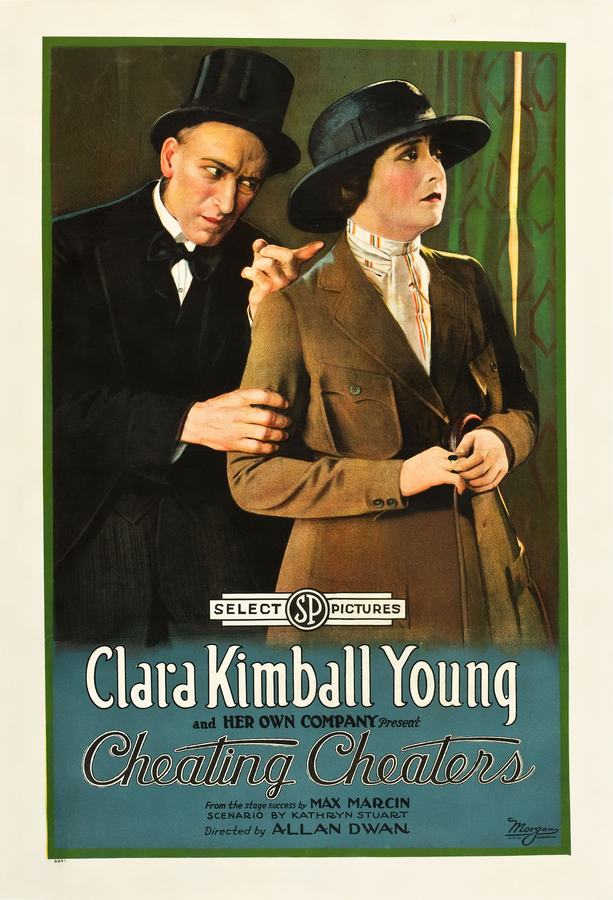
Stepping back into the cinematic landscape of 1919, one encounters a fascinating array of narrative experiments, particularly within the burgeoning crime and comedy genres. Among these, the often-overlooked gem, 'Cheating Cheaters', emerges not merely as a relic of its time but as a remarkably prescient piece of filmmaking. This silent era caper, a delightful confection of mistaken identities and elaborate deceptions, manages to weave a tapestry of intrigue and humor that remains surprisingly potent even a century later. It posits a scenario so inherently ironic, so deliciously symmetrical, that its very premise promises a grand, farcical unraveling. Here, we are not merely spectators to a single act of villainy, but rather witnesses to a carefully balanced ecosystem of reciprocal roguery, where every cunning scheme is met with an equally intricate counter-scheme, all born from a foundation of profound, yet entirely understandable, misapprehension.
The central conceit is deceptively simple, yet brilliantly executed: two distinct criminal enterprises, each a meticulously organized family unit of swindlers, find themselves as next-door neighbors. Each, through a series of carefully constructed illusions, believes the other to be an exceedingly wealthy, legitimate household ripe for plucking. This foundational misunderstanding sets in motion a chain of events that is both ludicrous and compelling, a testament to the ingenious minds of writers Max Marcin and Kathryn Stuart. They craft a world where appearance is everything, and beneath every polished surface lies a calculated deception. The film doesn't just present a plot; it invites the audience into a sophisticated game of cat and mouse, where both participants are, in fact, the same species, blissfully unaware of their shared predatory nature. The brilliance lies in this symmetrical ignorance, creating a comedic tension that builds with exquisite precision.
The success of such a intricate plot hinges heavily on the performances, and 'Cheating Cheaters' boasts an ensemble that rises to the occasion with remarkable flair. Leading the charge is the captivating Clara Kimball Young, a prominent star of the silent screen, whose presence alone lent a certain gravitas and allure to any production. As Ruth Ferris (or rather, the persona she adopts), Young navigates the delicate balance between sophisticated socialite and shrewd criminal mastermind with effortless grace. Her ability to convey layers of intention through subtle facial expressions and gestures, without the aid of dialogue, is a masterclass in silent film acting. She embodies the film's central irony, a woman projecting an image of innocence and charm while orchestrating grand larceny.
Opposite her, Tully Marshall delivers a performance that is both menacing and comically understated. Marshall, known for his distinctive character work, brings a palpable sense of the theatrical to his role as the head of one of the criminal families, Mr. Palmer. His portrayal is a delicate dance between maintaining a veneer of respectability and revealing the calculating mind beneath. The interplay between Young and Marshall, often conveyed through stolen glances or meticulously staged social interactions, becomes a silent duel of wits, each attempting to outmaneuver the other without betraying their true intentions. This dynamic forms the very backbone of the film's suspense and humor, demonstrating how effectively silent cinema could build complex character relationships through purely visual means.
The supporting cast further enriches this comedic tapestry. Mayme Kelso and Anna Q. Nilsson contribute their own distinct energies, adding depth to the various members of these unconventional families. Frederick Burton and Edwin Stevens, as other key players in the elaborate schemes, round out an ensemble that is uniformly committed to the film's heightened reality. Each actor, from the most prominent to the seemingly minor, understands their role in propagating the grand illusion, making their characters feel lived-in despite the extraordinary circumstances. This collective dedication to the premise ensures that the audience is fully invested in the unfolding absurdity, eagerly awaiting the inevitable moment when the two worlds collide, and the truth, or at least a version of it, is finally revealed. The intricate dance of their interactions, the subtle cues they exchange, and the elaborate charades they maintain, all contribute to a rich, engaging cinematic experience that transcends the limitations of its era.
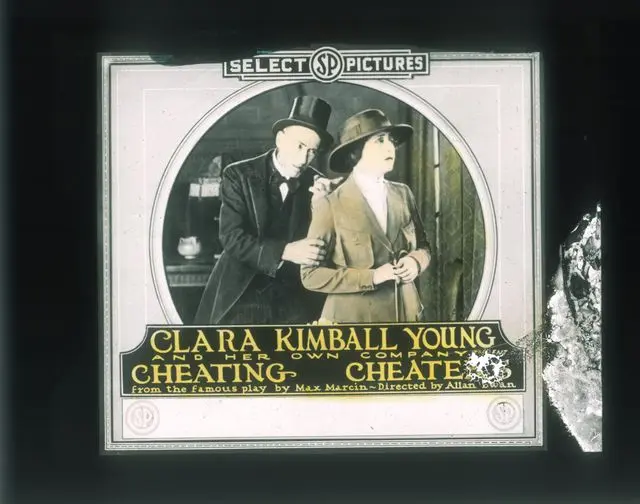
The intricate narrative structure of 'Cheating Cheaters' is a testament to the masterful screenwriting of Max Marcin and Kathryn Stuart. Their ability to construct a plot so dependent on sustained dramatic irony, where the audience is privy to information the characters are not, is truly remarkable. The screenplay doesn't merely present a series of events; it crafts a meticulously designed mechanism of misdirection. Each scene is carefully calibrated to reinforce the false perceptions held by both gangs, subtly escalating the tension as their respective plans draw closer to execution. The pacing is deliberate, allowing the audience to savor the irony, to appreciate the delicate balance of deception that permeates every interaction.
What stands out is how Marcin and Stuart manage to maintain the illusion for so long without it feeling contrived or tedious. They introduce just enough complications and near-misses to keep the audience on edge, constantly wondering when and how the truth will finally burst through the elaborate facades. The comedic beats are derived organically from the characters' misguided efforts, from the sheer absurdity of their parallel plotting. Consider, for instance, the subtle visual gags that arise from one gang's efforts to 'case' the other's house, while the occupants inside are doing precisely the same. This symmetrical planning, this mirroring of criminal intent, is where the script truly shines, elevating the film beyond a simple heist story into a sophisticated satire on appearances and the human capacity for self-deception. The writers understand that the most potent humor often springs from the gravest misjudgment, and they exploit this principle to its fullest extent.
Furthermore, the screenplay excels in its characterization, even within the confines of a silent film where exposition is often limited to intertitles. Marcin and Stuart imbue each member of the criminal families with distinct personalities and motivations, making them more than mere archetypes. Whether it's the suave leader, the cunning femme fatale, or the bumbling henchman, each character serves a specific purpose in advancing the plot and enhancing the comedic effect. Their interactions, though voiceless, convey a rich tapestry of relationships, rivalries, and internal conflicts. This depth allows the audience to connect with these characters, even as they are engaged in morally ambiguous activities, fostering a sense of empathy and enjoyment that is crucial for a successful crime comedy. The narrative, therefore, becomes a delightful exploration of human folly, wrapped in the guise of a thrilling criminal enterprise.
In the absence of spoken dialogue, the visual storytelling of 'Cheating Cheaters' becomes paramount, and the director (Allan Dwan, though not listed in the prompt, is often credited for the 1919 version) navigates this challenge with remarkable dexterity. The film relies heavily on careful staging, expressive performances, and the strategic use of intertitles to convey information and emotion. The camera work, while perhaps not as overtly experimental as some of its contemporaries, is effective in establishing the geography of the two neighboring houses and in guiding the audience's eye to crucial details. Close-ups are employed judiciously to highlight a character's sly glance, a moment of dawning realization, or a subtle gesture that speaks volumes without a single word. This visual precision is essential for a plot so reliant on hidden intentions and unspoken schemes.
The set design and costuming also play a critical role in establishing the elaborate deceptions. Both households are meticulously dressed to convey an air of old-world charm and undeniable wealth, from the ornate furniture to the sophisticated attire of the inhabitants. These visual cues are not just decorative; they are integral to the plot, serving as the very foundation upon which the mistaken identities are built. The contrast between the opulent exteriors and the criminal machinations occurring within creates a potent sense of dramatic irony, further engaging the audience in the unfolding farce. The film's aesthetic choices are therefore not merely stylistic preferences but essential narrative tools, demonstrating a profound understanding of how to leverage every element of silent cinema to maximum effect. The atmosphere generated is one of elegant subterfuge, where every detail, from a flickering gaslight to a carefully chosen brooch, contributes to the grand illusion.
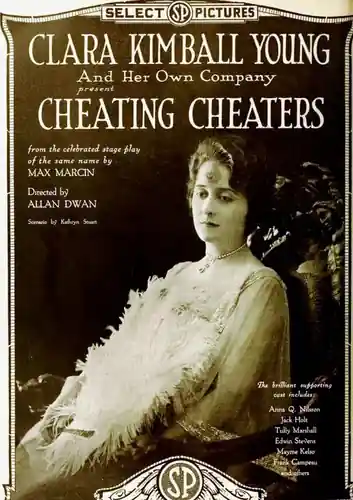
Furthermore, the film's pacing, controlled entirely by the director and editor, is crucial to its success. The tension builds gradually, punctuated by moments of comedic relief and near-disasters. The intertitles are used sparingly but effectively, providing necessary exposition or witty commentary without interrupting the flow of the visual narrative. This thoughtful integration of text and image ensures that the audience remains fully immersed in the story, piecing together the intricate puzzle alongside the characters. The director's ability to maintain a consistent tone, oscillating between genuine suspense and lighthearted humor, is a testament to their skill in handling such a complex genre blend. This deft touch ensures that 'Cheating Cheaters' remains a captivating watch, a testament to the enduring power of visual storytelling in its purest form.
To fully appreciate 'Cheating Cheaters', it is essential to place it within the broader context of early 20th-century cinema. The year 1919 was a vibrant period for filmmaking, with studios experimenting with various genres and narrative techniques. Crime films were particularly popular, often featuring daring heists, clever detectives, and morally ambiguous protagonists. However, 'Cheating Cheaters' distinguishes itself by injecting a strong current of sophisticated comedy into the crime narrative, moving beyond simple thrills to explore the humorous aspects of human deception. This blend of genres was not entirely unique; one might find similar thematic explorations in films like The Lone Wolf (also from 1919, featuring another master criminal), which explored the life of a gentleman thief, albeit with a more straightforward dramatic approach. What sets 'Cheating Cheaters' apart is its symmetrical plot, its focus on the irony of two groups of professional criminals attempting to fleece each other, rather than an innocent party.
The film also reflects a fascination with social class and the art of appearances, themes prevalent in many silent films. The idea that one could simply 'pass' as wealthy through careful staging and demeanor was a recurring motif, often exploited for both dramatic and comedic effect. While other films like Meyer from Berlin might have explored cultural misunderstandings for humor, 'Cheating Cheaters' delves into the deliberate construction of false identities for nefarious purposes. This preoccupation with disguise and the thin veneer of respectability makes the film a compelling social commentary, albeit a humorous one. It subtly critiques the superficiality of high society, suggesting that beneath the polished facades, even the most 'respectable' individuals might harbor less than honorable intentions, or at least be easily fooled by those who do.
The film's enduring appeal lies in its timeless premise. The 'crooks robbing crooks' trope has been revisited countless times throughout cinematic history, a testament to its inherent dramatic and comedic potential. From classic caper films to modern thrillers, the satisfaction derived from watching villains unwittingly turn on each other remains universally appealing. 'Cheating Cheaters' stands as an early, highly effective example of this narrative device, executed with a sophistication that belies its age. It’s a foundational text for anyone interested in the evolution of the crime comedy, demonstrating that even in the nascent days of cinema, filmmakers were already exploring complex narrative structures and nuanced character dynamics. Its place in film history, therefore, should not be underestimated, offering a window into the inventive spirit of the silent era.
Ultimately, 'Cheating Cheaters' transcends its historical context to offer a thoroughly entertaining and insightful exploration of human nature. Its themes of deception, greed, and the ironic consequences of elaborate pretense resonate just as strongly today as they did a century ago. The film playfully questions the very notion of 'honesty' within a world where everyone is, to some extent, performing. It celebrates the ingenuity of the con artist while simultaneously highlighting the inherent folly of their endeavors when confronted with an equally cunning adversary. The satisfaction derived from the film's climax, when the layers of deception are finally peeled back, is immense, leaving the audience with a sense of poetic justice, albeit one delivered with a wink and a smile.
In an era often dismissed as primitive, 'Cheating Cheaters' stands as a vibrant testament to the sophistication of silent cinema. It proves that compelling storytelling, nuanced performances, and intricate plotting were already well within the grasp of early filmmakers. For those with an appreciation for the art of the silent film, or simply a fondness for clever crime comedies, this film is an absolute must-see. It's a delightful journey into a world where everyone is trying to pull a fast one, and the greatest trick of all is believing you're the only one doing it. A true cinematic treasure that deserves to be rediscovered and celebrated, it offers more than just historical curiosity; it provides genuine, timeless entertainment. The film serves as a reminder that the human desire to outwit, outmaneuver, and ultimately, to cheat, is a narrative wellspring that never runs dry.
IMDb —
1927
Community
Log in to comment.