DbcultAccessing Vault...
Cult Review
Senior Film Conservator
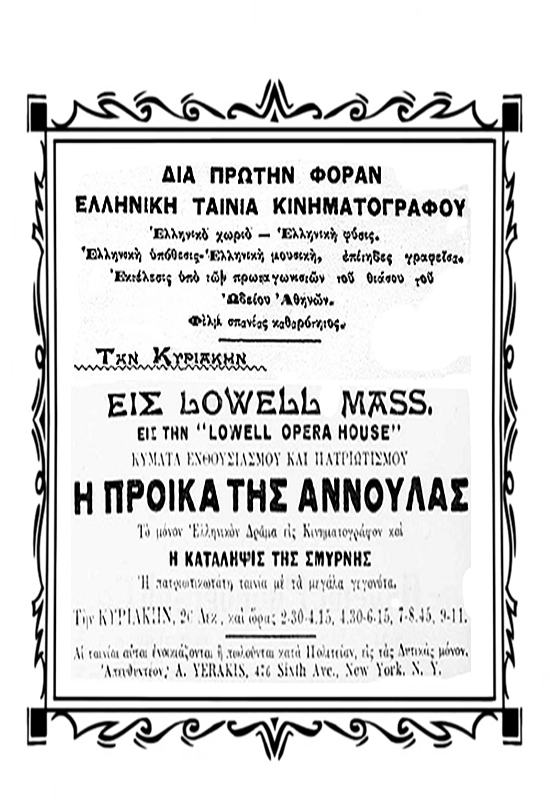
The cinematic landscape frequently presents narratives of profound transformation, yet few resonate with the raw, poignant authenticity of 'Annoula's Dowry' (slug: annoulas-dowry). This film, a masterwork of Greek storytelling, delves into the unexpected seismic shifts that can redefine human existence, exploring the very essence of fate, class, and the elusive pursuit of happiness. From the outset, we are introduced to Annoula, portrayed with a delicate yet resolute intensity by Xaveria Kanellopoulou, a young provincial woman whose life is a testament to quiet endurance. Her journey to Athens, forsaking the familiar yet impoverished contours of her village, is not one of adventure but of necessity, a stark pilgrimage towards a perceived economic salvation. Her destination, a grand Athenian mansion, serves not as a sanctuary but as a gilded cage, a potent symbol of the societal chasm she is compelled to navigate.
Within the mansion's imposing walls, Annoula assumes the role of a maid, echoing the path of her father, Elias Destounis, whose stoic portrayal anchors much of the film's early emotional weight. Destounis imbues his character with a quiet dignity, a man resigned to his station but never entirely bereft of hope. Their shared servitude under the same roof is a powerful visual metaphor for their intertwined destinies and the inherited burdens of their social class. The film meticulously establishes their daily rhythms, the subtle indignities, and the unspoken language of their shared struggle. It is a world where aspirations are modest, and survival is the paramount goal, painting a vivid portrait of Greece at a time when economic disparity cast long, unyielding shadows over large segments of the population. The writers, Dimos Vratsanos and Zaharias Papantoniou, exhibit a profound understanding of these social dynamics, crafting a narrative that feels both intimately personal and broadly universal in its critique of class structures.
The narrative's fulcrum arrives with an unexpected, almost mythical, stroke of fortune: the father's lottery win. This single event detonates the established order of their lives, sending ripples through their personal universe and the broader social fabric. The film masterfully avoids cliché, portraying this sudden windfall not merely as a joyous escape but as a complex catalyst for profound internal and external upheaval. The initial shock, the disbelief, the hesitant embrace of this new reality are all handled with a nuanced hand, allowing the audience to truly grasp the monumental shift. It’s a moment that might draw thematic parallels to films like The Price of Vanity, where the acquisition of wealth or status invariably comes with its own set of unforeseen costs and responsibilities, challenging the very moral fiber of its protagonists.
The genius of 'Annoula's Dowry' lies in its refusal to simplify the aftermath of this lottery win into a mere 'happily ever after' narrative. Instead, it meticulously charts the intricate psychological and social consequences of their newfound affluence. The mansion, once a symbol of their subjugation, now becomes a poignant reminder of their past, even as they are no longer bound by its service. Their transition from the margins to a position of comfort, perhaps even prominence, is fraught with challenges. Old relationships are tested, new societal expectations emerge, and the very definition of 'home' and 'family' begins to mutate under the pressure of their transformed circumstances. The film compellingly asks whether true happiness can simply be purchased, or if it is a more intricate construct, deeply rooted in identity and connection.
Annoula, in particular, undergoes a remarkable evolution. Kanellopoulou’s portrayal captures the subtle shifts in Annoula’s demeanor, from the reserved maid to a young woman grappling with the implications of her family’s changed status. She is no longer merely an observer of wealth but a participant, albeit one who carries the indelible marks of her past. This struggle for identity, for reconciling the 'who she was' with the 'who she is expected to be,' forms a powerful emotional core of the film. It's a journey that could be intellectually aligned with the thematic explorations in Panna Meri, which often examines the complexities of social mobility and the redefinition of self in the face of altered circumstances. The film avoids facile resolutions, instead immersing us in the uncomfortable truths of social ascent, where acceptance from the established elite is not guaranteed, and envy from former peers can be corrosive.
"Annoula's Dowry transcends a simple rags-to-riches narrative, offering a profound meditation on the enduring human quest for dignity and belonging amidst the capricious whims of fortune."
The ensemble cast, including Dimitris Rontiris and Koula Zervou, contributes significantly to the film's rich tapestry. Rontiris, perhaps in a supporting role, adds layers to the social interactions surrounding Annoula and her father, representing either the lingering prejudices or the shifting attitudes of those who witness their transformation. Zervou's presence, whether as a figure from their past or a new acquaintance, further complicates the evolving social dynamics, highlighting the myriad ways in which people react to sudden changes in fortune. The authenticity of these performances grounds the narrative, preventing it from veering into melodrama and instead maintaining a powerful, observational tone. The writers' dialogue, often understated, allows the unspoken emotions and societal pressures to speak volumes.
'Annoula's Dowry' is more than just a personal story; it functions as a powerful social commentary on a nation grappling with its own identity and economic realities. The film subtly critiques the rigid class structures that define opportunities and limit potential, while simultaneously exploring the psychological toll of poverty and the often-disorienting impact of sudden wealth. It raises pertinent questions about the true value of money, the nature of happiness, and the definition of a 'better life.' Is 'better' merely an accumulation of material possessions, or does it encompass a deeper sense of self-worth, acceptance, and genuine connection? These are timeless questions, handled with a particular Greek sensibility that imbues the film with a unique cultural flavor.
The narrative's exploration of fate versus free will is particularly compelling. The lottery win is the ultimate expression of chance, a capricious twist of destiny that utterly reshapes their path. Yet, the choices Annoula and her father make in the aftermath, their reactions to their new circumstances, speak to the enduring power of human agency. Do they succumb to the trappings of wealth, or do they retain the core values forged in hardship? This internal conflict, often subtly conveyed through performance and visual cues, elevates the film beyond a simple dramatic premise. It brings to mind the profound questions posed by films such as Dan, where characters are often confronted with life-altering events that force them to redefine their moral compass and their place in the world.
The directorial vision, while not explicitly detailed in the provided information, is evident in the film's coherent thematic development and powerful emotional arc. The choice of setting, from the provincial austerity to the Athenian grandeur, is not merely backdrop but an active participant in the story, reflecting the characters' internal and external journeys. The cinematography, one can surmise, would have been crucial in contrasting these worlds, perhaps using stark lighting for the early scenes and a more expansive, yet potentially isolating, visual language for their new environment. This careful visual storytelling would have underscored the dramatic irony of their situation, where material comfort might not necessarily translate to emotional ease.
The writers, Dimos Vratsanos and Zaharias Papantoniou, deserve immense credit for crafting a narrative that possesses both immediate emotional appeal and enduring intellectual depth. Their script avoids simplistic resolutions, instead embracing the messy, unpredictable nature of human experience. They understand that a change in fortune does not erase a past of hardship but rather recontextualizes it, adding new layers of complexity to character motivations and relationships. The dialogue, one imagines, would be steeped in the vernacular of the time, lending an additional layer of authenticity to the characters and their struggles. It’s a testament to their skill that such a straightforward premise yields such a rich tapestry of human drama.
In an era when narratives often favored clear-cut heroes and villains, 'Annoula's Dowry' stands out for its nuanced depiction of human ambition, resilience, and vulnerability. It is a film that invites introspection, prompting audiences to consider their own perceptions of success and the societal forces that shape individual lives. The film's legacy lies in its ability to transcend its specific cultural context, offering universal insights into the human condition. It reminds us that while external circumstances can change dramatically, the internal landscape of identity, memory, and desire remains a complex, often turbulent, terrain. This enduring relevance is what makes it a vital piece of cinematic history, a story that continues to resonate with contemporary audiences.
Ultimately, 'Annoula's Dowry' is a powerful testament to the transformative power of narrative cinema. It takes a seemingly simple plot point – a lottery win – and extrapolates from it a profound exploration of personal and societal change. The performances, particularly from Kanellopoulou and Destounis, are imbued with a quiet power that elevates the material, making their characters' journey feel deeply personal and intensely real. The film is a contemplative journey through the labyrinthine corridors of fate and class, leaving the viewer with much to ponder long after the credits roll. It stands as a compelling example of how Greek cinema, even in its earlier forms, was capable of delivering narratives of immense emotional depth and sociological insight.
The film's enduring appeal also lies in its subtle commentary on the Greek dream, or perhaps, the universal dream of escaping hardship. It doesn't romanticize poverty, nor does it demonize wealth. Instead, it presents both as complex states of being, each with its own set of challenges and opportunities. The 'dowry' in the title, while traditionally referring to property or money brought by a bride to her husband, here takes on a metaphorical significance. It is not just the material wealth acquired but the 'dowry' of experience, resilience, and perhaps a newfound understanding of life's true values that Annoula carries forward. This metaphorical depth is a hallmark of truly great storytelling, elevating the film beyond a mere depiction of events to a profound artistic statement. The nuanced exploration of these themes places 'Annoula's Dowry' in a distinguished lineage of films that examine the profound impacts of societal shifts on individual lives, much like the contemplative narratives found in Es werde Licht! 1. Teil, which often grappled with foundational societal changes and their human cost.
The exploration of the father-daughter relationship, portrayed with such raw honesty by Destounis and Kanellopoulou, is another cornerstone of the film. Their bond, forged in shared adversity, is tested by prosperity. How do family dynamics shift when economic pressures are lifted? Do old wounds heal, or do new tensions emerge? The film delicately unpacks these questions, showing that money, while solving certain problems, often introduces others that are far more insidious. This human element, the exploration of enduring familial ties against a backdrop of dramatic change, is what gives 'Annoula's Dowry' its timeless quality. It’s a compelling study of how individuals, bound by blood and shared history, navigate the treacherous waters of altered fortunes. The film ultimately argues that while external circumstances may dictate our paths, the strength of our character and the resilience of our human connections are the true arbiters of our destiny, a sentiment echoed in the timeless struggles of characters in Marta of the Lowlands, where social standing and personal integrity are in constant conflict. The film remains a potent reminder of the enduring power of Greek cinematic heritage.
IMDb 6.7
1923
Community
Log in to comment.