DbcultAccessing Vault...
Cult Review
Senior Film Conservator
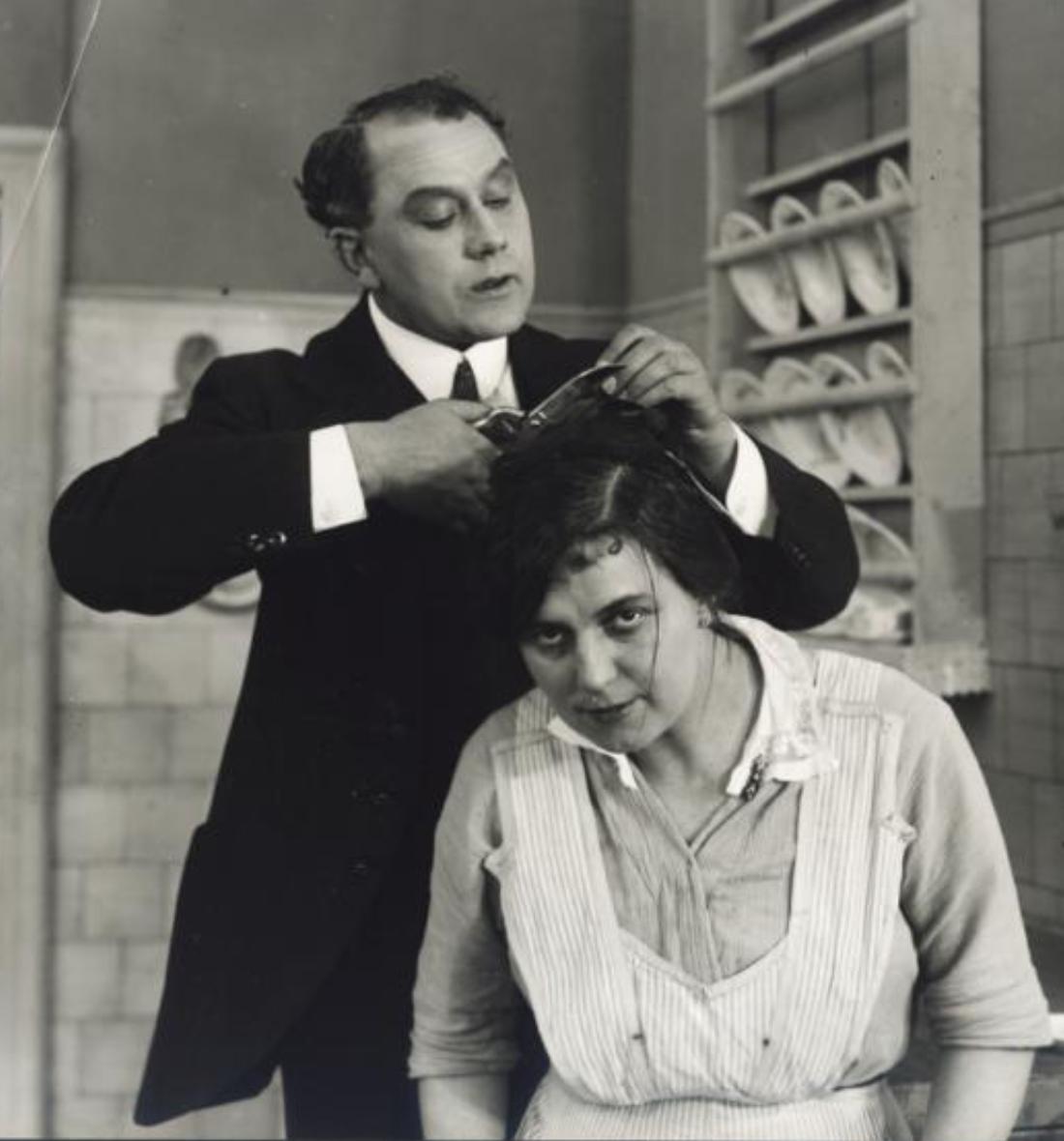
Valdemar Andersen's Jalousiens Magt (The Power of Jealousy) remains a Molotov cocktail hurled at the stained-glass windows of Edwardian matrimony. From its opening tableau—Carl Crone adjusting his cravat before a gilt-framed mirror while wife Inger arranges chrysanthemums with robotic precision—the film constructs marriage as a performance of oppressive normalcy. Director August Blom (though uncredited in surviving prints) weaponizes domestic spaces: mahogany-paneled dining rooms become battlegrounds where Inger's newfound feminism declaws Carl's patronizing endearments. Notice how Blom photographs Krygell's transformation through evolving costuming: her initial lace-collared dresses constrict like gilded cages, progressively replaced by streamlined shirtwaists whose masculine cut visually rejects ornamental femininity. When she finally burns her corset in the garden incinerator, the flames lick the edges of the frame like revolutionary banners.
Astrid Krygell's performance is a masterclass in subversive subtlety. Watch her hands: initially fluttering like caged sparrows when pouring Carl's tea, they later grip feminist literature with tensile strength. Her evolution plays out in micro-expressions—the fractional pause before obeying Carl's demand for sherry evolves into outright refusal, captured in a startling medium close-up where her raised eyebrow carries more radical weight than any manifesto. Unlike the hysterical suffragettes caricatured in contemporaneous films like The Missing Links, Krygell's Inger weaponizes calm intellect. Her most devastating act isn't attending rallies, but hosting one in Carl's sacrosanct study, smashing his illusion of domestic sovereignty.
"The true revolution occurs not at the podium but in the parlour, when a woman stops arranging flowers and starts dissecting patriarchy with the same pair of silver scissors."
Carl Alstrup's Crone embodies bourgeois masculinity in freefall. His disintegration follows three devastating blows: the theft of his decorative wife (property), the invasion of his home (territory), and mockery from legal peers (status). Alstrup physicalizes Crone's unraveling through destabilizing body language—watch how his trademark ramrod posture collapses into a predatory crouch during surveillance scenes. Blom parallels Crone's spying with The Burglar's criminal voyeurism, suggesting toxic jealousy as its own felony. The film's audacious centerpiece finds Crone hiding behind potted palms at a suffragette meeting, his face contorting like a gargoyle as Inger debates marital equity. Alstrup's genius lies in revealing the pathetic vulnerability beneath the rage—when he desperately buys Inger jewels to reclaim her, the trembling hands offering the velvet box betray infantilized despair.
Andersen's script shrewdly contrasts Crone's meltdown with the pragmatic feminism of Stella Lind's character, whose leather-bound ledger of grievances operates like a business proposal for equality. Meanwhile, Maggi Zinn's gossipy society matron functions as the Greek chorus of bourgeois anxiety, her lorgnette magnifying the scandal to operatic proportions. The film's most radical flourish arrives via Olga Svendsen's subplot as a widowed activist who mentors Inger—her economic independence and sexual autonomy (hinted at through discreet liaisons) offer a revolutionary alternative to marriage. This narrative daring distinguishes Jalousiens Magt from tamer marital dramas like Tangled Lives, where feminism remains a passing fancy rather than an existential threat.
Blom composes the film around devastating symbolic objects. The silver scissors Inger uses to cut fabric for suffrage banners later sever Carl's necktie—a castratory metaphor that drew censors' wrath. Floral imagery undergoes brutal revision: hothouse orchids in the opening scenes signify controlled femininity, while the wild roses Inger brings home from rallies embody untamed agency. Most ingenious is the recurring motif of Carl's legal documents. Early scenes show him annotating laws with proprietary confidence; later, we see feminist literature stacked atop his legal codes, literally overshadowing patriarchal text. When he tears apart Inger's copy of Mary Wollstonecraft, the papers scatter like funeral ashes over their marriage bed.
Cinematographer Louis Larsen pioneers psychological close-ups years before Dreyer's mastery. A signature shot isolates Crone's eye peering through keyholes, the distorted iris reflecting Inger's silhouette like a malevolent moon. During arguments, Larsen frames the couple through doorway arches—ecclesiastical compositions that sarcastically bless their collapsing union. The suffragette meeting sequence remains revolutionary: rather than static wide shots, Larsen's camera weaves through the crowd, catching fragments of debate that collectively build a mosaic of insurrection. Compare this dynamism to the staid tableaux of The Lyons Mail and the difference feels generational.
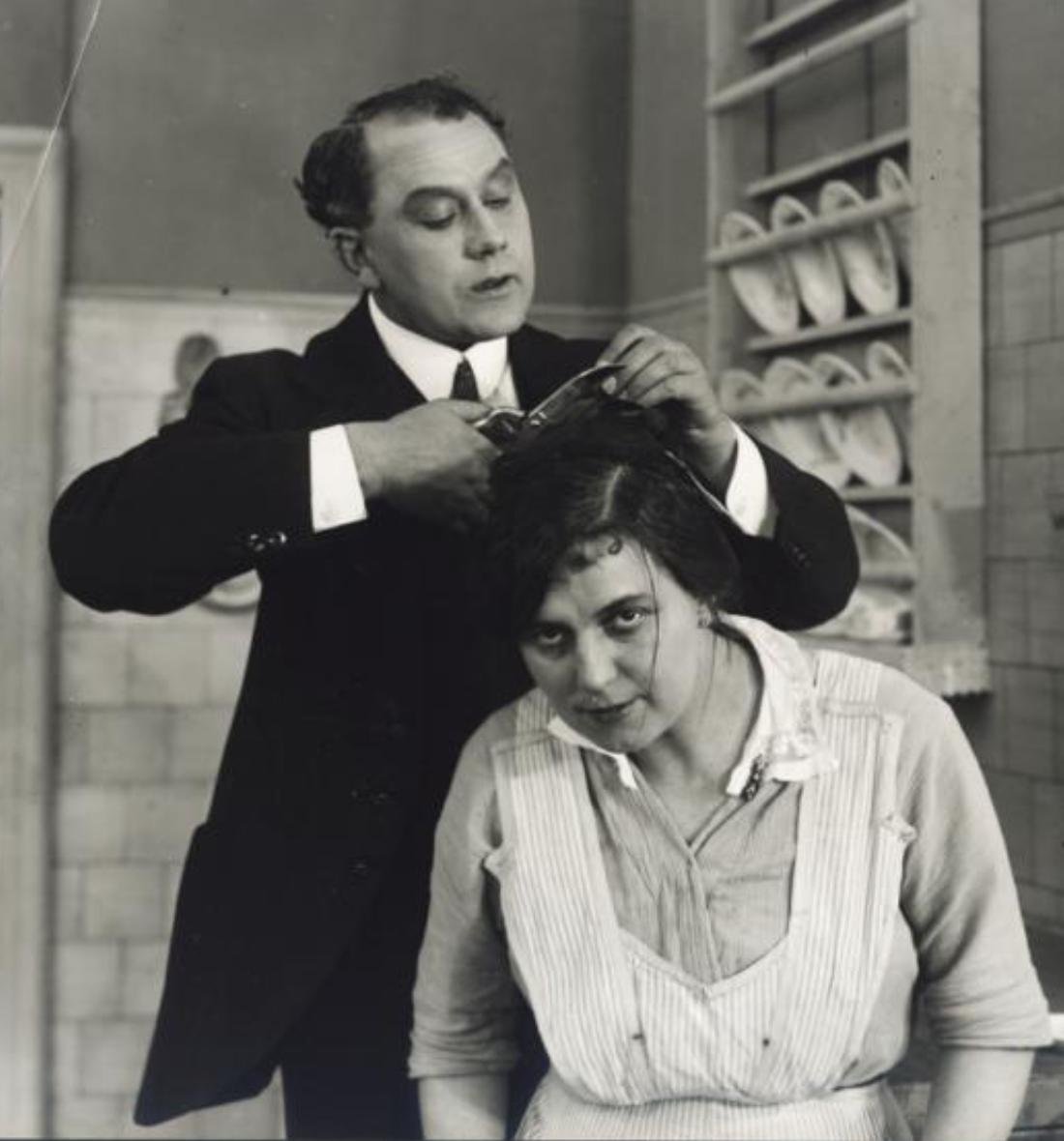
"Blom understands that revolution smells like scorched whalebone and sounds like silk skirts sweeping past a husband too stunned to utter his own name."
Jalousiens Magt conducts a forensic audit of gendered territory. Carl's study—all leather-bound books and hunting trophies—symbolizes imperial masculinity. When Inger commandeers it for strategy sessions, her activists literally redraw the room's power map by moving furniture to form a circular discussion pit. Similarly, the formal dining room's oppressive symmetry fractures during the infamous dinner scene where Inger debates divorce law between courses. Blom shoots Carl from low angles, his isolation magnified by the vacant chairs stretching into darkness like an abandoned tribunal. This spatial warfare predates Virginia Woolf's "room of one's own" by over a decade, making the film astonishingly prescient.
As a silent film, Jalousiens Magt weaponizes text intertitles with poetic ferocity. When Carl hisses "You are my wife, not some street-corner hysteric!" the cursive font drips with venom. Conversely, Inger's declarations appear in bold sans-serif—a visual rupture embodying modernity. The absence of spoken dialogue amplifies the couple's emotional disconnect; their final confrontation plays out in agonizing silence, the intertitle simply reading "[...]" as they stare through each other. This eloquent void resonates beyond the marital collapse in Her Life and His, suggesting communication itself as a casualty of gender war.
Contemporary critics denounced the film as "anarchic propaganda," yet its cultural ripples proved undeniable. The Danish Women's Society screened prints at fundraisers, while conservative papers warned it would inspire wives to "burn breakfast instead of corsets." Historical context heightens its audacity: Denmark didn't grant women full suffrage until 1915—the year of the film's release. This immediacy distinguishes it from allegorical treatments like Saved from the Harem, locating its rebellion squarely in Copenhagen drawing rooms rather than Orientalist fantasies.
Krygell's performance influenced a generation of Nordic actresses, particularly in her rejection of the "suffragette shrew" trope. Unlike the martyrdom of Jean Valjean in Les Misérables, Inger's resilience feels triumphantly secular—she seeks justice, not sainthood. The film's legacy surfaces in Arzner's later work, particularly when Crone's legal sabotage parallels the courtroom manipulation in Not Guilty. Yet what remains most radical is its refusal to villainize either spouse. Carl's jealousy stems not from cartoonish malice, but existential terror as his entire value system implodes. The final shot—Inger walking toward the horizon while Carl shrinks in the background, both figures equidistant from the camera—offers no facile victor, only the devastating cost of liberation.
"True equality begins when a woman's horizon expands beyond her husband's shadow—even if that shadow stretches long enough to darken a decade."
Rewatching Jalousiens Magt today reveals startling modern cadences. The "tradwife" versus feminist discourse playing out across social media mirrors Carl and Inger's battles, proving Andersen's insights tragically timeless. Blom's visual grammar—particularly his focus on hands (Carl's clutching, Inger's releasing)—feels intensely contemporary, anticipating Bergman's tactile psychodramas. While the film shares Blue Blood's critique of aristocracy, its true target is the psychological architecture upholding privilege. Carl doesn't fear losing Inger's love; he dreads losing her complicity in his self-mythology.
Surviving prints show damage around the third act—perhaps censorship, perhaps neglect—creating poignant lacunae where their marriage disintegrates beyond retrieval. These celluloid scars metaphorize the narrative's emotional erosion. Unlike the tidy resolutions of Marrying Money, Jalousiens Magt offers no restorative embrace. Its power derives from this unflinching gaze at the rubble of gender roles, where the dust hasn't settled even a century later. When Inger steps beyond the garden gate in the final frames, she walks into history, leaving Carl—and patriarchy—choking on the perfumed ashes of their own extinction.
IMDb 4.5
1937
Community
Log in to comment.