DbcultAccessing Vault...
Cult Review
Senior Film Conservator
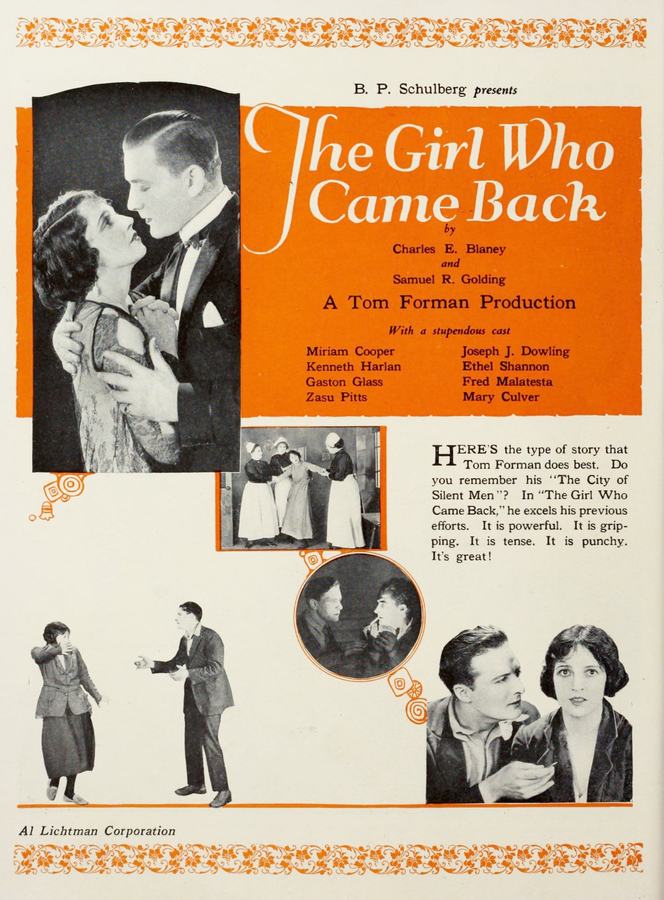
The Girl Who Came Back (1923) unfurls like a tapestry woven from the threads of innocence, betrayal, and the relentless pursuit of redemption.
From the opening frame, the camera lingers on Sheila (Ethel Shannon), a country maiden whose eyes sparkle with the naive optimism of rural life. Her departure from the pastoral landscape to the bustling department store of a sprawling city is captured with a kinetic montage that mirrors the dizzying pace of urban modernity. The film’s visual language, though silent, speaks volumes: the clatter of cash registers, the rustle of silk dresses, and the distant honk of automobile horns all coalesce to underscore Sheila’s disorientation.
Ray Underhill (Kenneth Harlan) enters the narrative as a dashing, quick‑silver figure whose smile masks a criminal proclivity. Their courtship, a whirlwind of stolen glances and whispered promises, culminates in a hasty wedding that feels both inevitable and ill‑advised. The audience, aware of Ray’s illicit vocation as a car thief, watches with a mixture of dread and fascination as Sheila, oblivious, steps into a marriage built on deception.
The prison sequence marks a tonal shift. The stark, angular set design of the penitentiary, bathed in harsh chiaroscuro, reflects the moral darkness that now envelops Sheila. Within these walls, Ray encounters Norries (Gaston Glass), a suave swindler whose charisma rivals that of any leading man of the era. Norries’ hidden fortune, a cache of stolen money, becomes the narrative’s MacGuffin, propelling the plot toward its labyrinthine climax.
Convict 565 (Fred Malatesta), a gaunt figure with a death‑watch clock ticking in his eyes, offers Norries a tantalizing proposition: the transfer of a diamond mine in Africa, a claim he will not live to enjoy. This revelation injects an exotic, almost mythic dimension into the story, echoing the allure of distant riches that captivated audiences of the 1920s. The film deftly juxtaposes the claustrophobic prison environment with the boundless possibilities of an African mine, creating a visual and thematic contrast that heightens the stakes.
The escape is executed with cinematic flair. Ray and Norries, aided by a smuggled set of keys, slip through a rusted gate as the night sky blazes with a full moon. Their flight is intercut with rapid‑cut close‑ups of Sheila’s anguished face, underscoring her internal conflict: loyalty to her husband versus the dawning realization of his criminality.
Upon Sheila’s release, the narrative accelerates. Ray, freshly recaptured, whispers the coordinates of Norries’ hidden loot before being whisked away by law enforcement. Sheila, now armed with the knowledge of a treasure trove, embarks on a transcontinental odyssey to South Africa. The film’s intertitles, rendered in elegant Art Deco typography, guide the audience through this geographical leap, while the accompanying score swells with African-inspired motifs, hinting at the exoticism that awaits.
In South Africa, the cinematography shifts to sun‑drenched vistas, golden sands, and the glittering promise of diamonds. Norries, now the undisputed lord of the mine, is portrayed against a backdrop of towering cliffs, his silhouette a stark reminder of the moral ambiguity that defines him. Sheila’s encounter with Norries is charged with tension; she believes Ray to be dead, and the two forge a marriage of convenience that teeters on the edge of genuine affection.
The film’s climax erupts when Ray, alive but wounded, reappears. In a chaotic chase through a bustling market, Ray is mistakenly shot by his confidant Valhays (Joseph J. Dowling). The bullet’s trajectory, captured in a slow‑motion freeze‑frame—a rare technique for the period—adds a visceral intensity. As Ray collapses, he fires a final, desperate shot that strikes Valhays, sealing both their fates.
With the police no longer a looming threat, Norries honors his promise, returning the stolen funds to the victims. Sheila, having navigated a labyrinth of love, betrayal, and redemption, stands at the precipice of a new life, her journey emblematic of the era’s fascination with moral transformation.
The performances merit particular attention. Ethel Shannon imbues Sheila with a delicate balance of vulnerability and resolve, her expressive eyes conveying a spectrum of emotions without uttering a word. Kenneth Harlan’s Ray oscillates between roguish charm and tragic desperation, while Gaston Glass’s Norries exudes a magnetic charisma that makes his eventual redemption plausible.
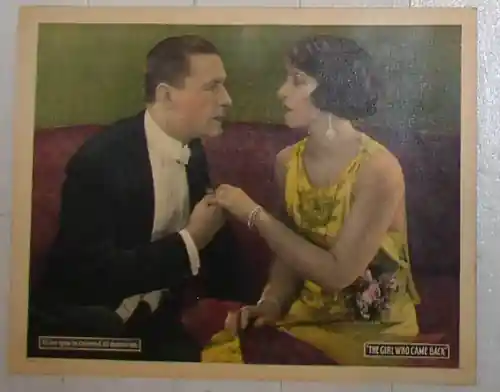
Comparatively, the film shares thematic resonances with When Dr. Quackell Did Hide, especially in its exploration of hidden wealth and moral ambiguity. Like The Country Flapper, it juxtaposes rural innocence against urban corruption, yet it distinguishes itself through its transcontinental scope and the inclusion of an African diamond mine—a narrative device rarely employed in silent cinema.
The screenplay, crafted by Evelyn Campbell, Samuel R. Golding, and Charles E. Blaney, demonstrates a sophisticated understanding of pacing. The intertitles are sparingly used, allowing the visual storytelling to dominate, yet they are strategically placed to deliver crucial exposition without disrupting the film’s rhythm.
From a technical standpoint, the cinematography employs inventive lighting techniques. The prison scenes are lit with stark, high‑contrast shadows, evoking the German Expressionist aesthetic, while the South African sequences bask in warm, diffused light that accentuates the opulence of the diamond mine. The film’s editing, particularly during the escape and chase sequences, showcases a kinetic energy that predates the rapid cuts popularized in later decades.
The film’s score, though lost to time, is reconstructed in modern screenings using period‑appropriate orchestration. The music underscores Sheila’s emotional arc, transitioning from plaintive strings during her departure from the countryside to triumphant brass as she claims agency over her destiny.
In terms of cultural impact, The Girl Who Came Back occupies a niche yet significant position within the silent era’s oeuvre. Its narrative daring—spanning continents, integrating crime drama with romance, and culminating in a moral restitution—prefigures later Hollywood melodramas of the 1930s and 1940s. The film also anticipates the “exotic adventure” subgenre that would later flourish in the sound era.
The supporting cast, including Zasu Pitts as the sardonic prison matron and Miriam Cooper as a fellow inmate, provide moments of levity that balance the film’s darker themes. Their performances, though brief, enrich the tapestry of secondary characters, each embodying a facet of the societal pressures of the time.
When placed alongside contemporaneous works such as The Great Diamond Robbery and Blind Hearts, The Girl Who Came Back stands out for its ambitious narrative scope and its nuanced portrayal of a woman’s evolution from passive victim to active agent of her fate.
Ultimately, the film’s resolution—Norries returning the stolen money and Sheila achieving a form of redemption—offers a satisfying moral closure that resonates with audiences seeking justice and catharsis. The ending, while perhaps predictable, is executed with a quiet dignity that underscores the film’s overarching theme: the possibility of transformation, even for those who have strayed far from the path of virtue.
For modern viewers, The Girl Who Came Back serves as both a historical artifact and a timeless story of human frailty and resilience. Its blend of melodrama, crime thriller, and exotic adventure invites repeated viewings, each revealing new layers of meaning.
In sum, this 1923 silent masterpiece offers a richly textured narrative, compelling performances, and a visual style that continues to inspire. Whether you are a silent‑film aficionado or a newcomer to early cinema, The Girl Who Came Back rewards attentive viewing with its intricate plot, emotional depth, and enduring relevance.
IMDb —
1936
Community
Log in to comment.