DbcultAccessing Vault...
Cult Review
Senior Film Conservator
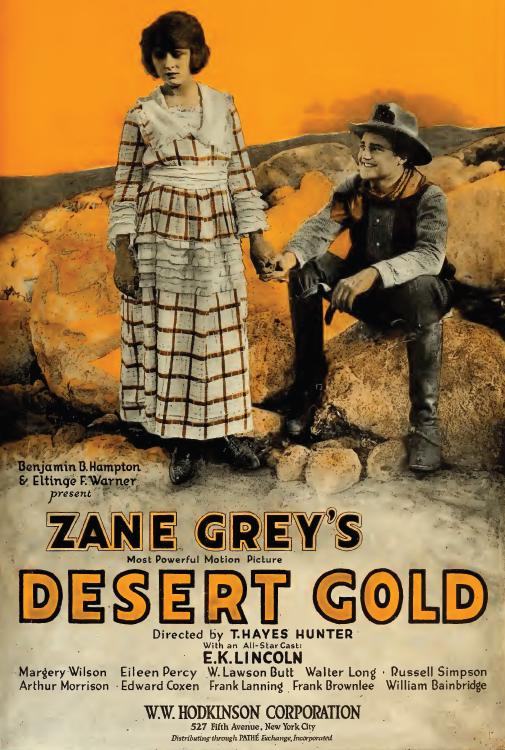
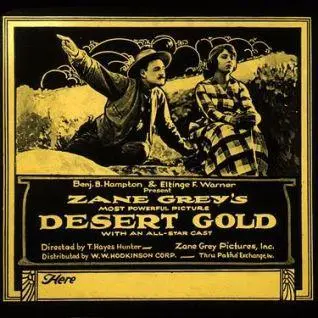
The 1919 iteration of Desert Gold stands as a towering, if often overlooked, monolith in the early topography of the American Western. Directed with a surprisingly modern sense of spatial awareness by T. Hayes Hunter, the film transcends the mere 'oater' tropes of its era to become a meditation on the intersection of law, land, and legitimacy. Unlike the frantic, slapstick energy of contemporary shorts like An Auto Nut, this feature-length adaptation of Zane Grey’s prose demands a more contemplative engagement. It is a work that understands the desert not merely as a backdrop, but as an ontological force—a crucible that strips away the artificialities of the 'Easterner' and reveals the raw, atavistic core of the human condition.
Cinematically, the film utilizes the harsh, unforgiving light of the Southwestern landscape to create a visual language of stark contrasts. The prologue, featuring Jonas Warren’s desperate search for his daughter, is imbued with a sense of fatalistic doom that rivals the dramatic weight of The Silent Master. When the sandstorm eventually descends, the practical effects of the era achieve a visceral intensity that modern CGI frequently fails to replicate. The grain of the film stock itself seems to merge with the swirling grit of the desert, creating a sensory experience that is both claustrophobic and expansive. This is not the romanticized West of later decades; this is a place where survival is a tenuous negotiation with the elements.
The casting of E.K. Lincoln as Dick Gale provides a fascinating study in the 'civilizing' of the American male. Lincoln portrays Gale with a subtle evolution, moving from a position of detached curiosity to one of profound, grit-under-the-fingernails commitment. His journey mirrors the national psyche of 1919—a country emerging from the horrors of the Great War, looking toward its own internal frontiers for a sense of renewed purpose and identity. In this regard, the film shares a thematic kinship with The Regenerates, where the reclamation of character is inextricably linked to the reclamation of the land.
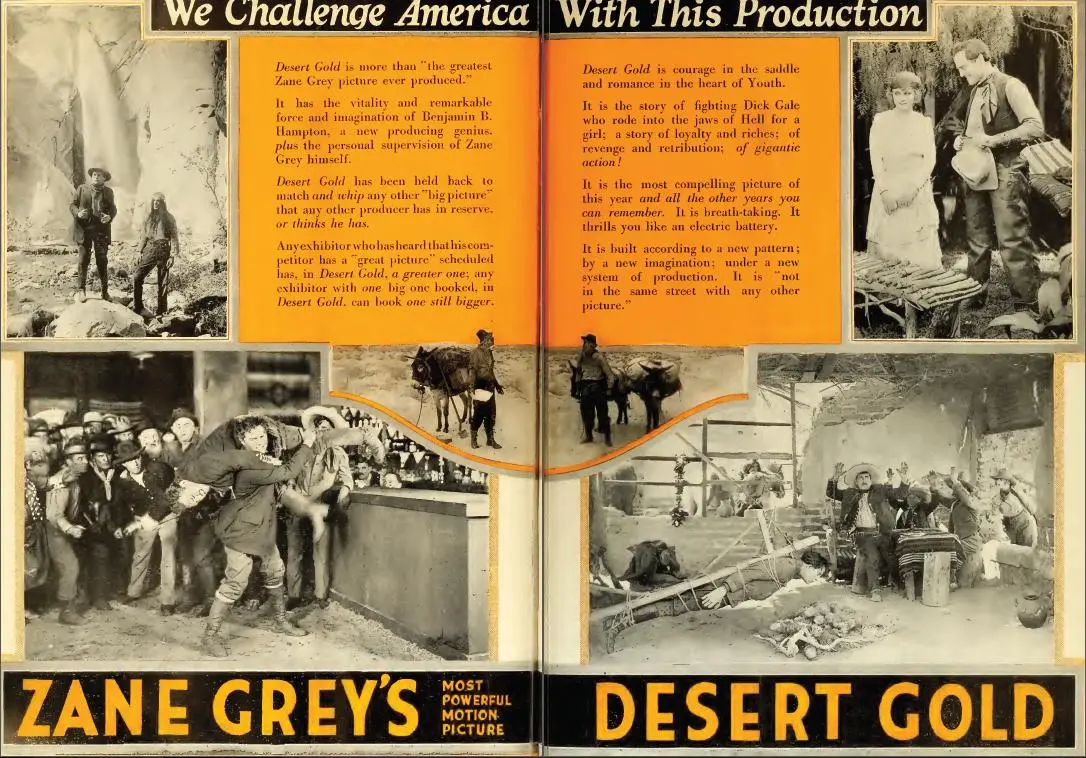
Walter Long’s portrayal of Rojas is a masterclass in silent-era villainy. Long, an actor who often embodied the darker impulses of the American screen, brings a predatory magnetism to the role. His Rojas is not a mere caricature but a personification of the lawlessness that the marriage certificate—a central MacGuffin in the plot—seeks to overwrite. The tension between Rojas’s band of outlaws and the ranch cowboys is choreographed with a rhythmic precision that predates the sophisticated action sequences of the 1930s. This conflict is less about the gold itself and more about the sovereignty of the individual over a territory that recognizes no master.
While many films of the period, such as The Little Mademoiselle, dealt with the intricacies of social standing within a European or urban context, Desert Gold projects these anxieties onto the frontier. The character of Mercedes Castenada, played with a luminous vulnerability by Eileen Percy (who also pulls double duty as Nell), represents the precarious position of women in a landscape where legal protections are as ephemeral as a mirage. The rescue of Mercedes by Gale and the Yaqui is a pivotal moment that shifts the film from a survivalist drama into a high-stakes tactical thriller.
Perhaps the most compelling element of the narrative is the role of the Yaqui Indian, portrayed by Frank Lanning. In an era where Indigenous characters were frequently relegated to the periphery or used as agents of terror, the Yaqui in *Desert Gold* is the story’s moral and environmental compass. He is the one who understands the hidden architecture of the desert, the location of the life-giving water, and the ultimate resting place of the gold. His act of throwing Rojas off a cliff is not merely an act of vengeance; it is a restorative gesture, purging the landscape of a toxic presence.
This connection to the land is a recurring motif in Grey's work, but Hunter’s direction gives it a specific cinematic weight. The way the camera lingers on the Yaqui’s movements—deliberate, economical, and perfectly attuned to the terrain—contrasts sharply with the frenetic, often clumsy movements of the outlaws. It suggests a hierarchy of belonging that places the Indigenous guide at the apex, followed by those who, like Gale, are willing to learn the desert's harsh lessons. This thematic depth is far more sophisticated than the domestic deceptions explored in The Painted Lie or the lighthearted romanticism of Cupid Camouflaged.
The resolution of the film, involving the discovery of the marriage certificate, might seem like a convenient plot device to modern audiences, but within the context of 1919, it carries immense weight. The certificate is the bridge between the chaotic 'Wild West' and the structured 'Civilized East.' It transforms Nell from a person of uncertain social standing—a 'nameless' girl of the ranch—into a legitimate heir. This preoccupation with legitimacy and the 'condoning' of past sins is a thread that runs through many silent dramas, including Her Condoned Sin and Satan's Private Door.
In *Desert Gold*, the certificate is found in the very place where the gold is hidden, equating financial wealth with moral and social status. To own the mine, Nell must first 'own' her name. This synthesis of the material and the spiritual is the hallmark of the Zane Grey mythos. The fact that the Yaqui is the one to reveal this truth reinforces the idea that the land itself holds the memory of justice, waiting for the right moment to relinquish its secrets. It is a far more satisfying and profound conclusion than the whimsical resolutions found in Romance and Arabella or The Veiled Adventure.
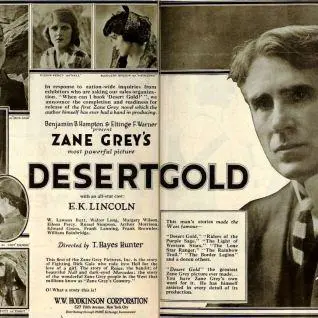
Reflecting on the performances, Jeanne Carpenter and Mary Jane Irving provide the necessary emotional grounding as the younger versions of the protagonists, while veterans like Russell Simpson and Frank Brownlee anchor the ranch sequences with a sense of weathered authenticity. The film’s pacing is deliberate, allowing the tension to simmer like the midday heat before boiling over in the third act’s mountain pursuit.
Comparing *Desert Gold* to other films of its year, such as the regal In the Palace of the King or the fantastical The Magic Eye, highlights its unique position as a work of rugged realism. While Die Bettelgräfin might offer a more European sensibility of class struggle, Hunter’s film is quintessentially American in its obsession with self-invention and the cleansing power of the frontier. Even when compared to the high-stakes moral dilemmas of In the Balance or the social critiques of The Praise Agent, *Desert Gold* remains a singular achievement for its ability to marry pulp adventure with a genuine sense of awe for the natural world.
Ultimately, Desert Gold (1919) is a film that demands to be seen by any serious student of cinema. It is a testament to the power of the silent image to convey complex emotional and philosophical truths. It reminds us that before the Western became a genre of tropes and cliches, it was a genre of exploration—not just of the land, but of the soul. The gold at the center of the story is not just a mineral; it is a metaphor for the enduring value of honor, the necessity of roots, and the immutable law of the desert that eventually, everything hidden will be revealed under the blistering sun.
IMDb 6.2
1930
Community
Log in to comment.