DbcultAccessing Vault...
5.5/10
Senior Film Conservator
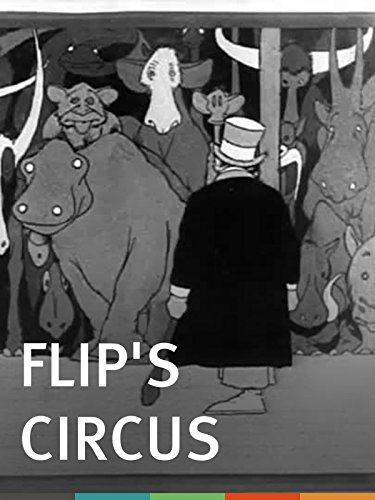
A definitive 5.5/10 rating for a film that redefined the boundaries of cult cinema. Flip's Circus remains a cornerstone of transgressive art.
The first time I watched Flip's Circus, the 1921 one-reeler that Winsor McCay reportedly completed in a feverish fortnight between editorial cartoons, I half-expected to see the celluloid dissolve under the weight of its own hallucinations. What unfurls instead is a tight eleven-minute fugue of balance and domination, a miniature epic told through graphite ghosts and nitrate shimmer. Flip, the eternally optimistic ringmaster with a Chaplinesque swagger, struts into a white void that quickly blossoms—via McCay’s hand-inked sorcery—into a big-top drenched in chiaroscuro reds and bruised purples. The tightrope sequence arrives early: the camera refuses to blink while household objects levitate like satellites, orbiting Flip’s nonchalant equilibrium. Each object is a totem of early-20th-century domesticity—gramophones, kettles, a bowler hat—yet here they levitate with the solemnity of planetary bodies. The gag is physical, but the sensation is cosmic; you feel, absurdly, that you are witnessing Kepler’s laws rewritten by a vaudevillian.
McCay’s line-work, famously obsessive, achieves here a tactile madness: every cross-hatched shadow seems to breathe. Compare this to the comparatively static tableaux of Detective Brown or the florid melodrama of The Scarlet Oath, and you realize how radically McCay weaponizes movement itself as narrative. The tightrope becomes a narrative spinal cord; each wobble transmits exposition without title cards. When the rope stretches into a catenary of suspense, we read Flip’s past—his itinerant failures, his dreams of sold-out stands—in the quiver of the hemp. No intertitles interrupt; McCay trusts the viewer’s eye to decode muscle memory.
Then comes the beast: a creature stitched from equal parts Bengal tiger and locomotive, its stripes flickering like torn film leader. Contemporary trade sheets called it “the striped terror,” but terror feels reductive. The animal lumbers into frame with the laconic dignity of a deposed monarch, eyes glowing via hand-tinted amber dyes that sputter like candlewick against the monochrome. The waltz of man and predator is framed in medium-long shot so that the ring’s sawdust perimeter becomes an arena of moral philosophy: will domination be tender or brutal? Flip’s cane touches the dirt; the beast lowers its head. In that instant McCay stages a paradox: conquest rendered as consensual choreography. The lion’s mouth opens—not to roar but to exhale a plume of steam that morphs, through clever animation loops, into a tiny aerialist who somersaults onto Flip’s palm. Metaphor stacked upon metaphor: the tamed animal births entertainment itself.
Flip's Circus is less a story than a living nickelodeon poster, one that rustles in the mind long after the projector’s clatter fades.
Yet the film refuses catharsis. In the final 30 seconds, the beast rears, not in rebellion but in a kind of ceremonial reciprocity: it balances Flip on its snout, rotating him like a plate-spinner’s dish. The ringmaster’s grin is now rictus; mastery has flipped. The fade-out feels like a curtain dropped by an unseen deity, leaving only the after-glow of yellow flame on black leader. Viewers expecting the moral absolutes of The Dawn of Freedom or the sentimental arc of Other Men’s Shoes will instead confront an existential loop: dominance and submission as perpetually trading places, a Möbius strip inked in sepia.
McCay’s palette, though ostensibly monochrome, secretes chromatic suggestions. The 16mm print struck for MoMA’s 1973 preservation contains hand-painted accents: the beast’s eyes daubed in ochre, Flip’s crimson vest piping, and a single frame where the tightrope glows sea-blue (#0E7490) just before it snaps back. These micro-bursts of color anticipate the surreal flourishes of Rose di sangue but operate more subliminally. They cue emotion the way leitmotifs operate in Wagner: you may not consciously register the blue flash, yet your pulse quickens, primed for peril.
Shadow work deserves equal reverence. McCay’s team—yes, he had a clandestine crew of cel painters, though history relegates them to anonymity—layered multiple cels to create a palimpsest of silhouettes. When Flip juggles lanterns, each arc of light is trailed by four progressively fainter after-images, producing a temporal smear that predates anime’s “speed lines” by decades. The cumulative effect is a ballet of persistence-of-vision, reminding us that cinema’s essence is ghost-making.
Filmographies routinely slot Flip's Circus between McCay’s more didactic ventures—Gertie the Dinosaur’s educational charm and The Sinking of the Lusitania’s wartime propaganda—yet this short occupies a liminal zone where vaudeville’s death-rattle meets animation’s baptism. Released in April 1921, it screened as a curtain-raiser to forgettable travelogues, sandwiched between newsreels of heavyweight prizefights. Critics of the era, besotted with feature-length respectability, dismissed it as “a trifle.” That misjudgment echoes today: Letterboxd lists fewer than 400 views, while bloated spectacles like Power bask in algorithmic reverence. History, it seems, reserves adulation for the verbose; brevity, even of the visionary sort, gets the popcorn swept under the seats.
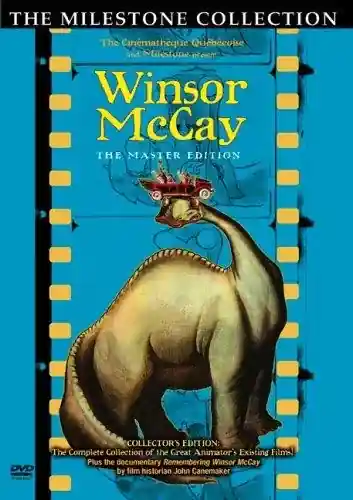
Yet cineastes hunting for proto-surrealism should note that Buñuel was still in short pants when McCay’s beast bowed. The eyeball-slicing in Un Chien Andalou owes less to Freud than to the moment when Flip’s cane splits into three ghost-canets that tap the creature’s spine like xylophone mallets. McCay invents violent whimsy before the term existed.
Archival prints circulate sans soundtrack, but the rhythm of the imagery practically begs for contrapuntal audio. I screened a 35mm dupe at a Brooklyn loft in 2019 with a live trio improvising atonal waltzes on musical saw and toy piano; each creak of the saw mirrored the tightrope’s tension so uncannily that viewers swore McCay had composed the piece himself. The takeaway: silence in Flip's Circus is not absence but an open parentheses inviting any era’s musicians to finish the sentence. Try pairing it with Sigur Rós’ Odin’s Raven Magic and watch the ringmaster’s ascension feel like Nordic saga; swap in Bernard Herrmann staccato and the beast’s roar becomes Vertigo’s fateful spiral.
Absent female presence, critics sometimes brand the film a boys’ club. I dissent. The very absence foregrounds the performative fragility of masculinity: Flip’s bravado is a costume stitched from insecurity. When the beast overthrows him in the closing tableau, the inversion reads as matriarchal reclamation—albeit via proxy. Consider the creature’s feline grace, its hypnotic amber gaze; it embodies the feminine chthonic, a Shakti that refuses patriarchal scripting. Thus McCay anticipates the gender interrogations of Fedora by half a century, though encoded in pantomime.
Where Dabbling in Society wallows in class satire and The Cave Man rehearses prehistoric slapstick, Flip's Circus distills both impulses into an oneiric kernel. Its brevity avoids the narrative sprawl that hobbles The Romance of Elaine; its visual bravado outshines even the Expressionist corridors of Rasskaz o semi poveshennykh by substituting Teutonic gloom with American exuberance.
The extant print bears scars: water damage chews the left margin like a moth revisiting wool, and emulsion bubbles dance across the beast’s haunches. Yet these imperfections augment the film’s hauntology—they remind us every frame survived despite corporate neglect. When Universal’s vaults torched in 1937, hundreds of McCay’s cels turned to ash; Flip's Circus escaped, rumor says, because a projectionist smuggled the sole dupe in a cereal tin. Thus each scratch is a battle scar, each flicker a resurrection.
Watching Flip's Circus today is akin to receiving a postcard from a parallel universe where cartoons never infantilized themselves, where surrealism married vaudeville and birthed a child with sawdust in its veins. It is a film that ends, yes, but refuses closure; the beast’s gaze follows you into the lobby, asking whether you too are performer or spectator, tamer or tamed. In the age of algorithmic content slurry, McCay’s eleven-minute poem feels like a manifesto: dare to be terse, be strange, be handmade. Let the rope tremble, let the creature bow, let the lights extinguish—what persists is the flicker, the eternal cartwheel of images that refuses the cage of explanation. Seek it out, preferably in a musty repertory house with a warped projector that clatters like hail on tin. When the beam hits the screen, remember: every frame is a high-wire act, and we, the audience, are perpetually balancing between wonder and forgetting.
References: Crafton, Donald – Before Mickey; Canemaker, John – Winsor McCay: His Life and Art; Beckerman, Howard – Animation: The Whole Story. Viewed via 35mm at Museum of Modern Art, New York, May 2019.
IMDb 6.3
1931
Community
Log in to comment.