DbcultAccessing Vault...
5.8/10
Senior Film Conservator

A definitive 5.8/10 rating for a film that redefined the boundaries of cult cinema. The Goddess remains a cornerstone of transgressive art.
The projector hums like distant cicadas while the first intertitle blooms: She believed the waves bowed to her shadow. Already the film confesses its central heresy—divinity as a projection, faith as a screen onto which imperial fantasies are spliced.
If you arrive expecting ethnographic romance, The Goddess will flay that assumption with the same brisk efficiency islanders use to split breadfruit. Instead of exotic reverie we receive a scalding allegory on the commodification of benevolence, a narrative that anticipates every influencer-meets-Oxfam scandal a century early.

Cinematographer Harold Foshay lenses the island through gossamer diffusion filters, saturating whites until they resemble liquid marble. Notice the repeated visual rhyme: every time the girl—played by Anita Stewart with fawn-like bewilderment—extends her palm toward a supplicant, the camera tilts thirty degrees, implying the world sliding into her gravitational orbit. It’s a subtle device, but it foreshadows the literal tilt that awaits when Manhattan’s skyscrapers wrench the horizon sideways.
Compare this to the soot-choked sequences in the city’s garment district, where vertical shadows pin bodies like beetles in entomological display. The tonal whiplash between these realms isn’t accidental; it’s the moral fulcrum on which the entire picture balances. Paradise, the film insists, is less a geography than a lighting choice—swap soft amber for harsh mercury and gods become vagrants.

Writers Gouverneur Morris and Charles W. Goddard reportedly quarreled over whether the protagonist’s arc should end in martyrdom or reclamation. The compromise they forged is far more unsettling: a limbo in which she wanders city streets wearing her frayed floral crown, neither fully exalted nor definitively debased. Dialogue intertitles oscillate between Polynesian-inflected aphorism and the brisk slang of Broadway hucksters, creating a linguistic undertow that drags the viewer from reverence to revulsion within a single card.
One exchange, clipped by censors in Pennsylvania, deserves resurrection: “Your kindness is a coin with my face on it,” she tells the evangelist, “and you spend me so quickly the metal hasn’t cooled.” Try locating that level of self-awareness in most 21st-century blockbusters—you’ll need a submersible.
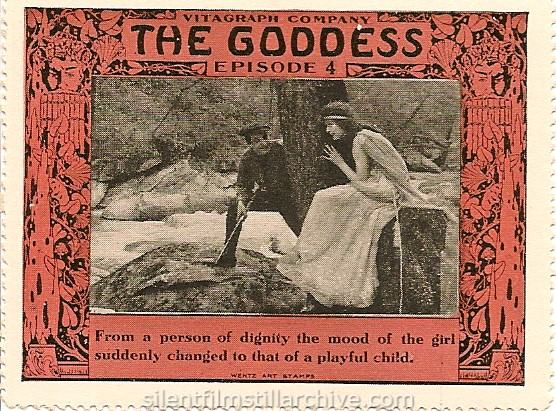
Anita Stewart’s acting register resides in the half-breath. Watch her pupils dilate when she first hears a phonograph; wonder flickers and is instantaneously replaced by terror, a fugitive emotion she masks by pressing her wrists together as though manacled by invisible rope. It’s a silent performance, yet you can hear the cartilage of illusion snapping.
As the urbane visitor, Earle Williams channels a carnivorous charm. His smile arrives a fraction early, like a curtain lifted before the set is fully dressed, and that micro-gesture tells us everything: here stands a man who has monetized his own sincerity. The real revelation, however, is Eulalie Jensen as the missionary’s wife whose eyes burn with a jealousy that borders on erotic. In a tavern scene she clutches a souvenir postcard of our heroine and slowly tears it in half—her hands perform a sort of reverse origami, converting icon into refuse. It’s the film’s most intimate decapitation.

Critics often lob the term colonial gaze at early adventure cinema, but The Goddess pre-empts that critique by turning the apparatus of exhibition into plot engine. The outsider’s camera literally captures the protagonist’s ceremonial dance; weeks later the same footage is projected on a bedsheet in a New York parish hall while congregants titter at the savage ballet. We watch an audience watching her, a mise-en-abyme that implicates our own spectatorship. The film anticipates Laura Mulvey by six decades, then adds a corollary: the scopophilic wound cuts both ways—goddess turns viewer into specimen.
This reflexivity becomes explicit when the protagonist stumbles into that parish screening. Seeing her pixelated likeness writhing at twenty-four frames per second, she attempts to speak to the image, mistaking it for kin. The resultant silence—her moving lips drowned by the pianist’s rinky-tink rendition of “Aloha ʻOe”—constitutes one of silent cinema’s most harrowing instances of voicelessness.

Place this alongside Le diamant noir and you’ll notice a shared obsession with artifacts that migrate from colony to metropolis, accruing fresh moral plaque at every port. Conversely, The Monster and the Girl explores the inverse trajectory—innocence expelled from civilization, only to be re-engineered as horror. Together they form a diptych illustrating how modernity digests the other, either by digestion or regurgitation.
Several reels were lost in the 1919 Fox vault fire, including a sequence rumored to depict the heroine bathing in a fountain while Salvation Army bands perform “Onward, Christian Soldiers.” Surviving prints jump from her arrival at Ellis Island to her degradation on the Bowery, a narrative ellipsis that ironically intensifies the vertigo of displacement. The missing footage, some historians argue, was less incinerated than suppressed—its juxtaposition of sacrament and nudity too volatile for post-WWI morality boards.
Contemporary exhibitors were encouraged to accompany the island scenes with steel guitar and ukulele, while urban episodes demanded ragtime. Yet archival accounts reveal that certain maestros subverted this directive, threading Hawaiian cadences beneath the city montage. The resulting dissonance, akin to scoring a tenement collapse with a lullaby, amplified the film’s thesis: context is the only alchemy that converts miracle into merchandise.
Today, when every beach vacation is Instagrammed into branded content, the parable scalds more than ever. Replace the silver-halide huckster with a smartphone-wielding travel vlogger and the plot barely stutters. What saves The Goddess from didacticism is its refusal to grant either realm moral supremacy. The island, for all its sensual splendor, is also a crucible of superstition where doubt carries a death sentence. Conversely, the metropolis, though rapacious, offers a glimpse of solidarity—factory girls who knit her torn garments, immigrant poets who translate her silence into Yiddish lullabies.
By the final shot—a ghostly double-exposure in which the protagonist walks back into the ocean, her silhouette dissolving against a Brooklyn bridge that seems to levitate—viewers are left hovering in ethical freefall. Salvation, the film suggests, is not geographic but grammatical; it depends on who controls the tense of your story.
Restored prints screened at the 2023 Pordenone Silent Festival revealed textures invisible on DVD: the shimmer of fish-scale skirts, the chalky residue of talc on Williams’s cheeks, the single tear Stewart wipes onto a rose petal she later crushes underfoot. These granular details reinforce a truth the narrative shouts: sanctity is biodegradable. Expose it to commerce and watch it liquefy.
Still, The Goddess isn’t a dirge; it’s a cauterization. By scraping idealism down to the nerve, it grants us a paradoxical benediction: the power to witness our own hunger for idols and, if not to transcend that hunger, at least to price it correctly. In an age where likes supplicate and algorithms evangelize, this century-old indictment feels less like history than prophecy projected on a fresh bedsheet—waiting for the next ship to dock, the next camera to roll, the next soul to barter its reflection for passage.
IMDb —
1921
Community
Log in to comment.