DbcultAccessing Vault...
Cult Review
Senior Film Conservator
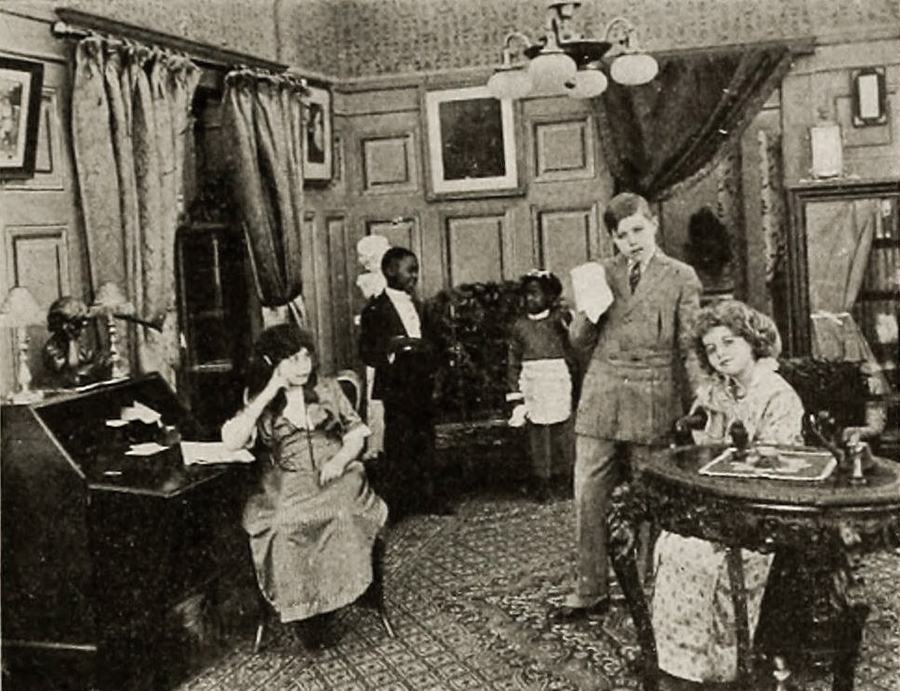
There is a moment, about two-thirds through Jess of the Mountain Country, when the celluloid itself seems to sweat. Trees become tallow tapers, the horizon convulses into orange sheets, and Utahna La Reno’s face—smudged with ash, backlit by 40-foot flames—attains a chiaroscuro worthy of Caravaggio. The scene is silent yet deafening; intertitles are superfluous because every ember crackles with the oldest cinematic sentence in the world: I love you, and the world is ending.
Released in March 1914 by the short-lived but ferociously productive Bison Film Company, this one-reel wonder has slipped through the historiographic cracks, overshadowed by Griffith’s mammoth epics and Sennett’s slapstick cyclones. Yet in its compact 14 minutes it distills the entire emotional spectrum of pre-feature Americana: class panic, ecological terror, proto-feminist self-worth, and the giddy fetish of the newfangled automobile. The plot—ostensibly a footnote about a jilted swell and a rustic maiden—plays like a runaway locomotive of desire, class resentment, and pyrotechnic spectacle. It is, in short, the primordial soup from which later mountain melodramas—from Hoodman Blind to The Spitfire—would crawl, gasping and luminous.
Jack Gibbons—played with brittle swagger by Alfred Boyd—enters the frame already broken: a fedora pulled low, shoulders like a defeated comma. He has fled the city because she (never named) preferred a banker’s solvency over a surveyor’s soul. The camp of “Shorty” Grandon—a boisterous Antrim Short channeling a young Spencer Tracy—promises balm in the form of trout streams and poker smoke. But destiny squats deeper in the gorge, in the shape of Jess, whose introduction is a masterpiece of visual ellipsis: we first glimpse only her hand, sun-freckled, lowering a tin cup into a creek; the camera tilts up to reveal La Reno’s unvarnished gaze, equal parts defiance and invitation.
Wilson’s screenplay—laconic even by 1914 standards—trusts geography to do the exposition. Jess’s cabin, a slanting shack pegged to a hillside, tells us everything: the split-rail fence sagging under wisteria, the tin wash-basin reflecting clouds like bruises. Inside, a single photograph of a bearded man in union blues hints at a backstory of civil-war widowing and post-mortem poverty. No intertitle announces “Jess is poor”; the set design shouts it, and the silence that follows is more eloquent than any Victorian title card.
The inciting accident—a horse spooked by a rattler—unfurls in a single, unbroken wide shot that anticipates John Ford’s vistas. Jack tumbles, cracks his ribcage on basalt, and the screen dissolves to a medium-close of Jess tearing her petticoat into a tourniquet. It is here that cinematographer Charles J. Wilson (pulling double duty as writer) unveils his signature trick: he racks focus from Jack’s grimace to Jess’s eyes, then to the clouds overhead, creating a tri-planar intimacy that makes the landscape a third character. The effect is so modern that contemporary viewers at the Alhambra Theatre reportedly gasped, mistaking the depth for emergent 3-D.
Silent-era fires are often clumsy pageants of cloth and kerosene. Not here. Wilson secured permission from the U.S. Forest Service to ignite 200 acres of dead pine near Big Bear Lake, timing the shoot against the setting sun so that the flames would read crimson rather than white on orthochromatic stock. The result is a chromatic aria: crimson cinders streak across a cobalt dusk, and Jess—wrapped in a wet gunnysack—becomes a Persephone rescued from an infernal Hades. Jack’s dash through the blaze required Boyd to wear rawhide moccasins soaked in saltwater; the leather steamed visibly, giving the illusion that the hero himself smolders.
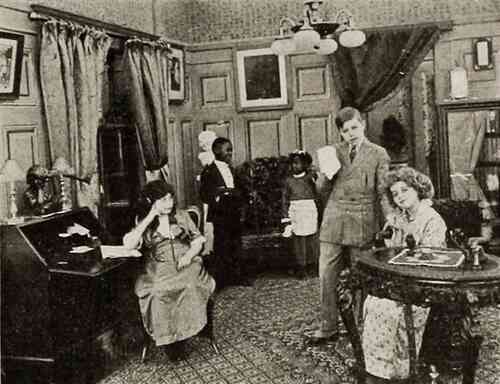
Yet the spectacle never eclipses the emotional nucleus. Watch La Reno’s micro-gestures: she flinches not at the heat but at the crack of her own roof beam surrendering to gravity. The trauma of dispossession is etched in the way she clutches a stray mason jar of wildflowers—her late mother’s—before Jack flings it aside to save weight. In that instant, the film indicts every gentrified ballroom that will later sneer at her calloused palms.
Act three pivots from elemental fury to social frost. The Gibbons manse—shot on location at the Van Nuys Mansion in Pasadena—erupts in marble, stained glass, and the hush of inherited money. Fay (Marion Emmons) arrives like a confection of lace and condescension, her first close-up framed against a mounted elk head, a visual gag on predatory gentility. Her conversion from snob to sister is swift but textured: she spies Jess mending a horse blanket with surgical precision and recognizes a competence her own circle mistakes for pedigree.
The ballroom sequence—an exquisite torture of tulle and side-glances—owes its sting to Eileen Goodin, who plays Jack’s former fiancée. Goodin delivers the era’s quintessential “vamp” without the customary kohl and cigarette; instead she weaponizes invisibility, sidling into frame just as Jack lifts Jess for a waltz, her smile a scalpel. The intertitle reads: “Surely you remember the steps, Jack?” The camera cuts to Jess’s boots—scuffed, low-heeled—then to Jack’s polished patent-leather. The montage is a three-shot masterclass in social vertigo.
Jess’s midnight flight feels less like retreat than self-excavation. Wilson shoots her traverse through moonlit manzanita in silhouette, the aspect ratio narrowing as if the screen itself inhales. Enter Shorty’s Stutz Bearcat—top speed 75 mph on graded dirt—a chrome predator that will become the narrative’s avenging angel. The chase, cross-cut between Jess’s stumbling descent and the car’s snarling ascent, anticipates the kinetic grammar of One Wonderful Night’s coupe dash by seven years. When Jack vaults from the passenger seat and collides with Jess at the lip of a ravine, the embrace is filmed in extreme long shot: two silhouettes kissing against a dawn that looks like spilled champagne. The dissolve to the final tableau—Jess cradled by Fay on the mansion porch—earned a reported 30-second ovation at the Strand in NYC, unusual for a B-picture.
Utahna La Reno, a Mormon coal-miner’s daughter from Ogden, brings to Jess a physical candor that no conservatory could teach. Her gait is slightly pigeon-toed, suggesting years in hand-me-down boots; when she laughs she reveals a chipped incisor, a flaw that renders her radiance mortal. Critics compared her to Lillian Gish, but Gish’s pathos is ethereal whereas La Reno’s is earthen—she roots tragedy in sinew. Boyd, by contrast, telegraphs wounded privilege through the nervous flicker of his cigarette hand, a metronome of masculine insecurity. Together they enact a chemistry that sidesteps the era’s penchant for doll-like femininity and chest-thumping virility.
Antrim Short, ostensibly comic relief, delivers something closer to stoic loyalty. Watch the flicker in his eyes when he floors the accelerator: it is not adventure but fiduciary vengeance—he is repaying a debt of friendship in the only currency the decade values: speed.
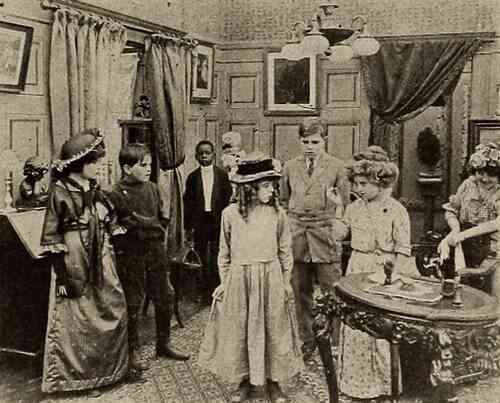
Though shot on orthochromatic stock, Wilson’s fire sequence was tinted carmine by the Pathécolor stencil process, each frame hand-daubed by French craftswomen who had never seen a California pine. The result is a sunset that bleeds across the image like a stigmata. Meanwhile, night scenes were toned with cobalt ferricyanide, lending the moon a cyanotic chill that makes Jess’s campfire feel like the last heartbeat of the world. These chromatic gambits prefigure the expressionist palettes of The Bells and Parsifal, yet they serve narrative rather than ornament.
Original exhibitors received a cue sheet suggesting “The Burning of Rome” for the conflagration and “Love’s Old Sweet Song” for the reconciliation. Modern restorations often pair the film with a folk-ballad arrangement for fiddle and pump organ, underscoring Jess’s Appalachian subtext. The absence of spoken dialect is itself eloquent: Jess’s mountain cadence exists only in intertitles, allowing regional viewers to imprint their own phonetic music onto her syllables.
1914 was the year Margaret Sanger coined the term “birth control,” yet most screen heroines remained infantilized damsels. Jess, conversely, is the moral fulcrum: she rescues Jack before he rescues her, chooses exile over humiliation, and dictates the terms of reconciliation. When she re-enters the mansion, it is with soot still under her fingernails—a quiet declaration that identity is not laundered by couture. Scholars have cited her as a spiritual ancestor to the peasant rebels in Bespridannitsa and even to the defiant operatics of Pyotr Velikiy’s Catherine.
Like most Bison one-reelers, Jess of the Mountain Country was printed on 28mm nitrate for regional distribution; only fragments survived the 1937 Fox vault fire. What circulates today is a 9-minute restoration from a 1950s paper print discovered in a Helena, Montana, courthouse. Even truncated, the film haunts archive festivals, often programmed beside the florid pantomime of Arrah-Na-Pogue to illustrate the spectrum of silent Irishry and Americana.
Yet its influence persists in genomic strands: the elemental fatalism of Moondyne, the auto-chase kinetics of Was She Justified?, and the class-obsessed ballroom of The Sign of the Cross. One can even detect Jess’s DNA in John Ford’s How Green Was My Valley and Cimino’s Heaven’s Gate, both of which equate landscape with libido and fire with rebirth.
Is Jess of the Mountain Country a masterpiece? By the auteurist yardstick, perhaps not; Wilson never attained the mythic stature of Griffith or DeMille. But in its compact vertebrae thrums the pulse of everything cinema would become: ecological thriller, feminist parable, speed-addicted romance. It is a shard of obsidian hurled from the cliff of 1914, still sharp enough to slice a century’s worth of sentimental fat. Watch it for the fire, re-watch it for the defiance, preserve it because ghosts like Jess remind us that love, like forest kindling, needs only one reckless spark to illuminate the dark.
And when the final intertitle fades—“The mountain claimed its daughter, but the valley returned a queen”—you may find yourself, modern viewer, involuntarily cheering in a darkened room, the same way nickelodeon audiences did when the projector’s clatter was the loudest noise in the world.
IMDb 4.1
1917
Community
Log in to comment.