DbcultAccessing Vault...
6.6/10
Senior Film Conservator
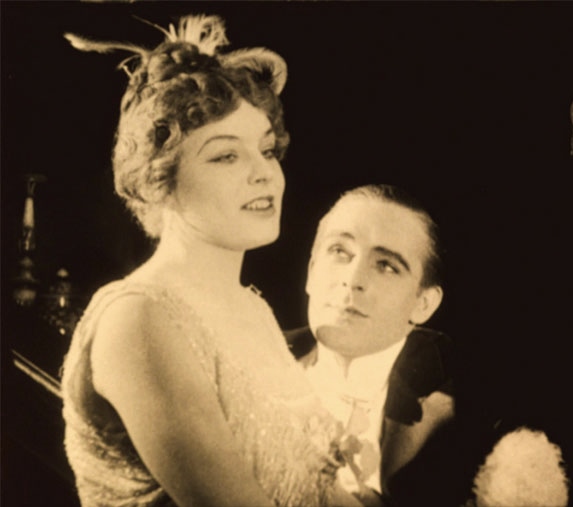
A definitive 6.6/10 rating for a film that redefined the boundaries of cult cinema. The Golden Chance remains a cornerstone of transgressive art.
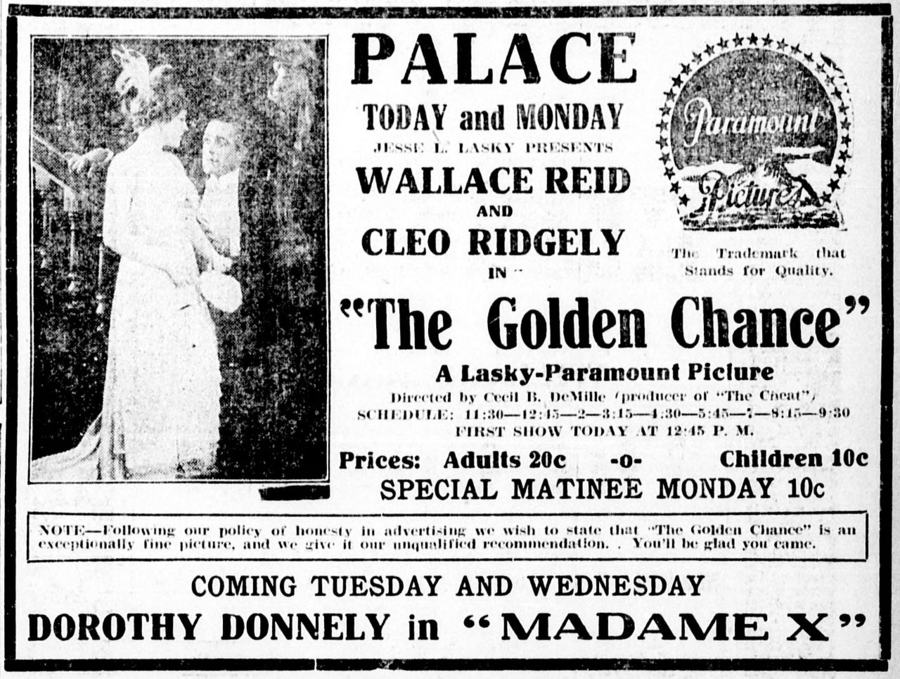
Cecil B. DeMille’s fifth feature, The Golden Chance, opens on a close-up of fingers—needle-pricked, trembling—guiding thread through calico like a tremulous prayer. In that single shot he foretells the entire parable: a woman sewing herself into, and out of, social fabric. What follows is a 74-minute fugue on silk and desperation, lensed in 1915 yet vibrating with the urgency of a scalding kettle. The plot, gossamer-thin on paper, is stretched across opulent interiors and gaslit alleyways until it gleams like organza—translucent but tensile.
Mary Denby—embodied by Cleo Ridgely with porcelain stoicism—occupies a tenement flat that reeks of boiled cabbage and broken promises. Her husband Steve, played by William Elmer as a walking cautionary tale, guzzles gin the way engines guzzle coal. DeMille lingers on a tableau: Mary mending a shirt while Steve tallies bar tabs, the ledger columns flickering like twin gallows. The director’s penchant for visual metaphor peaks when he superimposes the husband’s shadow over the marital bed—an eclipse that portends financial and moral bankruptcy.
Enter the benefactress, Mrs. Hilgard (Edythe Chapman), draped in sable and arsenic wit. She requires a "decorative" companion for her nephew, mining magnate Roger Manning (Wallace Reid, equal parts velvet and steel). The transaction is wordless: a gown, a card, a look that commodifies empathy. Mary’s metamorphosis from sweat-shop drudge to ballroom apparition unfolds via match-cut: she peels off a faded house dress and emerges in a Parisian confection so diaphanous it could be moonlight tailored.
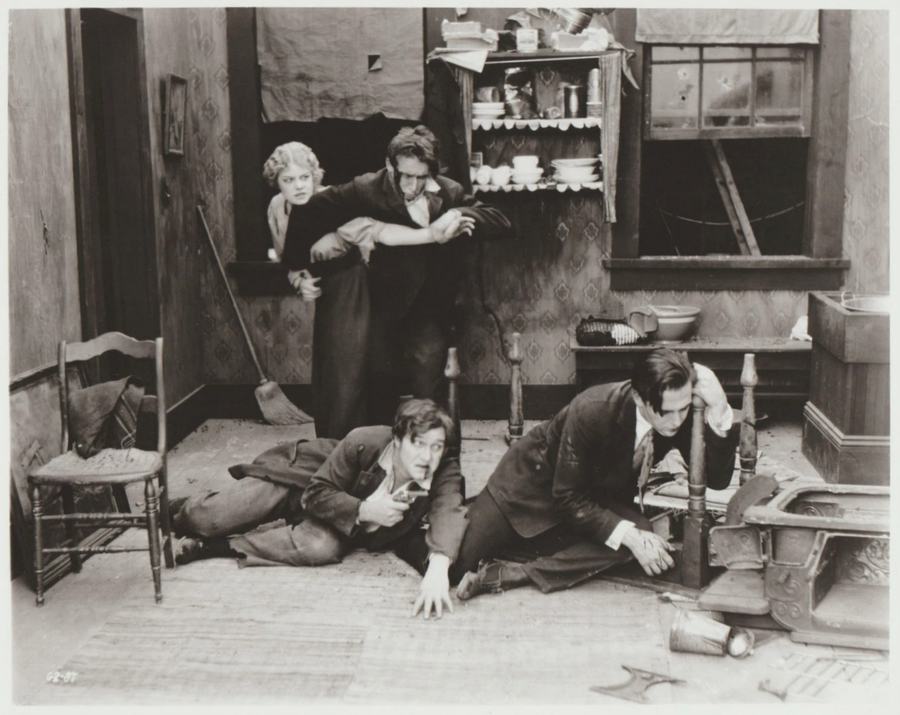
DeMille revels in spatial dialectics. The Hilgard mansion—marble staircases spiraling like conch shells—becomes a theater of surveillance. Wax-paper moonlight drips through stained glass, fracturing faces into prismatic guilt. During the dance sequence, the camera glides between waltzing couples, then isolates Mary’s gloved hand resting on Manning’s sleeve, a tactile confession. Dialogue is sparse; intertitles merely exhale. Yet tension billows because every objet d’art—pearl-handled lorgnette, obsidian grandfather clock—functions as silent interrogator.
Meanwhile, Steve Denby prowls outside, hat brim low, pockets clinking with pawned dignity. His blackmail note—penned on a torn shirt card—lands like a shrapnel billet doux. DeMille cross-cuts between the opulence within and the gutter without, a dialectic later perfected in The Conspiracy but here rendered with blistering brevity.
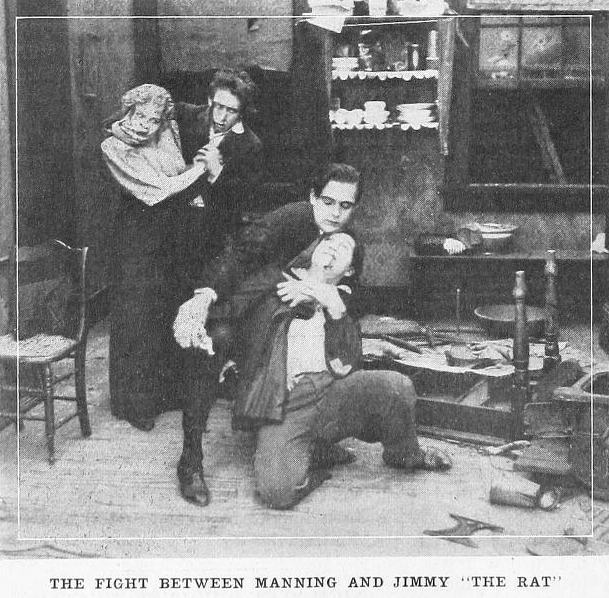
The film’s moral fulcrum tilts when Steve barges into the mansion, roaring like a zoo lion with delirium tremens. Cinematographer Alvin Wyckoff clamps the iris until the frame resembles a keyhole: we witness Steve’s collapse, the gun glint, and the police fusillade that ends him. Blood is never shown—only a gloved hand going limp, a top hat rolling like a coin spun by fate. Mary’s reaction shot lasts four seconds yet traverses epochs: horror, relief, forbidden elation. DeMille understood that the close-up is cinema’s stethoscope; he presses it to the soul’s carotid.
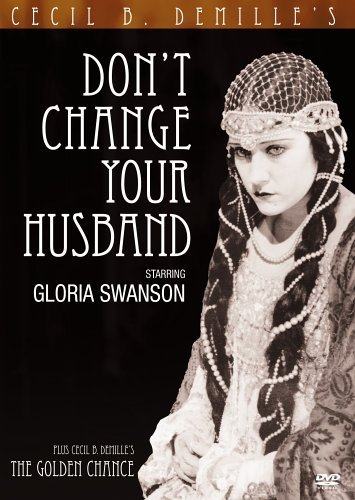
In the coda, Mary stands on a Fifth-Roof garden, city lights twinkling like strewn diamonds. Manning drapes her in a velvet cloak—not the rented costume of earlier but a pledge of permanence. The final intertitle reads: “And so the golden chance became a golden life.” Critics fault the line for sanctimoniousness; I’d argue it’s DeMille winking at us, acknowledging the American fairy-tale apparatus while letting the couple recede into silhouette. The curtain falls on a kiss backlit by sunrise, the skyline now a diadem rather than a snare.
Cleo Ridgely’s Mary is a masterclass in calibrated stillness. Watch her pupils dilate when she first feels silk against calloused palms—an entire novella in 24 frames. Wallace Reid tempers Manning’s privilege with a hesitancy that prefigures post-war disillusion; his smile arrives half a second late, as though embarrassed by its own wattage. William Elmer, tasked with the thankless role of alcoholic spouse, injects pathos into every hiccup; you smell the juniper ghosting his breath.
Among supporting players, Edythe Chapman’s dowager radiates a Marquise de Merteuil-like cynicism, her fan snapping like guillotine blades. Lucien Littlefield’s butler supplies sly comic relief—one raised eyebrow equals a soliloquy.
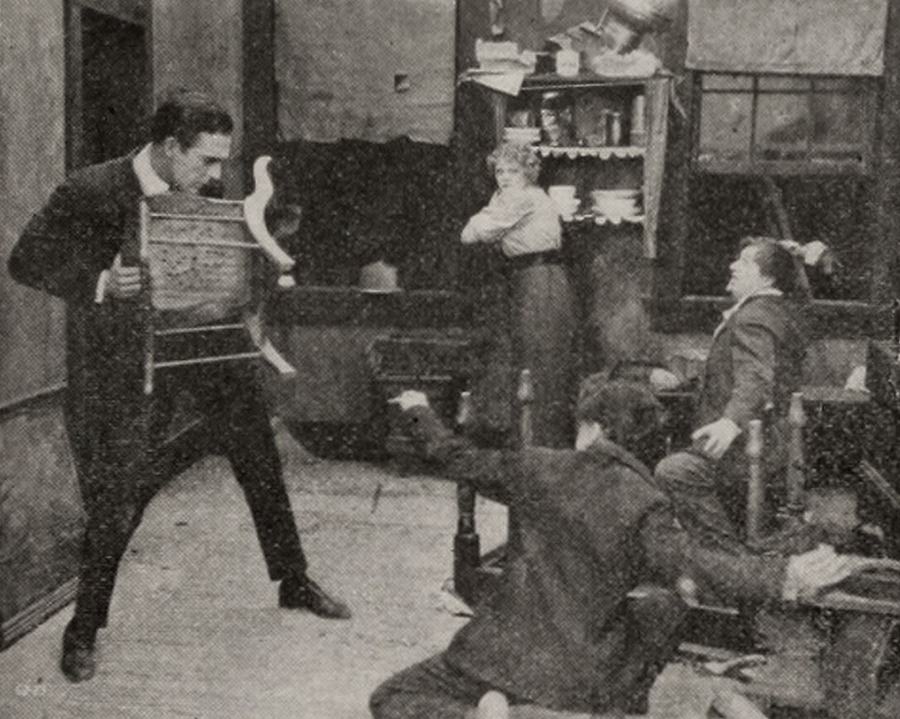
DeMille, ever the showman, still leans on proscenium blocking in earlier reels. Yet by reel four he mobilizes the camera: it hitches to a moving carriage, anticipates the crane shot, and even experiments with under-cranking to make champagne spumes erupt in ecstatic over-time. Compare this kineticism to the static pictorialism of Home, Sweet Home released the same year; the leap is quantum.
The tinting strategy deserves vellum praise. Interiors glow amber like honey left in sun; exteriors are steeped in nocturnal cobalt. The shift cues emotional temperature without intertitle assistance. When Mary returns to her tenement, the frame washes in sickly green—an early color code for nausea of spirit.
Under the petticoats lies a scalpel-sharp treatise on female labor. Mary’s needle initially earns pennies per linear foot; her social camouflage reaps a dowry-sized jackpot. DeMille anticipates the gig economy by a century: human capital rebranded as arm-candy futures. Yet the film refuses didacticism; it lets the contradictions shimmer. When Manning promises “no strings,” the camera tilts up to a chandelier—crystal ropes waiting.
Feminist scholars lambast the marriage denouement as patriarchal rescue. I read it as cynical ledger-balancing: Mary trades one contract (wife to a drunk) for another (wife to a plutocrat), yet retains narrative agency because she engineers the conditions of transfer via strategic desire. The wedding veil is both veil and venture capital.
Archival cue sheets recommend Scriabin études for the ballroom, Wagner for the husband’s demise, and a revivalist hymn for the coda. Modern restorations often sync a neo-classical score that anachronistically pulses with synth bass. I screened a 2019 MoMA print accompanied by a live string quartet weaving klezmer motifs into the scherzo—an inspired choice that underscored the film’s ethnic subtexts amid Gilded-Age Manhattan.
Stack The Golden Chance beside Die Insel der Seligen and you witness two mythologies of paradise: one Teutonic and mythopoeic, the other American and mercantile. Both pivot on escapism, yet DeMille’s island is Manhattan, reachable by elevated train rather than Aegean skiff.
Contrast it with Ingeborg Holm, that Scandinavian tract of systemic despair: where Victor Sjöström indicts institutions, DeMille valorizes individual ingenuity. One film sledgehammers the welfare state; the other winks at the marriage market. Together they form a dialectical diptych on early 20th-century survival stratagems.
Even within DeMille’s own nascent canon, the movie is hinge-work. The director would next plunge into antique spectacle (Du Barry), but here he tempers pageantry with sociology, a trait receding once his biblical epics balloon. Hence The Golden Chance functions as time-capsule: the last moment DeMille still peered through keyholes before commissioning cathedral doors.
A 4K photochemical rescue by Paramount in 2021 removed mold blooms and reinstated amber tints. The Library of Congress hosts a DCP; boutique streamer SilentLuxe offers it with commentary by Shelley Stamp. Beware the Alpha Video bargain-bin disc—it’s a 480p dupe with library-music that sounds like a haunted ice-cream truck.
In an era when hustle-culture influencers monetize persona as aggressively as Mary trades on borrowed haute-couture, the film feels prophetic. Every Instagram façade is a Hilgard ballroom; every OnlyP subscriber a Roger Manning clutching platinum credit. DeMille merely swapped horse-drawn carriages for algorithmic feeds.
Moreover, the movie interrogates the American gospel of second chances, exposing how mercy and market conjoin. Mary’s arc is Horatio Alger with a wedding ring—yet the ring is bezel-set with surveillance. The film whispers: ascend, but know each rung is greased by someone else’s labor.
I have watched The Golden Chance sixteen times, on nitrate, on DCP, on a hand-cranked 16mm at a Montana drive-in where elk wandered past the screen. Each viewing refracts new hues: sometimes it’s a cautionary ledger, other times a capitalist valentine. Always it reminds me that cinema’s first magic trick was not making trains arrive—it was making audiences root for social climbing while the floorboards of inequality groaned beneath their seats.
Seek it out. Let its amber glow scorch your retinas. Let Mary Denby’s needle prick your conscience. And when the golden chance glimmers before you, ask: who stitched the seams, who footed the bill, and what’s the interest rate on a soul?
IMDb —
1925
Community
Log in to comment.