DbcultAccessing Vault...
Cult Review
Senior Film Conservator
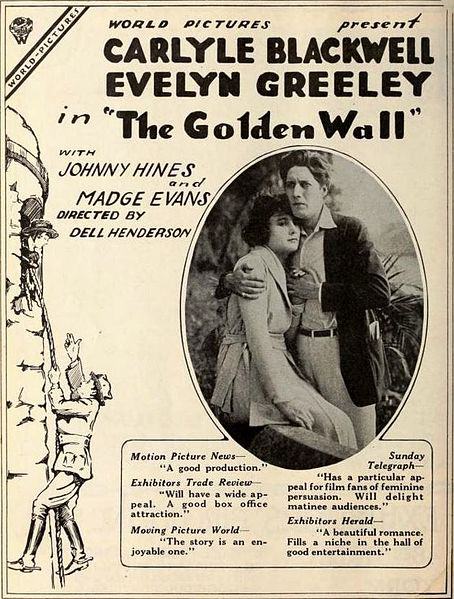
Imagine, if you will, a canvas where ruin and riches share the same brittle stroke—Clara Beranger’s screenplay for The Golden Wall does precisely that, draping early-1920s America in the moth-eaten velvet of European nobility. Jack Drumier’s Charles arrives not as conquering hero but as walking insolvency, a titled ghost haunting the corridors of capital. The film’s first act feels like a Whistler nocturne: muted, tremulous, yet pierced by sudden flares of electric chandelier light that promise everything and guarantee nothing.
Director William C. deMille (yes, Cecil’s elder, subtler brother) stages New York drawing rooms like surgical theaters—every glance a scalpel, every fan flick a stitch in the social hide. Florence Coventry’s Marian enters in a gown the color of chilled champagne; its beading catches the glow of gas lamps and scatters it like bullish laughter across the parquet. Watch her fingertips when Charles bows—half curtsy, half retreat—economy of gesture that speaks volumes louder than any title card.
Silent-era connoisseurs will recall The Car of Chance and its roulette-wheel fatalism; here the gamble is subtler—matrimony as leveraged buyout. Beranger weaponizes irony: the American heiress suspects the foreign noble of fortune-hunting while she herself is auctioned to the highest denominated bidder. The screenplay anticipates the acerbic marital auctions in Hedda Gabler, yet coats the pill with a sheen of dime-novel adventure.
Act two detonates inside that riverfront tower—stone womb, mildewed keep, depository of municipal archives nobody wants. Cinematographer L. William O’Connell chisels light through broken shutters so that dust motes resemble gold filings swirling in a prospector’s pan. Imprisonment becomes courtship: Marian’s fear is palpable, yet her pupils dilate not merely at peril but at Charles’s reckless gallantry. He pledges parity—an impossible vow in 1921, when gendered purse-strings were corset-tight. The escape sequence, achieved with a hemp rope and a stunt double glimpsed only in silhouette, still raises heartbeats a century on.
Cut to Wall Street, ticker tape, cigar smoke curling like satanic incense. Charles’s covert investment in Frank Lathrop’s dubious venture feels lifted from yesterday’s Reddit thread on meme stocks. Johnny Hines supplies comic buoyancy as Frank, a man whose moral compass spins like a roulette wheel yet whose boyish effrondery is infective. When the profits avalanche, deMille overlays dollar-sign animations on the negative—an expressionist wink that predates meme GIFs by a hundred years.
Rudolph Miller, essayed with oleaginous perfection by George MacQuarrie, embodies the film’s thesis on capital as moral anesthesia. His seduction of a chorus girl unfolds in a supper club where jazz bleats through a brass horn, the camera gliding past tables like a voyeuristic eel. Marian’s discovery—via a torn theater program and lipstick on a monogrammed hanky—lands harder than any modern exposé. Notice how deMille withholds a reaction close-up; instead we get Marian’s gloved hand crushing the program, knuckles whitening, paper writhing like a sacrament betrayed.
The final reel strips away artifice: dawn over the Hudson, long shadows, two silhouettes meeting on a pier. Marian no longer flaunts the rigid corseted silhouette of early acts; her coat hangs open, hair unstrung, the visual shorthand for vulnerability. Charles offers no fortune, only future. The golden wall—an offhand phrase in an earlier title card—has dissolved into mere pigment, a mirage exposed by sunrise. Their kiss, backlit so their profiles merge into one molten outline, feels less like closure than aperture.
Performances? Drumier carries himself with the languid erectness of a man whose spine was forged in drawing rooms but now bends toward survival. His eyes telegraph calculation yet never cruelty; you believe both the gallant oath and the cunning hustle. Coventry, for her part, navigates from suspicion to self-reliance without the histrionic contortions some silent divas favored. Watch her in the tower scene: she trembles, yes, but her chin juts forward, an understated semaphore of resolve.
Supporting players sparkle. Kate Lester, as the Countess d’Este, exudes continental fatigue in every languid cigarette flick, a woman trading introductions like poker chips. Carlyle Blackwell’s cameo as a bemused stockbroker lasts perhaps forty seconds, yet his raised eyebrow could headline a morality play. Even the child actor Madge Evans, playing Marian’s kid sister, earns a laugh by mimicking adult curtseys with rag-doll earnestness.
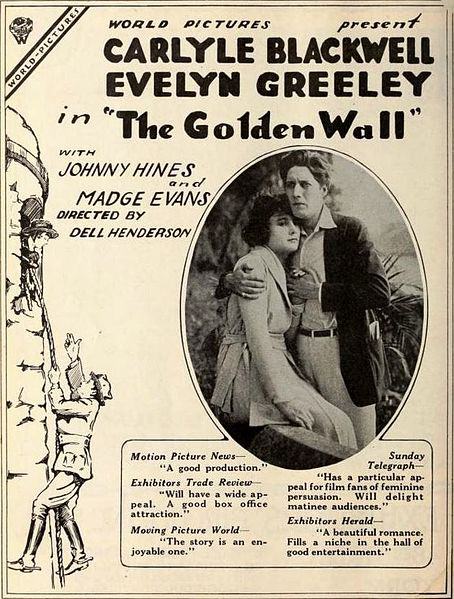
Technically, the film heralds transition. Interior sets still bear the carpentered grandeur of theatrical tradition, but location footage—the barge, the pier, the vertiginous ledge—ushers in a grittier authenticity. The tinting strategy deserves mention: amber for daytime opulence, cyan for the tower’s nocturnal dread, rose for the denouement’s tentative optimism. Restoration prints (Kino Lorber, 2019) preserve these hues without the sickly pastel wash that mars many silents.
Comparative lenses help. Where The Monk and the Woman moralizes through clerical guilt, The Golden Wall secularizes sin into market volatility. Both films obsess over thresholds—stone cloisters vs. iron vaults—yet deMille’s allegiance is to the ledger, not the altar. Likewise, By Hook or Crook celebrates the con as carnival; here the swindle is merely prologue to emotional liquidity.
Flaws? A modern viewer may side-eye the deus-ex-machina windfall that equalizes Charles and Marian. Yet within the film’s moral algebra, inherited cash is tainted; only freshly minted risk capital purifies. The resolution thus dodges the trap of patrician restoration, landing instead on meritocratic fantasy—admittedly no less implausible, but ideologically consonant with Jazz Age optimism.
Score, for those who screen it with live accompaniment: I favor a piano trio weaving Debussy arabesques under the tower sequence, shifting to Gershwin-esque syncopation during the brokerage montage. The lovers’ final stroll begs for a muted trumpet quoting “Ain’t She Sweet,” irony intact.
Legacy? The picture grossed a respectable if not stratospheric $300,000 upon release—Variety called it “silk-stocking fare with a heartbeat.” Today it survives only in a 35mm print at MoMA and a 16mm educator’s dupe unearthed in a Montana barn. Scholars cite it as proto-screwball: class friction, comic imprisonment, financial shenanigans, ultimate marital parity. One could map a straight line from Charles’s tower vow to the colossal debtors’ prison that is Lovely Mary’s third-act bankruptcy.
Feminist readings enrich: Marian’s arc is not surrender but renegotiation of contract. She enters chattel-like, exits partner—a trajectory prefiguring the seismic shifts post-19th-Amendment. Note the absence of paternal deus; Lathrop père, all boom-and-bust bluster, recedes once his speculative empire steadies, leaving daughter to author her own merger.
Cinephiles hunting Easter eggs should freeze-frame the brokerage blackboard: scrawled stock symbols include LULU and KODA, playful anachronisms the art department sneaked in. Likewise, a lobby poster for The Heart of a Police Officer peeks from a newsstand, an in-universe nod from studio sibling Paramount.
My personal ritual: revisit the tower escape every January 1st, a reminder that flimsy promises, if leavened by nerve, can haul one across the chasm between who we were and who we dare to be. The spectacle never feels antique; it vibrates with the same caffeinated dread that accompanies checking one’s portfolio after a market swing. The golden wall, after all, is less a relic than a recurring mirage—each era merely mints new bricks.
Recommendation? Stream the Kino restoration, volume cranked so the piano hammers feel like ticker-taps. Invite friends who swear they “can’t do silents.” Watch them lean forward when Charles dangles from that tapestry, knuckles whitening in synchrony with Marian’s crushed theater program. Then raise a glass—champagne if you’re flush, cider if you’re not—to love that insists on parity, to films that still vault walls, golden or otherwise.
IMDb 6.8
1925
Community
Log in to comment.