DbcultAccessing Vault...
Cult Review
Senior Film Conservator
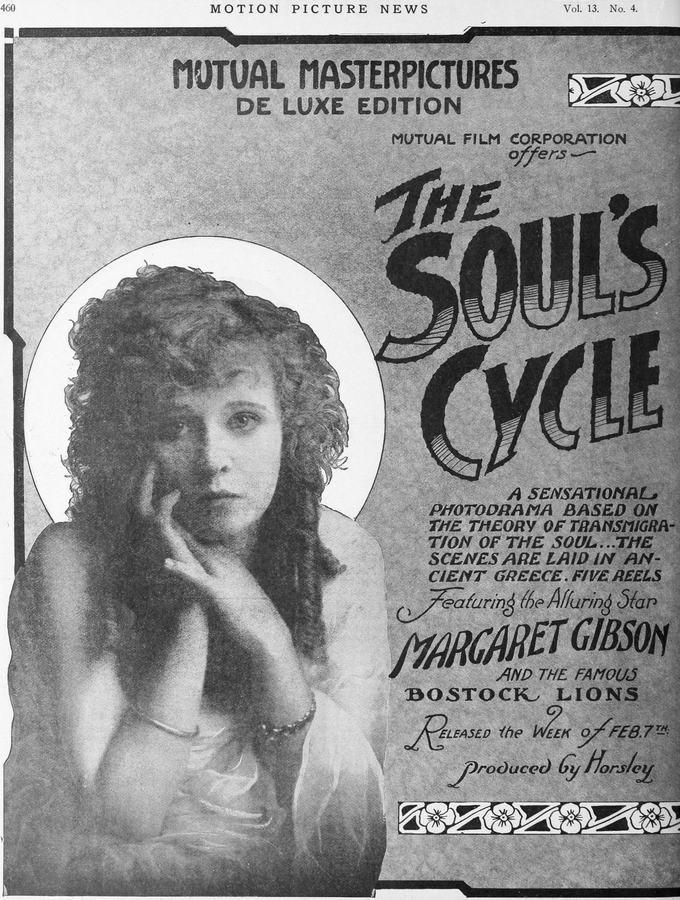
A Transcendent Odyssey: Unpacking the Karmic Threads of 'The Soul's Cycle'
From the very first flickering frames, The Soul's Cycle presents itself not merely as a cinematic narrative, but as a profound philosophical treatise rendered in light and shadow. It delves headfirst into the ancient, enigmatic doctrines of reincarnation and the transmigration of souls, positing a universe governed by an immutable, almost sentient, system of karmic justice. This isn't just a story; it's an ambitious exploration of spiritual debt and redemption, a sprawling epic that dares to connect disparate eras through the persistent echoes of human folly and enduring affection. The film's premise, bold and unyielding, suggests that the soul, in its quest for ultimate perfection, must traverse myriad existences, confronting and rectifying past transgressions, even if that journey plunges it into the most primal forms of being. It's a testament to the power of storytelling to grapple with concepts far grander than mere mortal concerns, inviting its audience to ponder the very fabric of existence and the unseen threads that bind us all across time.
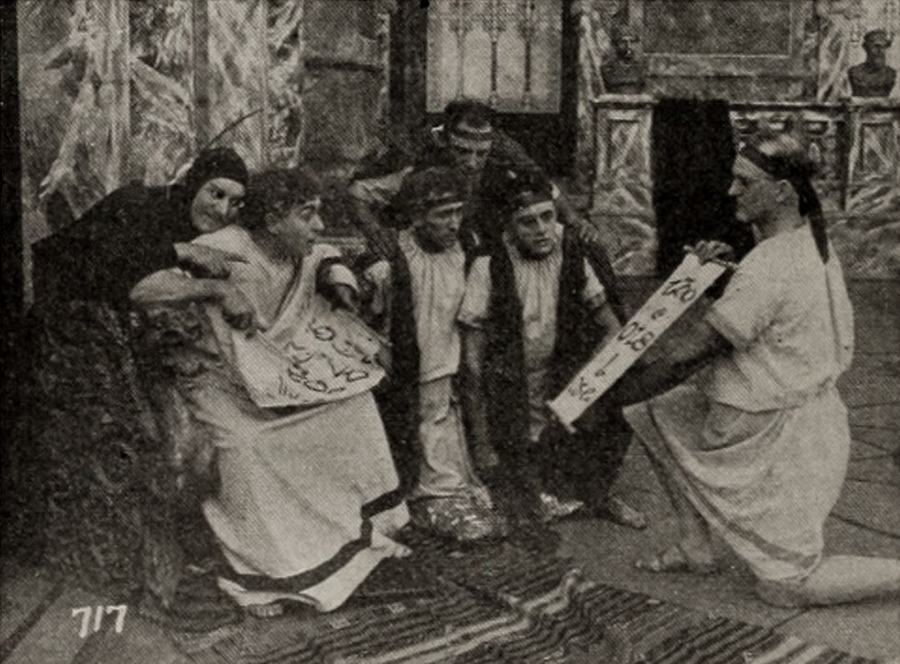
Our odyssey commences in the sun-drenched, marble-clad world of ancient Greece, a realm where honor and ambition often clashed with the tender stirrings of the heart. Here, we encounter Theron, portrayed with a fascinating blend of gravitas and burgeoning desperation by George Clair. Theron is a venerable Senator, a man to whom the accolades of society have long been bestowed, yet whose inner life remains a desolate landscape devoid of genuine love. His gaze falls upon Nadia, the vibrant, innocent daughter of a Greek nobleman, a character brought to life with captivating naiveté by Patricia Palmer. Nadia embodies a purity that ignites a fierce, possessive passion within Theron, a desire so potent it eclipses his reason and honor. This unrequited adoration swiftly curdles into a venomous brew of hatred and revenge when Nadia, with the unerring instinct of youth, bestows her affections upon the poetic Lucian, a role imbued with youthful idealism by Roy Watson. The initial scenes beautifully juxtapose the serene beauty of the Grecian landscape with the tumultuous emotional currents simmering beneath the surface, a stark reminder that even in an age of supposed enlightenment, the basest human emotions can hold sway.
The narrative tightens its grip as Nadia's father, a figure of cynical ambition played by George Stanley, aligns himself with Theron. This unholy alliance, driven by a lust for power and social standing, seeks to extinguish the burgeoning flame of youthful love, deeming it an impediment to their grander designs. Yet, as the old adage reminds us, "Love laughs at locksmiths," and Nadia and Lucian, fueled by an indomitable spirit, defy their oppressors, choosing elopement over a life of subjugation. Their audacious act, however, only serves to fan the inferno of Theron's wounded pride and vengeful fury. In a scene of breathtaking, chilling brutality, Theron unleashes the "dogs of hatred," orchestrating the capture of the young lovers. They are dragged by his slaves to the precipice of a burning crater, a literal hellmouth, into which Theron, in a moment of unparalleled malice, casts them. This act, a profound defilement of divine law and a brazen assault on the very essence of life and love, sets in motion the inexorable wheels of cosmic justice. The unseen arbiter of souls, a silent but omnipotent force, condemns Theron to a fate both poetic and agonizing: his soul is compelled to enter the body of a lion, destined to roam the earth, a beast of the wild, until he can redeem his monstrous sin by saving youth and love, just as he had so cruelly extinguished them. It's a powerful, almost biblical, depiction of consequence, echoing ancient myths of transformation and penance.
The film then executes a masterful temporal leap, propelling us a century forward into a dramatically different landscape – the bustling, burgeoning metropolis of America, specifically the cutthroat world of Wall Street. This transition is handled with remarkable fluidity, maintaining thematic continuity despite the radical shift in setting and societal norms. Here, the souls of Nadia and Lucian are reincarnated, their essences reborn into a new era, yet still inexorably drawn to one another. Nadia, now the lovely young daughter of an American millionaire, retains an innate grace and an almost ethereal sensitivity, while Lucian's soul inhabits the form of a shrewd young broker, navigating the perilous currents of financial speculation. The casting choice of Patricia Palmer and Roy Watson in these modern roles reinforces the cyclical nature of their bond, creating an immediate, resonant familiarity for the audience. The profound sense of déjà vu, the feeling of "living over a dream of some olden time," is palpable, a testament to the enduring power of their connection.
Crucially, the modern Lucian, a man of adventure and refined taste, possesses a magnificent lion, a trophy from his African travels, which he houses within his opulent mansion. This majestic beast is no mere pet; it is the silent, brooding vessel for Theron's condemned soul, a living, breathing symbol of his protracted penance. The lion, with its regal bearing and simmering power, becomes a central, almost sentient, character, its presence imbuing every scene with a subtle tension and foreboding. As the reincarnated lovers meet and their destinies intertwine once more, culminating in their marriage, the narrative introduces a new antagonist, a rival broker, played with insidious charm by George Stanley. This character, much like Nadia's father in the Grecian epoch, succumbs to the corroding influence of hatred and envy, setting about to ruin the young broker, mirroring the ancient machinations that sought to destroy Lucian. The echoes are undeniable, suggesting that while forms may change, the fundamental struggles of human nature persist across the ages. This parallel structure is one of the film's most compelling strengths, providing a rich tapestry of recurring motifs and emotional resonance.
The tension escalates as the financial world threatens to engulf the young couple. It is at this critical juncture that the profound influence of the magnificent beast becomes unmistakably clear. The young wife, Nadia, develops an uncanny connection with the lion, a bond that transcends mere animal affection. In a sequence of striking visual and emotional impact, she experiences a profound, premonitory vision – a terrifying abyss, a chasm of impending ruin. This vision is not merely a figment of her imagination; it is the unseen message, the desperate plea of Theron's spirit, speaking through the lion. He, the ancient sinner, is now compelled to save the very love he once destroyed. Persuaded by this inexplicable warning, Nadia implores her husband to alter a crucial stock order, an act that ultimately safeguards their fortune and averts financial catastrophe. This moment is a brilliant narrative pivot, demonstrating the direct intervention of the karmic cycle, a tangible manifestation of Theron's long-deferred redemption beginning to take shape. It brings to mind the spiritual quests and interventions seen in films like The Spirit of the Poppy, where unseen forces guide mortal choices, or even the moral quandaries explored in The Cup of Life, where choices have profound, lasting consequences.
The climax of The Soul's Cycle is a masterclass in escalating suspense and ultimate catharsis. The rival broker, blinded by his avarice and convinced of his imminent triumph over his "helpless victim," boldly confronts the young wife. His cruel pronouncements, designed to shatter her spirit and announce her husband's ruin, are met with the swift, righteous indignation of the returning husband. A heated exchange ensues, culminating in the husband chastising the villain for his unforgivable insult to his wife's honor. Humiliated and enraged, the rival retreats, but his malice is far from spent. A hideous, final act of revenge takes root in his mind as he enters the room where the lion is caged. In a moment of pure, unadulterated villainy, he releases the magnificent beast, fully intending for it to wreak havoc upon the young couple, to complete the destruction he could not achieve through financial means.
Yet, fate, or rather, the intricate machinery of cosmic justice, has a different design. Instead of turning its primal fury upon the innocent lovers, the lion, under the unseen guidance of Theron's spirit, seems to elect itself their protector. In a breathtaking display of controlled power and ancient purpose, the beast responds to the young wife's command, leaving the room where the couple stands unharmed. Its true target is the source of modern evil, the rival. The lion returns to the other room and, in a swift, decisive act of primal retribution, kills the villain. This moment is profoundly significant: it is the culmination of centuries of penance, the ultimate act of atonement for Theron's ancient sin. By saving youth and love, even as he once destroyed them, his karmic debt is finally settled. The spirit, we are told, rises for a moment triumphant, a fleeting glimpse of liberation after an eternity of suffering. This scene resonates deeply with themes of justice and redemption, reminiscent of narratives in Forgiven; or, the Jack of Diamonds, where past wrongs are ultimately addressed, albeit through different means.
Theodosia Harris's screenplay for The Soul's Cycle is a remarkably ambitious and intricate piece of writing. It deftly navigates the complexities of its dual timelines, ensuring that the philosophical underpinnings remain consistently clear without ever feeling didactic. The character arcs, particularly that of Theron/the lion, are compellingly drawn, showcasing a profound understanding of human (and spiritual) transformation. The dialogue, though perhaps reflecting the sensibilities of its era, serves to advance the plot and deepen character motivations with precision. The pacing is deliberate, allowing the grandeur of the Grecian tragedy to unfold with appropriate weight before accelerating into the more dynamic, almost frenetic, rhythm of the modern Wall Street drama. It's a testament to Harris's vision that such a complex narrative, bridging millennia and disparate cultural landscapes, feels cohesive and emotionally resonant. The film's ability to maintain a consistent thematic thread through such vast changes is commendable, making it stand out among its contemporaries.
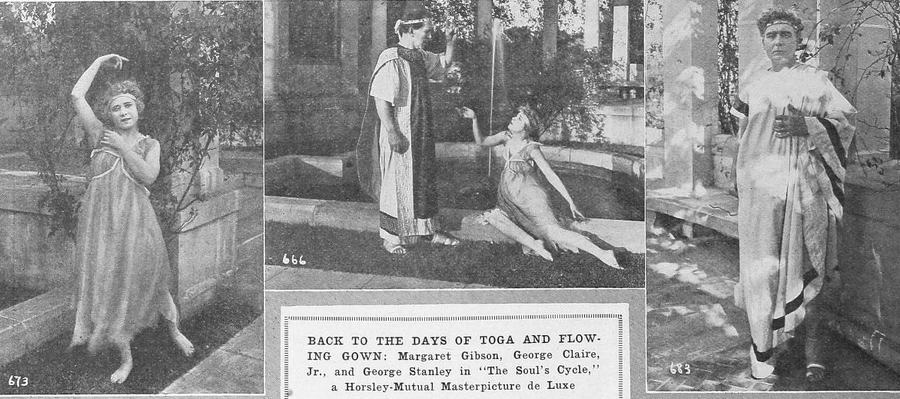
Visually, one can imagine The Soul's Cycle being a spectacle of its time. The Grecian scenes would have demanded grand sets and elaborate costumes, evoking a sense of ancient majesty and tragic splendor. The contrast with the modern settings—the opulent mansion, the bustling streets of New York, perhaps even a glimpse of the frantic energy of the stock exchange—would have been striking. The cinematography would have needed to capture both the sweeping vistas of the ancient world and the intimate emotional turmoil of its characters, as well as the raw power of the lion. The use of symbolism, particularly with the crater and the lion itself, is rich and intentional, adding layers of meaning to every frame. The visual storytelling would have been paramount in conveying the transmigration of souls and the invisible forces at play.
The performances are central to grounding such a fantastical premise. George Clair, in his dual role, would have had the immense task of portraying both the embittered, prideful Theron and the modern man wrestling with unseen influences. His ability to convey the ancient spirit's struggle for redemption through subtle gestures and expressions, even when embodied as a human, would be crucial. Patricia Palmer brings a luminous quality to Nadia, both in her Grecian innocence and her modern-day intuition, making her a compelling emotional anchor. Roy Watson’s Lucian provides the steadfast, loving counterpoint to the forces of hatred. The antagonist roles, handled by George Stanley, are vital in providing the recurring challenge that drives the karmic cycle forward. These actors, under the direction of the filmmakers, would have needed to imbue their characters with a depth that transcends mere plot points, making their spiritual journeys believable and impactful. The ensemble cast works together to weave a narrative tapestry that feels both epic and intimately human.
What truly elevates The Soul's Cycle beyond a simple dramatic offering is its unwavering commitment to its central philosophical tenet: the endless cycle of justice. Even after Theron's spirit achieves its momentary triumph, the film sagely reminds us that "the endless cycle of justice goes on and the modern man must work out his destiny even as has the ancient." This profound concluding thought prevents the narrative from devolving into a simplistic 'happily ever after,' instead imbuing it with a timeless, universal resonance. It suggests that while individual karmic debts may be settled, the fundamental human condition—the struggle between good and evil, love and hatred, ambition and altruism—persists, requiring each soul, in every epoch, to confront its own choices and forge its own destiny. This nuanced understanding of destiny and free will makes the film remarkably sophisticated for its time, prompting audiences to reflect on their own lives and the unseen forces that might be shaping them. It's a stark contrast to films that offer easy resolutions, embracing instead a more complex and enduring vision of human existence.
In comparison to other films of its era, The Soul's Cycle stands as a bold outlier. While many films focused on more immediate, tangible dramas, this picture dared to tackle the metaphysical. One might draw parallels to the adventurous spirit and quest for meaning found in Il sogno di Don Chisciotte, though The Soul's Cycle grounds its fantastical elements in a more rigorous philosophical framework. The urban intensity of the Wall Street scenes might evoke the hustle and moral ambiguities explored in films like The Lure of New York, but here, the city becomes merely a backdrop for a much older, deeper drama. The theme of love battling against oppressive forces is a timeless one, seen in simpler, perhaps more rustic forms in films such as Fanchon, the Cricket, yet The Soul's Cycle elevates this struggle to a cosmic scale. Its intricate plotting and thematic ambition position it as a significant work, pushing the boundaries of what cinema could explore.
Ultimately, The Soul's Cycle is more than just a captivating story of love, revenge, and redemption; it is an enduring meditation on the very nature of existence. It proposes that our present actions are not isolated events but ripples in an infinite ocean of time, impacting not only our immediate reality but potentially shaping our destinies across countless lifetimes. The film's intricate plot, its compelling characters, and its profound philosophical undercurrents combine to create a cinematic experience that is both intellectually stimulating and emotionally resonant. It challenges viewers to consider the unseen forces that govern the universe and the enduring power of our choices. For those seeking a film that transcends mere entertainment to offer a glimpse into the grander tapestry of cosmic law, The Soul's Cycle remains a singular and truly unforgettable achievement, a timeless testament to the relentless, beautiful, and often brutal journey of the soul towards its ultimate perfection. It leaves an indelible mark, prompting introspection long after the final credits roll, a true cinematic triumph in its exploration of the eternal.
IMDb —
1924
Community
Log in to comment.