DbcultAccessing Vault...
5.7/10
Senior Film Conservator
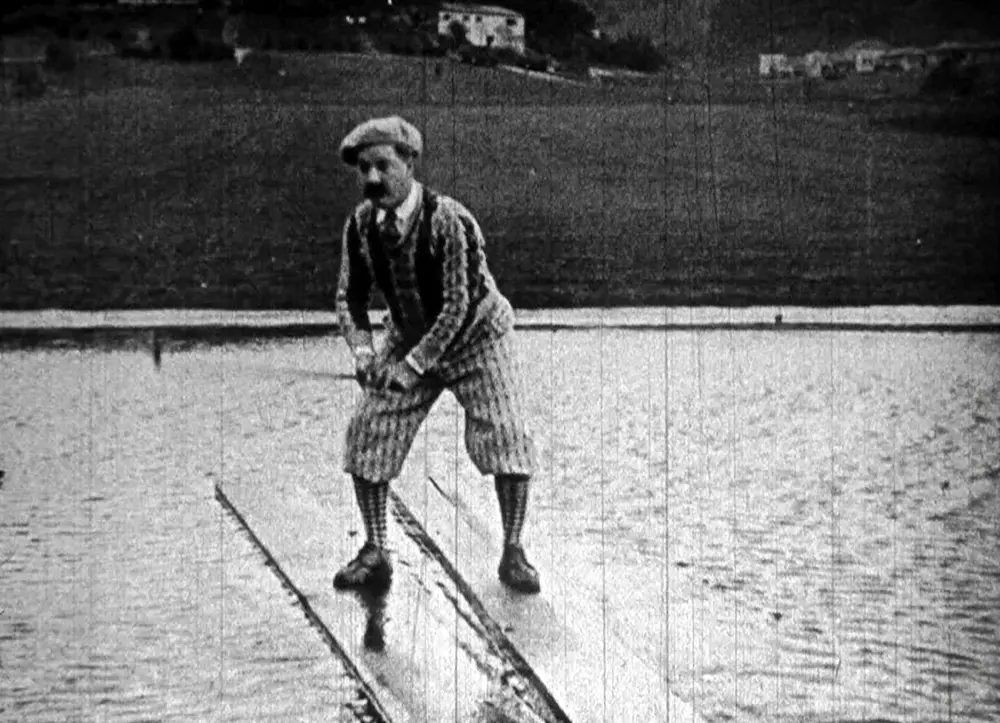
A definitive 5.7/10 rating for a film that redefined the boundaries of cult cinema. The Golf Nut remains a cornerstone of transgressive art.
Is The Golf Nut worth watching today? Short answer: yes, but with a significant asterisk. This 1926 silent comedy offers a fascinating, if occasionally frustrating, glimpse into early slapstick, making it a film best suited for silent film enthusiasts and those curious about the roots of physical comedy, but definitely not for viewers seeking nuanced storytelling or polished production values.
The cinematic landscape of the 1920s was a vibrant, experimental space, and The Golf Nut, directed by a collective of early comedic talent, stands as a testament to the era’s fascination with broad humor and physical gags. It’s a film that doesn’t just lean into chaos; it embraces it, wraps it in a golf sweater, and sends it careening down the fairway. The narrative, if one can call it that, is a simple framework designed to facilitate a relentless barrage of comedic set pieces.
Billy Divott, portrayed with admirable energy by Billy Bevan, is our titular golf nut. He’s a man whose love for the game transcends mere enthusiasm, bordering on a manic obsession. His arrival at the opulent El Caballero Golf Club, a place of quiet leisure for its members, is less an entrance and more an invasion. From the moment he steps onto the course, Divott is a walking, talking (or rather, gesticulating) disruption, a force of nature determined to bring his unique brand of 'expertise' to anyone unfortunate enough to cross his path.
The film’s humor largely derives from Divott’s misguided attempts to instruct, correct, and generally interfere with the other golfers. His advice is always unsolicited, often aggressive, and invariably leads to disaster. A prime example is a scene where he attempts to demonstrate a 'proper' swing, only to send the ball, and often himself, into increasingly precarious positions. The physical comedy is broad, relying heavily on pratfalls, exaggerated expressions, and the sheer absurdity of Divott’s self-assured incompetence.
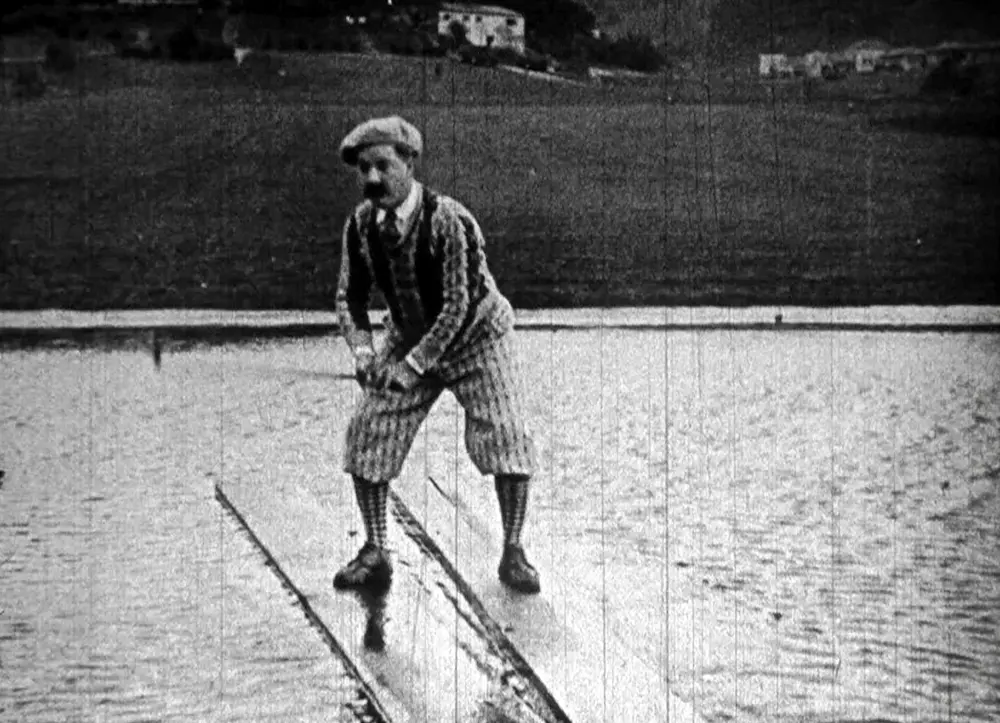
What truly sets Divott apart, and what the film exploits for maximum comedic effect, is his particular nemesis: the natural world. Sand traps become quicksand pits, water hazards transform into miniature oceans, and, most hilariously, flying insects with stingers become monstrous antagonists. These moments, where Divott’s self-seriousness clashes violently with the mundane realities of a golf course, are where the film truly finds its stride. There’s a particular sequence involving a bee that, despite its simplicity, elicits genuine laughs through Bevan’s frantic, over-the-top performance.
While Billy Bevan undeniably carries the film, the ensemble cast, including Kathryn Stanley and Vernon Dent, provides solid support, reacting to Divott’s antics with varying degrees of exasperation and bewilderment. Stanley, often the object of Divott’s misguided 'chivalry,' provides a grounded counterpoint to his manic energy. Dent, a silent film veteran, delivers his reactions with expert timing, often with a subtle eye-roll or a look of utter defeat that speaks volumes without a single intertitle.
The direction, a collaborative effort by multiple writers, manages to maintain a consistent tone of escalating silliness. There’s no deep character development here, nor is there any pretense of social commentary. The goal is pure entertainment, and on that front, the film largely succeeds. The pacing is relentless, moving from one gag to the next with admirable efficiency. This isn't a film that lingers; it pushes forward, always seeking the next opportunity for a pratfall or a ludicrous misunderstanding.
One could argue that the film’s episodic nature, a common trait in early comedies, prevents it from achieving a more cohesive narrative arc. However, in the context of its time, this rapid-fire succession of gags was precisely what audiences craved. It’s less a story and more a series of vignettes, strung together by Divott’s singular, destructive presence. The camera work is functional, prioritizing clarity of action over stylistic flourishes, ensuring that every pratfall and exaggerated gesture is perfectly framed for comedic impact.
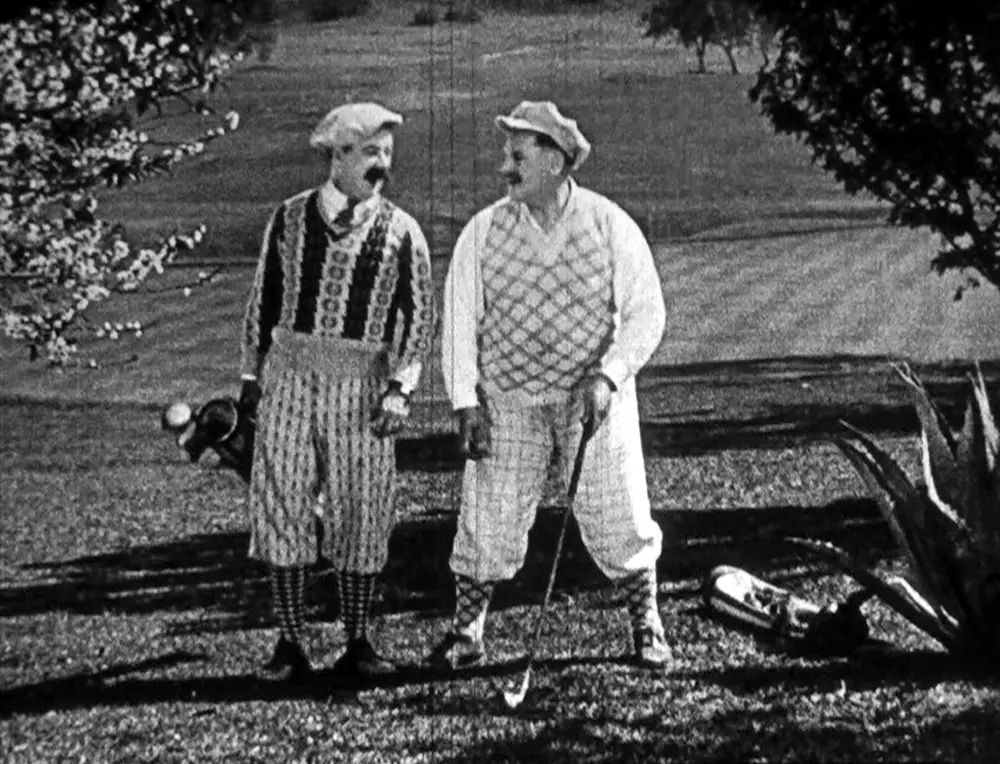
"The Golf Nut is a chaotic joyride that reminds us of the raw, unadulterated energy of early cinema. It’s loud, it’s silly, and it’s unapologetically itself. While it won't win awards for subtlety, its sheer commitment to slapstick is commendable."
The cinematography, while not groundbreaking by today's standards, effectively captures the beauty of the El Caballero Golf Club, providing a lush, almost idyllic backdrop for Divott's destructive tendencies. The contrast between the serene setting and the escalating pandemonium is a comedic device in itself. Wide shots establish the grandeur of the course, while tighter shots focus on the expressive faces of the actors, particularly Bevan's, as he transitions from confident instructor to flailing victim.
The use of intertitles is sparse, relying instead on the actors' physical prowess and facial expressions to convey emotion and intent. This reliance on visual storytelling is a hallmark of the silent era, and The Golf Nut demonstrates a solid understanding of this craft. Bevan's ability to communicate frustration, triumph, and sheer bewilderment without a single spoken word is a testament to his skill as a silent comedian. It’s a physical language that transcends eras, making some of the gags surprisingly effective even for a modern audience.
Compared to more sophisticated silent comedies like Buster Keaton's His Majesty, the American or the more dramatic The She Wolf, The Golf Nut operates on a much simpler, more direct comedic plane. It’s less about intricate stunts or character arcs and more about the immediate, visceral reaction to physical comedy. This simplicity is both its strength and, at times, its limitation. There are moments when the gags feel repetitive, but just as you begin to tire, a new, more absurd situation arises to rekindle the laughter.
Absolutely, if you approach it with the right expectations. This film is a pure, unadulterated dose of early 20th-century slapstick. It’s a historical artifact that still manages to deliver laughs, even if some of its comedic rhythms feel a little dated. It works. But it’s flawed.
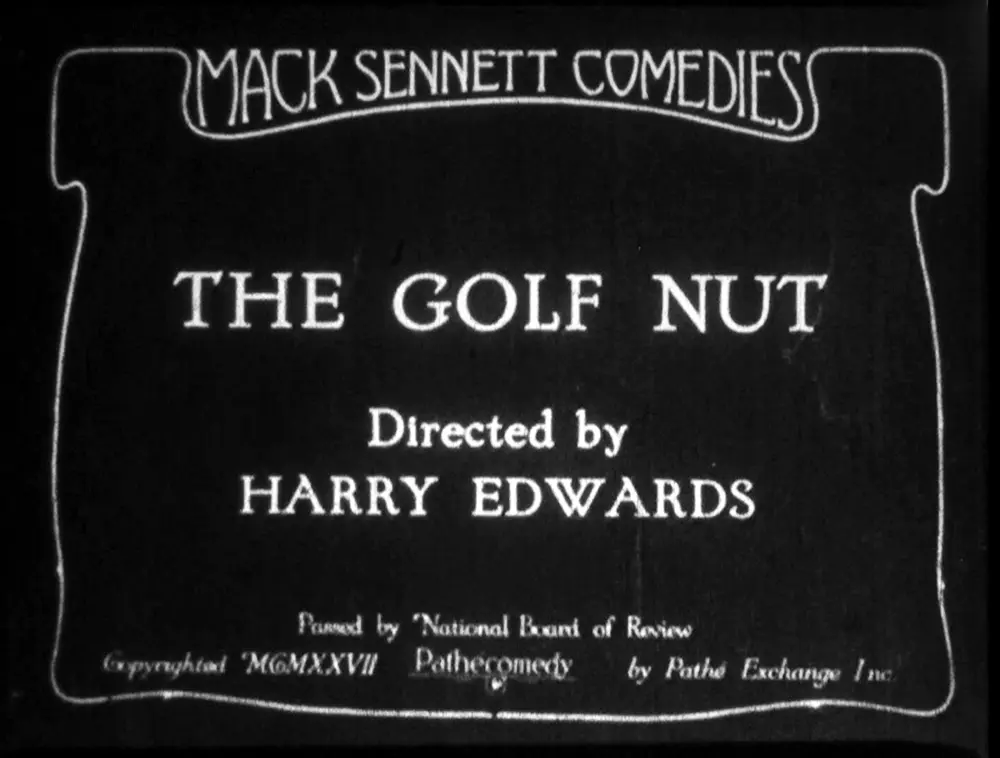
This film works because of Billy Bevan’s indefatigable energy and the sheer commitment to its farcical premise. It fails because its episodic structure can feel a little thin over its runtime, lacking the deeper resonance of more celebrated silent comedies. You should watch it if you appreciate the raw, unpolished charm of early cinema and have a soft spot for physical comedy that doesn't take itself seriously.
It’s a peculiar joy to witness the pure, unadulterated physical comedy on display here. While it might not have the intricate set pieces of a Chaplin or Keaton film, it offers a different kind of pleasure – the pleasure of watching a man utterly consumed by his passion, leaving a trail of destruction in his wake. The film’s strength lies in its refusal to be anything other than what it is: a silly, energetic romp on a golf course.
The Golf Nut isn't going to redefine your understanding of cinema, nor is it a forgotten masterpiece. What it is, however, is an energetic, often hilarious slice of silent slapstick that perfectly captures the unbridled comedic spirit of its era. Billy Bevan’s performance is a force of nature, a whirlwind of misplaced enthusiasm and escalating blunders that keeps the film afloat even when the gags occasionally falter. It’s a film that demands little from its audience beyond a willingness to laugh at the absurdities of a man utterly consumed by a game, and in return, it delivers a good-natured, if somewhat simple, comedic experience.
For those who appreciate the foundational elements of physical comedy and the unique charm of silent films, The Golf Nut is a worthwhile watch. It’s a testament to the fact that sometimes, all you need for a good laugh is a golf club, a sand trap, and a very, very enthusiastic amateur.
IMDb 6.6
1935
Community
Log in to comment.