DbcultAccessing Vault...
Cult Review
Senior Film Conservator
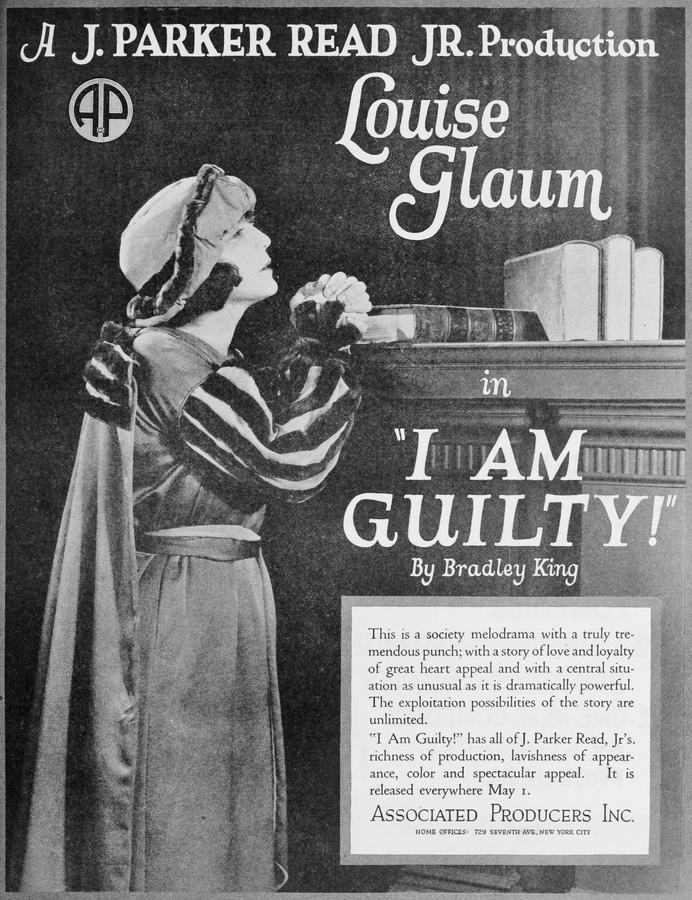
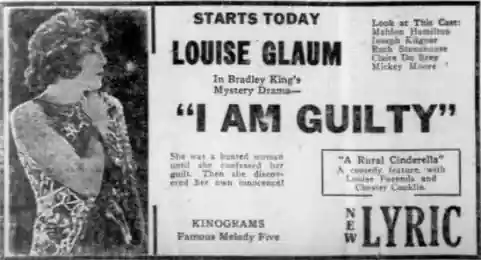
The first time we see Connie she is all calf-skin and spangles, a tremolo of jazz-light catching the sequins that map her body like a constellation. May Hopkins plays her with the brittle radiance of a chandelier one swing away from shatter: eyes too wide, smile too fast, a girl who has learned that applause is a currency you can spend only once. Bradley King’s screenplay, laconic yet scalpel-clean, refuses to give us a backstory; instead it lets the marriage itself become the biography. Four years compressed into a single cut: honeymoon confetti still clinging to the soles of her satin slippers while Robert MacNair—Mahlon Hamilton channeling young-Clark-Gable poise—morphs into a brief-toting wraith who speaks in subjunctive clauses and sleeps with his back to her. Their apartment is high-ceilinged, cold, the kind of place where love letters curl like dead leaves on mantelpieces.
Into this refrigeration glides Garrick, played by Joseph Kilgour with the silken menace of a man who collects porcelain and secrets. The party sequence—shot in low-key lighting that predates the official birth of noir by two decades—unfurls like a fever dream: cigarette smoke braiding through chandeliers, a string quartet sawing at something vaguely Viennese, champagne flutes catching the flashbulbs of illicit snapshots. Connie, hollowed by neglect, lets herself be lured. The seduction is never graphic; it is all glances and geometry, a gloved hand brushing the small of her back the way one tests a peach for ripeness. When she recoils, the burn lands—an accident that feels metaphysical, as though the universe itself had grown weary of metaphor and opted for literal branding.
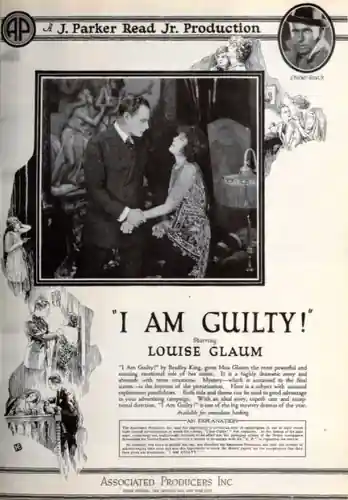
Enter Dillon, a pickpocket with the face of a disappointed cherub, slipping the gun into her hand as deftly as a maestro passing a baton. The cut is so swift many viewers miss it on first watch; the revolver simply appears, gleaming like a malignant star. Garrick falls, the camera tilts, the orchestra in the sound-palace of 1924 lets out a collective gasp synchronized by the theater’s resident “mood organist.” From here the film pivots into courtroom machinery, yet never forfeits its emotional temperature. George Cooper’s Dillon becomes a tragic collateral node: society needs a culprit, any culprit, so long as the narrative threads are cinched before the final reel.
MacNair’s return is staged like a resurrection. Hamilton steps off the night train, coat collar up, city rain lacquering the brim of his fedora—an iconography future noirs will Xerox ad nauseam. He spots Connie’s burn while she reaches for a bedside salve; the scar is a hieroglyph, a sigil of marital dereliction. In that moment the husband recognizes not just her body but the geography of his own absence. The marriage, once a gilt contract, becomes a crime scene where both parties are simultaneously perpetrator and victim.
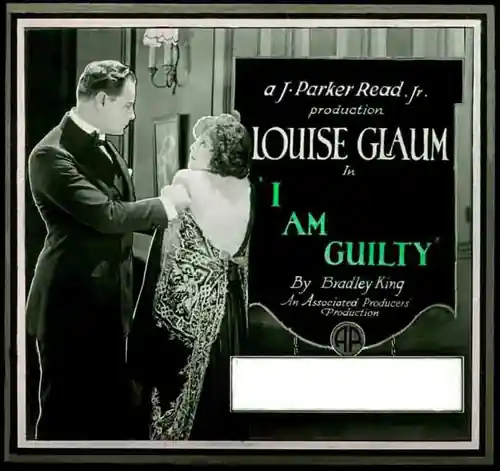
The trial is a cathedral of mahogany and moral vertigo. Cameras glide past Corinthian columns, lingering on faces lit by side-windows that cast bars of light—proto-film-noir chiaroscuro. Connie ascends the witness stand in a white dress whose neckline trembles like the wings of a moth too close to flame. Her confession—half mea culpa, half love-letter to the idea of honesty—ranks among the silent era’s most courageous sequences. Intertitles flash: “I wanted to feel wanted, even if only for the length of a song.” The line, terse as haiku, detonates across the courtroom gallery; women clutch pearls, men adjust starched collars, the camera dollies in until Hopkins’ tear threatens to blot the entire frame.
Yet the film refuses the tawdry comfort of self-flagellation. MacNair, voice cracking in subtitle, produces hotel logs and lipstick-smeared handkerchiefs that paint Trixie—Louise Glaum in venomous splendor—as the orchestrator. Glaum, vamp specialist from Sangue blu, exhales contempt like a dragon exhaling smoke; her sneer is so precise it could slice subpoenas. The twist is less whodunit than who-dares-admit-it, because the picture’s true suspense is ethical, not forensic. When the gavel falls, absolving Connie and condemning Trixie, the camera does not celebrate. Instead it frames the couple in silhouette, two survivors whose acquittal feels suspiciously like probation.
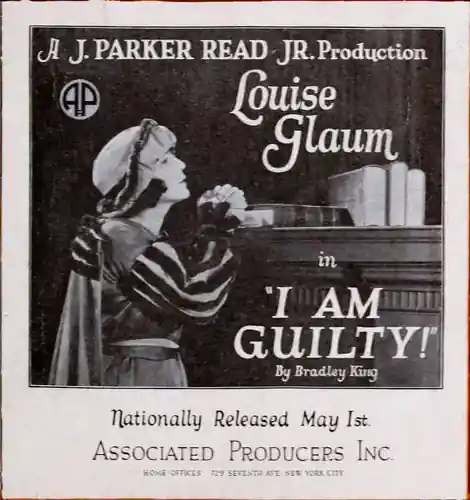
Cinematographer Allen G. Siegler worked with orthochromatic stock that renders red as black, a cruel irony for a narrative so drenched in scarlet subtext. Burns, blood, lipstick—all register as lunar chiaroscuro, a grayscale purgatory. Yet within that limitation blooms visual ingenuity: the amber glow of hallway lamps becomes a surrogate for passion, the sea-blue (#0E7490) tint of the courtroom night-for-film segments hints at moral coldness. Modern restorations can’t fully resurrect the original tints, but even the battered 16 mm prints circulating on archive.org pulse with chromatic intention.
Released three years before The Jazz Singer, I Am Guilty belongs to that twilight era when theaters employed live musicians to ventriloquize character interiors. Surviving cue sheets call for a “moderato lamentoso” during Connie’s burn reveal, shifting to a tarantella-esque scherzo when Dillon pickpockets the gun. Contemporary accompanist Ben Model, performing at MoMA in 2019, fused stride-piano with celesta to evoke the fractured fairy-tale ambience. His approach underscores how silent cinema was never truly mute; it was a symbiotic organism whose respiratory system depended on flesh-and-blood artisans in the orchestra pit.
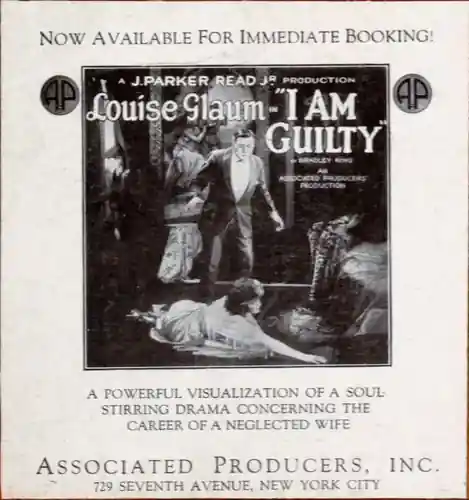
Set the film beside The Marriage Price and you witness two divergent theorems on marital erosion: one posits wedlock as auction block, the other as forensic tableau. Where A Daughter of Uncle Sam externalizes patriotic sacrifice, I Am Guilt internalizes it, turning the home front into a battlefield of glances deferred. Even Sylvia of the Secret Service shares the motif of woman-as-instrument-of-state-secrets, yet Connie’s only secret is the ache beneath her sternum—a classified dossier even she lacks clearance to read.
May Hopkins, often dismissed as a second-tier Colleen Moore, delivers here a masterclass in micro-gesture: watch the way her fingers flutter when she lies, the way her shoulders square when she decides to tell the truth—as though honesty were a corset one consciously tightens. Mahlon Hamilton, rakish yet vulnerable, embodies the early-century professional male whose emotional vocabulary was forged in boarding-school Latin: every feeling translated through the passive voice. Their final embrace, backlit by dawn light filtered through Venetian blinds, prefigures the closing shot of Double Indemnity by two decades, proof that the grammar of fatal desire was already being storyboarded in the twilight of the roaring twenties.
Historians cite the 1920s as the decade when American jurisprudence confronted the “New Woman” in courtrooms. The sensational 1922 Hall-Mills murder case, still fresh in public memory, haunts the film’s subconscious: women on trial not for deeds but for appetites. Connie’s infidelity is never carnal—she backs away before the kiss—but the narrative treats her desire as a volatile substance requiring containment. Compare that to Warning! The S.O.S. Call of Humanity, where female transgression is punished by global apocalypse; here the punishment is more intimate—marriage itself becomes the carceral architecture.
What lingers is not the acquittal but the epilogue: Connie and MacNair exiting the courthouse into winter fog, coats cinched, hands brushing yet never quite clasping. No violins swell, no intertitle declaims love’s triumph. The camera simply watches them recede, two figures swallowed by urban anonymity. The film posits that guilt is not a verdict but a residue, an after-image burned into the marriage bed like the faint silhouette of a vanished lover. For modern viewers numbed by CGI absolution, this refusal of catharsis feels almost radical.
The lone surviving print, a 35 mm nitrate positive, languished in the Dawson Film Find until 2021, when it was transferred to 4K under the Library of Congress’ Silent Film Vault initiative. The new scan reveals textures previously lost: the satin shimmer of Connie’s stage costume, the razor nick on MacNair’s neck from a hasty morning shave. Streaming platforms have yet to license it; cinephiles must seek specialty Blu-ray via Kino Classics or attend repertory screenings. Be wary of the 64-minute bootleg on certain tube sites—its interpolation of later jazz tracks annihilates the film’s fragile mood.
Manny Farber, in his 1951 Nation column, praised the film’s “concrete melancholia,” while 1970s feminist critics reclaimed it as proto-consciousness-raising cinema. More recently, the Cine-Files podcast devoted a three-part series arguing that the burn on Connie’s arm is the silent era’s answer to the stigmata in The Passion of Joan of Arc. Such hyperbole risks obscuring the film’s simpler triumph: it trusts the audience to sit with discomfort rather than offering moral ibuprofen.
Watch it at dusk, lights off, laptop dimmed to match the grayscale palette. Pair with something strong and peaty—an Islay single malt whose smoky finish mirrors the film’s lingering guilt. Resist the urge to read the intertitles aloud; let them flicker in the optic nerve like semaphore from a sinking ship. When the final reel ends, do not cue another film. Sit in the hush and notice how your own room suddenly feels witness to every promise you’ve failed to keep. That is the echo of I Am Guilty, a whisper that insists the most severe courtroom is the one we carry behind the sternum, always in session, always dark, always waiting for the next piece of evidence to surface.
IMDb 5.2
1927
Community
Log in to comment.