DbcultAccessing Vault...
Cult Review
Senior Film Conservator
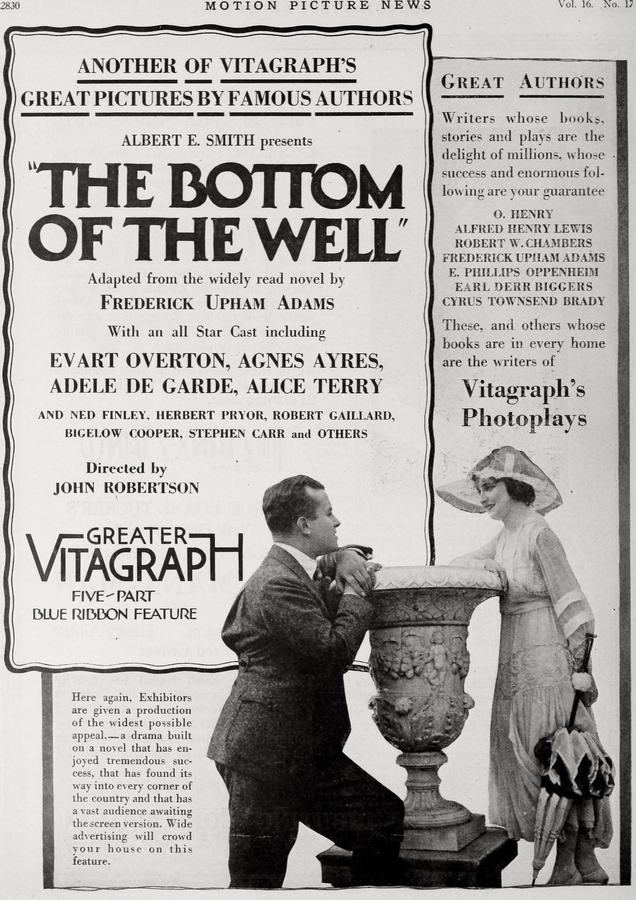
In the annals of early cinema, where narratives often served as moral parables or grand romantic gestures, certain films emerge as more than mere entertainment; they become vital cultural artifacts, reflecting the societal anxieties and aspirations of their time. The Bottom of the Well, a compelling drama from the pens of Frederick Upham Adams and Eugene Mullin, stands as one such testament. It's a film that, even decades removed from its initial flicker across darkened theaters, still resonates with a profound exploration of identity, class conflict, and the redemptive power of truth. This isn't just a story; it's a meticulously crafted social commentary, wrapped in the intricate tapestry of a personal quest for belonging and justice.
The film commences with an origin story steeped in maritime intrigue: a young boy, enigmatically dubbed "Mascot," is plucked from the turbulent wake of his presumed smuggler father, Captain Stark, following the capture of their ship. This dramatic severance from his past thrusts him into the care of Mr. Deane, the British military governor of Kingston, an act of paternalistic benevolence that redefines his future. This initial setup immediately establishes a central theme: the arbitrary nature of identity and the profound impact of circumstance on one's destiny. The narrative then gracefully leaps forward, repositioning our protagonist in the bustling heart of London. Here, the erstwhile "Mascot" has metamorphosed into Stanley Deane, a distinguished lawyer, his life now dedicated to championing the cause of "The Well," a radical organization comprising disaffected mill employees. This juxtaposition of a privileged upbringing with a commitment to social justice forms the bedrock of Stanley's character, setting the stage for the dramatic conflicts to come. The era's burgeoning industrial might and its attendant social inequalities are palpable, providing a potent backdrop for the personal dramas unfolding.
Stanley's professional dedication soon intertwines with his personal life when he rekindles a childhood acquaintance with Alice, the daughter of the formidable mill owner, Amos Buckingham. Their burgeoning romance, however, is not a smooth sail. Buckingham, a man entrenched in his industrialist convictions, harbors a deep-seated resentment for Stanley's advocacy on behalf of his workforce. This animosity morphs into a cruel weapon when Buckingham, aware of Stanley's ambiguous parentage, leverages this secret to turn Alice against him, sowing seeds of doubt and suspicion. This particular plot device, the weaponization of unknown origins, is a timeless dramatic trope, often seen in narratives where social standing and lineage are paramount, much like the struggles with inherited reputation explored in films such as The Discard. Here, it functions not merely as a romantic obstacle but as a direct assault on Stanley's very right to exist within respectable society.
The simmering tensions among the mill workers reach a boiling point, culminating in a desperate plot to blow up Buckingham's mansion and assassinate its owner. This act of radical defiance underscores the desperate plight of the working class, driven to extremes by perceived injustice. What makes this particular turn of events truly remarkable, however, is Buckingham's secret infiltration of 'The Well.' Disguised, he seeks to understand the true conditions and grievances of his employees, a daring act of industrial espionage that reveals a complexity beneath his seemingly tyrannical exterior. This narrative choice elevates the film beyond a simple good-versus-evil dichotomy, introducing layers of moral ambiguity and a surprisingly empathetic portrayal of a capitalist grappling with his conscience. It echoes the profound social realism and stark depictions of worker exploitation seen in powerful European dramas of the era, though perhaps with a distinctly American flavor of eventual reconciliation.
The explosion, when it inevitably occurs, is a moment of intense cinematic drama. Stanley, ever the hero, courageously saves Alice from the impending catastrophe. The aftermath, however, plunges the story into deeper turmoil: a charred body is discovered, presumed to be Buckingham's. This leads to the immediate arrest of Stanley and all members of 'The Well' for murder, setting the stage for a tense courtroom drama. The film's ability to pivot from social commentary to a gripping legal thriller is a testament to its robust writing. The trial sequence, while perhaps constrained by the visual vocabulary of silent film, manages to convey a palpable sense of injustice and impending doom. The conviction of Buckingham himself, still in disguise as a member of 'The Well,' is a masterstroke of dramatic irony, intensifying the suspense and paving the way for the film's climactic reveal.
The silent era demanded a particular kind of actor, one whose expressions and physicality could convey the full spectrum of human emotion without uttering a single word. In The Bottom of the Well, the cast rises to this challenge with commendable skill. Ned Finley, as Stanley Deane, embodies the earnest lawyer with a quiet strength and conviction that anchors the film. His portrayal of a man burdened by an unknown past yet driven by a strong moral compass is nuanced and compelling. Alice Terry, playing Alice Buckingham, brings a delicate vulnerability and resilience to her role, making her character's internal conflict—torn between love and loyalty, swayed by her father's accusations—palpably real. Her ability to convey deep emotion through subtle gestures and facial expressions is a highlight, a quality that set many silent film actresses apart, much like the evocative performances seen in a film like Souls in Pawn.
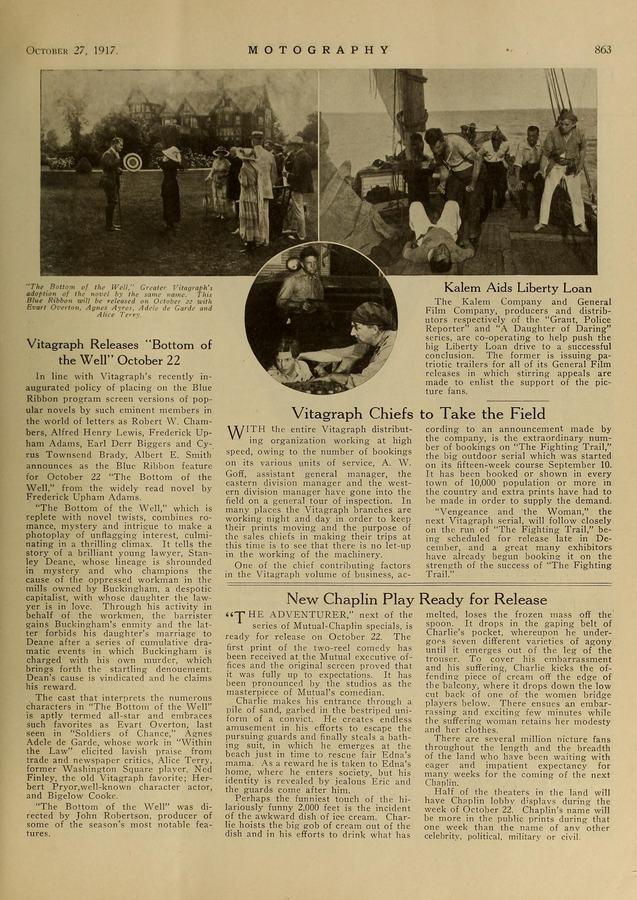
Bigelow Cooper, as Amos Buckingham, delivers a performance that is central to the film's thematic complexity. His initial portrayal as an unyielding industrialist gradually gives way to a more layered character, particularly during his undercover stint within 'The Well.' Cooper masterfully conveys the internal struggle of a man who, despite his perceived villainy, is ultimately seeking understanding and reconciliation. This transformation is crucial for the film's message of empathy and bridge-building. Supporting roles by Adele DeGarde, Alice Rodier, Robert Gaillard, Stephen Carr, Agnes Ayres, Herbert Prior, and Evart Overton all contribute to the rich tapestry of characters, each lending credibility to the intricate social ecosystem depicted. The ensemble's collective ability to convey complex motivations and emotional arcs without dialogue is a testament to the artistry of early cinema and the careful direction that must have guided their performances.
The film's denouement is a whirlwind of revelations. Buckingham, having witnessed the injustice from within, finally sheds his disguise during his own conviction. He discloses the truth: the explosion was accidental, and the charred body was merely a prop from his scientific experiments, a macabre detail that adds a touch of eccentricity to his character. More significantly, he takes full responsibility for the bitterness that had poisoned his relationship with his workmen, acknowledging his own role in their desperation. This act of profound humility and self-awareness is the turning point, leading to the acquittal of Stanley and all members of 'The Well.' It's a powerful statement on accountability and the possibility of redemption, even for those seemingly on opposing sides of a deep societal chasm. This kind of redemptive arc, where a seemingly antagonistic figure undergoes a profound change of heart, is a trope that resonates across cinematic history, often providing a satisfying, if sometimes idealistic, resolution to complex conflicts.
The final piece of the puzzle falls into place with Stanley's discovery of his true parentage: he is not the son of a smuggler, but of a reputable Boston banker. This revelation not only clears his name of any lingering aspersions but also solidifies his standing within society, making him a more than acceptable suitor for Alice. Buckingham, now fully reconciled, welcomes Stanley as his son-in-law, thus neatly tying together the romantic and social threads of the narrative. This conclusion, while perhaps leaning towards an idealized resolution of class conflict, nonetheless delivers a satisfying emotional catharsis, underscoring the triumph of truth, love, and understanding over prejudice and misunderstanding. The resolution of Stanley's identity crisis is particularly impactful, providing a sense of closure to a journey fraught with uncertainty and prejudice. In many ways, this quest for one's true lineage and place in the world mirrors the universal human desire for belonging, a theme explored in countless narratives, from grand epics to intimate dramas.
The Bottom of the Well, as a cinematic work, is more than just a historical curiosity. It is a film that grapples with weighty themes of social justice, personal identity, and the complexities of human relationships. The writers, Frederick Upham Adams and Eugene Mullin, crafted a story that, despite its period setting, feels remarkably prescient in its exploration of class divides and the search for common ground. The film's ability to weave together a love story with a sharp critique of industrial society, all while maintaining a compelling mystery, is a testament to their narrative prowess.
The direction, though uncredited in the provided details, would have been crucial in orchestrating the nuanced performances and the dramatic pacing required for such an intricate plot in the silent era. The visual storytelling, often relying on elaborate sets, expressive acting, and intertitles, would have been paramount in conveying the story's depth. One can imagine the stark contrasts between the opulence of Buckingham's mansion and the grim realities faced by the mill workers, visually reinforcing the film's central conflict. This visual dichotomy, a common tool in early cinema for highlighting social disparities, would have been particularly effective here, akin to the visual narrative power of films like The Great Leap: Until Death Do Us Part, which also explored societal chasms.
In an era where film technology was still nascent, the ambition of The Bottom of the Well to tackle such multifaceted issues is truly commendable. It avoids simplistic answers, instead offering a vision of reconciliation born from understanding and a willingness to confront one's own biases. The film suggests that true justice isn't always found in retribution, but sometimes in empathy and a shared pursuit of truth. Its lasting legacy lies not just in its engaging plot, but in its thoughtful commentary on the human condition and the perennial struggle for a more equitable society. For those interested in the evolution of dramatic storytelling and social realism in cinema, The Bottom of the Well remains a significant, if often overlooked, piece of cinematic history, inviting viewers to delve into its depths and discover the enduring power of its message. It's a reminder that even in the absence of spoken dialogue, a film can communicate volumes, leaving an indelible mark on the viewer's consciousness and prompting reflection on themes that remain evergreen.
IMDb —
1920
Community
Log in to comment.