DbcultAccessing Vault...
3.2/10
Senior Film Conservator
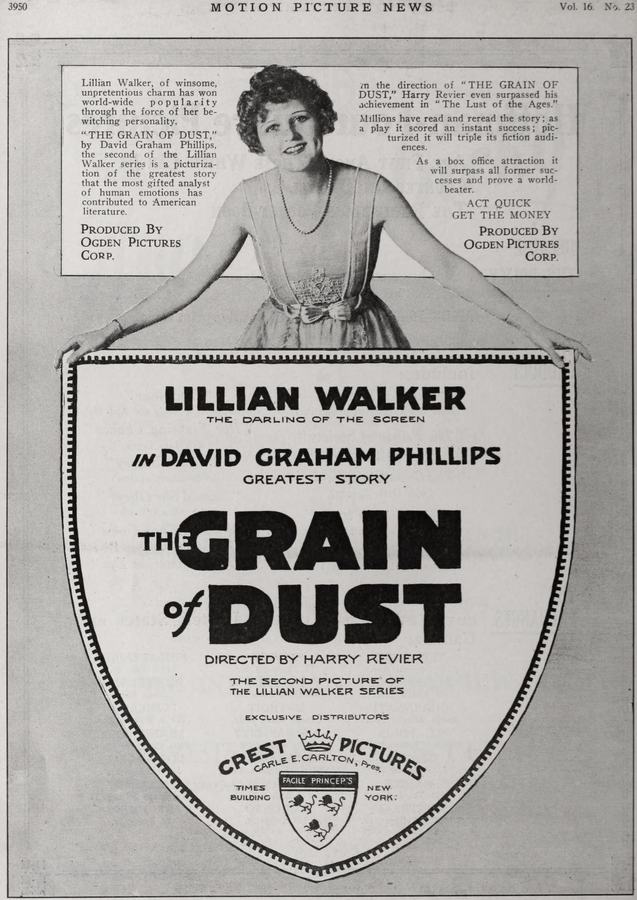
A definitive 3.2/10 rating for a film that redefined the boundaries of cult cinema. The Grain of Dust remains a cornerstone of transgressive art.
I. The Ink That Writes Itself
In the cathedral dusk of a law office where gaslight pools like sacramental wine, Dorothy’s fingers spider across the keyboard, punching time into permanence. Bess Meredyth’s screenplay—adapted from David Graham Phillips’s muckraking novel—treats every close-up as a forensic exhibit: the quiver of Lillian Walker’s lower lip, the mercury-flash of fear in Redfield Clarke’s eyes. The result is a narrative that feels less intertitled than footnoted by silence itself.
II. Chromatic Morality
Director Jacques Tyrol tints stock-market exteriors in sulfurous amber—predatory dusk—while flashbacks to Dorothy’s pastoral girlhood breathe in cerulean, as though memory were developed under sea-water. The palette shift is not mere ornament; it weaponizes color to indict the urban contract: every golden handshake hides oxidized corrosion.
III. Anatomy of a Refusal
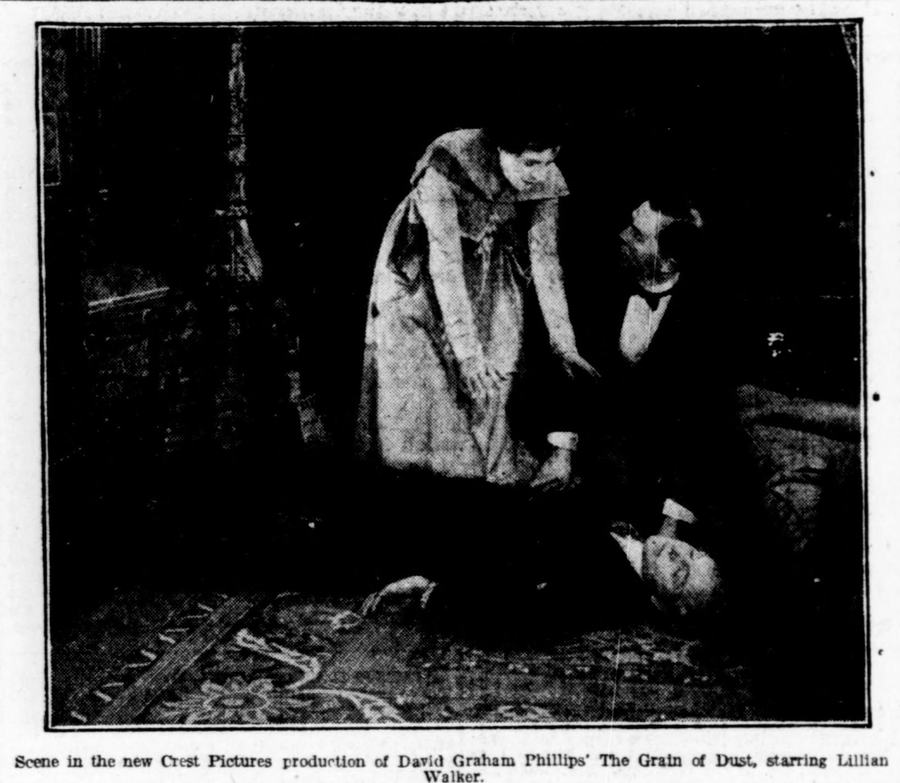
When Dorothy rejects Frederick’s veiled dowry, the film stages the moment as a reverse Pietà: she stands, he collapses spiritually. The blocking is claustrophobic—two bodies separated by the width of a mahogany desk that might as well be a continent. Intertitle cards do not verbalize her refusal; instead, Tyrol inserts a single frame of white leader—an aperture of pure negation—before cutting to the erupting gasp of the broken engagement party next door. Silent cinema at its most operatic.
IV. Small-Town Semaphore
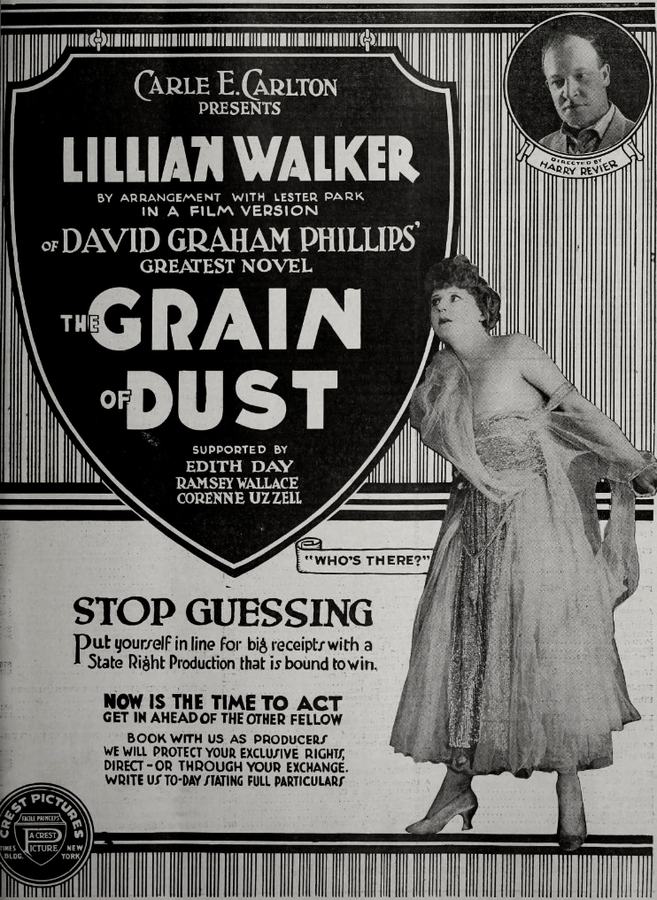
Exiled to the provinces, Dorothy steps off the train into a vista framed like a stereoscope: parallel white fences converge toward a vanishing point labeled "redemption" but rigged with bear traps of moral surveillance. Here the film’s rhythm downshifts from staccato to andante, allowing Edith Day’s supporting turn as the town’s spinster telegraphist to steal scenes with Morse-code glances that spell out solidarity in dashes of compassion and dots of complicity.
V. Legal Noir Before Noir
Upon Dorothy’s return to Manhattan, the plot pivots into an embryonic courtroom thriller. Ramsey Wallace’s prosecuting attorney prowls the frame like a pre-code predator, brandishing insinuation as evidence. The trial sequence prefigures According to Law (1920) yet retains a Victorian appetite for public shaming, complete with a gallery of bonneted voyeurs perched like ravens.
VI. The Physics of Gossip
Meredyth’s script treats rumor as particle physics: invisible, yet capable of splitting reputations at the nucleus. Note how Tyrol visualizes this—Dorothy’s silhouette dissolving into a swarm of newspaper confetti that reassembles into the word "FALLEN." It’s an effect achieved with double-exposure and a fan hidden beneath a glass plate, yet it anticipates CGI decomposition by a century.
VII. Performances Calibrated to Silence
Lillian Walker, often dismissed as a "sweetheart" archetype, here weaponizes her famed dimples—first as currency, then as scar tissue. Watch her cheek muscles retract when she reads the forged letter that seals her social doom; the gesture is micro-cinematic, a shudder you feel in your own molars. Opposite her, Redfield Clarke avoids the mustache-twirling seducer template; instead, he plays Frederick as a man allergic to his own entitlement, his shoulders creeping higher with each rejected gift, as though his skeleton were shrinking inside a bespoke suit now suddenly garish.
VIII. Matriarchal Undercurrents
Elizabeth Ferris, as Frederick’s mother, delivers a masterclass in parasol semaphore: one twitch of lace and dowagers scatter like pigeons. Yet the film denies her the last word; ultimate grace belongs to Corene Uzzell’s maid, whose final intertitle—"Ain’t no ledger big enough to tally a woman’s worth"—flashes across the screen like a manifesto smuggled inside a melodrama.
IX. Cinematic Lineage
Tyrol’s urban-expressionist DNA threads forward to The Mysteries of Myra (1916) and backward to the social outrage of The Marked Woman (1914). Yet Dust stands apart in its refusal to rescue the protagonist through marriage or death; instead, it offers a third path—precarious, unsensationalized employment as a legal secretary once again, but this time on her own terms, salary negotiable, gaze unflinching.
X. Restoration & Viewing
A 2018 4K restoration by EYE Filmmuseum salvaged a near-complete 35 mm nitrate print from an Amsterdam warehouse. The tinting schema was reconstructed via chemical analysis of splice marks—amber for avarice, cyan for memory, magenta for the blush of rumor. Streaming is currently exclusive to Criterion Channel in North America; Blu-ray rumored for 2025 alongside scholarly commentary by Shelley Stamp.
XI. Why It Matters Now
In an era when corporate benevolence still masquerades as courtship, Dorothy’s insistence that charity is never neutral feels surgically contemporary. Her refusal to be " funded" into affection resonates with ongoing debates about unpaid internships, NDAs, and the hidden contracts of mentorship. The film’s final shot—a close-up of her hands typing a deposition against a sexual-harassment plaintiff—loops back to the opening image, but now the keystrokes sound less like submission, more like artillery.
The Grain of Dust is not a curio to be dusted off; it is a gauntlet to be picked up. It argues, with photochemical conviction, that survival is not a single dramatic exodus but a thousand daily acts of saying no—each syllable typed, each gaze returned unlowered. Watch it once for historical vertigo, twice for personal indictment, a third time to notice how the grain itself, barely visible, still manages to scratch the gleaming veneer of our so-called progress.
IMDb —
1935
Community
Log in to comment.