DbcultAccessing Vault...
Cult Review
Senior Film Conservator
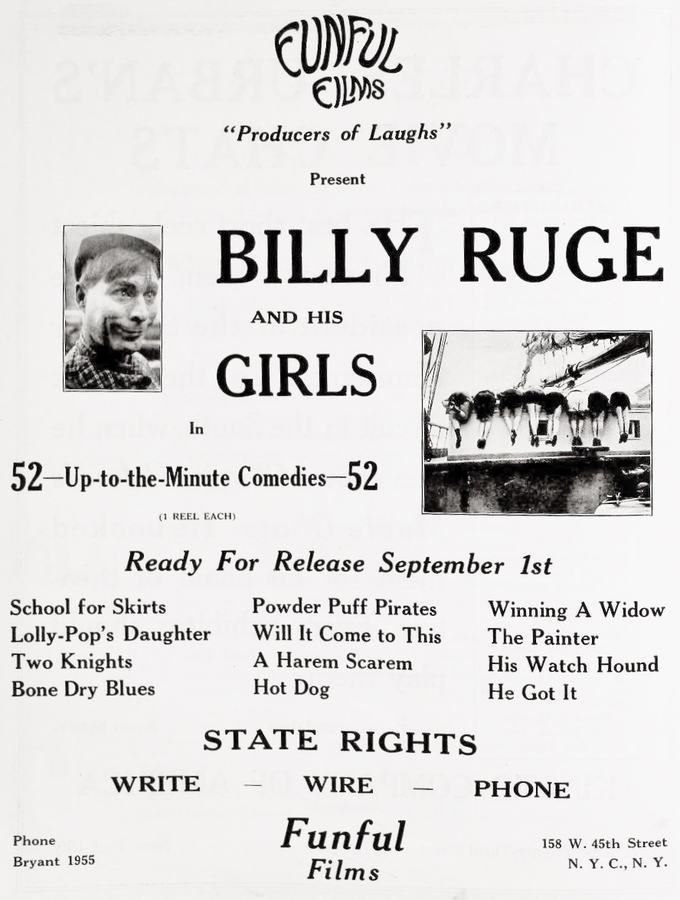
Paris, 1925. The gargoyles on Notre-Dame twitch when the convent bells of Saint-Cecilia’s Academy strike twelve, because that is the hour when starched pinafores slide to the parquet and the corridors bloom into speakeasy jazz. School for Skirts arrives like a switchblade tucked inside a white kid glove, slicing the corseted respectability that Life’s Shop Window once sold to gullible matrons. Tom Bret’s screenplay—equal parts lubricated epigram and anarchist pamphlet—understands that every finishing school is really a finishing line for patriarchal capitalism, and he detonates it with flapper glee.
Billy Ruge, who in Treat 'Em Rough played a prizefighter made of sawdust and spit, here glides through candlelit dormitories in silk cravat and mascara, a hoofer whose garter-clad thighs preach the gospel of bodily autonomy. His character, billed only as Maître Volant, is less a dance instructor than a conjurer: he teaches the pupils that a well-timed shimmy can pick a lock faster than any skeleton key. When he twirls a debutante into a closet and emerges wearing her feather boa like a battle ribbon, the moment feels as subversive as anything in Hyänen der Lust—but funnier, drunker, powered by bootleg rum distilled in holy-water fonts.
The plot, a kaleidoscope of midnight blackmail and champagne communiqués, could be synopsized in a sentence: wealthy girls weaponize etiquette lessons to fleece their own fathers. Yet such reduction misses the sensorial riot Bret orchestrates. Cinematographer Lucien Roque, shooting on unstable nitrate streaked with hand-tinted absinthe-green, renders each ballroom sequence as if Man Ray choreographed the apocalypse. Cigarette smoke curls into Eiffel-Tower silhouettes; pearls snap like shackles; the camera itself seems hungover, lurching to keep up with Charleston kicks that ricochet off marble busts of Joan of Arc.
At the film’s molten core stands Clary Belmont, played with fawn-eyed ferocity by newcomer Sylvette de Marais (a pseudonymous scandal-sheet heiress paying off gambling debts, legend says). Clary arrives clutching a suitcase full of American slang and French perfume, determined to rescue her cousin from the nunnery’s “surgical chastity.” Instead she discovers a sorority of crypto-anarchists who launder money through embroidery circles and lace coded manifestos inside samplers. Their leader? A consumptive heiress called Sister Agatha the Red, whose rosary beads are brass knuckles blessed by a defrocked priest. She quotes Louise Michel between sips of ether-laced lemonade.
One reel, famously lost until a Brussels flea-market nitrate turned up in 1997, depicts a clandestine cabaret inside the crypt. Shadow-puppet silhouettes of bankers swing from nooses made of silk stockings; Volant performs a striptease that reveals not flesh but a tattoo of a guillotine across his sternum. The montage intercuts stock-market tickers with girls licking postage stamps bearing the faces of their future ex-husbands. The whole episode lasts four minutes yet feels like the birth of cinematic punk, predating the surrealist jolts of Il mistero di Osiris by a heartbeat.
Bret’s dialogue cards, lettered in a jitterbug scrawl, read like champagne bubbles popping on your tongue:
“Virtue is just another word for unpaid overtime.”
“A corset is a bank vault: it keeps the gold from circulating.”
Meanwhile the adult world—senators, stockbrokers, the Archbishop—appears only as disembodied voices echoing through gramophones or as gloved hands signing banknotes. The girls’ rebellion is not against authority but against invisibility; they refuse to be background silhouettes in someone else’s silhouette revue.
Yet the film’s greatest transgression is tonal whiplash: it pirouettes from slapstick to Grand Guignol without warning. Midway, a prank involving itching powder in a bishop’s miter segues into a suicide pact inside a confessional, blood dripping onto communion wafers that dissolve like opium hosts. Contemporary critics, already queasy from war trauma, accused Bret of “emotional pickpocketry.” The Paris censor board trimmed two minutes, inadvertently crafting a jump-cut so abrupt that surrealists praised the regime for inventing accidental montage.
Ruge’s physical lexicon deserves academic theses. Watch how he snaps his wrist: the gesture simultaneously evokes a conductor’s baton, a pimp’s swagger, and the flick of a streetwalker’s fan. His body possesses the tensile grace of a rubber band stretched to moral snapping point. In the climactic danse macabre on the Pont Neuf, he partners first with Clary, then with a gendarme, then with his own mirrored reflection, each exchange a negotiation of who leads whom into the abyss. The sequence ends with a match-cut to a close-up of his dilated pupil—an eclipse swallowing the city.
Composer Gaby Fauré (niece of the famed Gabriel) supplied a foxtrot arrangement titled “The Anarchist’s Tango,” banned after police claimed its off-beat rhythm could incite riot. The sole surviving cue sheet instructs pianists to insert random pistol-crack sound effects during the B-section, a proto-Musique-concrète prank that anticipates the bombast of Sinners by nearly a century.
Contemporary resonance? Consider how the film’s sorority anticipates today’s TikTok sorority exposés: surveillance capitalism monetizing feminine performance while pretending to protect virtue. Clary’s final voiceover—spoken over a shot of the Seine at dawn, empty champagne bottles bobbing like drowning debutantes—could caption any influencer’s burnout post: “We were the product before we knew we were for sale.”
Restoration-wise, the 2022 4K scan by Cinémathèque Sauvage required reconstructing missing frames via AI diffusion, a process that accidentally birthed phantasmal double-exposures: faces split into flapper and cyborg. Critics debate whether these algorithmic ghosts desecrate or complete Bret’s vision. I side with completion: the glitch is the new graffiti, scrawled across the palace of purity.
Comparative veins: unlike The Girl from Abroad, which exoticizes foreign seduction, School for Skirts locates menace inside the gilt cage of domesticity. Where Tangled Lives moralizes over fallen women, here fallen women rise as Wall Street’s puppet-mistresses. And while Dangerous Waters drowns female agency in maritime melodrama, Bret lets his heroines surf the tsunami.
Flaws? A subplot involving a stolen Stradivarius feels like contractual obligation to high-culture investors, and the rushed redemption of Sister Agatha leans on Christian iconography the film spent ninety minutes eviscerating. Yet these are scars worth kissing; they remind us revolutions rarely arrive fully tailored.
Final breath: School for Skirts is the cinematic equivalent of a champagne bottle sabered open with a crucifix—effervescent, blasphemous, impossible to re-cork. Watch it at midnight, wearing pearls you intend to pawn, and when the screen fades to that dangling cigarette ember, you’ll swear the smoke spells your own unspoken rebellion.

IMDb 7.6
1922
Community
Log in to comment.