DbcultAccessing Vault...
Cult Review
Senior Film Conservator
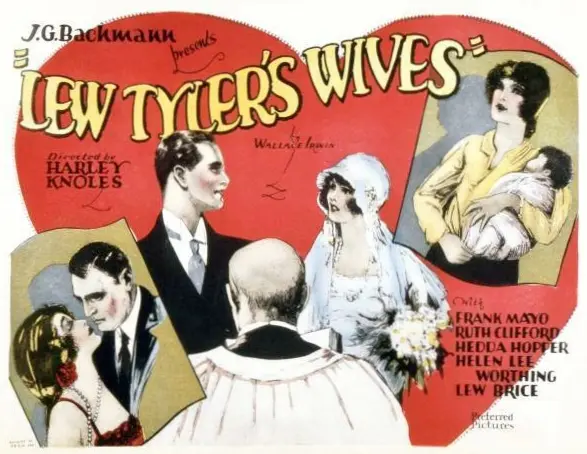
Is Lew Tyler's Wives a forgotten masterpiece of the silent era or a dated relic of patriarchal melodrama? Short answer: It is a surprisingly sharp-edged character study that remains relevant because it refuses to let its protagonist off the hook for his own stupidity. This film is for viewers who appreciate psychological realism in silent cinema and those interested in the evolution of domestic dramas; it is not for those who want a lighthearted romance or a fast-paced thriller.
This 1926 production, featuring Lew Brice and Hedda Hopper, navigates the murky waters of social standing and emotional maturity. It asks a question that still resonates in modern discourse: how much of a man's identity is tied to his paycheck, and what happens when that pride becomes a poison? While many films of this era relied on external villains, the antagonist here is Lew’s own internal architecture.
1) This film works because it avoids the easy path of making Lew a simple hero; he is a deeply flawed, often unlikeable man whose actions have real, devastating consequences for the women in his life.
2) This film fails because its final transition from grief-stricken alcoholic to a redeemed philanthropist feels rushed, almost as if the screenplay was trying to outrun its own cynicism.
3) You should watch it if you want to see a pre-Code era exploration of infidelity and the social stigma of divorce that feels remarkably modern in its bleakness.
The opening act of Lew Tyler's Wives sets a stage that feels uncomfortably familiar even a century later. Lew Brice portrays Tyler not as a mustache-twirling villain, but as a man paralyzed by the fear of being 'kept.' When he breaks his engagement with Virginia Philips (Ruth Clifford), it isn't because of a lack of love, but a lack of power. The scene where he confronts Virginia’s father is a masterclass in silent tension. The intertitles capture the biting class resentment that fueled so much of the American dream during the Roaring Twenties.
By refusing the father-in-law's support, Lew isn't just protecting his dignity; he is burning down his future. This is where the film takes its first bold step. Most romances of the time would have had the couple elope and struggle together in noble poverty. Instead, Lew Tyler's Wives shows us the ugly reality of spite. Lew marries Jessie Winkler (Helen Lee Worthing) not out of passion, but out of a desperate need to prove he can move on. It is a rebound marriage documented with agonizing clarity.
The performance by Helen Lee Worthing is the film's secret weapon. As Jessie, she represents the countless women of the era who were caught in the crossfire of male pride. She is the 'distraction' wife, and the film doesn't shy away from how cruel that position is. When she realizes Lew is still haunted by Virginia, the camera lingers on her face—a landscape of silent realization that her marriage is a hollow shell.
The second act shifts from a domestic drama into something much darker. The introduction of Coleen Miles, played by the legendary Hedda Hopper before she became the queen of Hollywood gossip, adds a layer of predatory sophistication to the narrative. Unlike the other films of the period like Faith, which often treated morality in black and white, this film suggests that Lew’s affair is a symptom of his fundamental inability to be present in his own life.
The sequence where Jessie discovers Lew with Coleen is edited with a rhythmic intensity that mirrors the psychological collapse of the household. But the film takes a turn into the truly macabre when the child dies on the same night. It’s a classic melodramatic trope, yet here it feels earned. It serves as the ultimate indictment of Lew’s negligence. He wasn't just a bad husband; he was an absent father. The scenes of Lew descending into alcoholism to dull his remorse are shot with a gritty, almost expressionistic style that reminds one of the darker moments in The Vanishing American.
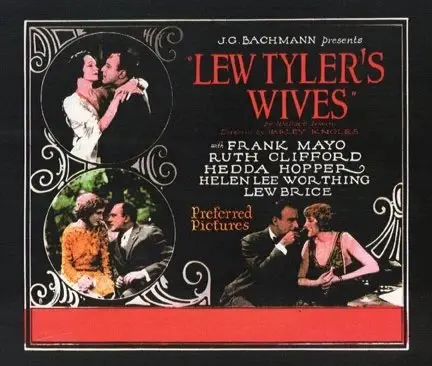
It is rare to see a silent film dwell so long on the 'remorse' phase of a character's journey. Lew Brice’s physicality changes; he becomes smaller, more hunched, a man literally weighed down by the ghosts of his choices. This isn't just a plot point; it's a character study in moral rot.
The direction by Harley Knoles (working from the script by Clifford, Hoerl, and Irwin) utilizes space to illustrate the emotional distance between characters. In the Tyler household, characters are often separated by large pieces of furniture or placed in different planes of focus. This visual storytelling is far more effective than the dialogue-heavy intertitles found in contemporary films like Molly and I.
The cinematography excels during the night scenes. The use of low-key lighting during Lew’s liaison with Coleen creates a sense of claustrophobia, suggesting that their 'escape' is actually a prison. Contrast this with the bright, airy scenes of Virginia’s world, and the visual metaphor for Lew’s lost paradise becomes clear. The film understands that cinema is the art of showing, not just telling, and it uses light and shadow to map the protagonist's moral decline.
Yes, Lew Tyler's Wives is worth watching because it provides a raw look at the consequences of toxic masculinity before that term even existed. While some might find the silent acting style exaggerated, the core emotions—pride, jealousy, and the desperate need for forgiveness—are universal.
Is it a masterpiece? No. But it is a vital piece of cinematic history that challenges the notion that all silent films were simplistic moral fables. It has more in common with the psychological depth of The Call of the Cumberlands than it does with standard romantic fare. The film demands your attention and rewards it with a narrative that is as uncomfortable as it is compelling.
Pros:
- Sophisticated handling of infidelity and divorce for its era.
- Strong ensemble cast, particularly the women who outshine the lead.
- Visually inventive use of shadows to represent moral ambiguity.
- A narrative that doesn't shy away from the protagonist's darker impulses.
Cons:
- The pacing in the final third feels rushed.
- Some intertitles are overly didactic.
- The 'reparation' subplot feels like a forced happy ending.
The final act of the film is where it becomes truly debatable. After Jessie is granted a divorce and Virginia’s father inexplicably regrets his past actions, Lew is given a second chance. He marries Virginia, and they have a child. But the film doesn't let him enjoy this victory. The return of Jessie as a nurse during the birth of Virginia's child is a stroke of narrative genius—or perhaps narrative cruelty. It forces Lew to look his past in the eye at the very moment his future is being born.
The resolution—Lew financing a hospital for poor children—is a fascinating glimpse into the 1920s mindset. It suggests that while you cannot undo the past, you can balance the scales through public service. It’s a very 'Great Gatsby' style of redemption, where money is used as a surrogate for genuine emotional healing. Does it work? For the audience of 1926, likely yes. For a modern audience, it feels a bit like a tax write-off for the soul.
However, the final image of Lew seeking reparation is powerful. It acknowledges that he is a failure who is trying to be better. It’s a humble ending for a man who started the film with nothing but arrogant pride. This transformation is the film's greatest achievement. It takes a man who had everything and threw it away, then shows the agonizingly slow process of him trying to pick up the pieces.
Lew Tyler's Wives is a punchy, provocative drama that survives its own dated elements. It works. But it's flawed. The performances are grounded, the direction is thoughtful, and the themes are surprisingly mature. It is a film that understands that the greatest battles we fight are often with the versions of ourselves we see in the mirror. While the ending might feel a bit too tidy for some, the journey there is paved with genuine emotional grit. If you have any interest in the roots of the modern domestic drama, this is essential viewing. It is a stark reminder that pride doesn't just go before a fall—it often causes the fall itself.
IMDb 6.6
1929
Community
Log in to comment.