DbcultAccessing Vault...
6.5/10
Senior Film Conservator
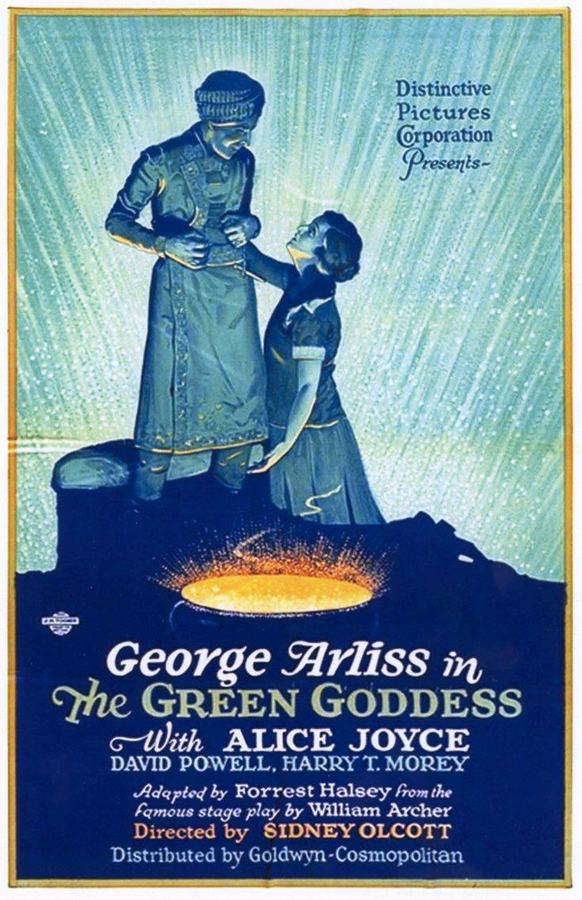
A definitive 6.5/10 rating for a film that redefined the boundaries of cult cinema. The Green Goddess remains a cornerstone of transgressive art.
There's a certain allure to the cinematic artifacts of a bygone era, especially those that dare to grapple with the complex, often uncomfortable, facets of empire. Such is the case with *The Green Goddess*, a film that, despite its vintage, retains a potent, if problematic, fascination. It’s a narrative steeped in the exoticism and peril that defined much of early 20th-century adventure cinema, taking its audience on a harrowing journey into the heart of a perceived 'otherness.' The premise is deceptively simple: three British subjects find themselves marooned in the remote, sovereign territory of the Rajah of Rukh, a realm nestled within the broader dominion of the British Raj, yet fiercely independent in spirit and custom. This involuntary intrusion sets the stage for a dramatic collision of cultures, wills, and, ultimately, destinies, meticulously crafted by writers William Archer and Forrest Halsey, who imbue the narrative with a sense of impending doom and moral quandary.
The film immediately establishes a palpable tension, not merely through the geographical isolation of its protagonists but through the psychological chasm that separates them from their indigenous hosts. This isn't just a story of survival; it's a profound exploration of cultural arrogance meeting unyielding tradition. The British subjects, embodying various archetypes of the colonial mindset, are thrust into a world where their familiar rules of engagement hold no sway. Their very presence, an affront to the Rajah’s sovereignty, becomes a catalyst for an intricate dance of power and retribution. The 'Green Goddess' herself, an enigmatic symbol that permeates the film's atmosphere, hints at a deeper, mystical layer to the conflict, suggesting that the stakes extend beyond mere political maneuvering into the realm of spiritual justice.
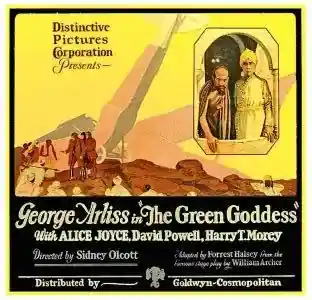
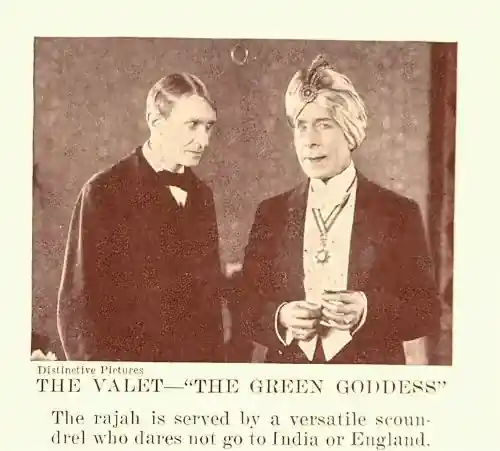
The ensemble cast, featuring notable talents like George Arliss, Alice Joyce, and William Worthington, shoulders the considerable burden of conveying this escalating drama. George Arliss, in particular, often celebrated for his nuanced portrayals of complex, often morally ambiguous characters, likely brings a formidable presence to the role of the Rajah. One can envision him imbuing the ruler with a blend of regal authority, simmering resentment, and perhaps a chilling sense of calculated justice. His performance would have been pivotal in grounding the film's central conflict, transforming a potentially one-dimensional antagonist into a figure of compelling, if terrifying, gravitas. Alice Joyce, a prominent star of the era, likely portrays the female protagonist with a blend of vulnerability and steely resolve, a common trope for women caught in such perilous circumstances, yet always with an underlying strength that defined many of her roles.
William Worthington, Ivan F. Simpson, David Powell, Jetta Goudal, and Harry T. Morey complete this ill-fated British contingent. Each character, though perhaps sketched with broad strokes typical of the period, contributes to the collective sense of dread and desperation. Worthington's likely portrayal of a stiff-upper-lip colonial officer, Simpson's possibly more pragmatic or even cowardly figure, and Powell's youthful idealism or naiveté would all serve to highlight the varied human responses to extreme duress. Goudal, often cast in femme fatale or exotic roles, might have introduced an element of seduction or cunning, further complicating the already precarious situation. Their collective struggle against an insurmountable force echoes the thematic core of films like Desperate Trails, where survival hinges not just on physical endurance but on the psychological fortitude to confront an alien and unforgiving landscape.
The film’s backdrop, the British Raj, is more than just a setting; it's a political and cultural crucible. *The Green Goddess* capitalizes on the prevailing anxieties and fascinations of its time concerning the empire's furthest reaches. It taps into a primal fear of the unknown, of a reversal of power dynamics where the colonizer becomes the colonized, albeit temporarily. This narrative framework allows for a contemplation of justice and vengeance from a non-Western perspective, a bold move for its era, even if filtered through a Western lens. The Rajah's actions, however seemingly cruel, are presented as a direct consequence of imperial overreach, a manifestation of a deep-seated desire for autonomy and retribution.
The screenplay by William Archer and Forrest Halsey, adapted from Archer's own play, likely retains much of the theatricality and sharp dialogue that characterized the original stage production. This would lend a certain intensity to the confrontations between the British captives and the Rajah, transforming what could be mere exposition into gripping exchanges of ideological warfare. The narrative structure, probably building slowly to a crescendo of dramatic revelations and desperate attempts at escape, would keep audiences on the edge of their seats. The film's ability to sustain this tension, to constantly remind the viewer of the precariousness of the protagonists' situation, is a testament to the writers' skill in crafting a compelling, high-stakes drama. In its moral complexity and narrative drive, it shares a distant kinship with films like The Ninety and Nine, which also explored urgent moral dilemmas under extreme pressure, albeit in a different context.
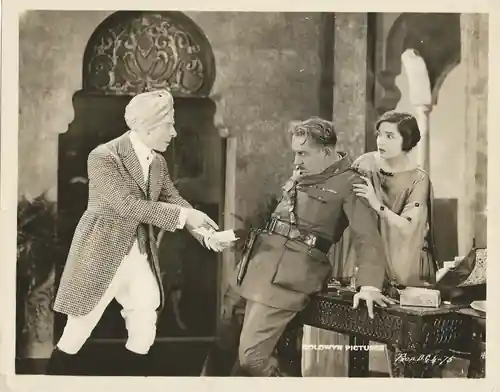
While a silent film or early talkie's visual palette might seem limited by modern standards, the power of *The Green Goddess* lies in its ability to evoke a rich, atmospheric world through meticulous set design, costuming, and cinematography. The 'land of the Rajah of Rukh' would have been depicted with a blend of authenticity and orientalist fantasy, a common practice for films venturing into non-Western territories. The visual contrast between the stoic, formal attire of the British and the vibrant, traditional garments of the Rajah's court would have been striking, immediately signaling the clash of civilizations. The titular 'Green Goddess' itself, likely a formidable idol or sacred symbol, would have been rendered with an imposing grandeur, becoming a silent, yet ever-present, character in the unfolding tragedy.
The film’s atmosphere would have been carefully cultivated to heighten the sense of isolation and danger. Shadows, intricate patterns, and perhaps even early attempts at special effects for any mystical elements, would have contributed to a pervasive mood of unease. The audience would have been transported, not just geographically, but emotionally, into a realm where ancient laws supersede modern diplomacy. This immersive quality, a hallmark of successful adventure films, is what allows stories like *The Green Goddess* to transcend their historical context and continue to resonate. It’s a testament to the filmmakers' craft that they could conjure such a vivid sense of place and peril with the tools available to them.
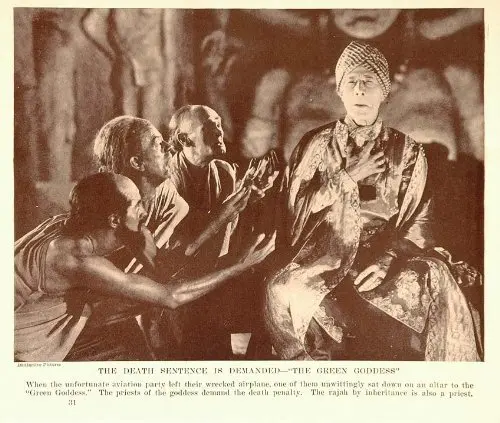
At its core, *The Green Goddess* delves into profound questions of power, justice, and cultural relativism. Is the Rajah's retribution justified, or is it merely barbaric? Are the British subjects truly innocent victims, or do they bear the collective guilt of an imperial power? The film, consciously or unconsciously, invites viewers to ponder these uncomfortable truths. It challenges the simplistic binary of 'civilized' versus 'savage' that often underpinned colonial narratives, even if it doesn't fully dismantle it. The Rajah, rather than being a caricatured villain, emerges as a figure of sovereign authority, acting according to his own code and traditions.
The narrative's exploration of these themes, while perhaps not as overtly critical as a modern film might be, was nonetheless significant for its time. It dared to present a scenario where European dominance was not absolute, where indigenous populations possessed their own formidable power and a legitimate claim to self-determination. This nuanced approach, however subtle, elevates *The Green Goddess* beyond mere adventure fare. It transforms it into a cultural document, reflecting both the prevailing attitudes and the burgeoning awareness of the complexities of empire. It’s a film that, much like A Message from Mars, uses an extraordinary premise to hold a mirror up to societal values, forcing a confrontation with uncomfortable truths, albeit through dramatically different lenses.
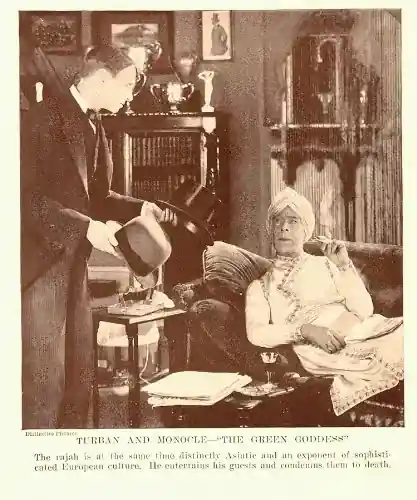
In retrospect, *The Green Goddess* stands as a fascinating example of early cinema's capacity for complex storytelling. It's a film that, while rooted in the sensibilities of its era, offers glimpses of thematic depth that resonate even today. Its portrayal of cultural clash and the precariousness of power remains a compelling aspect, prompting viewers to consider the historical context of its production and reception. The performances, particularly that of George Arliss, would have undoubtedly been a major draw, anchoring the fantastical elements of the plot with human drama and psychological intensity. The film’s ability to generate genuine suspense and a sense of impending doom is a testament to its enduring power as a piece of thrilling entertainment.
While perhaps not as widely known as some of its contemporaries, *The Green Goddess* holds a significant place in the tapestry of early adventure cinema. It’s a film that, through its gripping narrative and evocative atmosphere, transports its audience to a world both dangerous and alluring. It reminds us of the enduring human fascination with the unknown, the allure of the forbidden, and the timeless struggle between opposing forces. Its legacy lies not just in its entertainment value, but in its capacity to spark reflection on the intricate, often fraught, relationship between different cultures and powers. It’s a film that demands to be seen through a critical, yet appreciative, lens, recognizing both its artistic merits and its historical specificities.
The meticulous scripting by Archer and Halsey ensures that every twist and turn feels earned, every confrontation laden with significance. The dramatic arc of the British subjects, from initial arrogance to desperate pleading, offers a compelling character study in extremis. Their journey mirrors the broader colonial narrative, where initial confidence often gives way to the stark realities of resistance and the limitations of imperial might. This nuanced portrayal, rather than a simplistic good-vs-evil dichotomy, is what lends *The Green Goddess* its lasting intellectual resonance. It's a film that, much like the best of its genre, uses a thrilling plot to explore deeper, more universal themes about human nature and societal constructs.
Ultimately, *The Green Goddess* is more than just an exotic adventure; it is a fascinating historical document that captures the anxieties and fascinations of its time. It’s a compelling narrative that, through its strong performances and engaging plot, transcends its age to offer a potent commentary on power, justice, and the clash of civilizations. For those interested in the evolution of cinematic storytelling, particularly within the adventure and drama genres, this film offers a rich and rewarding viewing experience, proving that even early works can possess a profound and lasting impact. It stands as a testament to the enduring power of storytelling to transport, entertain, and provoke thought, solidifying its place as a notable entry in the annals of film history.

IMDb —
1917
Community
Log in to comment.