DbcultAccessing Vault...
6.4/10
Senior Film Conservator

A definitive 6.4/10 rating for a film that redefined the boundaries of cult cinema. Never Say Quit remains a cornerstone of transgressive art.
In the annals of early cinema, where narratives often grappled with the grand themes of destiny, fortune, and the indomitable human spirit, Never Say Quit emerges as a particularly charming, if somewhat farcical, exploration of these very concepts. Released in 1916, at a pivotal moment in film history when storytelling was rapidly evolving beyond mere spectacle, this picture, starring the engaging George Walsh, plunges its audience into the perpetually unfortunate existence of Reginald Jones. It’s a film that asks us to consider, with a knowing wink and a dramatic flourish, whether one can truly outrun a fate seemingly inscribed in the stars, or rather, in the very day and name of one’s birth. The answer, as the title boldly declares, lies in an unwavering tenacity, a refusal to succumb to the relentless barrage of cosmic pranks.
Reginald Jones is, by all accounts, a man cursed. Born on Friday the thirteenth, burdened with thirteen letters in his name, his life is a veritable masterclass in Murphy's Law writ large. The film opens by establishing this congenital predisposition to disaster with a series of vignettes that are at once comedic and profoundly sympathetic. We witness Reginald's earnest attempts to participate in normal life, only for them to backfire spectacularly. His attendance at a chauffeur's ball, a seemingly innocuous social gathering, becomes a stage for his characteristic ill luck. An act of pure, old-fashioned chivalry – intervening when a companion berates a young woman – is met not with gratitude, but with a swift, unceremonious slap from the very person he sought to protect. This moment, early in the narrative, is crucial; it perfectly encapsulates the film's central conceit: Reginald's intentions, however noble, are perpetually sabotaged by an unseen, malevolent force.
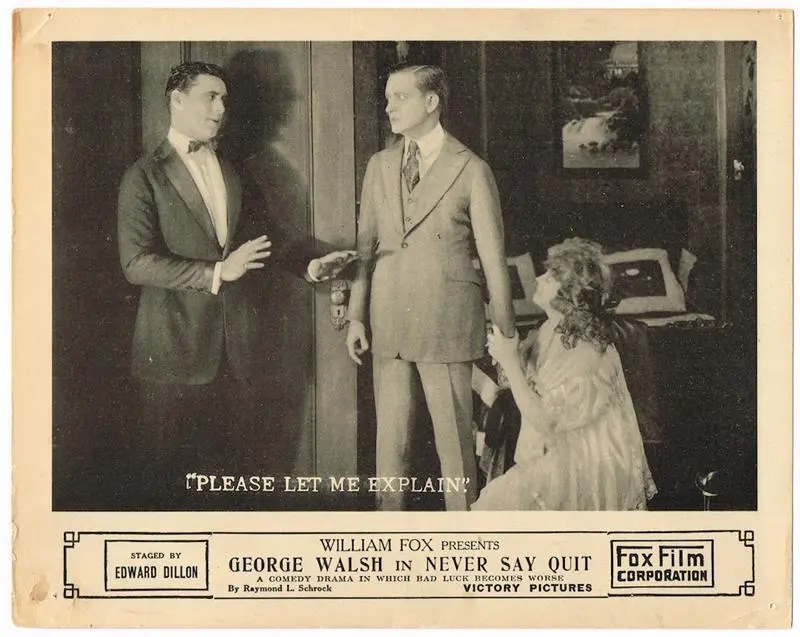
The misfortunes escalate with a relentless, almost theatrical rhythm. He loses at matching coins, an apparently simple game of chance, with a predictability that borders on the absurd. The stock market, a realm where fortunes are made and lost, predictably fleeces him, reducing his holdings to dust. Then comes the utterly humiliating badger game, a classic con that strips him of his remaining dignity and, more importantly, his money. Each incident is a hammer blow, systematically dismantling his financial security and personal confidence. The ultimate indignity arrives when he is arrested for fighting, a consequence of his perpetually unlucky encounters, causing him to miss his aunt's funeral and, with it, an inheritance of $999,998.60. The sum itself, so tantalizingly close to a million, yet just shy, is a cruel joke in itself, underscoring the film's pervasive theme of near-misses and tragic ironies. The narrative here, while playing for laughs, also evokes a profound sense of an individual pitted against an indifferent, if not actively hostile, universe. This persistent string of unfortunate events, while perhaps exaggerated for dramatic effect, resonates with a universal human experience of feeling overwhelmed by circumstances beyond one's control. One might even draw a thematic parallel to the more socially critical narratives of resilience in films like The Habit of Happiness, where individuals navigate life's harsh realities, albeit with a different focus on societal support versus personal fate.
At the heart of Never Say Quit is George Walsh's performance as Reginald Jones. Walsh, a prominent figure in early silent cinema, brings a remarkable blend of physical comedy and earnest pathos to the role. His portrayal is not merely that of a caricature of bad luck; he imbues Reginald with a genuine, if often bewildered, humanity. We see the frustration, the exasperation, and the quiet despair etched on his face as each new disaster befalls him. Yet, crucially, Walsh never allows Reginald to descend into utter defeatism. There's an underlying spark of defiance, a subtle resilience that hints at the heroism to come. His expressive eyes and body language, vital tools for silent film actors, convey the inner turmoil and eventual transformation of a man who, despite everything, refuses to be utterly broken. The early scenes, in particular, rely heavily on his ability to elicit both laughter and sympathy from the audience, a delicate balance that Walsh handles with aplomb. He makes Reginald's plight relatable, transforming the outlandish string of misfortunes into something emotionally resonant. Without a single spoken word, Walsh communicates the sheer weight of Reginald's burden, making his eventual triumph all the more satisfying. His acting style, characteristic of the era, is broad enough for the back rows of a nickelodeon, yet nuanced enough to convey genuine emotion, a testament to the skill required to perform without dialogue. He is the quintessential everyman, thrust into extraordinary circumstances, making his journey from victim to victor a compelling spectacle.

Seeking a desperate escape from his terrestrial jinx, Reginald boards a schooner, embarking on what he hopes will be a journey of anonymity and peace. This shift from the urban landscape of repeated failure to the vast, unpredictable expanse of the ocean marks a pivotal turning point in the film's narrative. It is here that fate, for once, seems to offer a glimmer of hope, introducing him to millionaire Professor Lattimore and his captivating daughter, Helen (Jean Acker). The premise of their presence – ostensibly on a quest for buried treasure – adds a layer of classic adventure to the burgeoning melodrama. The nascent romance between Reginald and Helen is handled with the tender delicacy typical of silent film courtships. Helen sees past Reginald's seemingly endless streak of bad luck, drawn instead to his inherent goodness and, perhaps, the quiet strength that lies beneath his bumbling exterior. This burgeoning connection acts as a powerful catalyst, providing Reginald with a purpose beyond merely surviving his next misfortune. It is love, in its purest cinematic form, that begins to reforge his character.
However, the respite is short-lived. The tranquil beauty of the open sea soon gives way to a darker current of human perfidy. Reginald, ever the unwitting magnet for trouble, uncovers a sinister plot: the schooner's captain, far from being a simple mariner, intends to hold Professor Lattimore for ransom. This revelation dramatically elevates the stakes, transforming the film from a quirky character study of misfortune into a full-blown adventure thriller. The shift is expertly managed by writers Ralph Spence and Raymond L. Schrock, who pivot the narrative from episodic bad luck to a focused, external threat. Reginald is no longer merely reacting to fate; he must now proactively fight against a tangible evil. This sudden intensification of peril, where a seemingly innocent voyage turns into a desperate struggle for survival, mirrors the unexpected twists found in films like The Menace of the Mute, where an ordinary setting quickly becomes a stage for high-stakes danger and intrigue, demanding unforeseen heroism from its protagonists.

The climax of Never Say Quit is a thrilling spectacle, a testament to the action filmmaking capabilities of the era. Reginald, driven by his newfound love for Helen and a righteous fury against injustice, undergoes a remarkable transformation. The perpetually unlucky, somewhat hapless man suddenly becomes a force to be reckoned with. He single-handedly confronts the entire crew, engaging in a series of brawls that showcase Walsh's athletic prowess and the film's commitment to delivering exciting physical action. This is not merely a fight; it is Reginald's ultimate defiance against a world that has constantly beaten him down. Each punch thrown, each crew member subdued, is a symbolic victory over his past misfortunes. The scene is choreographed to maximize tension and exhilaration, demonstrating how silent cinema could effectively convey intense physical conflict without dialogue.
Having overcome the formidable odds presented by the mutinous crew, Reginald then demonstrates quick thinking, forcing the wireless operator to signal a U. S. Destroyer. This moment, while a classic *deus ex machina*, is nevertheless incredibly satisfying within the film's context. The arrival of the Destroyer, sailing majestically into view to rescue our heroes, signifies the ultimate triumph of good over evil, and more importantly, of Reginald's burgeoning good luck over his lifelong jinx. It is the definitive turning point, a clear demarcation between the old, cursed Reginald and the new, heroic one. The resolution is swift and joyous: Reginald and Helen marry, a perfect storybook ending that validates Reginald's perseverance and the power of love to alter one's destiny. The film's message is clear: even when the odds are stacked against you, and fate seems determined to see you fail, an unwavering spirit and the courage to act can ultimately change your stars. This theme of justice and rightful triumph, often against formidable adversaries, resonates strongly with the moral fortitude depicted in films such as Blind Justice, where the narrative similarly champions the ultimate victory of virtue.
The narrative structure of Never Say Quit, penned by Ralph Spence and Raymond L. Schrock, is surprisingly sophisticated for its time, balancing episodic comedy with a focused adventure plot. The initial string of Reginald's misfortunes establishes his character and the film's central premise, drawing the audience into his plight with a mix of humor and empathy. This prolonged setup ensures that when the narrative shifts to the high seas and the ransom plot, the stakes feel genuinely high, and Reginald's transformation into a hero is earned rather than merely presented. Spence and Schrock skillfully weave together elements of slapstick, melodrama, and adventure, creating a cohesive, engaging story that never loses sight of its core message. The pacing is deliberate in the early stages, allowing for character development through repeated adversity, but accelerates dramatically once the maritime plot unfolds. The writers understand the power of visual storytelling, crafting scenes that are inherently dramatic or comedic without relying on intertitles for exposition, a hallmark of effective silent film screenwriting. Their ability to build tension, develop a compelling romance, and deliver a thrilling climax within the constraints of the medium speaks volumes about their craft. The dialogue, conveyed through intertitles, is sparse but effective, serving to advance the plot or highlight key emotional beats rather than to explain every nuance. This economy of storytelling is a masterclass in early cinematic narrative, demonstrating how much could be communicated through action, expression, and clever plotting. The film serves as a fascinating example of how writers of the era experimented with genre blending, offering audiences a rich tapestry of entertainment that transcended simple categories.
Released in 1916, Never Say Quit stands as a valuable artifact, offering a window into the burgeoning world of American cinema during the mid-1910s. This was an era of rapid expansion and innovation, where filmmakers were still defining the language of the moving image. Audiences of the time were hungry for diverse entertainment, and films like this, which combined elements of comedy, romance, and thrilling adventure, were immensely popular. The film's production values, while perhaps modest by today's standards, would have been considerable for its time, showcasing an ambition to tell grander stories. The use of location shooting for the schooner scenes, for instance, adds an authentic touch that elevates the drama. The film's blend of lightheartedness and serious peril, its exploration of individual struggle and ultimate triumph, resonates with the diverse emotional landscapes being explored in contemporary films. For example, the narrative's ability to pivot from personal comedic tragedy to an external, high-stakes adventure might be seen as a more action-oriented counterpart to the character-driven explorations of resilience in films like A Gay Old Dog, which similarly grappled with life's unpredictable turns, albeit through a more domestic lens. The universal appeal of a hero overcoming impossible odds is a timeless trope, one that found fertile ground in this period, and it is a message that transcends cultural boundaries, much like the compelling narratives found in international productions of the era, such as Der Mandarin or Les chacals, all striving to capture audience attention through dramatic storytelling.
Moreover, the dramatic rescue by a U.S. Destroyer, while a convenient plot device, also speaks to a broader cultural context of national pride and the burgeoning role of modern military forces, themes that could be seen in more explicit forms in documentary-style war films of the period, like The Battle and Fall of Przemysl. Never Say Quit, in its own way, offers a more intimate, personal battle that mirrors the larger struggles depicted elsewhere. The film's overarching theme of personal agency and the ability to shape one's destiny, even when faced with overwhelming circumstances, provides a fascinating contrast to more fatalistic narratives or those focusing on societal pressures, such as Everywoman's Husband, where individual choices are often constrained by social expectations. Reginald's journey from darkness to light, both literally and metaphorically, is a powerful and enduring motif in storytelling, reminiscent of the narrative arcs found in films like Out of the Darkness, where characters emerge from dire circumstances into hope. The element of uncovering a hidden plot and the dramatic revelations on the schooner, while not a pure mystery, shares a thematic resonance with the unraveling of secrets found in films like Los misterios de Barcelona, where hidden truths drive much of the narrative tension. The romantic subplot, while not the sole focus, adds a vital layer of emotional depth, illustrating how personal connections can fuel courage and change, much like the relationships explored in Bobbie of the Ballet, where love and personal ties often define character motivations. Reginald's ultimate triumph over adversity and his proving of worth, despite a lifetime of setbacks, mirrors the profound personal transformations seen in films like The Blindness of Divorce, albeit with a more uplifting conclusion. His quest for purpose and identity, against a backdrop of grand adventure, evokes the spirit of self-discovery present in narratives such as The Shepherd of the Southern Cross, where individuals find their true calling in challenging environments. The transformation of Reginald from a hapless victim to a decisive hero offers a compelling character arc, demonstrating the power of inner strength to overcome external perceptions, a theme also subtly explored in films like The Painted Madonna, where true character is revealed through trials. Ultimately, the film's very title, “Never Say Quit,” encapsulates a timeless and universally appealing message of enduring optimism and resilience. It's a foundational principle that, while perhaps less overtly dramatic in a film like The Girl Angle, remains a potent force in storytelling across all genres. Never Say Quit, therefore, is more than just a historical curiosity; it is a lively, engaging piece of early cinema that continues to charm with its spirited portrayal of one man's epic battle against the whims of fate, proving that sometimes, all it takes is a steadfast heart and a refusal to surrender to change one's stars forever.

IMDb —
1935
Community
Log in to comment.