DbcultAccessing Vault...
5.1/10
Senior Film Conservator
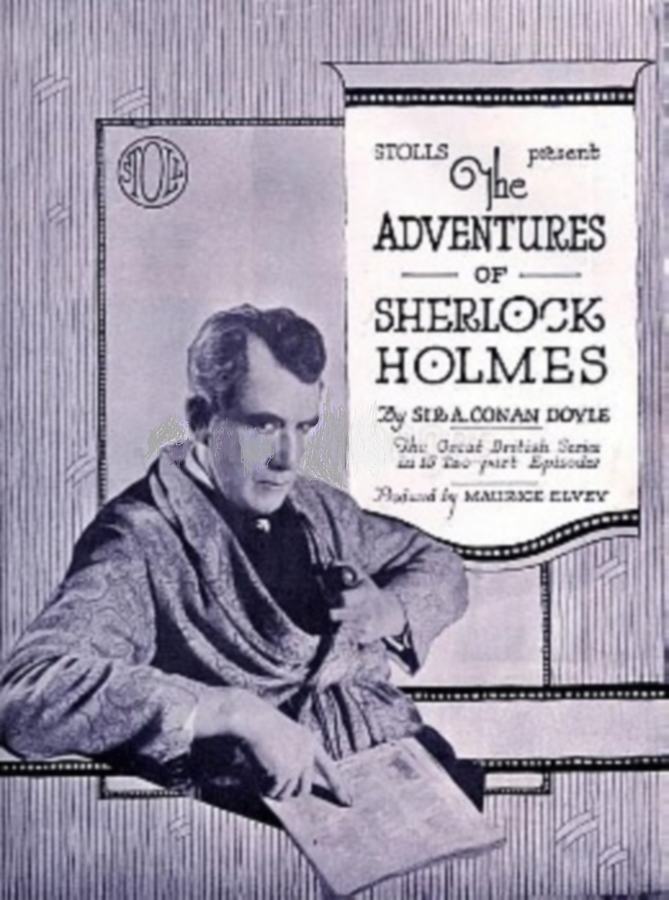
A definitive 5.1/10 rating for a film that redefined the boundaries of cult cinema. The Adventures of Sherlock Holmes remains a cornerstone of transgressive art.
Imagine a London where the Thames breathes soot and the moon drips silver nitrate onto cobblestones. That is the world the Stoll Picture Productions conjured at the dusty tail-end of the silent era, flinging open a portfolio of forty-five miniature nightmares stitched together by the thinnest of intertitles. No orchestral scores, no spoken cues—only the percussive chatter of projector sprockets to keep time while Eille Norwood’s Holmes glides through the murk like a renaissance stiletto.
Contemporary viewers, spoiled by Dolby thunder, will find the hush unsettling—yet that hush is the very secret. Silence amplifies the minute: the tremor of Willis’s moustache as Watson registers yet another grotesque revelation; the metallic rasp of a match struck inches from a corpse’s eye; the almost sexual shiver of Norwood’s nostrils when a clue blooms in the ether. The films flirt with the cadaverous, but never decay into gratuitous Grand-Guignol; restraint is their religion.
Where later epics sprawl, these shorts distil. The Man with the Twisted Lip compresses a novelette into twelve electric minutes, jettisoning every carriage ride and parlour chit-chat until only the existential vertigo remains: a respectable financier scrubbing off soot to reveal the face of a professional beggar beneath. The camera, starved of dialogue, clings to hands—hands clutching a blood-stained twopence, hands smoothing newsprint over a windowpane to block prying eyes. The economy is ferocious, yet nothing feels amputated; rather, the plot is folded like Japanese steel.
Compare this to the contemporaneous Miss Lulu Bett, whose small-town dramedy luxuriates in domestic minutiae, or the Gothic murk of The Bells (1914)—both fascinating, yet neither achieves the haiku-like compression of these Holmes vignettes.
Basil Rathbone owned the voice; Jeremy Brett owned the neurosis; Benedict Cumberbatch owned the algorithmic mind. Eille Norwood, meanwhile, owns the silhouette. Tall, gaunt, aquiline, he moves with the hush of a cat stalking chess pieces across a parquet floor. Watch him in The Dying Detective: feigning fever, he lets his limbs go slack while the eyes—those feral lanterns—roam the room, cataloguing dust motes, measuring exits, calculating how long before Watson’s credulity snaps.
Arthur Conan Doyle, notoriously stingy with praise, telegrammed the actor: “You are the Holmes I saw in my mind’s eye.” Praise does not come purer. Norwood prepared by reading the canon nightly, fasting to achieve the detective’s consumptive leanness, and—most radical—refusing theatrical eyebrow acting. His Holmes is cerebral flame encased in glacial reserve; emotion surfaces only in micro-tremors, a twitch of a lip corner when a puzzle yields.
If Norwood is scalpel, Hubert Willis is flannel. Portly, blinking, forever a half-second behind the maestro, his Watson rescues the stories from alien genius by tethering them to human fallibility. Note the sequence in The Devil’s Foot: the pair wake in a Cornish cottage to find a paralytic woman sprawled on the flagstones, her brothers convulsing in armchairs. Norwood circles the room like a planet tracing an orbit; Willis stands rooted, pupils dilating, the embodiment of every audience member’s primal dread.
Where Nigel Bruce would later buffoon, Willis underplays. His loyalty is quiet, almost stoic; you believe he would charge a pistol-toting thug not from bravado but because someone must, and Holmes’s skull is too precious to hazard.
Maurice Elvey, directing the bulk, understood that silence is not absence but negative space pregnant with implication. He favours deep-focus tableaux: foreground candle, middle-ground suspect, background window framing a constable’s bobbing lantern. The eye roams, restless as Holmes himself. Intertitles appear sparingly, often no more than five per reel; instead, plot points are embedded in mise-en-scène—a torn ticket stub wedged in a fob watch, a smear of phosphorescent clay on a kid glove.
Contrast this with the frantic cross-cutting of Stuart Webbs: Das Panzergewölbe, a German detective series that same year. Elvey’s British restraint feels almost monkish, yet the tension coils tighter precisely because the camera refuses to hyperventilate.
London’s fog is not weather but moral atmosphere, smudging boundaries between street beggar and stockbroker. The titular Twist is revealed in a cellar opium den whose clientele look like extras from Doré’s illustrations of Dante. The epiphany—that the missing gentleman and the grotesque mendicant are one—lands harder here than in the page, because celluloid forces the viewer to inhabit the same chiaroscuro where identity dissolves like morphine on the tongue.
A chamber piece of deception. Holmes pretends tropical fever to lure a venomous planter into confession. The camera lingers on a wax-sealed pill, a glass ampoule trembling like a hummingbird heart. Norwood’s feigned delirium borders on possession; veins throb at his temples like cartographic rivers. The payoff is not the confession but the flicker of triumph that melts into compassion as the criminal collapses, another soul broken on the wheel of imperial greed.
Arguably the most cinematic: a windswept Cornish coastline, a prehistoric stone hut, and a family struck cataleptic by an ancient poison. Elvey double-exposes a hallucinated demon dancing amid the flames of the family hearth—a primitive yet uncanny effect predating the Expressionist nightmares of Christa Hartungen by several years.
Gothic horror masquerading as domestic whodunit. A young governess is paid preposterously to copy out nonsense words and wear a specific silk dress at twilight. The reveal—a half-crazed father imprisoning his own daughter in a turret to block her inheritance—anticipates Hitchcock’s Vertigo in its obsession with surveillance and female commodification. Note the tinting: interiors bathe in cobalt, exteriors in sulphur yellow, signalling moral contamination seeping outward.
Only twenty-three of the forty-five survive complete; the rest moulder in archive cans, frames blistered like smallpox. The BFI’s 4K restoration of the extant reels premiered at the 2022 London Film Festival with a newly commissioned score by Neil Brand. Seeing the nitrate scars—those white comets streaking across Holmes’s cheekbone—adds patina rather than detracts; they are celluloid bruises, reminders that even genius is mortal.
Against the frothy marital farces of The Marriage Market or the sentimental melodrama of Anna Karenina (1920), these shorts are a black-ink corrective—proof that British cinema could rival continental masters when it traded sentiment for intellect. They lack the racial audacity of Lime Kiln Club Field Day or the proto-feminist bite of Battling Jane, yet they carve a different niche: the triumph of rational empathy over chaos.
Fast-forward a century: the BBC’s Sherlock and CBS’s Elementary both borrow visual shortcuts pioneered here—textual superimpositions standing in for thought processes, extreme close-ups of trivial objects that balloon into epiphany. The difference is tempo. Modern TV edits like a twitchy meth addict; Norwood’s Holmes savours the pregnant pause, the mental chess move played out in flicker-behind-the-eyes before the body commits.
Because in an age of algorithmic recommendation, these films restore the pleasure of genuine investigation. You must hunt reels, decode degraded intertitles, squint through scratches to glimpse the truth—a meta-Holmesian exercise. Streaming platforms shuffle them under generic "vintage" labels; cinephile societies project them in basements with a single piano for accompaniment. Yet the reward is communion with a purer storytelling idiom, one that trusts shadow, gesture, and the human face to carry the weight of worlds.
Verdict: Imperfect, fragmentary, and utterly indispensable—like the detective himself.
IMDb 6.5
1927
Community
Log in to comment.