DbcultAccessing Vault...
7/10
Senior Film Conservator
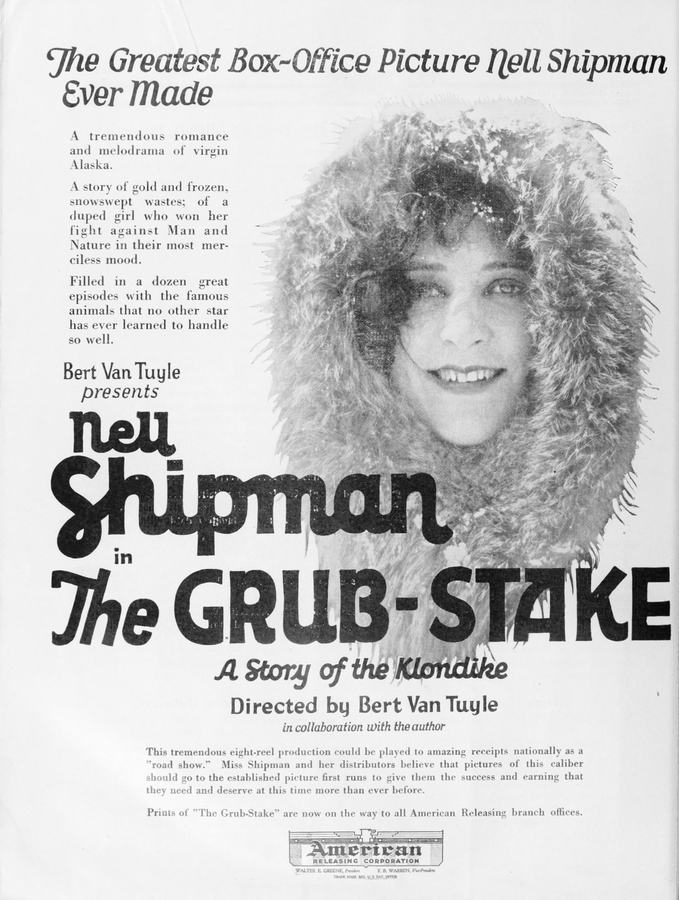
A definitive 7/10 rating for a film that redefined the boundaries of cult cinema. The Grub Stake remains a cornerstone of transgressive art.
In the pantheon of silent cinema, few figures loom with as much rugged defiance as Nell Shipman. While the burgeoning Hollywood studio system was busy codifying the damsel in distress, Shipman was out in the frozen reaches of the North, literally and figuratively carving her own path. The Grub Stake (1923) is not just a film; it is a manifesto of independence. It stands as a stark departure from the sanitized melodramas of its era, offering a visceral, tactile experience that remains startlingly modern in its gender politics and environmental reverence.
The film introduces us to Faith Manners (Shipman), a character whose very name suggests a vulnerability that the film systematically dismantles. We see her initially through the lens of urban artifice, lured by the oily charms of a gambler who promises marriage and a fortune in the Yukon. This setup mirrors the thematic concerns found in Sheltered Daughters, where the fragility of young women is often their undoing. However, Shipman’s Faith is forged from different steel. When she discovers that her 'grubstake' is actually a ticket to a dance hall—a euphemism for the carnal trade—the film pivots from a romance into a survivalist thriller.
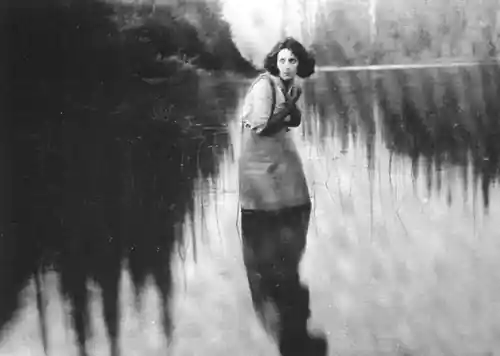
Shipman, who also wrote the screenplay, refuses to allow Faith to wait for a savior. In a move that subverts the tropes seen in contemporary works like Should a Husband Forgive?, Faith takes charge of her own destiny. She doesn't seek a husband's absolution; she seeks her father’s survival and her own autonomy. The scene where she gathers her ailing father and an eccentric old prospector to flee into the wilderness is a masterclass in tension, highlighting the physical stakes of her rebellion.
The Yukon of The Grub Stake is not the postcard-perfect backdrop of a studio backlot. It is a malevolent, breathing entity. Shipman, known for her 'God’s Country' aesthetic, utilized the natural world with a documentary-like precision that puts the artifice of Hearts or Diamonds? to shame. The cinematography captures the blinding whiteness of the snow and the oppressive silence of the pines, creating a sense of isolation that is both beautiful and terrifying.
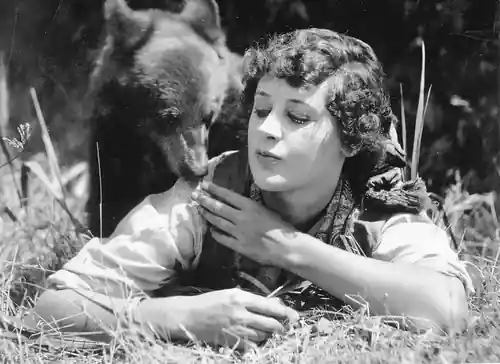
The journey into the wilderness is a quest for a 'lost gold claim,' but the gold serves as a MacGuffin. The true treasure is the reclamation of the self. As they traverse the tundra on a stolen dogsled, the film shifts into a mode of poetic realism. The interaction between the humans and the animals—Shipman was a staunch advocate for animal welfare and used her own menagerie—is organic and devoid of the 'trained' stiffness seen in lesser films like Stuffed Lions. There is a genuine sense of kinship between Faith and her sled dogs, a mutual understanding of what it takes to endure the unendurable.
Nell Shipman’s writing is characterized by a high lexical diversity of emotion. She doesn't rely on simple intertitles to convey depth; she relies on the physicality of her actors. Walt Whitman, as the ailing father, provides a poignant counterpoint to Faith’s vitality, while the old miner (George Berrell) offers a touch of grizzled wisdom that grounds the more fantastical elements of the plot. The narrative structure is far more complex than the straightforward morality plays of A Hoosier Romance or the satirical bite of More Truth Than Poetry.
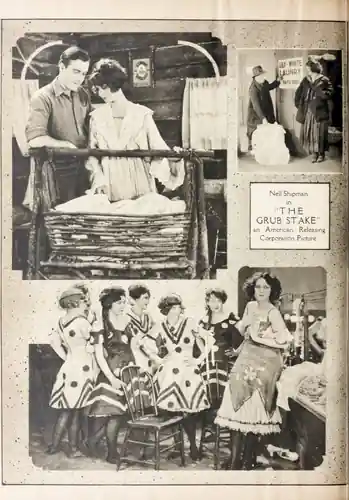
The film’s pacing is deliberate, allowing the desperation of the characters to seep into the viewer. We feel the bite of the frost and the weight of the supplies. Shipman understands that in the wilderness, the greatest enemy is not the villainous gambler—though he remains a looming threat—but the entropy of the environment. This focus on the elemental struggle elevates the film above the typical 'outlaw' narratives found in Notorious Gallagher; or, His Great Triumph.
When placed alongside the polished studio productions of the early 1920s, such as Paying the Piper or The Crucible, The Grub Stake feels like an outlier. It lacks the urban cynicism of the former and the rigid moralism of the latter. Instead, it offers a raw, unfiltered look at survival. Shipman was operating outside the safety net of the majors, and that sense of risk is palpable in every frame. The film doesn't have the whimsical charm of Lili or the stylized experimentation of Storm P. tegner de Tree Små Mænd; it is a work of grit and bone.

Even compared to other 'frontier' films like Nobleza gaucha, Shipman’s work is uniquely focused on the female experience. Faith Manners is not a symbol of the nation or a prize to be won; she is a technician of her own survival. She handles the dogs, manages the supplies, and protects the men in her care. In this regard, the film shares a spiritual DNA with Eve in Exile, though it executes its themes with a much more punishing realism.
The visual language of The Grub Stake is remarkably sophisticated. Shipman and her cinematographers use the vastness of the landscape to emphasize the psychological states of the characters. When Faith is in the city, the framing is tight and claustrophobic, mirroring her entrapment. As she enters the Yukon, the frames open up, reflecting a terrifying but necessary freedom. This visual evolution is far more advanced than the standard 'theatrical' staging seen in The Perfect '36' or the kinetic but often chaotic Flying Colors.
The use of natural light is particularly noteworthy. The low winter sun creates long, dramatic shadows that stretch across the snow like the fingers of fate. There is a sequence involving a blizzard that remains one of the most harrowing depictions of weather in silent cinema. It wasn't achieved with fans and salt; it was shot in the actual elements, and that authenticity radiates through the screen. The physical toll on the actors is visible, adding a layer of meta-narrative about the difficulty of making independent art in such conditions.
As the film reaches its climax—a confrontation that is as much about moral reckoning as it is about physical survival—the audience is left with a profound sense of respect for Shipman’s vision. The Grub Stake is a film that refuses to blink. It acknowledges the cruelty of men and the indifference of nature, yet it finds a sliver of hope in the sheer persistence of the human spirit. Faith Manners doesn't just find gold; she finds a way to exist in a world that sought to commodify her.
In the grand tapestry of film history, Nell Shipman is often relegated to a footnote, but The Grub Stake demands a central place. It is a work of immense courage and artistic integrity. It challenges the viewer to look past the 'silent' label and see the roaring fire of a filmmaker who would not be silenced. For those seeking a cinematic experience that combines the epic scale of the frontier with the intimate nuance of a character study, this film is an essential stake in the ground. It is a reminder that sometimes, to find your fortune, you have to be willing to lose everything in the snow.
Ultimately, The Grub Stake survives as a beacon for independent creators. It proves that with enough grit, a singular vision can overcome the lack of studio resources. Shipman’s legacy is not just in the frames of this film, but in the path she cleared for every female filmmaker who followed, proving that the wilderness is not a place to be feared, but a place to be conquered on one’s own terms.

IMDb 5.9
1934
Community
Log in to comment.