DbcultAccessing Vault...
Cult Review
Senior Film Conservator
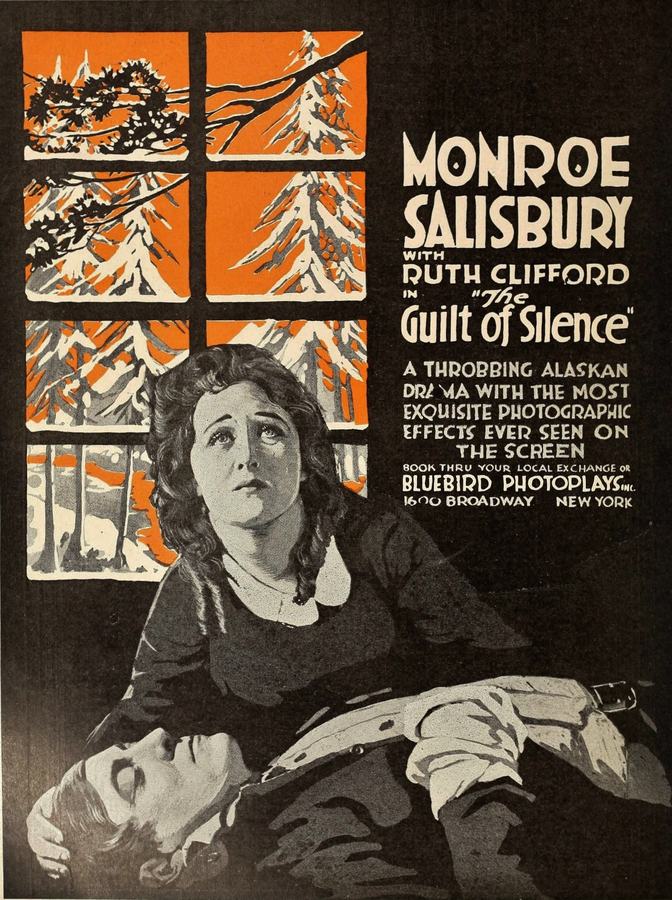
In the annals of early cinema, few narratives capture the raw, untamed spirit of human drama quite like Ethel Hill’s meticulously crafted scenario for 1918’s The Guilt of Silence. This silent film, a potent brew of deceit, burgeoning affection, and eventual vindication, plunges viewers headfirst into the unforgiving landscape of the Alaskan gold rush, where fortunes are made and lost, and moral compasses often spin wildly off course. It’s a compelling testament to the era’s storytelling prowess, demonstrating how visual narrative, devoid of spoken dialogue, could convey profound emotional depths and intricate plot machinations. The film doesn't merely present a story; it unravels a tapestry of human fallibility and resilience, painting its characters with broad, yet surprisingly nuanced, strokes against a backdrop of breathtaking, if treacherous, wilderness.
At the heart of this intricate drama lies Mathew Smith, portrayed with poignant vulnerability by Monroe Salisbury. His ordeal begins with an act of simple human kindness, offering sanctuary to Amy (Betty Schade) and her disreputable husband, Gambler Joe (Sam De Grasse), during a brutal snowstorm. Their recompense is a callous robbery, a betrayal that sets in motion a chain of events both tragic and transformative. Smith’s desperate pursuit through the unforgiving elements doesn't just lead him astray; it robs him of his voice, leaving him metaphorically and literally silenced. This enforced muteness, earning him the moniker “Silent Smith,” is a brilliant narrative device, amplifying his helplessness and the profound injustice he suffers. Salisbury’s performance, relying entirely on physical expression and the power of the gaze, masterfully conveys Smith’s inner turmoil, his frustration, and his quiet dignity even in the face of adversity. This exploration of a character stripped of their primary means of communication resonates with the thematic concerns found in other silent era films exploring similar vulnerabilities, such as The Menace of the Mute, where silence itself becomes both a burden and, eventually, a catalyst for revelation. The loss of voice here is not merely a plot point; it’s a symbolic representation of Smith’s disempowerment, a visual metaphor for the inability to speak truth to power.
The film’s early sequences, depicting Smith’s near-fatal exposure and subsequent rescue by Harkness (Alfred Allen), establish a powerful sense of frontier camaraderie, a bond forged in shared hardship. This nascent friendship, however, is a fragile thing, destined to be tested by the insidious machinations of Amy. Betty Schade’s portrayal of Amy is a masterclass in silent film villainy; she is beautiful, calculating, and utterly devoid of scruples. Her re-entry into Smith’s life, as Harkness’s unsuspecting bride, injects a palpable sense of dread into the narrative. The irony of Smith, unable to speak, forced to witness the woman who robbed him now ensnaring his rescuer, is a bitter pill. This dramatic irony is expertly handled, creating tension that builds relentlessly, mirroring the slow-burning fuse of a betrayal that is destined to explode. The film’s strength lies in its ability to build this emotional pressure without a single spoken word, relying instead on close-ups, subtle gestures, and the escalating rhythm of its editing. It captures a psychological intensity that would be revisited in later, more complex dramas like The Inner Shrine, where unspoken desires and hidden pasts drive the central conflicts.
The arrival of Mary (Ruth Clifford), Harkness’s daughter, introduces a vital new dynamic. Clifford imbues Mary with a youthful innocence and a keen sense of observation, making her an ideal foil for Amy’s duplicity. The burgeoning romance between Mary and Silent Smith is depicted with a tender delicacy, a quiet understanding that transcends the need for verbal communication. Their love story, blossoming amidst the simmering tensions, provides a much-needed emotional anchor, a glimmer of hope in an otherwise darkening narrative. However, this fragile happiness is swiftly imperiled by Amy’s relentless deceit. Her giving birth to a child, coupled with Mary’s growing suspicions, sets the stage for the film’s climactic confrontation. The script, penned by Ethel Hill, demonstrates a remarkable sophistication in weaving these threads of romance and suspicion into a cohesive, escalating dramatic arc. Hill’s ability to construct such a tight, emotionally resonant plot without the benefit of spoken dialogue is a testament to her skill as a writer, a craft that often went unsung in the early days of cinema but was crucial to the success of films like this. Her narrative precision allows for complex emotional states to be conveyed through visual cues, a skill that elevates the film beyond mere melodrama.
The film reaches its dramatic zenith upon Harkness’s return. Amy’s audacious accusation, falsely pinning paternity on Silent Smith, is a moment of breathtaking villainy. The ensuing scene, where Harkness, consumed by rage and betrayal, shoots Smith, is genuinely shocking. It’s a visceral depiction of how easily trust can be shattered and how devastating false accusations can be. Monroe Salisbury’s portrayal of Smith during this sequence is particularly impactful; his physical pain is mirrored by the profound emotional agony of being wrongly condemned. Yet, it is this very act of violence that, paradoxically, liberates Smith. The trauma of the wound restores his voice, a powerful moment of symbolic and literal release. This narrative twist, while perhaps leaning into melodrama, is executed with such conviction that it feels earned, a divine intervention designed to rectify a terrible wrong. The restoration of voice is not just a plot convenience; it's the ultimate triumph over his earlier disempowerment, allowing him to reclaim his agency. This pivotal moment of revelation, where truth bursts forth after prolonged suppression, finds echoes in other films of the period where justice is hard-won, such as Eye for Eye, which also explores themes of retribution and the unveiling of hidden truths.
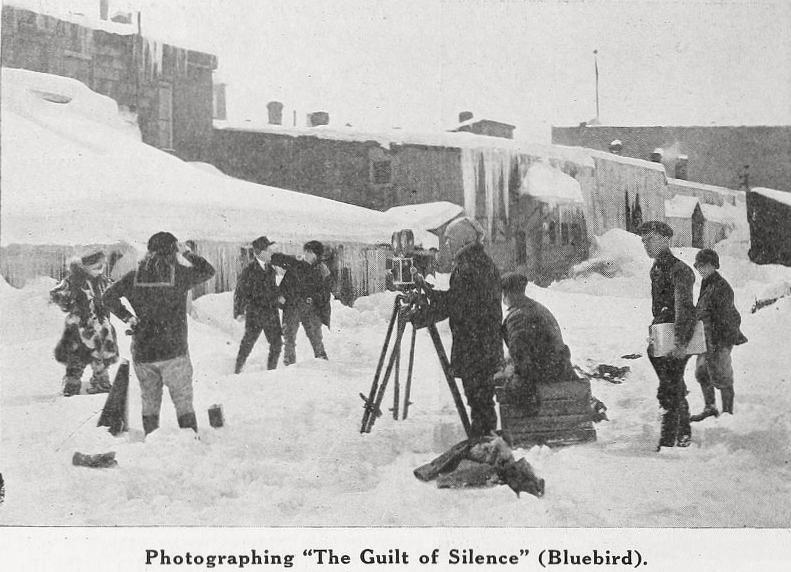
The final act of The Guilt of Silence is dedicated to the meticulous unmasking of Amy’s deception. The introduction of an Indigenous character, familiar with Amy and Gambler Joe’s past treachery, provides the crucial evidence needed to expose her as a married woman long before her union with Harkness. This plot device, while perhaps a touch convenient by modern standards, serves its purpose effectively in the context of early cinematic storytelling, providing a clear and definitive resolution to the tangled web of lies. It underscores the film’s commitment to a moral universe where justice, however delayed, ultimately prevails. The revelation not only exonerates Smith but also exposes Amy’s true character, leaving her utterly disgraced. Betty Schade’s performance, from manipulative seductress to exposed villainess, is compelling, showcasing the range required for silent film acting where every gesture and facial expression must convey a multitude of emotions.
Ruth Clifford’s Mary, whose faith in Smith never entirely wavered despite the damning accusations, returns to him, solidifying their bond. The film concludes with a somewhat unconventional, yet ultimately satisfying, resolution: Silent Smith, now restored to his full faculties and rightfully united with Mary, settles down with Harkness. This ending, rather than simply punishing the villain and rewarding the virtuous, suggests a more nuanced understanding of community and forgiveness, an acknowledgment that even after profound betrayal, new forms of familial harmony can emerge from the ashes of past conflict. It avoids a simplistic ‘happily ever after’ in favor of a resolution that feels earned through shared experience and the ultimate triumph of truth. This kind of complex interpersonal resolution, where characters must navigate the aftermath of significant emotional trauma, is a hallmark of more sophisticated silent dramas, distinguishing them from simpler fare. It speaks to a depth of character writing that was often overlooked in early film criticism.
Beyond its engaging narrative, The Guilt of Silence stands as a fascinating artifact of early cinematic craft. The film’s visual language, typical of the era, relies heavily on intertitles to convey dialogue and crucial plot information, yet it never feels cumbersome. Instead, the visual storytelling, particularly the use of striking Alaskan landscapes and the expressive performances of its cast, carries the bulk of the emotional weight. The director (uncredited in some records, but the visual style suggests a strong guiding hand) understands the power of the close-up to convey emotion, and the wider shots to establish the desolate beauty and danger of the setting. The pacing, while perhaps slower than modern audiences are accustomed to, allows for a deliberate build-up of tension and character development, drawing the viewer deeper into the plight of Silent Smith. This careful construction of narrative through purely visual means is a testament to the sophistication of filmmaking in the late 1910s, a period often overshadowed by the later 'golden age' of silent cinema.
The performances are uniformly strong, with Monroe Salisbury anchoring the film with his expressive, non-verbal acting. His ability to convey profound suffering, quiet hope, and righteous indignation without uttering a single word is remarkable. Betty Schade, as the conniving Amy, is equally captivating, embodying the archetypal femme fatale whose beauty masks a treacherous heart. Ruth Clifford brings a refreshing earnestness to Mary, providing the moral compass for much of the film. Alfred Allen’s portrayal of Harkness, the well-meaning but ultimately deceived friend, elicits genuine sympathy. Their collective efforts bring Ethel Hill’s intricate scenario to vivid, silent life. The film’s thematic concerns – the corrosive nature of lies, the resilience of the human spirit, the enduring power of truth, and the search for justice – are timeless. These universal themes ensure that The Guilt of Silence remains relevant, inviting audiences to reflect on the complexities of human morality. The way it explores the consequences of hidden pasts and the burden of unspoken truths aligns it with other potent dramas of the era, such as Jealousy, where the destructive force of unaddressed emotional turmoil takes center stage. Furthermore, the film’s depiction of the harsh realities of the gold rush, while perhaps romanticized, offers a glimpse into a specific historical period, adding another layer of interest for contemporary viewers.
In an era dominated by the spectacle of talkies, it is easy to overlook the quiet power of films like The Guilt of Silence. Yet, this film serves as a powerful reminder of the sophisticated storytelling and compelling performances that defined the silent era. It is a testament to the artistry of its creators that a narrative so rich in emotional complexity and moral ambiguity could be conveyed with such clarity and impact through purely visual means. The film doesn't just entertain; it provokes thought about the nature of truth, the consequences of silence, and the arduous journey towards redemption. For those willing to engage with its unique cinematic language, The Guilt of Silence offers a rewarding experience, a poignant window into a bygone era of filmmaking that still resonates with contemporary audiences. It’s a compelling argument for the enduring power of classic narratives, demonstrating that profound stories, when told with skill and passion, transcend the limitations of their medium. Its narrative ambition and character depth rival even later, more celebrated works, making it a truly underrated gem that deserves a place in the pantheon of significant silent films. Its exploration of a character losing and regaining his voice, both literally and figuratively, offers a timeless meditation on the human condition and the enduring quest for justice. Much like The Old Curiosity Shop, which delves into the vulnerability of innocence against a backdrop of societal harshness, The Guilt of Silence uses its setting to amplify the personal stakes of its characters, making their struggles feel all the more visceral. The film’s ability to create such a rich emotional landscape without audible dialogue is a masterclass in visual storytelling, reminding us that true cinematic power lies not just in what is heard, but in what is seen and felt.
IMDb —
1918
Community
Log in to comment.