DbcultAccessing Vault...
Cult Review
Senior Film Conservator
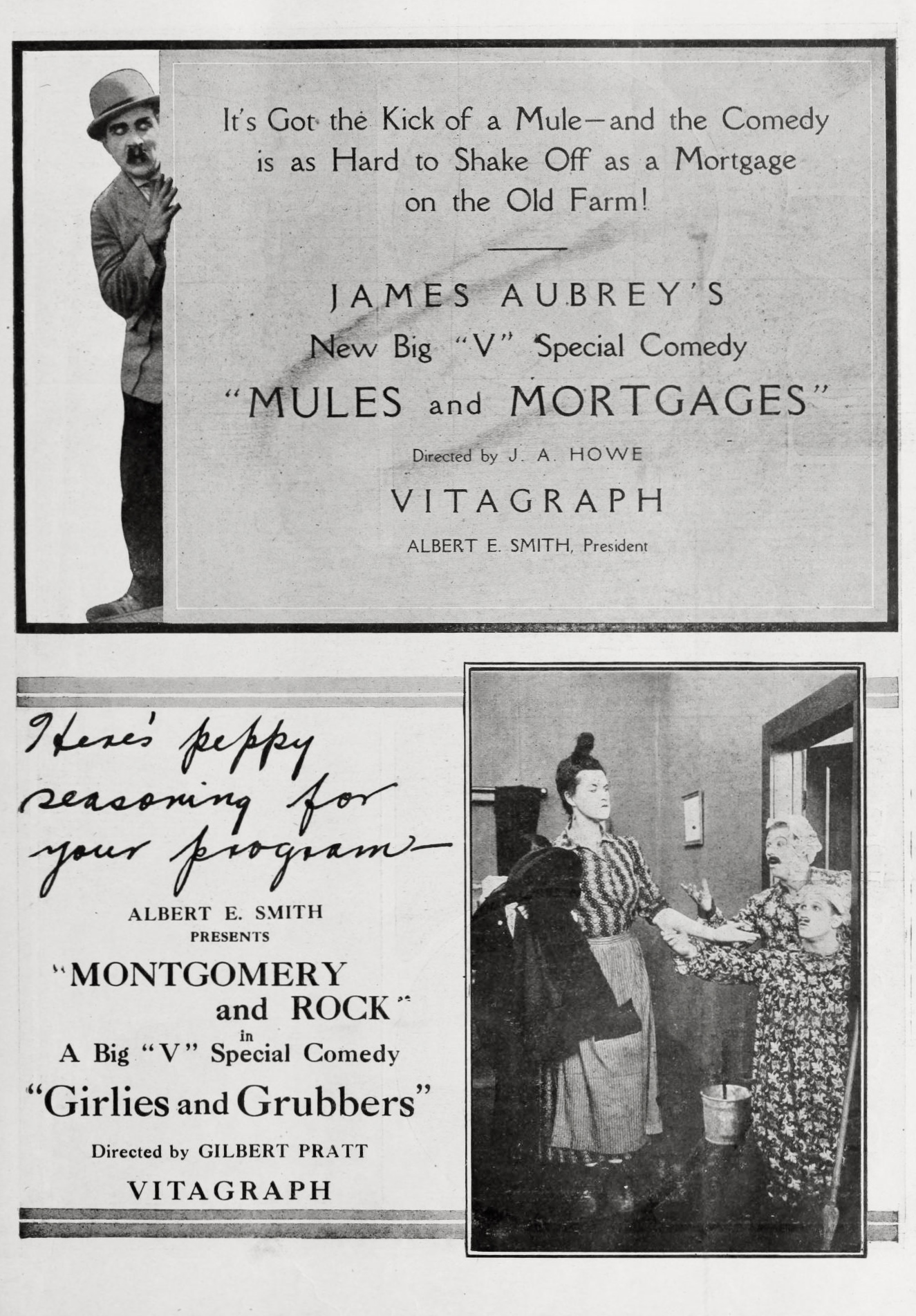
Stepping back into the nascent days of cinema, when flickering images and orchestral scores wove narratives without spoken dialogue, one encounters a treasure trove of human experience distilled into its purest visual form. Among these early gems, Mules and Mortgages emerges not merely as a historical artifact but as a vibrant, surprisingly potent commentary on universal themes of greed, compassion, and the unexpected avenues through which justice sometimes arrives. This 1916 silent short, a delightful concoction of melodrama and slapstick, offers a fascinating window into the storytelling sensibilities of its era, all while showcasing the foundational talents of a young Oliver Hardy in a pivotal antagonistic role. Its narrative, seemingly simple, unfurls with a compelling rhythm, drawing viewers into a world where a community's fate hangs precariously in the balance, threatened by the icy grip of an unfeeling capitalist.
Central to the film's dramatic tension, and indeed its enduring appeal, is the character of Old Man Hardscratch, portrayed with a remarkable early nuance by Oliver Hardy. Even in these formative years, before the iconic pairing with Stan Laurel cemented his place in comedic history, Hardy's physical presence and expressive face were already formidable tools. As Hardscratch, the village’s notorious "nickel-nurser" and "hard-hearted mortgage taxer," Hardy embodies the very essence of avarice. His name itself is a stroke of narrative genius, immediately conjuring an image of a man whose soul is as barren and unyielding as a parched landscape, constantly scratching for every last cent. Hardy’s portrayal isn't merely one-dimensional villainy; there's a certain bumbling, almost pathetic quality to his greed, particularly evident in the scene where he fumbles his ill-gotten gains. This early performance offers tantalizing glimpses of the comedic genius that would later define his career, demonstrating a mastery of timing and a capacity for physical humor that transcends the limitations of silent film. He’s not just a bad guy; he’s a character, a figure both detestable and, in his moments of clumsy misfortune, oddly amusing. His relentless pursuit of payment, his cold refusal to aid the desperate, sets the stage for a classic morality play, positioning him as the immovable obstacle against which the forces of good must inevitably collide. Hardy’s ability to convey such distinct personality through purely visual means — a scowl, a dismissive wave of the hand, the slight swagger of a man who believes himself untouchable — speaks volumes to his burgeoning talent. Much like the archetypal antagonists in other dramas of the era, such as the oppressive forces in The Eternal Strife or the morally compromised figures in The Price of Fame, Hardscratch serves as a clear, tangible representation of the societal ills the narrative seeks to critique and ultimately overcome. His presence anchors the film's ethical framework, making the eventual triumph of justice all the more satisfying.
Opposing Hardscratch’s tyrannical reign is Jim, a character who initially appears to be just another struggling villager, but who quickly emerges as the embodiment of nascent heroism and profound empathy. When the heroine, representing the collective despair of her people, appeals to him for help, Jim’s journey from apprentice blacksmith to community savior truly begins. His apprenticeship under Strongarm, the robust and presumably honest blacksmith, symbolizes a grounding in honest labor and community values, a stark contrast to Hardscratch’s parasitic existence. Jim’s actions are consistently driven by an innate goodness that shines through the narrative. His moment of independent triumph, successfully shoeing a horse and earning a modest two dollars, isn't just a plot point; it's a declaration of self-reliance and skill. Crucially, his immediate use of this hard-won money to purchase milk for a hungry baby—a necessity explicitly denied by Hardscratch—underscores his compassionate nature and positions him as the moral antithesis to the village's oppressor. This act, simple yet powerful, establishes Jim as the audience's emotional anchor, a beacon of hope in the face of systemic cruelty. His quiet determination and unyielding kindness are the very virtues that the film champions, suggesting that true strength lies not in wealth or power, but in one's capacity for human decency. This portrayal of an unassuming hero rising to the occasion resonates deeply, echoing the spirit of other films of the era that celebrated the common person's capacity for courage and moral fortitude, such as the protagonists found in The Bachelor's Romance or even the earnest efforts depicted in The Battle of Life, where individual character often dictates destiny.
Perhaps the most ingenious and delightful element of Mules and Mortgages is the introduction of Minnie, the trained monkey. Her arrival, a gift from Strongarm’s partner Gideon, injects a vibrant, unpredictable energy into the narrative, transforming a potentially grim tale of economic hardship into a lively comedic romp. Minnie is far more than a mere prop; she is a character in her own right, a mischievous force of nature whose antics drive much of the film's lighter moments. The chase sequence between Minnie and the human characters, culminating in her playful observation from the shop roof, is a masterclass in early physical comedy, showcasing the innate humor of an animal’s intelligence and agility. This sequence not only provides much-needed levity but also establishes Minnie's independent spirit and cleverness, traits that become pivotal later on.
However, Minnie's role transcends simple comedic relief. She becomes the ultimate agent of poetic justice. When Hardscratch, in a moment of hubris and carelessness, inadvertently drops his roll of bills, it is Minnie, with her keen observational skills and nimble fingers, who discovers the windfall. The subsequent "comedy business" between Minnie and Jim is a highlight of the film, a charming interplay of human ingenuity and animal instinct. Minnie’s decision to bring the money to Jim, whether by pure instinct or a stroke of cinematic fate, transforms her from a comedic sidekick into a crucial instrument of narrative resolution. This unexpected turn of events not only provides the means for the villagers' salvation but also imbues the story with a sense of whimsical karma, suggesting that even the smallest, most unconventional beings can play a monumental role in righting wrongs. Her actions are a testament to the film's underlying message: that justice, in its most satisfying form, often arrives through the most unforeseen and delightful channels. The monkey’s role also speaks to a particular fascination in early cinema with trained animals, often integrated into plots for both spectacle and narrative convenience, but rarely with such impactful, character-defining results as seen here. Her presence elevates the film beyond a simple morality tale, infusing it with a unique charm and a memorable, unexpected twist. This kind of spontaneous, animal-driven humor and plot device can be seen to a lesser extent in other early comedies, perhaps even in some of the more chaotic sequences of films like The Flying Circus, where unexpected elements often trigger comedic disarray. Minnie’s contribution here is, however, uniquely instrumental.
At its core, Mules and Mortgages is a compelling exploration of justice – not the cold, impartial kind, but a warm, community-driven retribution that feels deeply satisfying. The film masterfully sets up the conflict between the individualistic greed of Hardscratch and the collective well-being of the villagers. Hardscratch’s actions are not just personal slights; they are an assault on the very fabric of the community, threatening to dismantle homes and livelihoods. This creates a powerful emotional resonance, as audiences are naturally drawn to root for the underdog and yearn for the comeuppance of the oppressor. The narrative’s resolution, where Jim uses the serendipitously acquired money to pay off the debts and then physically expels Hardscratch from the house, is a moment of cathartic triumph. It’s a primal act of justice, a symbolic cleansing of the community from the parasitic influence that sought to devour it. The final scene, with Hardscratch ignominiously chased away, leaving behind a grateful populace, reinforces the film's moral compass. It champions the idea that collective spirit and individual acts of kindness can, and will, prevail against the forces of selfishness and exploitation. This theme of communal solidarity against oppressive forces is a recurring motif in early cinema, reflecting societal anxieties and hopes for a more equitable world. Films like The Battle of Ballots, while perhaps focusing on political rather than economic struggle, share this underlying current of a community fighting for its rights and dignity. Similarly, the dramatic stakes in a film like The Colleen Bawn, though rooted in different cultural contexts, often revolve around the protection of innocence and community honor against external threats, reinforcing shared values of justice and belonging.
Despite its brevity and the technological limitations of its era, Mules and Mortgages demonstrates a remarkable proficiency in silent storytelling. The reliance on exaggerated gestures, expressive facial movements, and well-placed intertitles to convey dialogue and plot points is expertly handled. The visual language is clear and direct, ensuring that even without spoken words, the audience fully grasps the emotional stakes and narrative progression. The direction, though uncredited in many historical records, effectively uses framing to highlight key character interactions and comedic beats. The scenes involving Minnie, for instance, are choreographed to maximize her impact, from her nimble escape to her pivotal discovery of the money. The film’s pacing is brisk, a hallmark of short comedies from this period, designed to deliver maximum entertainment in a concise timeframe. This efficiency in narrative delivery is a testament to the foundational principles of filmmaking being established at the time, where every frame had to count. The simple sets and outdoor locations contribute to an authentic, grounded feel, allowing the character dynamics and comedic situations to take center stage. The absence of synchronized sound, rather than being a deficit, becomes an artistic constraint that forces a heightened visual literacy from both filmmakers and audience. Every gesture, every tilt of the head, every prop placement carries amplified meaning, creating a universal language understood across cultural and linguistic divides. This reliance on visual cues for dramatic and comedic effect is a characteristic shared with other early silent films, where the art of pantomime and physical expression was paramount, from the subtle nuances of a dramatic piece like Blind Husbands to the rapid-fire gags of a chase film like High Speed. The expressive performances of the cast, particularly Hardy's, bridge the gap left by the lack of dialogue, making the narrative accessible and engaging.
Oliver Hardy’s performance as Hardscratch is more than just a historical footnote; it's an early indicator of a talent that would profoundly shape the landscape of cinematic comedy. While he doesn't yet exhibit the full range of the "Babe" character he would perfect alongside Stan Laurel, his Hardscratch possesses a recognizable comedic weight and a distinct physical presence. His stern, often exasperated expressions, combined with a certain portly grace even in moments of villainy, lay the groundwork for his future persona. It's fascinating to observe how elements of his later character — the pomposity, the exasperated sighs, the subtly choreographed physical reactions — are already present in nascent form. One can see the seeds of the long-suffering, often put-upon figure who would later be tormented by Laurel’s antics. This early role showcases Hardy’s ability to imbue even a straightforward antagonist with layers of character, making Hardscratch memorable not just for his villainy but for the distinctive way Hardy embodies it. His physical comedy, though subdued in this villainous role compared to his later work, still contributes significantly to the film’s lighter moments, particularly in his clumsy interactions and eventual ignominious retreat. For fans of classic cinema and particularly of Laurel and Hardy, Mules and Mortgages offers a unique opportunity to witness the genesis of a comedic legend. Compare this early character work to some of his slightly later, more developed roles, or even to the nuanced villainy seen in films like Blind Husbands (though a different genre, the complexity of human flaw is present), and one can appreciate the consistent thread of his acting prowess. His capacity for delivering a character that is simultaneously detestable and somewhat laughable is a testament to his innate comedic timing, a quality that would only ripen with time and experience.
What truly allows Mules and Mortgages to resonate even today is its embrace of a universal, easily digestible narrative. The story of good versus evil, the underdog triumphing over the oppressor, and the surprising intervention of fate or a clever animal are timeless tropes that continue to captivate audiences across generations. In an age saturated with complex narratives and sophisticated special effects, there's a refreshing honesty in the straightforward storytelling of this silent short. It reminds us that compelling cinema doesn't always require elaborate budgets or convoluted plots; sometimes, all it takes is a relatable struggle, a memorable villain, an endearing hero, and a dash of unexpected charm. The film’s ability to evoke genuine emotions—frustration at Hardscratch, sympathy for the villagers, joy at Jim’s compassion, and laughter at Minnie’s antics—is a testament to its fundamental human appeal. This enduring power of simple, well-told stories can be seen in other classic narratives of the era, such as The Bachelor's Romance or The Colleen Bawn, which, despite their varied plots, often relied on clear moral lines and emotionally resonant character arcs to engage their viewers. The clarity of its moral message, delivered without pretense, stands as a powerful counterpoint to the often ambiguous ethics explored in more complex dramas like Thais or Het proces Begeer, showcasing the diverse narrative landscape of early film.
Beyond its entertainment value, Mules and Mortgages also serves as an inadvertent historical document, reflecting the social and economic anxieties of early 20th-century America. The figure of the "mortgage taxer" and the threat of eviction were very real concerns for many working-class and rural communities. The film, therefore, taps into a collective consciousness, offering a cathartic fantasy of justice against the seemingly insurmountable forces of financial oppression. It’s a narrative that, while presented with comedic flourishes, addresses a serious underlying issue, allowing audiences to vicariously experience a triumph over exploitation. This blend of entertainment and subtle social commentary is a hallmark of many films from the period, which often used popular genres to reflect or even subtly critique contemporary issues. The portrayal of Hardscratch as an unsympathetic, isolated figure also subtly reinforces societal disapproval of unchecked greed, contrasting it sharply with the communal values embodied by Jim and the villagers. The film, in its own way, participates in a broader cinematic conversation about social justice and economic disparity, a dialogue found in more overtly dramatic forms in films like The Wild Strain or even the moral quandaries presented in The Make-Believe Wife, where economic pressures often drive character decisions and plot points. This silent short, through its accessible narrative, democratizes the discussion of vital societal concerns, making them digestible for a broad audience.
In summation, Mules and Mortgages is far more than a quaint silent short; it is a vibrant, engaging piece of cinematic history that continues to delight and resonate. Its simple yet effective narrative, bolstered by strong character archetypes and the unforgettable presence of Minnie, the monkey, delivers a powerful message about compassion, justice, and the ultimate triumph of community spirit over individual avarice. Oliver Hardy’s early turn as the villainous Hardscratch is a particular highlight, offering a fascinating precursor to his legendary career. For anyone interested in the foundational elements of film, the evolution of comedic performance, or simply a heartwarming tale of good prevailing over evil, this film remains an essential and thoroughly enjoyable watch. It’s a testament to the enduring power of storytelling, proving that even over a century later, a well-crafted narrative, devoid of dialogue but rich in visual expression, can still capture hearts and minds, leaving an indelible mark on its audience. The film stands as a charming reminder that the earliest days of cinema were already brimming with creativity, insight, and a profound understanding of the human condition, capable of weaving tales that transcend time and technological advancements, offering both entertainment and a gentle, yet firm, moral lesson. Its legacy lies not just in its historical place, but in its timeless ability to evoke a smile and a sense of satisfaction, reminding us that even the smallest acts of kindness, and the most unexpected allies, can lead to the grandest victories.
IMDb 5.9
1932
Community
Log in to comment.