DbcultAccessing Vault...
Cult Review
Senior Film Conservator
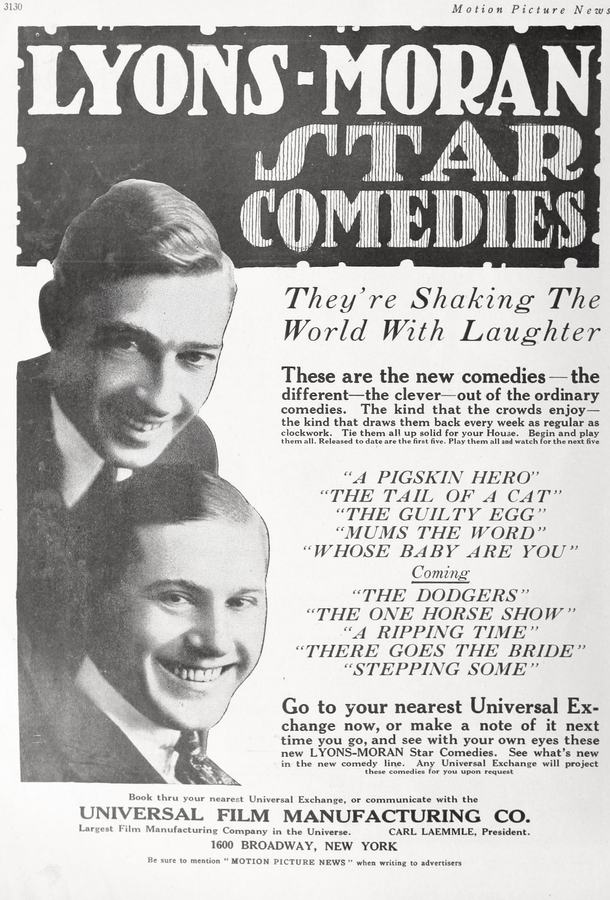
There’s a certain charm to films that embrace their own absurdity with an unwavering conviction, and 'The Guilty Egg' is a prime example of this delightful cinematic phenomenon. From its very premise, one understands that this is not a film to be taken with solemn gravity, but rather to be savored for its whimsical spirit and the quiet, often understated humor it masterfully extracts from a decidedly preposterous situation. Directed and written by the very talents who grace its screen, Eddie Lyons and Lee Moran, this picture offers a glimpse into a bygone era of comedy, where domestic foibles and societal anxieties could intertwine in the most unexpected and endearing ways.
At its heart, 'The Guilty Egg' is a story of expectation versus reality, filtered through the lens of newlywed optimism. Our protagonists, fresh into matrimonial bliss, embark on a venture born of both innocence and a touch of the era's burgeoning interest in self-sufficiency: they acquire a rooster. Now, for anyone possessing even a rudimentary understanding of gallinaceous biology, the expectation that this feathered gentleman will contribute to the breakfast table with daily ovulations is, to put it mildly, an exercise in futility. Yet, it is precisely this foundational misunderstanding that sets the stage for a series of comedic vignettes, each building upon the last with an escalating sense of the ridiculous. The film doesn't mock its characters outright; instead, it invites us to smile alongside them, appreciating the purity of their conviction even as we recognize its inherent flaw.
What makes 'The Guilty Egg' more than just a one-note joke is its clever integration of a more profound, albeit gently handled, theme: food conservation. In an era where resourcefulness was not merely a virtue but often a necessity, the film subtly weaves in the quiet anxieties surrounding food scarcity. The couple's desire for eggs isn't just a quirky fancy; it's presented as a practical contribution to their household economy. This undercurrent of practical concern elevates the film from simple slapstick to a piece of social commentary, however light. The humor derives not only from the rooster's biological limitations but also from the ingenious, and often desperate, measures the couple takes to encourage egg production, or perhaps, to explain its absence. It’s a testament to the writers’ skill that they manage to imbue such a silly premise with a resonant, relatable subtext.
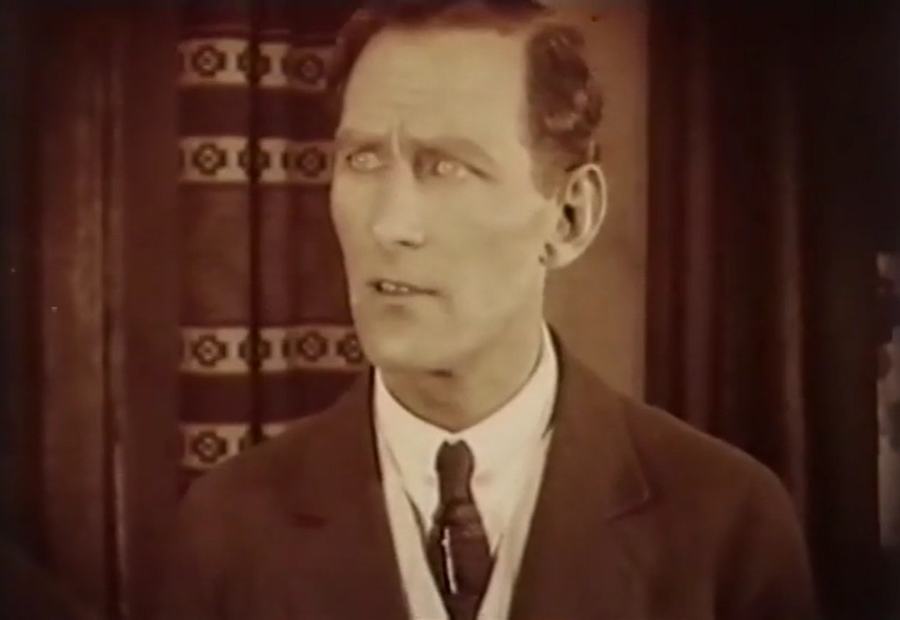
The performances by Eddie Lyons and Lee Moran, who also share writing and directing credits, are foundational to the film's success. Their chemistry as a comedic duo is palpable, a finely tuned dance of exasperation and continued hope. Lyons, with his expressive features, embodies the earnest, slightly bewildered husband, while Moran’s presence, often the catalyst for the escalating shenanigans, provides a perfect foil. Gladys Tennyson, as the wife, grounds the absurdity with a touch of domestic realism, her reactions often mirroring the audience's own incredulity and eventual amusement. Their interactions are a masterclass in silent comedy, relying on exaggerated gestures, facial expressions, and impeccable timing to convey emotion and drive the narrative forward. The humor is never mean-spirited; it's a shared experience, a gentle nudge at human foibles rather than a harsh jab.
As writers and directors, Lyons and Moran demonstrate a keen understanding of comedic pacing. The film builds its laughs incrementally, starting with the initial, innocent misunderstanding and gradually introducing new complications and attempts to resolve the egg-laying dilemma. The visual gags are inventive, relying on classic comedic tropes but executed with a fresh, unpretentious energy. There’s a particular delight in observing the subtle shifts in the rooster’s perceived 'guilt' or lack thereof, as the couple projects their own desires and disappointments onto the oblivious bird. This anthropomorphic projection is a classic comedic device, and here it’s employed with admirable restraint and effectiveness.
The film's exploration of food conservation, though quiet, feels remarkably contemporary even today. While 'The Guilty Egg' treats it with humor, it touches upon a universal theme of resource management. One might draw a thematic parallel, albeit a dramatic one, to a film like Khleb (Bread), which delves into the stark realities of food scarcity in a vastly different, more somber context. 'The Guilty Egg' offers a lighter counterpoint, showing how even in times of potential want, human ingenuity and optimism can prevail, often leading to hilariously misguided endeavors. It’s a testament to the film’s subtle depth that it can evoke such disparate comparisons.
The domestic setting is rendered with an intimate touch, allowing the audience to feel fully immersed in the couple's world. The limited scope of the narrative, focusing primarily on the home and its feathered inhabitant, amplifies the comedic effect. Every frustrated glance, every hopeful peek into the nesting box, every whispered discussion about the rooster's peculiar habits feels authentic to the characters' predicament. This intimate focus stands in stark contrast to the grand scale and expansive narratives of films like The Biggest Show on Earth, which sought to capture vast spectacles. 'The Guilty Egg' finds its spectacle in the small, the personal, and the utterly human.
The film also serves as a charming document of its time, reflecting not only the practical concerns of food but also the societal expectations placed upon newlyweds and the quaint innocence of early 20th-century life. It predates the more complex psychological dramas or the overt political allegories found in later silent films, opting instead for a simpler, more direct comedic approach. Yet, within its simplicity lies a profound understanding of human nature—our desires, our delusions, and our capacity for unyielding hope in the face of biological inevitability. The writing, credited to both Lyons and Moran, is lean and efficient, characteristic of the era's comedic shorts, yet it never feels underdeveloped. Each gag serves a purpose, propelling the story forward while eliciting genuine mirth.
One cannot help but compare the domestic comedy of 'The Guilty Egg' to other films that explore the humorous tribulations of married life. While perhaps less overtly farcical than some, it shares a spirit with films like Nearly Married, which similarly delves into the amusing complexities and misunderstandings that can arise within a marital bond. Both films thrive on the premise of ordinary people navigating extraordinary, or at least highly inconvenient, situations, with humor being the primary coping mechanism. The comedic timing in 'The Guilty Egg' is particularly noteworthy, a testament to the actors' stage experience and their intuitive grasp of visual storytelling in the silent era.
The film’s title itself, 'The Guilty Egg,' is a stroke of genius, immediately setting a tone of playful accusation and anthropomorphic humor. It primes the audience for a narrative where inanimate objects, or in this case, biologically unsuited animals, become central to human drama and comedy. This personification is a recurring theme in much early cinema, allowing for a broader range of comedic scenarios. The film never overstays its welcome, delivering its premise, developing its comedic potential, and concluding with a satisfying, if predictable, resolution that nonetheless leaves the viewer with a warm smile.
In an cinematic landscape often dominated by grand narratives and weighty themes, 'The Guilty Egg' stands as a delightful reminder of the power of simple, well-executed comedy. It’s a testament to the enduring appeal of human foibles, the charming absurdity of domestic life, and the ability of filmmakers to extract genuine laughter from the most unlikely of scenarios. The film's subtle commentary on food conservation adds a layer of unexpected depth, making it more than just a frivolous romp. It's a snapshot of an era, a reflection of human nature, and above all, a genuinely funny piece of cinema that continues to amuse and charm audiences today.
The performances, particularly from Lyons and Moran, are a joy to behold. Their ability to convey so much through gesture and expression, without the aid of spoken dialogue, is a masterclass in the art of silent film acting. Gladys Tennyson's contribution, too, is essential, providing the emotional anchor that makes the couple's plight relatable. The film's visual humor is timeless, relying on universal principles of comedy that transcend the passage of decades. Its legacy lies in its ability to consistently draw smiles, proving that sometimes, the most profound observations about life can be delivered with the lightest of touches and the most absurd of premises.
Ultimately, 'The Guilty Egg' is a small gem of early cinema, a film that doesn't shout for attention but quietly earns its place as a memorable and endearing comedy. It’s a perfect example of how a simple, seemingly silly idea can be transformed into a rich tapestry of humor and subtle social commentary through the skillful hands of its creators. For anyone seeking a dose of vintage charm and a good, hearty laugh rooted in the delightful ridiculousness of human nature, this film delivers with an understated elegance that is both refreshing and deeply satisfying.
IMDb —
1916
Community
Log in to comment.