DbcultAccessing Vault...
6/10
Senior Film Conservator
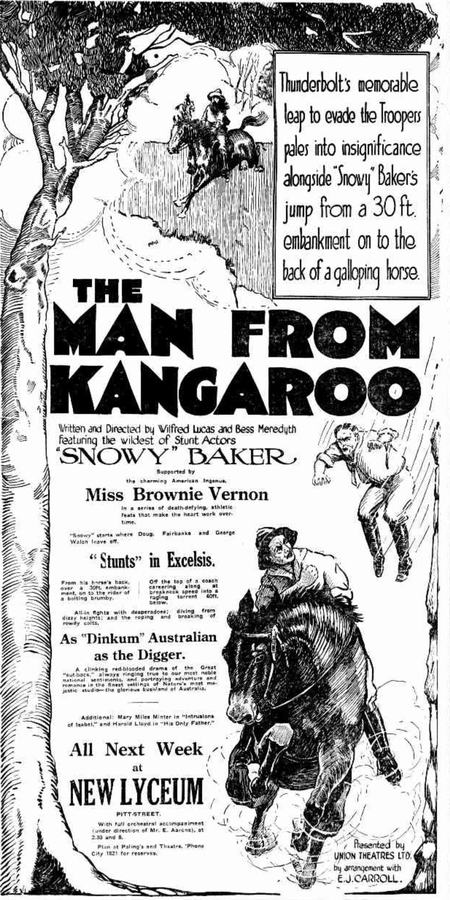
A definitive 6/10 rating for a film that redefined the boundaries of cult cinema. The Man from Kangaroo remains a cornerstone of transgressive art.
If the Australian silent era were a reef, The Man from Kangaroo would be its glinting, half-buried nautilus—irregular, barnacled, yet spiraling with chromatic surprises. If you arrive expecting a polite Sunday-school pamphlet, the film jabs a hard right-cross straight into your pieties.
Director Wilfred Lucas—an American émigré who cut his teeth on Keystone mayhem—transplants the DNA of D. W. Griffith’s moral fables into the blistering outback, yielding a hybrid part sermon, part rodeo. The result is a bushranger-noir that predates the more famous When Big Dan Rides by a full two years, yet remains buried under the celluloid equivalent of red sand.
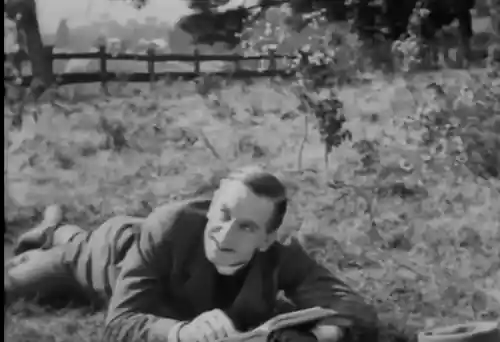
John Harland’s arc—ex-boxer, now Man of God—echoes Paul’s biblical metamorphosis from persecutor to proselytizer, only here the road to Damascus is paved with livestock dung and racialized frontier politics. Each reel tightens the tourniquet around Muriel’s inheritance, transmuting what could have been a creaky melodrama into a study of pastoral corruption. The screenplay, by the indefatigable Bess Meredyth (later to sculpt Ben-Hur’s 1925 chariots), laces muscular dialogue intertitles with pugilistic slang: “Pray in the chapel—punch in the paddock.”
As Harland, Rex ‘Snowy’ Baker radiates a rangy, kinetic Christianity; his nostrils flare like bellows stoking the forge of righteousness. Watch the subtle flex of his shoulder when he spies Muriel in the Kalmaroo congregation: a boxer’s instinct repressed by vestments. Opposite him, Agnes Vernon’s Muriel is no fainting dowel but a woman whose gaze can out-squint the Mallee sun. Their chemistry is less swoon, more standoff—two revolvers cocked in a drought-stricken corral.
Meanwhile, Wilfred Lucas himself dons the black cravat of Martin Giles, oozing sanctimonious avarice. Every time he fingers the orphaned girl’s ledger, the gesture is accompanied by a microscopic smirk that anticipates the corporate sharks of A Woman Who Understood.
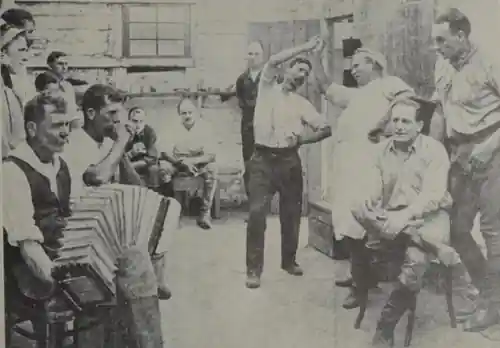
Cinematographer Robert Kurrle (later to lens The Mark of Zorro) makes the outback a character: gums stretch like arthritic supplicants; dust motes swirl in shafts of cathedral light inside a bark-roofed mission. Note the sequence when Harland teaches lads to box at golden hour: silhouetted fists against a molten sky, evoking Meissonier’s Barricade but with pre-adolescent scruffs instead of Parisian communards.
Intercutting between Sydney’s cobblestones and Kalmaroo’s gibber plains, the montage anticipates the dialectical urban/rural spasms of En vinternat. Yet Kurrle’s antipodean palette—ochre, spinifex green, bruised mauve—roots the film in a topsoil you can almost smell.
Released in 1920, the narrative is steeped in White Australia mythology: Indigenous presence is erased, pastoral expansion naturalized. Still, the film inadvertently exposes settler fragility—churches that buckle before a handful of bushrangers, economies that hinge on forged signatures. Compare this with the ecclesiastical self-flagellation of Der Stellvertreter; here guilt is sublimated into muscular rescue, not theological reckoning.
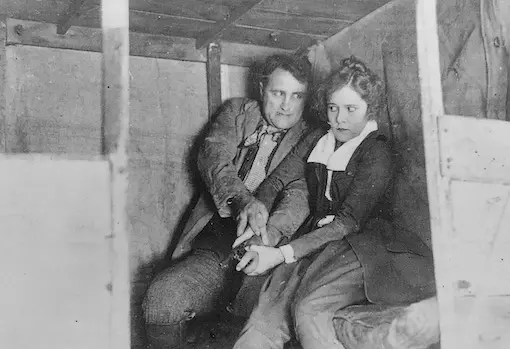
At 68 minutes, the pacing is a gallop—chapters elide with whiplash urgency. One moment Harland shears sheep; the next he’s trading jabs with Red Jack in a gulch. Contemporary viewers raised on languid prestige TV may gasp at the economical storytelling, yet the compression feels honest to a culture where tomorrow’s drought might obliterate today’s parable.
Muriel’s role oscillates between pawn and provocateur. When she chides Harland for timidity, her words sting worse than Red Jack’s whip. The film flirts with proto-feminist beats, though ultimately it capitulates to damsel tropes once the coach barrels toward the river. Still, Vernon’s final glare—soaked, defiant—suggests a woman already plotting revenge on the patriarchal ledger, prefiguring the political bite of The Woman in Politics.
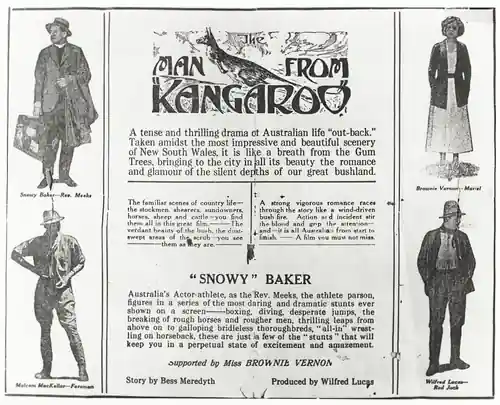
The Man from Kangaroo treats faith like a branding iron: potentially purifying, probably painful. Harland’s sermons are filmed in low angles that inflate him into colossus, yet Lucas repeatedly undercuts the sanctity—cut to Giles counting tithes like Scrooge, or to boys mimicking Harland’s uppercuts behind the manse. The film neither genuflects nor sneers; it wrestles, Jacob-like, with the angel of institutional religion, not unlike the spiritual skirmishes in The Greater Law.
Snowy Baker, Olympic fencer and real-life surf lifesaver, choreographs his own falls. The bridge leap—performed by a stunt double onto a hidden sandbar—was shot with a hand-cranked Bell & Howell cranked to 18 fps then under-cranked to 12 fps for impact, yielding a frenetic blur that makes modern CGI look narcoleptic. Compare this kinetic honesty to the overcranked fisticuffs of Sansone e la ladra di atleti.
For decades, The Man from Kangaroo survived only in desultory stills at the National Film and Sound Archive. Then, in 2022, a 35mm nitrate reel—curling like old bark—surfaced in a Rochester attic once owned by itinerant exhibitor Leonie Miller. NFSA’s 4K photochemical restoration removed mold blooms yet retained gate weave, thereby preserving that tremulous silence unique to the teens. A new score by Amanda Brown (The Go-Betweens) layers electric violin over didgeridoo drones, avoiding didactic nationalism while honoring the sonic void of 1920 exhibition.
Set Kangaroo beside Cupid’s Hold-Up and you notice antipodal temperaments: both traffic in hold-ups, yet where the latter plays larceny for laughs, Lucas’s film treats robbery as ontological—every acre stolen twice, first from First Peoples, then from heirs. Against the expressionist angst of Der müde Theodor, Kangaroo opts for muscular optimism: salvation through sweat.
Upon release, the film minted £46,000 domestically—princely for 1920—yet critical discourse was drowned by the thunderclap of Hollywood’s star system. Today, its DNA resurfaces in outback noirs like Wake in Fright and The Proposition, proving that Australia’s cinematic psyche remains stuck between pulpit and penitentiary.
The Man from Kangaroo is neither Sunday sermon nor barroom brawl—it’s the bruised knuckle you press against your lip while reciting the Lord’s Prayer. It asks: can violence be a sacrament? Can virtue survive without muscle? The answers, like the film itself, are gloriously, maddeningly unfinished. Seek it out—preferably on a big screen where the dust motes can settle on your own skin—and prepare to exit shaken, maybe converted, definitely thirsty for a beer.
IMDb —
1913
Community
Log in to comment.