DbcultAccessing Vault...
Cult Review
Senior Film Conservator
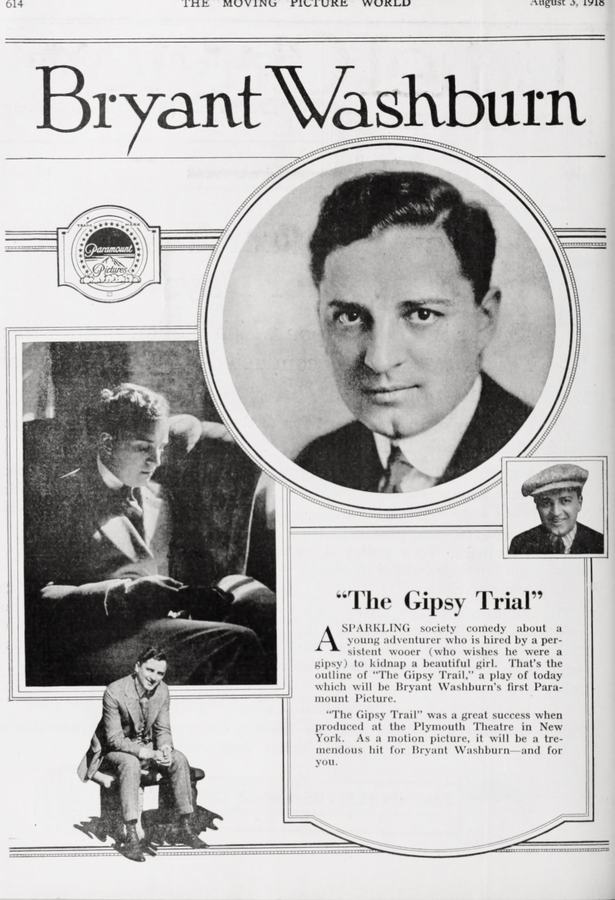
Imagine, if you will, a universe where Cupid subcontracts. Edward Andrews—milquetoast magnate in the making—doesn’t merely woo; he outsources seduction itself. The ledger of his longing balances on a single line-item: hire someone else to steal the woman he cannot even bring himself to serenade. Enter Michael Rudder, ink-stained troubadour from Dublin via every newsroom that ever smelled of Turkish tobacco, a man who could sell sand in the Sahara or, more pertinently, abduction as aphrodisiac.
The film’s first reel unspools like a champagne saber: swift, showy, and dangerously effervescent. Cinematographer Georgie Stone bathes the nocturnal escape in cobalt gels, so that every hedgerow becomes a theatre curtain, every panting locomotive a Greek chorus. The effect is less kidnapping than elopement with paperwork pending. Frances, played by Wanda Hawley with a combustible mix of curiosity and proto-feminist defiance, never quite registers as victim; rather she is tourist of her own narrative, sampling danger the way a sommelier swirls Bordeaux.
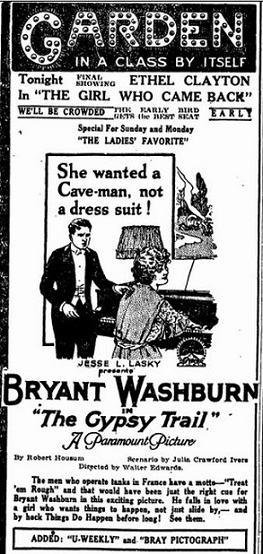
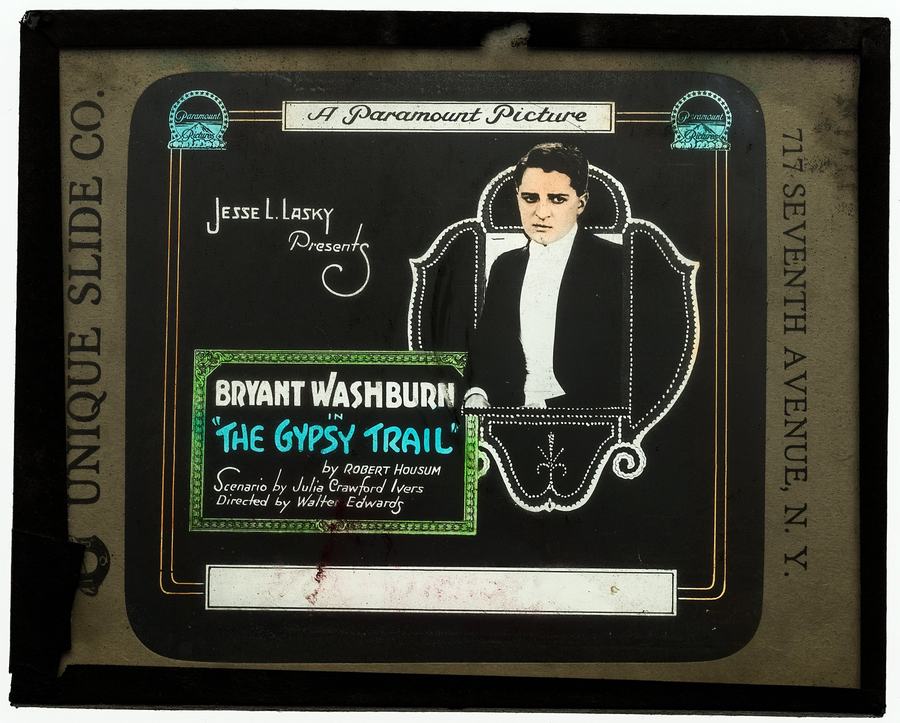
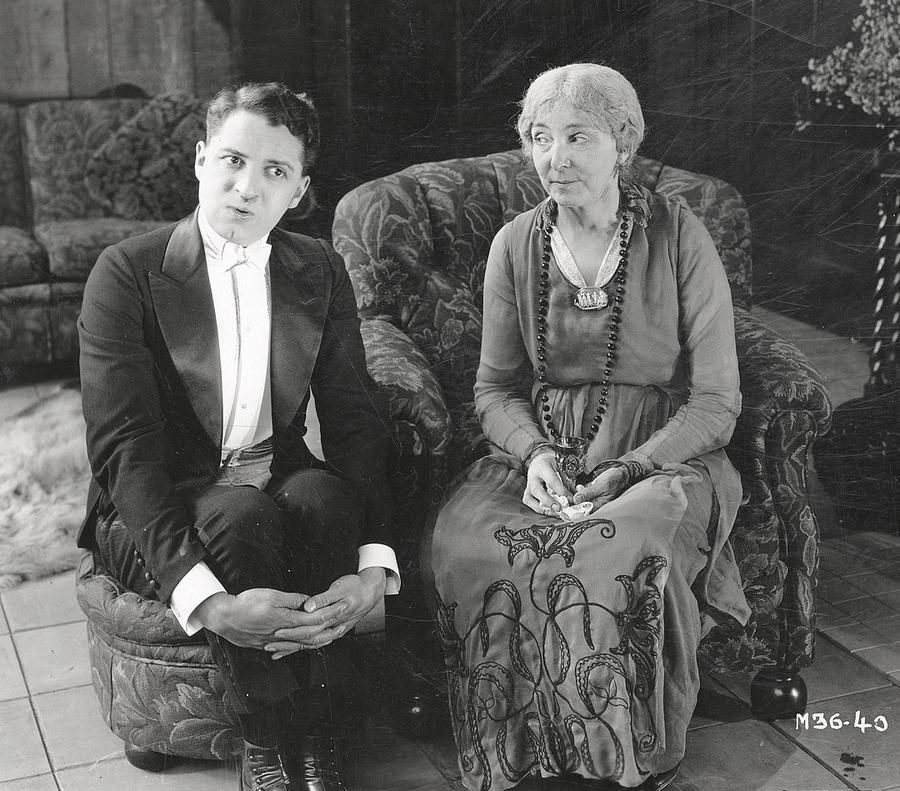
Casson Ferguson’s Michael Rudder strides through the frame as if he has leasehold on the horizon itself—jacket rakishly unbuttoned, eyes glittering like mica flecks. Watch the micro-gesture when he first registers Edward’s proposition: a half-smile that flits from amusement to calculation, a ledger of his own, scribbled on the air. His chemistry with Hawley crackles; yet the film’s emotional stealth bomber is Bryant Washburn’s Edward. Note the way his shoulders crumple inward the instant Frances praises Michael’s bravado—an implosion you feel in your own ribcage. Silent cinema rarely gets credit for such granular acting, but Washburn communicates renunciation via the simple act of smoothing a glove that is already smooth.
Director Robert Housum and scenarist Julia Crawford Ivers confect a world where natural elements double as emotional barometers. The gypsy campfire sequence—shot largely in day-for-night tinting—bleeds amber and carmine across the frame, suggesting both warmth and hazard. Compare this to the marble-cool interiors of Grandma Andrews’ manor, where lace doilies lie like snowflakes on mahogany, and you perceive the film’s covert thesis: domesticity is cryogenic; wanderlust is incendiary. Even the font of the intertitles shifts accordingly—art-nouveau filigree for Michael’s world, crisp Roman capitals for Edward’s.
Modern critics might damn the premise as transactional misogyny, yet The Gypsy Trail subtly inverts the scopophilic economy. Frances, though initially object of exchange, finishes as subject of choice—her final pivot to Edward executed not by narrative decree but by ocular assertion: a lingering close-up where she surveys both suitors, the camera obliging her perspective. In 1922, this was revolutionary: the female spectator within the film becomes the female spectator of the film, collapsing the fourth wall like silk negligee.
Archival notes suggest the original road-show boasted a live trio performing a pastiche of Irish reels and Grieg-esque nocturnes. Today, most home media releases graft a generic piano track, but cinephiles should seek the Kino restoration featuring a commissioned score by Mairéad Nesbitt—her violin mimics Michael’s restlessness, plucking strings like rain on a tin roof during the abduction, then swelling into legato reconciliation for Edward’s triumph. The synergy is so acute you can almost smell peat smoke.
Where The Avenging Conscience weaponizes guilt through Expressionist shadows, and Lili opts for carnivalesque whimsy, The Gypsy Trail occupies a liminal tonal meadow—too sincere for noir, too pragmatic for fairy-tale. Its nearest cousin might be Her One Mistake, where a single moral lapse ricochets through triangulated desire; yet that film punishes its heroine, whereas here the narrative absolves Frances, granting her volition at the eleventh hour.
For decades the sole surviving print languished in a Parisian basement, foxed and flecked like a leopard. Enter the San Francisco Silent Film Festival’s 2019 crowdfunding campaign—nitrate whisperers used ultrasonic gel separation to lift emulsion layers, then scanned at 4K. The resulting DCP retains cigarette burns and cue dots, preserving the material memory of projection. Streaming platforms compress the grain into mush; if you can’t catch a repertory screening, at least torrent the 35GB MKV rip circulating in cinephile forums—its bit-rate honors every flicker of campfire.
Because in an algorithmic era where dating apps reduce romance to swipe-labor, a film that literalizes courtship as contract labor feels eerily prescient. Because Wanda Hawley’s smile could reboot your faith in human complexity. Because the movie lasts a mere 58 minutes yet incubates enough interpretive eggs to keep a semester of gender-studies classes in perpetual hatch. Because Michael’s parting shot—a medium-long silhouette against the caravan fire—recalls every footloose beloved who ever ghosted you, and Edward’s clasp of acceptance offers the consoling fantasy that kindness, though tardy, can still outrun bravado.
Seek it, screen it, argue over it. The trail may be gypsy, but its footprints are permanent.
IMDb —
1918
Community
Log in to comment.