DbcultAccessing Vault...
6.2/10
Senior Film Conservator
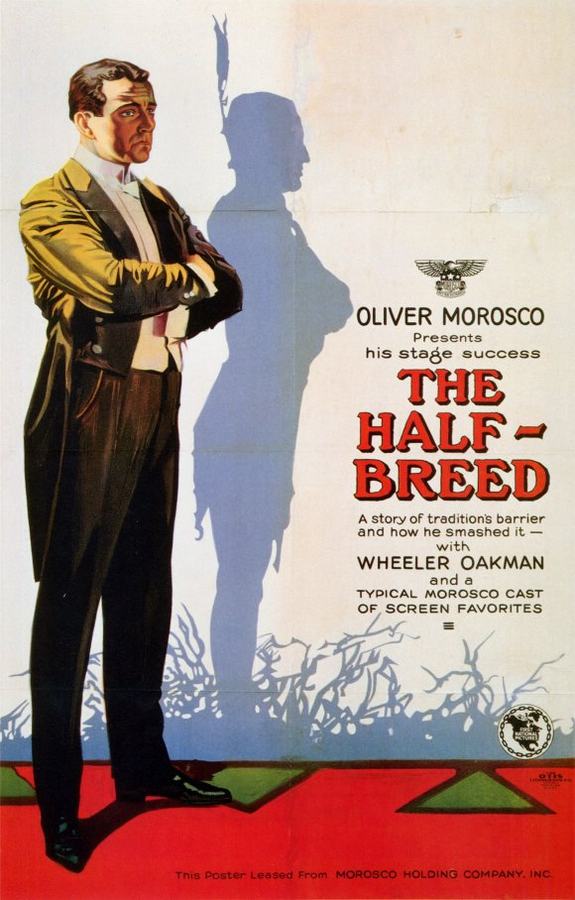
A definitive 6.2/10 rating for a film that redefined the boundaries of cult cinema. The Half Breed remains a cornerstone of transgressive art.
There are Westerns that gallop across the screen waving flags of Manifest Destiny, and then there is The Half Breed—a 65-minute stick of dynamite wedged between Griffith’s paeans to white hoods and Ford’s later hymns to sagebrush camaraderie. Shot in 1922, dumped into distribution purgatory, and resurrected only in smeared 16mm dupes, it plays today like an autopsy performed on the American psyche. The celluloid itself seems bruised; each scratch is a scar of censorship, each missing intertitle a scream snatched mid-throat.
The inciting MacGuffin isn’t gold or oil but paper—vellum inked with the promise that earth belongs to whoever can afford a scribe. Spavinaw’s mother, an Osage woman whose name the film never troubles to utter, once held title to a swath of tall-grass prairie. Judge Huntington—beard like a plantation porch, voice that could hang a man without rope—voids that claim with the languid flick of a quill. In 1922 audiences watched this and saw juridical melodrama; a century later we recognize the same maneuver in pipeline injunctions and reservation disestablishments. The plot’s engine is revenge, yet every piston stroke sprays collateral damage across race, class, and gender.
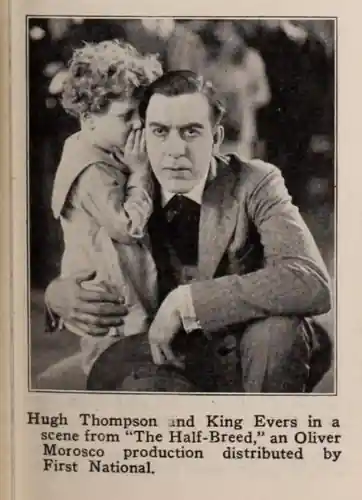
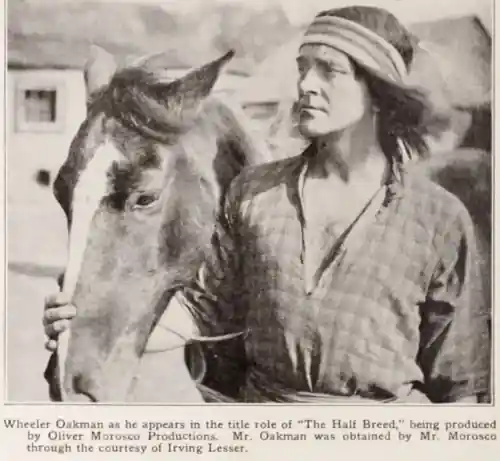
As Delmar Spavinaw, King Evers—born Leon Kauffman, light enough to pass yet proudly claiming Cherokee blood—carries the film on clavicles sharper than Bowie knives. His eyes perform a perpetual dialectic: one moment they brim with Booker T. Washington uplift, the next with Nat Turner fire. Because the film is silent, we read that conflict in micro-gestures: the way he fingers the brim of a Stetson as if weighing assimilation against annihilation, or how his courtly bow to Evelyn carries a tremor of sarcasm. Evers never overplays the noble-savage cliché; instead he weaponizes elegance, proving that a waistcoat can be war-plate and a law-citation a war-club.
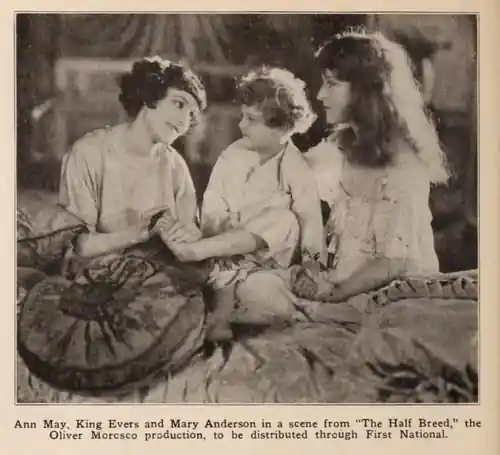
Ann May sashays into frame like a promissory note the frontier forgot to honor. Evelyn’s first close-up—iris shot contracting until her face becomes a lily suspended in obsidian—suggests a woman already pressed between pages of somebody else’s ledger. She is coveted, bartered, abducted, yet the performance insists on a neurasthenic intelligence: watch her decode Spavinaw’s anguish with the same acuity she applies to Kennion’s land ledgers. The script denies her a rifle or a deed, but May gifts her a blink-and-you-miss-it smirk when the kidnapping coach overturns—proof that complicity can masquerade as victimhood.
Japanese-American actor George Kuwa plays the Mexican cattle thief with such Pancho-Villa panache that present-day viewers may cringe at brown-face. Yet within the film’s racial Rubik’s cube, Juan functions as the unassimilable other who sees through white jurisprudence entirely. In a tavern scene lit by a single kerosene lamp, he teaches Spavinaw how to fold the stolen deed into a paper doll: “Now she dance for us, amigo—no more for the patrón.” The moment is played for roguish comedy, but it also deconstructs property as origami—land reduced to plaything, justice to sleight-of-hand.
Director Charles A. Taylor, a journeyman better known for Victorian potboilers, suddenly channels German Expressionism. Watch the eviction scene: homestead shacks tilt at Expressionist angles against a sky smeared with iodine-red tinting, while the judge’s silhouette looms like a caliph of capital. Later, a stampede becomes a tsunami of horns shot from below, hooves punching the camera lens like fists through parchment. The train finale—black steam serpent devouring horizon—owes as much to Caligari as to The Iron Horse.
Surviving prints lack roughly a third of the original intertitles; the gaps hiss like torn film. What remains reads like broken psalms: “The law is a white man’s dog—loyal only to the hand that feeds.” Or consider Spavinaw’s farewell to Evelyn: “I sought justice, found only jurisdiction.” These fragments, probably penned by suffragist scenarist H.D. Cottrell, throb with modernist economy; they anticipate the laconic cruelty of later Soviet montage.
Most 1922 theaters hired a house pianist; cue sheets suggested “Indian” motifs lifted from Edward MacDowell, followed by barroom rag. Today, stream the film with a playlist of pre-war Osage hymns and Dock Boggs banjo; the juxtaposition turns every frame into a séance. When Spavinaw cradles the wounded Kennion, try Dark Was the Night—Blind Willie Johnson’s slide guitar makes the image quake with contrapuntal sorrow.
Ohio and Pennsylvania boards demanded excisions: the shooting of Kennion shortened, the child-abduction truncated, any hint that Spavinaw “gets away.” Result: a narrative whose moral ledger is deliberately blurred. The surviving climax—train receding into dusk—feels less like escape than like deferred revolution, a reminder that history’s outlaws rarely receive third-act absolution. Compare this to Buster Keaton’s anarchic endings where the couple wanders into horizon’s blank page; here, the page is scorched before they can write a new contract.
The film’s true protagonist is the prairie itself, photographed at magic-hour when grass becomes a golden anarchist flag. Each long shot reminds viewers that America’s foundational crime is not murder but real-estate fraud. Spavinaw’s insistence on maternal title deeds is radical because it rejects the doctrine of terra nullius; the land was never empty, only its paper trail was whitewashed. In one overhead shot, the stolen herd morphs into a dark river that erase property lines—a visual prophecy of eco-rebellions to come.
Evelyn and Doll are both promised, traded, or abducted—female bodies standing in for acreage. Yet the film allows them moments of cartographic rebellion: Evelyn hides a derringer in her garter; Doll navigates by starlight when male guides fail. Their final leap onto the train is filmed in silhouette, gender indistinguishable, suggesting a fleeting utopia where persons escape the ledger of patriarchal ownership.
King Evers’ own ethnicity—African-American and Cherokee—adds metatextual frisson to every scene. When Spavinaw dons white gloves to court Evelyn, the gloves read as both cakewalk and camouflage, a visual metaphor for the minority performer navigating Hollywood’s pigmentocracy. The role could have gone to Sessue Hayakawa or even a darkened white lead; casting Evers weaponizes the film against itself, turning melodrama into vérité.
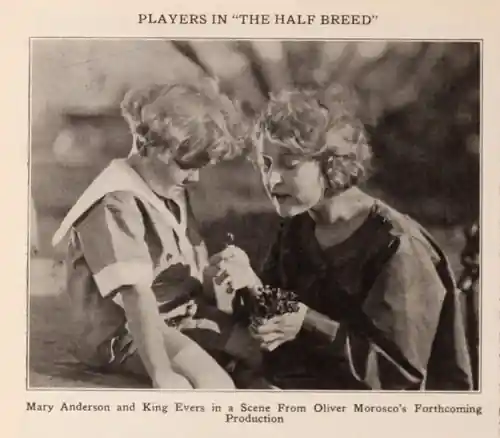
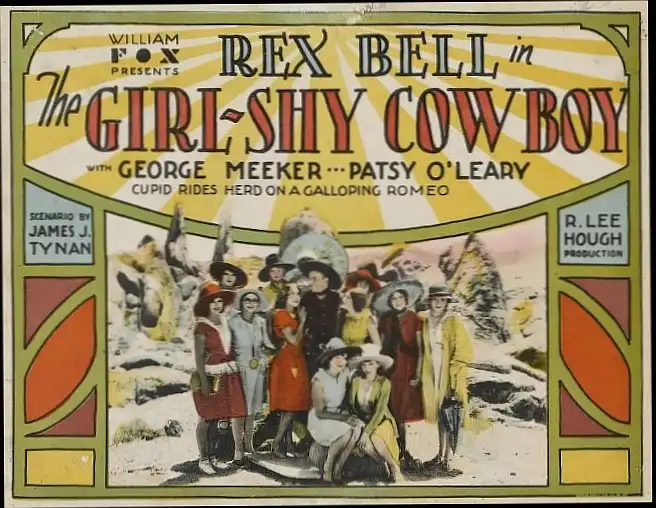
Place The Half Breed beside domestic farces or polar sci-fi and you see how alone it stands. Boots offers flapper escapism; Her Private Husband polishes marital mores. None confronts settler-colonial sin with such prickly immediacy. Only Tempest Cody’s gender-bend matches its anarchic spirit, but that serial is pure carnival next to this funeral waltz.
Screen the film in 2024 and you hear ghost-echoes of Standing Rock. Spavinaw’s paper deed is the precursor to every injunction slapped against indigenous water protectors; the judge’s bench morphs into a federal courthouse in Fargo. Meanwhile the cattle stampede prefigures the stock-market “corrections” that commodify earth into derivatives. The Half Breed doesn’t whisper #NoDAPL—it screams it through a megaphone of nitrate.
Only one 35mm negative survives, housed at the BFI, riddled with vinegar syndrome. Digital 4K scans reveal details smothered in dupes: the Osage beadwork on Spavinaw’s vest, the judge’s Masonic ring, the way dust motes resemble flecks of gold above the stolen herd. Yet each pass through the scanner accelerates molecular decay; the film dies a little every time we resurrect it. Like the land it depicts, the footage is both treasure and crime scene.
Joseph J. Dowling’s Sheriff has only twelve shots but conveys a whole treatise on lawful cowardice: watch his thumb rub the star like a scab he cannot peel. Eugenia Gilbert as the tavern girl flirts with the camera, her kohl-rimmed eyes predicting noir femmes twenty years early. These micro-turns remind us that silents were an ecosystem of glances, not just the leads’ pantomime.
Subtract half a point for the lost footage we may never reclaim, for the brown-face of Juan Del Rey, for the film’s inability to imagine female land ownership. Otherwise, this is a Molotov cocktail hurled into the vault of Western myth. It prefigures The Searchers’ critique of captivity narratives, Little Big Man’s anti-hero arc, even Django Unchained’s revenge fantasia. Yet it remains stubbornly itself: a 1922 indictment of America’s original sin, hurled from inside the belly of the beast.
Watch it at 2 a.m. with subtitles off; let the yellow tint of fire scenes bathe your room in infernal amber. Listen to the clatter of the projector—or, if streaming, to the silence between buffering circles—and feel the floorboards of your living room turn into contested soil. The Half Breed doesn’t end; it evacuates, leaving you stranded between nations, between screams, between the train’s last wheel-chant and the echoes of a deed that was never legitimately ceded. In that limbo, you realize the most radical act is not to seize land but to remember who it was stolen from—every frame of this wounded, luminous film is a mnemonic device for a future repatriation we have yet to enact.
IMDb 6.8
1931
Community
Log in to comment.