DbcultAccessing Vault...
Cult Review
Senior Film Conservator
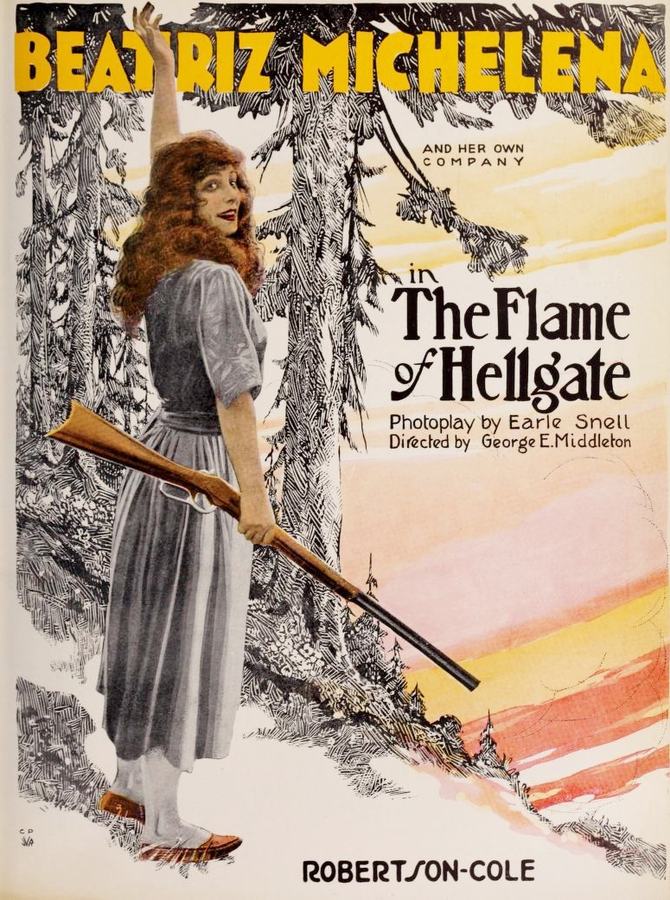
There's something inherently captivating about the American Western, isn't there? That sprawling canvas of dusty plains, rugged mountains, and the eternal struggle between civilization and the wild. Few films capture this primal energy quite like Earle Snell's 'The Flame of Hellgate'. It's not just a story; it's an experience, a visceral journey into the heart of a conflict as old as the land itself. This isn't some romanticized, glossed-over version of the frontier; this is the raw, unvarnished truth of survival, ambition, and the tenacious spirit of those who dared to dream of a life carved from the wilderness.
At its core, 'The Flame of Hellgate' is a timeless David versus Goliath tale, transplanted to the nascent American West. We witness the arduous lives of homesteaders, ordinary folk who have poured their sweat and dreams into taming a hostile landscape. They are the salt of the earth, believing in the promise of self-sufficiency, of owning a piece of the vast, open country. But their aspirations collide head-on with the monolithic power of a cattle baron, a man whose vision of progress is synonymous with unchecked expansion and absolute control over grazing lands. He sees the homesteaders not as neighbors or fellow dreamers, but as inconvenient obstacles, mere specks of dust in the grand scheme of his burgeoning empire. This fundamental clash of ideologies – the communal, agrarian ideal against the individualistic, capitalist drive – forms the bedrock of the film's profound tension. It's a conflict that resonates far beyond the dusty trails and wooden shacks, speaking to universal themes of property, power, and the lengths to which people will go to protect what they believe is rightfully theirs.
The strength of any narrative, particularly one as emotionally charged as this, hinges on its characters, and 'The Flame of Hellgate' delivers with a cast that truly embodies the rugged spirit of the era. Katherine Angus, in particular, shines as a homesteader matriarch, her eyes conveying both an unyielding resolve and the deep weariness of a life lived on the edge. Her performance is a masterclass in understated power, a quiet strength that anchors the entire film. You feel her desperation, her fear, but most importantly, her unwavering hope for a better future for her family. Jeffrey Williams brings a stoic intensity to his role, a man forced to confront the moral compromises inherent in such a brutal struggle. He is the reluctant hero, burdened by circumstance, yet driven by a fierce sense of justice. His internal conflict is palpable, a nuanced portrayal that elevates the character beyond a simple archetype.
Beatriz Michelena adds a layer of emotional complexity, her character often serving as the moral compass or the voice of reason amidst the escalating violence. Her interactions with Clarence Arper, who portrays the formidable cattle baron, are particularly charged, highlighting the vast chasm between their worlds. Arper, by the way, is absolutely chilling as the antagonist. He doesn't chew scenery; he simply *is* the embodiment of ruthless power, his quiet menace more terrifying than any overt display of aggression. William Pike and Albert Morrison, as members of the homesteader community, contribute significantly to the film's ensemble feel, their characters representing the collective struggle. Even the smaller roles, like those played by D. Mitsoras and Clifford Thompson, add texture and authenticity, painting a vivid picture of a community under siege. Earle Snell, as the writer, has crafted characters who feel remarkably real, not just plot devices, allowing their struggles and triumphs to resonate deeply with the audience.
While the technological limitations of early cinema might seem daunting, 'The Flame of Hellgate' uses its visual language to tremendous effect. The sweeping vistas of the Western landscape are not merely backdrops; they are active participants in the drama. The vastness emphasizes the isolation of the homesteaders, the sheer scale of the baron's ambition, and the seemingly insurmountable odds facing the protagonists. The cinematography, even in its nascent form, captures the stark beauty and inherent danger of this world. Dust motes dancing in shafts of sunlight, the ominous shadows cast by distant buttes, the relentless glare of the sun – these elements contribute to an atmosphere of relentless struggle. The film doesn't shy away from showing the physical toll of frontier life, the weathered faces, the calloused hands, the makeshift homes. This commitment to visual authenticity grounds the fantastical elements of the Western genre in a gritty reality, making the stakes feel incredibly high.
To truly appreciate 'The Flame of Hellgate', it's essential to place it within the cinematic and historical tapestry of its time. The early 20th century was a period of immense change, both socially and economically, and the Western genre often served as a mirror reflecting these societal anxieties. While films like A Little Princess offered escapism and heartwarming tales, and France in Arms focused on the global conflicts brewing, 'The Flame of Hellgate' delved into the domestic struggles for land and livelihood that defined much of America's expansion. It shares thematic DNA with other films exploring the harsh realities of life and conflict, such as The Road o' Strife, which also grappled with difficult circumstances, or the more direct confrontations seen in On the Fire. The film's portrayal of a powerful individual attempting to dominate a community for personal gain finds parallels in the industrial titans of the era, making its 'cattle baron' a symbolic figure of an emerging economic order.
Unlike the more straightforward villainy in something like Dead Shot Baker, the antagonist here is driven by a form of logic, albeit a cruel one, that he believes is progress. This nuanced conflict is what elevates the film. It avoids simplistic good-versus-evil dichotomies, instead presenting a more complex struggle where both sides feel justified in their actions, even if one's methods are undeniably oppressive. The film doesn't shy away from the brutality inherent in such clashes, much like the unflinching look at human nature found in The Hun Within, though in a vastly different context. It’s a testament to Earle Snell's writing that these characters, despite the passage of time, still feel relatable in their motivations and fears. The struggle for land, for a home, for a future – these are timeless human desires that transcend any specific historical period.
What makes 'The Flame of Hellgate' continue to resonate with audiences today? It's more than just a historical curiosity; it's a powerful narrative about resilience and the fight for justice against overwhelming odds. The film explores themes that remain profoundly relevant: the exploitation of resources, the struggle of the common person against corporate power, and the definition of 'ownership' in a rapidly developing world. It asks difficult questions about what constitutes progress and at what cost. The homesteaders' battle for their meager plots of land becomes a microcosm for broader societal conflicts, echoing the sentiment of personal liberty against encroaching authority, a theme also explored in films like The Man Inside or Soldiers of Chance, albeit in different narrative frameworks.
The film's resolution, without giving too much away, avoids easy answers. It acknowledges the sacrifices made and the scars left behind, reinforcing the idea that even in victory, there is a cost. This refusal to tie everything up in a neat bow is part of its enduring power. It leaves the audience contemplating the true nature of 'winning' on the frontier. The moral ambiguities presented here are far more compelling than the clear-cut heroics often found in genre contemporaries, making it a more thought-provoking experience than, say, the more lighthearted adventures of Five Thousand an Hour or the romantic entanglements of The Unfortunate Marriage. Even when compared to dramas like The Marriage Ring or Langdon's Legacy, which delve into personal tribulations, 'The Flame of Hellgate' stands out for its grander, societal scope while still maintaining deeply personal stakes.
Ultimately, 'The Flame of Hellgate' is more than just a Western; it's a profound human drama set against an iconic backdrop. It’s a testament to the power of storytelling, demonstrating how compelling characters, a resonant conflict, and a keen understanding of human nature can transcend the limitations of its era to deliver a truly impactful cinematic experience. Earle Snell's narrative vision, brought to life by the committed performances of Katherine Angus, Jeffrey Williams, Beatriz Michelena, Clarence Arper, William Pike, Albert Morrison, D. Mitsoras, and Clifford Thompson, ensures that the flame of this particular Hellgate continues to burn brightly in the annals of film history. It's a film that demands to be seen, pondered, and discussed, offering a window into a pivotal moment in history and the universal struggles that continue to define us. So, if you're looking for a film that combines thrilling action with thoughtful commentary, look no further than this blazing classic. It reminds us that even in the face of overwhelming power, the human spirit, when ignited by the desire for freedom and justice, can indeed become an unstoppable force.
For more classic film reviews and explorations of cinematic history, make sure to explore our archives!
IMDb —
1917
Community
Log in to comment.