DbcultAccessing Vault...
6.8/10
Senior Film Conservator
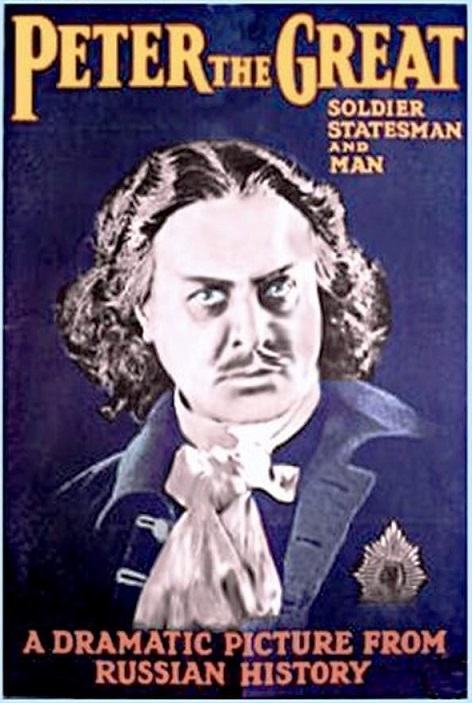
A definitive 6.8/10 rating for a film that redefined the boundaries of cult cinema. Peter the Great remains a cornerstone of transgressive art.
The first thing that strikes you is the scale—no, not the scale of sets, though Ufa poured enough lumber into Petrograd back-lots to refloat the Swedish armada. I mean the moral scale: a man who enlarges his country by shrinking his own soul. Emil Jannings, face like a weather-beated prow, lumbers through corridors wide enough to stable elephants, every footstep a referendum on absolutism. The camera, starved for sound, clings to his shoulders as though afraid of being trampled.
Director Dimitri Buchowetzki, fresh from continental sword-and-cape potboilers, suddenly goes cold-turkey on ornament. He shoots the coronation scene like an autopsy: black marble, guttering tapers, a single bell tolling off-screen. The future emperor, barely twenty-four, receives the orb and sceptre beneath a vault of ice-heavy shadows; the ritual feels less sacral than penal. In that instant you sense the film’s wager: to make majesty look like solitary confinement.
Cut to Amsterdam—sun-bleached, salt-stung, guilders clinking like tiny bells. Here Peter, incognito in a blondish wig, learns to coax oak into keels. The intertitles flash across the screen like semaphore flags: “A czar must know the smell of tar.” Alexandra Sorina, waif-thin and hawk-eyed, drifts into frame as Marta the refugee—later Catherine I—her Lutheran psalter hidden beneath a sheepskin coat. Their meet-cute is a shipyard brawl: Peter’s chisel slips, Marta’s hand bleeds, and the titan bandages her finger with the same delicacy he will later use to sign a death warrant. Even in 1922, long before Method acting, Sorina lets the camera read every beat of her pulse; you can almost taste the iron in the blood.
Back home, the nobles—beards cascading like stale seaweed—gnash at the ukazes. One boyar, played by Bernhard Goetzke with cheekbones sharp enough to slice communion bread, spits: “We are ruled by a carpenter!” The line, hurled like a poisoned javelin, lands harder because the film refuses to subtitle Peter’s Dutch curses; you feel the linguistic chasm between reform and reaction. Cinematographer Fritz Arno Wagner, who would later paint Nosferatu’s plague streets, here floods palace antechambers with diagonal shafts of light, as though God himself were auditing the ledgers.
War arrives like a winter guest—uninvited, overfed, impossible to evict. The narrative detonates at Poltava, June 1709, restaged on a plain of ochre dust just outside Berlin. Buchowetzki eschews the bird’s-eye maps that Griffith loved; instead he plunges us amid hoof-flung clods, musket butts, the wheeze of kettle-drums. Jannings stands atop a scarlet ammunition caisson, arms akimbo, coat flying like a torn regimental flag. In close-up his pupils reflect cannon-flash; the iris seems to dilate with every volley. Historians quibble that the real Peter directed the battle from a litter, wounded. The film prefers the myth: czar as artillery engine, Russia as projectile.
Victory tastes of copper. The screenplay, co-authored by expatriate Sada Cowan, stages a banquet where Poltava’s captured Swedish banners are dragged across the flagstones like tablecloths. Peter forces his trembling heir Alexei—Walter Janssen, all moist nostrils and sidelong glances—to tread on the blue-and-yellow silk. It is the moment when patricide is decided, though the knives will not flash for another reel. Watch Janssen’s fingers: they worry a silver cross until the metal warms, a rehearsal for the later scene where the same hands cling to a prison grille while a muffled drum counts down to flogging.
The middle act pivots toward domestic gothic. Peter, now grizzled, builds St. Petersburg on bones—literally: extras haul sledges piled with skulls that will serve as cellar fill. Marta, rechristened Catherine, presides over a court where dwarfs juggle cannonballs and ladies-in-waiting powder their hair with flour rationed from soldier’s biscuits. Sorina’s transformation from laundress to empress is charted through wardrobe: first a moth-nibbled shawl, then a sable cloak that eats half the frame. She underplays magnificently; when Peter publicly severs her Orthodox baptismal lock, she blinks once—two pale shutters in a marble façade—and you sense an empire tilting.
Meanwhile the Church fumes. Fritz Kortner, eyes phosphorescent beneath a mitre too heavy for his neck, denounces the beard tax, the calendar reform, the foreign surgeons who open veins with unclean lancets. His sermons are shot against tenebrous voids, apostles’ icons flickering like failing torches. Buchowetzki intercuts these tirades with Peter’s secret nightly visits to the shipyard: the czar, stripped to the waist, adzes beams until blisters burst. Each swing of the axe answers the patriarch’s anathemas. The montage is Eisenstein before Eisenstein—contrapuntal, percussive, dialectic.
Conspiracy ferments in taverns that reek of juniper vodka. The camera adopts a conspiratorial low angle: boots, spurs, dropped gloves. Alexei flees to Vienna, is lured back, and the film stages the interrogation in a torture chamber lit by a single magnesium flare. Shadows jitter across stone like black ponies. Peter, entering, carries a candle; the flame gutters in his exhalation, a visual confession that paternal love has already curdled. What follows is not the actual flogging—censors would have shredded the negative—but something more harrowing: a sustained close-up of Jannings’ face while off-screen lashes fall. Every crack of the whip tightens the cords in his neck; his eyes glaze with a sorrow so immense it seems to cave the socket. It is impossible to watch without recalling the actor’s later The Last Laugh, where the whole body becomes a map of humiliation.
The execution is staged at dawn, implied rather than shown: a tower window, a bell toll, crows bursting across a saffron sky. Peter stands below, hand on pommel, as though nailing himself to the hour. From this apex the narrative descends into a death spiral. Catherine miscarries; the fleet founders on a reef of bureaucratic sabotage; snow drifts through palace corridors where plaster saints sweat icicles. In the film’s most auditory silence, Peter drags a toy boat—miniature of his flagship—across a frozen river, keel scoring the ice like a quill on parchment. He collapses, blood drops blooming like rubies on the snow. A monk appears, murmurs “God forgives; Russia does not.” Cut to black.
Buchowetzki ends not on the standard deathbed tableau but on a freeze-frame of the toy boat caught mid-river, half-buried, mast tilting toward the horizon. The intertitle, terse as a death warrant: “Thus empires drift.” The image lodges in the skull like a splintered oar.
Viewed today, the film survives only in shreds—two reels at Cinémathèque, a tinted nitrate at Gosfilmofond, a 1970s Soviet restoration that tinted the Poltava dust rose. Yet what remains is enough to certify its place in the pantheon of tyrant-biopics, somewhere between Abel Gance’s Napoléon and Eisenstein’s Ivan. The difference: where those films mythify, Peter the Great mortifies; it strips the superman until vertebrae show.
Performances ripple with silent-era muscle. Jannings, already famed for Oedipus, modulates from brash colossus to husk of conscience without relying on the histrionic eyebrow semaphore that dates so many peers. Sorina’s Catherine is no coquette but a strategist who learns to weaponize compassion; watch her coax a dying soldier to drink, then pocket his last letter for leverage. Goetzkin, as the boyar Miloslavsky, exudes reptilian patience—every blink feels premeditated. Even the bit players—dockside drunks, Finnish oarsmen, a child who offers Peter a wooden duck—seem recruited from Breughel by way of Muscovy.
Design-wise, the picture anticipates both Eisenstein’s ice battle and Olivier’s Henry V sets. The Swedish camp is a geometry of sharpened stakes against wan sky, a proto-Calibanesque nightmare. Inside the Kremlin, Orthodox crosses are stacked like kindling, foreshadowing the secular pyre Peter will light. Costumes obey a chromatic code: Swedes in bruised blue, Russians in earth-brown, Peter toggling between the two until the final crimson coat of the doomed heir.
Musically, the original score—lost in the bombing of Dresden—was reportedly a mongrel of Lutheran chorales and Tatar drumbeats. Modern revivals often pair it with Shostakovich, but I once caught a print at Pordenone scored live by a Baltic folk quartet using nyckelharpa and bas-relief drum; the effect turned every intertitle into a rune, every cannon volley into a wedding jig gone berserk.
Politically, the film was weaponized from birth. Released in 1922, it flattered the Bolshevik narrative of tsarist tyranny while simultaneously warning any would-be Bonaparte that Russia devours its renovators. The censors trimmed a scene where Peter jokes that “laws are but nails to be driven by the strong.” Yet the excised line survives in foreign press sheets, proving that cinema has always smuggled contraband across ideological frontiers.
Critics of the era compared the film to a “cathedral window hammered into a frigate.” They meant it as praise, though the metaphor hints at the uneasy splice of spectacle and psychodrama. Some sequences—the beard-burning, the ukase on Western dress—feel like didactic captions bolted onto an epic poem. Yet the tonal whiplash mirrors Peter himself, a despot who could design a fluyt on Monday, torture a tax collector on Tuesday, and weep over a Lutheran hymn on Wednesday.
Restorationists debate tint philosophy: should the Poltava flames be amber or blood-cyan? I side with amber; it reminds us that history’s turning points are rarely noir—they glare with sick daylight. Meanwhile the missing reels—allegedly burned by a White émigré who feared Stalin’s propagandists—are said to contain a dream sequence where Peter rows through a Styx of bearded corpses toward a Dutch windmill that turns into a gallows. If any collector’s attic ever yields that footage, expect a bidding war to make the Metropolis restorations look like pocket change.
Comparative note: if you’ve savored Way Outback’s rugged individualism or The Unpainted Woman’s toxic intimacy, prepare for a colder bath. Peter offers no frontier Eden, no redemptive romance; it charts the moment when modernization becomes indistinguishable from mutilation. Yet the film is not mere nihilism; there is a wild grandeur in its refusal to sand down the contradictions of its protagonist.
Watch it, if you can find it, on the largest screen available. Let the flicker perforate your retinas until you feel the Neva ice groan beneath your soles. Then walk outside—preferably at dusk when sodium lamps bruise the snow amber—and listen for the ghost-scrape of a toy boat’s keel. That is the echo of a movie that dared to portray empire not as march but as drift, not as sunrise but as long, arterial dusk.

IMDb 6.2
1931
Community
Log in to comment.