DbcultAccessing Vault...
Cult Review
Senior Film Conservator
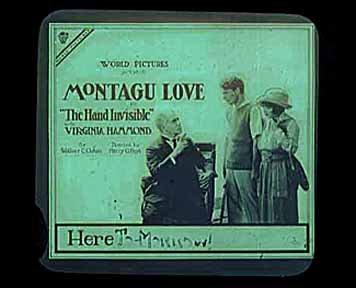
There’s a certain haunting resonance to silent cinema, a power in its unarticulated narratives that often transcends the spoken word. The Hand Invisible, a film from 1919, is a prime example, a tapestry woven with threads of ambition, societal pressure, and the relentless, often cruel, machinations of fate. It’s a story that, despite its century-old vintage, still speaks to the timeless human struggle against circumstances beyond one's control, reminding us that some hands, indeed, remain unseen yet undeniably influential.
At its core, The Hand Invisible delves into the psyche of Rodney Graham, a steel magnate whose wealth and power are ironically overshadowed by a singular, almost primal, insecurity: the lack of a male heir. His initial marriage to Alice, played with a nuanced pathos by Marguerite Gale, is a casualty of this obsession. When Alice suffers an injury that renders her unable to bear children, Graham’s reaction is not one of compassion, but of ruthless pragmatism. He divorces her, a decision that, even in an era when such actions carried significant social stigma, he pursues with unwavering resolve. This act immediately establishes Graham not merely as a wealthy industrialist, but as a man whose personal life is dictated by a transactional view of relationships, where utility trumps affection. His desire for an heir isn't just about passing on a name; it's about cementing his legacy, an extension of his industrial empire into the realm of bloodline.
The film’s portrayal of Graham, brought to life by William Sorelle, is fascinating. He’s not a mustache-twirling villain, but a man driven by a deep-seated societal expectation, perhaps even an internal void, that an heir will fill. His pursuit of Katherine Dale (Muriel Ostriche) isn't romantic; it's a strategic maneuver. Katherine, a debutante still mourning the loss of her fiancé, Dick Allen, is vulnerable, a pawn in Graham’s grand scheme. Her mother, portrayed by Kate Lester with a chilling blend of ambition and manipulation, acts as the architect of this forced union, seeing in Graham a ticket to social elevation rather than a suitable partner for her grieving daughter. This secondary layer of manipulation adds another dimension to the tragedy, showing how societal pressures and personal greed can combine to create devastating outcomes for the innocent.
Katherine's story is heartbreakingly brief, a fleeting candle extinguished too soon. Her marriage to Graham is devoid of genuine affection, a hollow arrangement designed solely to produce a successor. The film doesn't shy away from the emotional toll this takes, even in its silent language. Muriel Ostriche conveys Katherine's quiet despair and resignation through subtle gestures and expressions, painting a portrait of a woman trapped by circumstances. Her death in childbirth, delivering Rodney, Jr., is a stark, almost biblical, consequence of Graham's unyielding ambition. It's a moment that should, one might think, force Graham to confront the human cost of his desires, but his focus remains fixated on the newborn, the vessel of his legacy. This indifference to Katherine's sacrifice underscores the depth of his self-absorption, making him a compellingly flawed protagonist.
It is at this juncture that Arthur Haynes, Graham's stepbrother, steps into the narrative, embodying the voice of moral conscience and prophetic doom. Montagu Love imbues Arthur with a simmering indignation, his prediction of Graham's "sad demise" hanging heavy in the air, a foreshadowing that reverberates through the remainder of the film. Arthur represents the human element, the familial bond that Graham has consistently undervalued in his pursuit of material and dynastic success. His anger is justified, a reaction to the callous disregard Graham has shown for human feeling and the lives he has upended.
Graham's devotion to raising Rodney, Jr. becomes the new anchor of his existence. He channels all his formidable will and resources into shaping the boy into the perfect heir, a mirror image of his own ambition. The film then fast-forwards, showing the passage of time and the growth of Rodney, Jr. (George LeGuere) into a young man. The narrative takes a poignant turn when Rodney, Jr. falls in love with Ruth, Arthur's daughter (Martha Mansfield). This romantic entanglement brings together the two fractured branches of the family, creating a potential for healing and reconciliation, but also setting the stage for the ultimate revelation.
Graham's initial objection to the match is predictable, rooted in his old resentments and perhaps a subconscious desire to maintain control over his son's destiny. However, it is Alice, his first wife, who re-emerges as a quiet force of reason and empathy. Her persuasion of Graham to allow the marriage is a testament to her enduring kindness and perhaps a subtle critique of Graham's rigid worldview. Alice, having been cast aside, still possesses a moral compass that points towards happiness and genuine connection, a stark contrast to Graham's calculations.
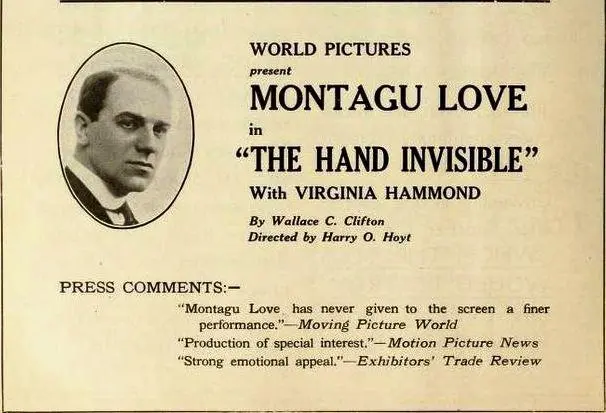
The true genius of The Hand Invisible lies in its climactic twist. The discovery that Rodney, Jr. is not Graham's biological son, but the child of Katherine and her deceased fiancé, Dick Allen, is a stroke of narrative brilliance. It’s a revelation that shatters Graham's carefully constructed world, rendering his entire life's ambition a cruel cosmic joke. His ruthless divorce of Alice, his manipulative marriage to Katherine, his obsessive parenting – all were in service of an illusion. The invisible hand of fate, or perhaps karma, has played its ultimate card, revealing the futility of his efforts.
Graham's reaction to this shattering truth is immediate and visceral. He plans to disinherit Rodney, Jr., to undo the years of investment in a legacy that was never truly his. But here, the film delivers its most potent moment of poetic justice. Before he can execute his final act of control, a stroke paralyzes him, leaving him physically incapacitated and emotionally crushed. It's a fitting punishment, trapping his formidable will within a helpless body, forcing him to witness the very future he sought to control unfold without his input.
The image of Graham attending the wedding of Rodney, Jr. and Ruth in a wheelchair, a silent, immobile observer, is profoundly powerful. It’s a stark visual metaphor for his loss of agency and the ultimate triumph of the "invisible hand" that has guided the narrative from the outset. He dies soon after, his life ending not with a bang, but with a whimper, a testament to the hollowness of his ambition. This ending resonates with the tragic fatalism often seen in silent era dramas, where moral comeuppance is often delivered with stark, uncompromising clarity. One might draw parallels to the stark societal critiques found in films like The Wheel of the Law, where the gears of justice, whether human or cosmic, grind slowly but inevitably.
The ensemble cast, under the direction of an unnamed but clearly skilled hand (Clara Beranger and Wallace Clifton are credited writers), delivers performances that, while constrained by the conventions of silent film, convey a surprising depth of emotion. William Sorelle’s Rodney Graham is a complex figure, not entirely unsympathetic despite his flaws, making his eventual downfall all the more impactful. Muriel Ostriche's Katherine is a tragic figure, her brief screen time leaving a lasting impression of lost innocence. Marguerite Gale's Alice provides a quiet strength, a moral center that contrasts sharply with Graham's ruthlessness. Montagu Love's Arthur Haynes is the film's conscience, his predictions lending an almost mythological quality to the narrative.
The film's thematic richness extends beyond mere revenge. It explores the nature of identity and legacy, questioning what truly constitutes fatherhood – is it biological connection, or the act of raising and loving a child? It also critiques the suffocating expectations placed upon individuals, particularly women, in a society obsessed with status and lineage. The plot device of the hidden parentage, while a staple of melodrama, is handled here with a degree of sophistication that elevates it beyond mere sensationalism. The echoes of such complex familial deceptions can be seen in later melodramas like The Whirlpool, where secrets unravel lives, or even the intense emotional stakes in films like Should a Mother Tell, which often grappled with the moral complexities of hidden truths.
As a product of its time, The Hand Invisible offers a fascinating glimpse into the social mores and dramatic conventions of the late 1910s. Its narrative, while steeped in melodrama, possesses a timeless quality, exploring universal themes of ambition, betrayal, love, and the often-unpredictable hand of destiny. The film's title itself is a powerful metaphor, suggesting unseen forces at play, shaping human lives in ways that are often beyond comprehension or control. It's a testament to the power of storytelling that even without synchronized dialogue, the emotional weight of these events resonates profoundly.
For modern audiences, watching The Hand Invisible is more than just an exercise in historical appreciation; it’s an opportunity to engage with a form of cinematic art that relied entirely on visual storytelling and the expressive capabilities of its actors. It reminds us that compelling narratives don't require elaborate special effects or booming soundtracks, but rather strong characters, engaging conflicts, and a keen understanding of the human condition. It stands as a compelling example of how silent cinema could weave intricate, emotionally charged tales that linger long after the final frame. The film's exploration of ambition's cost and the ultimate futility of certain desires offers a somber yet compelling reflection on the human experience, a theme that continues to resonate across cinematic eras.
IMDb 6
1931
Community
Log in to comment.