DbcultAccessing Vault...
Cult Review
Senior Film Conservator
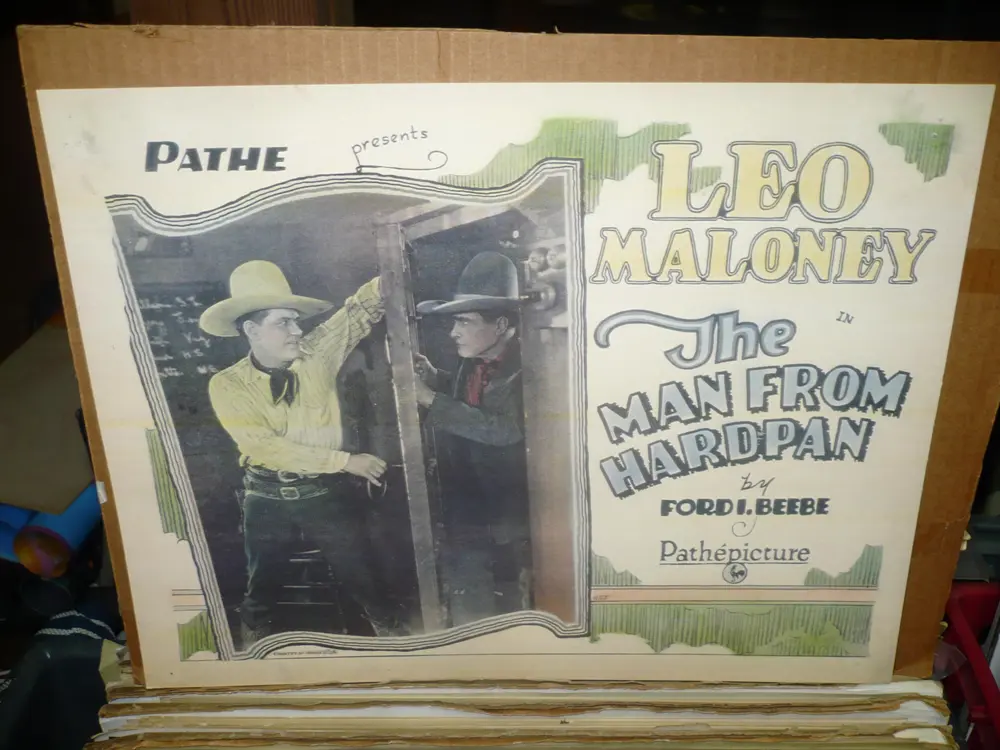
Is The Man from Hard Pan worth your time in an age of high-definition blockbusters? Short answer: Yes, provided you appreciate the raw, unpolished DNA of the American Western before it became a sanitized myth.
This film is specifically for the cinematic archeologist and the silent film enthusiast who values atmosphere over artifice. It is absolutely not for those who require rapid-fire editing or the narrative hand-holding common in modern cinema.
1) This film works because: It prioritizes environmental texture and the 'Everyman' physicality of Leo D. Maloney over the theatrical posturing typical of the 1920s.
2) This film fails because: The pacing in the second act suffers from a redundant subplot involving a secondary villain that distracts from the central tension.
3) You should watch it if: You want to see the missing link between the early morality plays of William S. Hart and the gritty realism of later 1950s 'psychological' Westerns.
Leo D. Maloney was never the 'dandy' cowboy. Unlike the flashy, trick-riding antics seen in some contemporary productions, Maloney’s performance in The Man from Hard Pan is grounded in a weary, bone-deep exhaustion. You can almost feel the grit in his teeth. In the scene where he first encounters Eugenia Gilbert’s character near the dry creek bed, there is no grand romantic gesture. Instead, there is a quiet, transactional understanding of survival. It is refreshing. It is honest.
The direction, also handled by Maloney, shows a keen eye for the geography of Hard Pan. He uses the landscape not just as a backdrop, but as an antagonist. The way the camera lingers on the heat shimmer over the horizon reminds me of the atmospheric tension found in Der Berg des Schicksals, though with far less romanticism. Maloney understands that in the desert, the sun is just as dangerous as a bullet.
The writing by Ford Beebe is surprisingly lean. Beebe, who would later become a king of the serials, avoids the flowery title cards that plagued many films of 1927. He allows the actors' faces to carry the weight of the dialogue. When Murdock MacQuarrie’s villain enters the frame, the threat isn't announced with a mustache-twirl; it's felt in the way the townspeople clear the street. It’s effective filmmaking that respects the audience's intelligence.
While it lacks the expressionistic flair of The Devil's Circus, the cinematography here is functional and occasionally inspired. There is a specific shot during the climax—a wide angle of a horse chase across a salt flat—that captures a sense of isolation rarely seen in the 'Big Five' studio Westerns. The frame is dominated by the sky, making the human conflict look appropriately small and desperate.
The use of natural lighting is both a necessity of the budget and a creative triumph. The harsh shadows cast by the midday sun create a natural noir aesthetic years before the term was even coined. It’s a stark contrast to the soft-focus glamour of films like Sunny Side Up. Here, the world is sharp, jagged, and unforgiving.
I would argue that Maloney’s visual style is more influential than he gets credit for. He avoids the stagey compositions of his era, opting for mid-shots that emphasize movement and spatial awareness. When a punch is thrown, you see the weight behind it. When a gun is drawn, the stakes feel terminal. It works. But it’s flawed.
The Man from Hard Pan is worth watching for anyone interested in the evolution of the Western genre. It offers a rare glimpse into the 'Poverty Row' style of filmmaking that prioritized grit over glamour. While it may lack the technical polish of a major studio release, its sincerity and rugged charm make it a compelling piece of cinema history.
Eugenia Gilbert provides a solid, if somewhat conventional, female lead. However, she shows flashes of agency that were missing from many 1920s damsels. In the sequence where she defends her cabin, she isn't just waiting for Maloney to save her; she’s an active participant in her own survival. This nuance is often overlooked in reviews of this period but is vital to the film’s lasting appeal.
Murdock MacQuarrie is the real surprise here. His villainy isn't loud. It’s bureaucratic and cold. He represents the encroaching 'civilization' that uses the law as a weapon to steal from the vulnerable. This thematic depth elevates the film above the standard 'cattle rustler' plot. It’s a more sophisticated conflict, echoing the darker tones found in Revenge.
Rosa Gore adds a touch of much-needed character acting as the eccentric town gossip. While her role is small, it provides the only levity in an otherwise somber film. Her presence helps flesh out 'Hard Pan' as a living, breathing community rather than just a collection of sets. It reminds me of the character work in The Violinist of Florence, where the ensemble creates the world.
One observation that struck me was the film's obsession with water. In many Westerns, water is just a prop. In The Man from Hard Pan, it’s a character. Every struggle, every negotiation, and every death seems to revolve around the scarcity of resources. This gives the film a proto-environmentalist subtext that feels incredibly modern. It’s not just about good vs. evil; it’s about biology vs. greed.
Compare this to the more whimsical nature of Felix Gets the Can or the slapstick of He Loved Like He Lied, and you see how serious Maloney was about his craft. He wasn't interested in entertaining children; he was making movies for men who knew what it was like to work for a living. The film is as hard as its title suggests.
The ending is also surprisingly somber. There is no grand parade or wedding. The hero simply moves on, a trope we would see perfected decades later by George Stevens or Clint Eastwood. It’s a cynical, yet satisfying conclusion that feels earned. The West wasn't won; it was survived.
The Man from Hard Pan is a rugged, essential piece of Western history that trades Hollywood sparkle for desert grit. It’s a film that demands your attention and rewards it with a surprisingly deep meditation on survival and morality. While it lacks the polish of its contemporaries, its raw honesty makes it a superior example of the silent B-Western.
If you’ve explored the depths of Das Gefängnis auf dem Meeresgrund or the drama of Big Jim Garrity, you owe it to yourself to experience the dusty, uncompromising world of Leo D. Maloney. It isn't perfect. It isn't pretty. But it is real.
IMDb —
1921
Community
Log in to comment.