DbcultAccessing Vault...
Cult Review
Senior Film Conservator
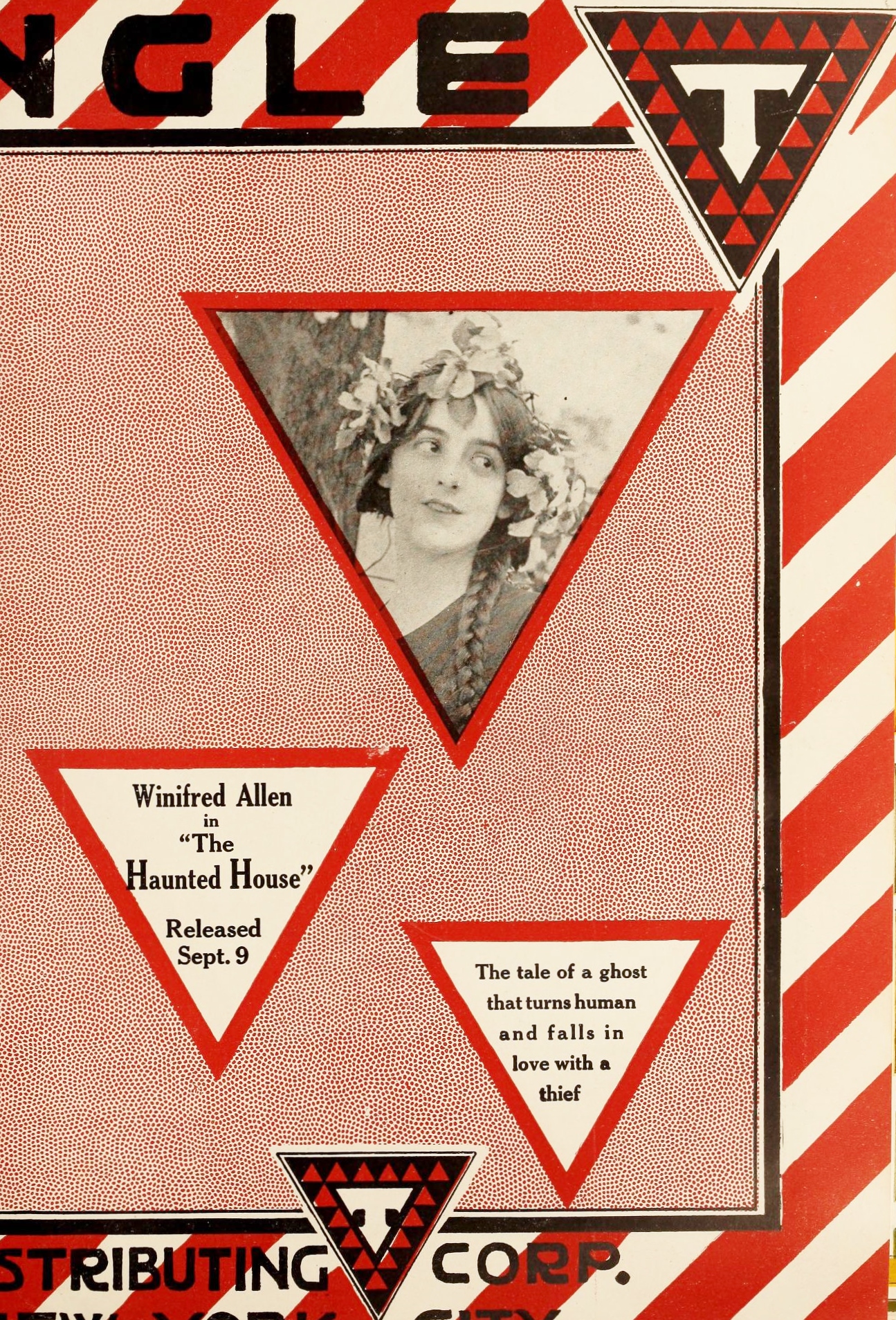
Stepping back into the hallowed, flickering embrace of silent cinema often feels like unearthing a forgotten treasure map, each frame a cryptic clue to a past world of storytelling. The Haunted House (1921), a lesser-known gem from an era brimming with cinematic innovation, invites us into such an expedition, promising not just chills, but a curiously tender romance blooming amidst the dust and shadows. It's a film that, despite its simple premise, speaks volumes about human connection, the power of perception, and the unexpected sanctuaries we carve out for ourselves when the world outside feels too harsh.
At its heart lies Anne, portrayed with a delicate yet compelling intensity by Winifred Allen. Anne is not merely a character; she is an archetype of the misunderstood soul, a figure often relegated to the fringes of society for daring to possess a vibrant inner life. Her village, a microcosm of societal judgment, labels her 'strange' – a damning indictment for a young woman who finds solace and conversation with her deceased mother in the hushed sanctity of the woods. This initial characterization immediately sets a melancholic, introspective tone, drawing the viewer into Anne's isolated world. Allen's performance, relying solely on expression and gesture, masterfully conveys Anne's quiet resilience and profound sensitivity, making her perceived oddity feel less like a flaw and more like a unique strength.
The titular haunted house, far from being a mere backdrop, swiftly evolves into a pivotal character itself. It is a dilapidated testament to forgotten grandeur, a place where local folklore and whispered rumors have coalesced into a potent, fear-inducing narrative. When Jimmy, a crook on the run after a robbery, stumbles into its decaying embrace, wounded and desperate, the stage is set for an unlikely convergence of fates. Dick Rosson, as Jimmy, brings a compelling blend of rugged desperation and an underlying vulnerability to the screen. His initial interactions with the mansion are tinged with the primal fear of discovery, a raw, human terror that momentarily overshadows any supernatural dread.
What truly elevates The Haunted House beyond a conventional genre piece is Anne's ingenious transformation into the mansion's resident 'ghost.' This isn't a tale of genuine spectral activity but one of clever artifice, born of empathy and a desire to protect. Anne, with her intimate knowledge of the house's nooks and crannies, and perhaps a touch of theatrical flair honed from her solitary imaginative life, orchestrates a series of spectral charades. These aren't malicious hauntings but rather strategic maneuvers, designed to frighten away Jimmy's relentless pursuers, the sheriff and his deputies. The irony is delicious: the 'ghost' is not an ethereal entity but a very corporeal young woman, whose compassion transcends societal boundaries.
The blossoming romance between Anne and Jimmy is the beating heart of the film. Confined within the mansion's walls, stripped of their societal labels – Anne, the 'strange girl,' and Jimmy, the 'crook' – they find common ground in their shared vulnerability and mutual reliance. The silence of the era, rather than diminishing their connection, amplifies it. Every lingering glance, every hesitant touch, every shared moment of quiet understanding becomes imbued with profound meaning. It's a testament to the power of silent acting, where emotions are writ large on faces and conveyed through subtle body language. The mansion, initially a place of fear, transforms into a sanctuary, a cocoon where their unconventional love can unfurl, safe from the prying eyes and judgmental whispers of the outside world.
The narrative, while straightforward, is imbued with layers of thematic richness. It explores the idea that what is perceived as 'haunted' or 'strange' can, in fact, be a refuge. Anne's solitude, once a source of her ostracism, becomes her greatest asset, allowing her the freedom and creativity to manipulate perceptions. Jimmy, the criminal, finds redemption not through legal means, but through the unexpected kindness of a stranger. This subversion of expectations is a hallmark of truly engaging storytelling, a quality that allows The Haunted House to transcend its simple genre trappings.
The cinematography, typical of the early 1920s, uses stark contrasts between light and shadow to great effect. The gloomy interiors of the mansion are rendered with an atmospheric depth that enhances the sense of mystery and isolation. Close-ups on the actors' faces are crucial, allowing their nuanced expressions to convey complex emotions without the aid of dialogue. The pacing, while deliberate, never drags, building tension effectively during the chase sequences and allowing ample time for the tender moments between Anne and Jimmy to resonate. The absence of spoken words forces the viewer to pay closer attention, to interpret every gesture, every flicker of an eye, drawing them deeper into the characters' internal worlds.
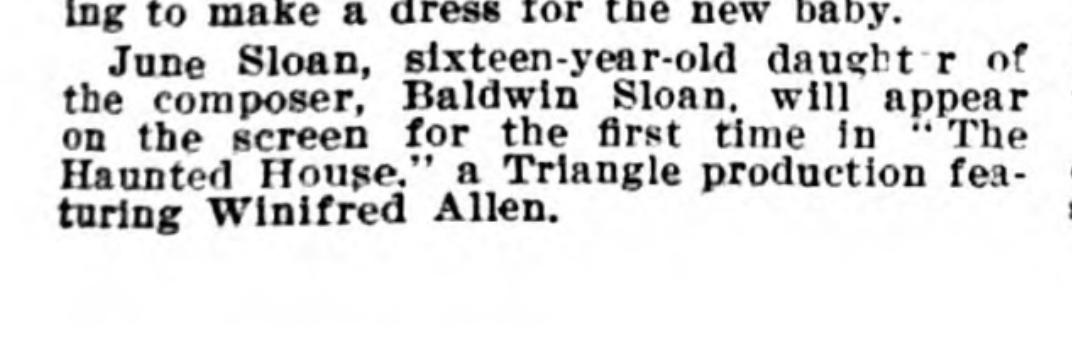
Comparing The Haunted House to contemporary films of its era provides valuable context. While not as overtly adventurous as something like The Active Life of Dolly of the Dailies, or as grand in scale as a historical epic, it shares a thematic thread with films like The Wolf Woman, in its portrayal of strong, unconventional female characters who navigate challenging circumstances. The criminal element, while central to Jimmy's predicament, is handled with a certain romanticism, not unlike the sympathetic portrayal of outlaws in films such as Alias Jimmy Valentine. What sets The Haunted House apart is its unique blend of the supernatural (or rather, the illusion of it) with a deeply human story of connection and sanctuary.
The supporting cast, including Albert Day, Mabel Wright, Alice Saunders, Albert Parker, Eddie Kelly, Harry Depp, and Mac Barnes, contribute to the film's overall fabric, even if their roles are often brief. They provide the necessary contrast to Anne and Jimmy's secluded world, representing the judgmental society from which the protagonists seek refuge. Their performances, though in smaller capacities, are integral to establishing the world outside the mansion, making the sanctuary within feel all the more precious.
It's fascinating to consider that for many silent films, the exact contributions of writers are often less clearly documented than in modern cinema, a testament to the collaborative nature of early filmmaking. The narrative ingenuity here, however, shines through, demonstrating a keen understanding of character development and plot progression even within the constraints of the medium. The story relies heavily on visual cues and the emotional resonance of its leads, a hallmark of successful silent storytelling.
The film's exploration of perception versus reality is particularly poignant. The villagers fear a ghost, but the true 'haunting' is Anne's profound loneliness and society's inability to see beyond her eccentricities. The mansion, far from being a place of dread, becomes a symbol of refuge, a place where two outcasts can shed their labels and simply exist, finding solace in each other's presence. This transformation of a traditional horror trope into a romantic backdrop is a stroke of narrative brilliance, showcasing the versatility of cinematic storytelling even in its nascent stages.
In a broader sense, The Haunted House also touches upon themes of societal judgment and the search for belonging. Anne is an outsider, and Jimmy, a criminal, is equally alienated. Their coming together in the 'haunted' space is a powerful metaphor for finding acceptance and love in unexpected places, away from the rigid strictures of conventional society. This universal theme resonates even today, making the film feel surprisingly contemporary despite its age.
The film serves as a charming reminder of the enduring power of silent cinema to evoke strong emotions and tell compelling stories. It doesn't rely on grand spectacle or complex plots, but rather on the raw magnetism of its characters and the atmospheric setting. Winifred Allen's portrayal of Anne is particularly memorable, grounding the fantastical elements of the plot in a deeply human performance. Her ability to convey both vulnerability and cunning without a single spoken word is a testament to her talent and the expressive nature of silent acting.
For modern audiences, The Haunted House offers a delightful glimpse into a bygone era of filmmaking, one where imagination and visual storytelling reigned supreme. It’s a film that encourages us to look beyond the surface, to question our perceptions, and to appreciate the quiet strength found in the most unlikely of heroes and heroines. It’s not merely a film about a haunted house; it’s a film about finding a home, both physically and emotionally, in a world that often feels unwelcoming. Its gentle charm and poignant romance make it a deserving candidate for rediscovery, a testament to the timeless appeal of a well-told story, even when told in silence.
The film's ending, without giving away specifics, provides a satisfying resolution that reinforces the themes of love and acceptance. It’s a conclusion that feels earned, a natural culmination of the journey Anne and Jimmy embark upon together. The 'haunted house' ultimately sheds its sinister reputation, transforming into a symbol of their shared future, a place where their unique bond can flourish unimpeded. This shift from fear to affection, from isolation to companionship, is what gives The Haunted House its enduring, understated appeal. It's a small film with a big heart, proving that sometimes, the most profound stories are told not with booming dialogue, but with the eloquent silence of a glance, a gesture, or a shared, knowing smile.
IMDb —
1924
Community
Log in to comment.