DbcultAccessing Vault...
Cult Review
Senior Film Conservator
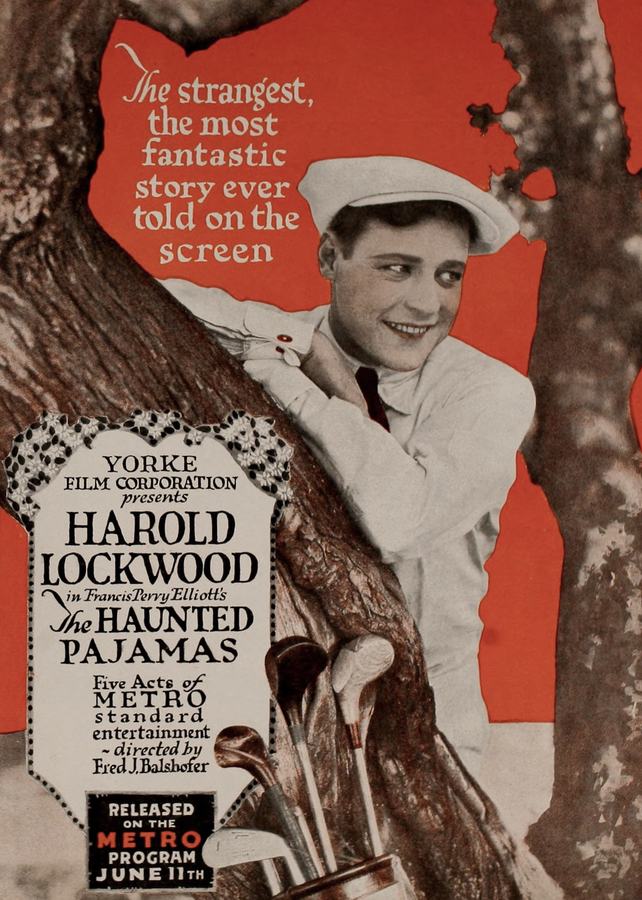
In the vibrant, burgeoning landscape of early 20th-century cinema, where innovation was the prevailing currency and narrative boundaries were perpetually being pushed, a delightful curiosity emerged in 1917, captivating audiences with its blend of farcical comedy and whimsical fantasy: The Haunted Pajamas. This silent-era gem, directed with a light, deft touch by Fred J. Balshofer and penned by Francis Perry Elliott, stands as a testament to the imaginative spirit of its time, demonstrating how a simple, yet utterly preposterous, premise could yield a cascade of uproarious complications and profound, albeit comedic, explorations of identity. It’s a film that, even a century later, retains a certain quaint charm, inviting us to reflect on the foundational elements of cinematic storytelling and the timeless appeal of a good, old-fashioned magical mishap.
The narrative unfurls around Richard Hudson, portrayed with admirable bewilderment by Paul Willis, a character whose life of comfortable predictability is irrevocably shattered by the arrival of a seemingly innocuous gift. From a friend in the distant, mystical East, a pair of exquisite silk pajamas arrives, imbued with an ancient enchantment unknown to their new owner. This sartorial sorcery forms the very bedrock of the film's comedic engine: whoever dons these bewitched garments is instantly transformed, not merely in appearance, but in essence, into another being entirely. This core conceit, while simplistic, is remarkably potent, offering a fertile ground for the escalating absurdities that follow. Such a magical artifact, capable of altering one's very being, harkens back to ancient folklore and fairy tales, yet its placement within a modern, albeit early 20th-century, setting lends it a unique, almost anachronistic humor, a delightful clash of the supernatural with the mundane.
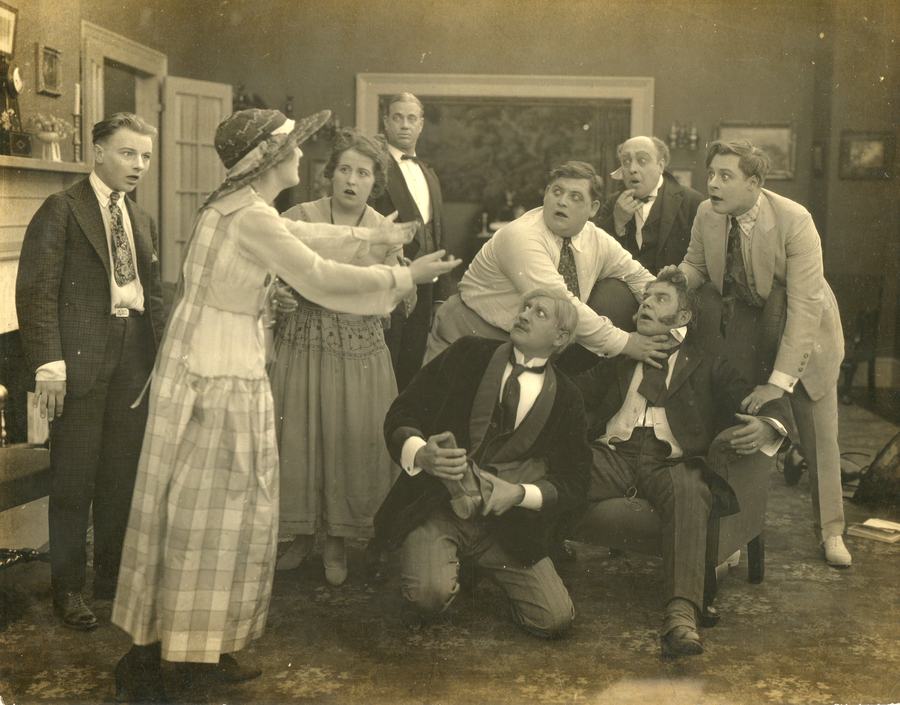
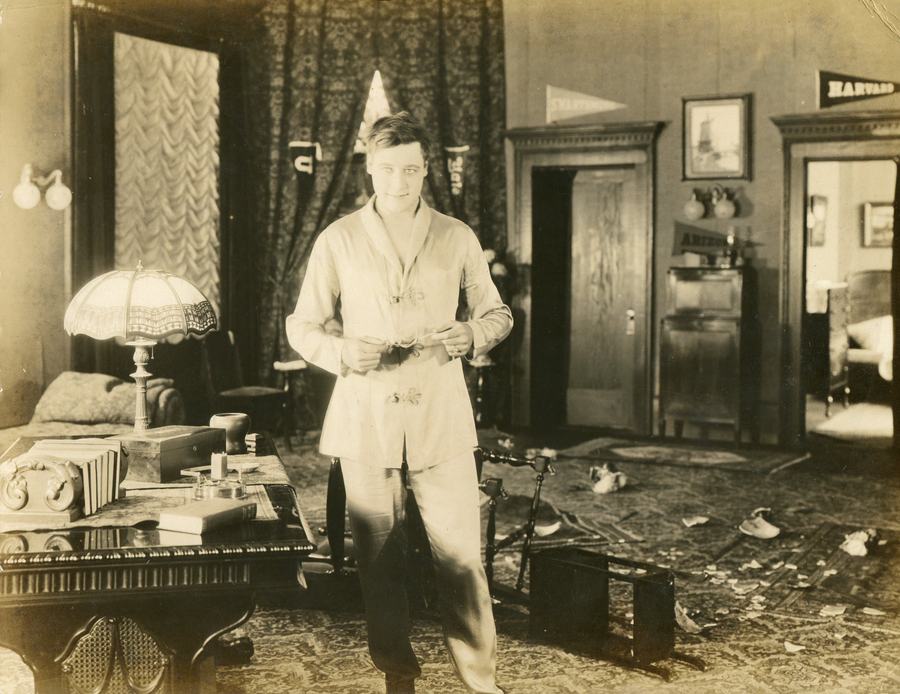
The initial transformation sets the tone for the ensuing pandemonium. Richard, innocently slipping into the luxurious silk, finds himself instantaneously metamorphosed into a fierce Chinese warrior. This initial metamorphosis is handled with a blend of early cinematic trickery and Willis's committed physical performance, which must have been quite a spectacle for contemporary audiences. The immediate fallout? His butler, Jenkins, played by the expressive William De Vaull, a man evidently prone to the solace of the bottle, is so utterly flabbergasted by the sight that he is shocked into a temporary state of sobriety. De Vaull's portrayal of the perpetually flustered, often inebriated, but ultimately loyal servant provides a crucial comedic counterpoint to Richard's escalating distress. His reactions, a masterclass in silent film pantomime, underscore the sheer incredulity of the situation, anchoring the fantastical elements in a relatable, if exaggerated, human response.
The film's genius lies in its relentless escalation of these transformations and the subsequent farcical complications. The next evening, Richard's close friend, Jack Billings, sends his brother Francis to spend the night. Francis, perhaps drawn by the allure of the exotic silk or simply seeking comfort, becomes the next unwitting victim of the pajamas' magic. Upon donning them, he is startlingly transmuted into Frances Kirkland, Jack's own sweetheart, a role brought to life by Helen Ware. This particular transformation is a stroke of comedic brilliance, not only introducing a gender swap but also creating a deeply awkward romantic entanglement. Richard is, understandably, thrown into a fresh paroxysm of shock and confusion, now grappling with the appearance of his friend's fiancée in an unexpected guise, all while trying to maintain some semblance of decorum and explanation in a situation that defies all logic. The silent era's reliance on visual storytelling made such transformations particularly effective, allowing audiences to marvel at the visual gag without the need for intricate dialogue to explain the impossible.
The escalating chaos reaches its zenith when Jack Billings himself, portrayed by Harry DeRoy, falls prey to the mischievous garments. His transformation leads to perhaps the most humiliating and genuinely funny predicament: he is mistaken for a burglar and promptly locked up, only to receive a black eye from his own father, who, unable to recognize his magically altered son, believes him to be an imposter. This sequence brilliantly highlights the themes of mistaken identity and the unreliable nature of perception, central tenets of many comedies of errors. The emotional stakes, while played for laughs, are surprisingly effective; the audience understands the frustration and bewilderment of the characters caught in this supernatural snare. The physical comedy, a hallmark of silent cinema, is particularly pronounced here, with DeRoy's performance conveying both the indignity and the sheer absurdity of his character's plight.
The ensemble cast, including Harold Lockwood, Carmel Myers, Edward Sedgwick (who also contributed to the direction), Lester Cuneo, and Goro Kino, all play their parts in contributing to the film's vibrant tapestry of reactions and misunderstandings. Each character's response to the bizarre occurrences, from incredulity to outright panic, adds layers to the comedic texture. Silent film acting, with its emphasis on exaggerated facial expressions and body language, was perfectly suited to convey the heightened emotions demanded by such a fantastical plot. The actors, through their skilled pantomime, ensure that the audience remains fully engaged in the unfolding absurdity, empathizing with the characters' predicaments even as they laugh at their misfortune. The dynamic interplay between these performers is crucial, creating a believable, if hilariously chaotic, world despite the supernatural premise.
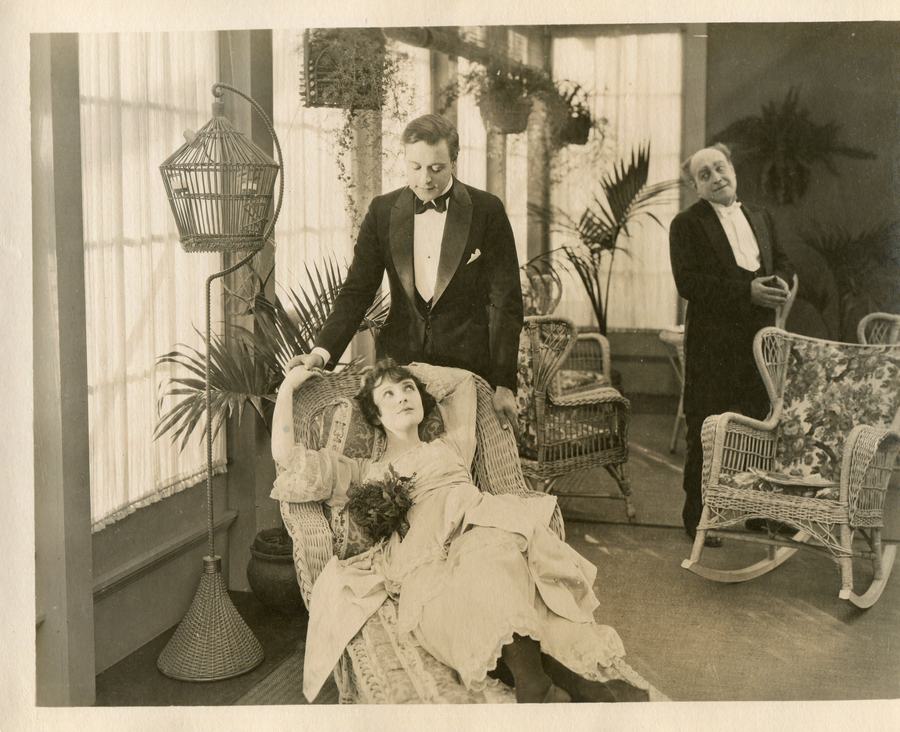
The technical execution, for a film of its era, is noteworthy. The transformations themselves, though simple by today's standards, likely involved clever use of dissolves, quick cuts, and precise costume and makeup changes, demonstrating the early filmmakers' ingenuity in conveying supernatural events without the aid of modern special effects. The visual gags are paramount, and Balshofer's direction ensures that each transformation and subsequent reaction is clearly communicated. The pacing is brisk, a common characteristic of silent comedies, designed to keep the audience engaged and prevent any lingering questions about the fantastical elements from derailing the humor. Compared to other films of the period that experimented with genre, such as the dramatic intensity of The Avenging Conscience: or 'Thou Shalt Not Kill' (1914) or the adventurous spirit of The Lad and the Lion (1917), The Haunted Pajamas carves its niche through pure, unadulterated comedic escapism, leveraging its fantastical premise for maximum audience delight rather than profound psychological exploration.
The film's thematic undercurrents, while never overtly didactic, touch upon the fluidity of identity and the societal constructs that define us. When Francis becomes Frances, or Jack becomes an unrecognizable 'burglar,' the very essence of who they are, as perceived by others, is challenged. This raises intriguing, albeit humorous, questions about how much our identity is tied to our physical appearance and how readily we accept or reject those we believe we know when their exterior changes. It's a comedic take on a concept that more serious dramas might explore with gravitas, making the film surprisingly resonant beyond its surface-level gags. This lighthearted approach to profound themes is a testament to the sophistication, however subtle, of early cinematic storytelling.
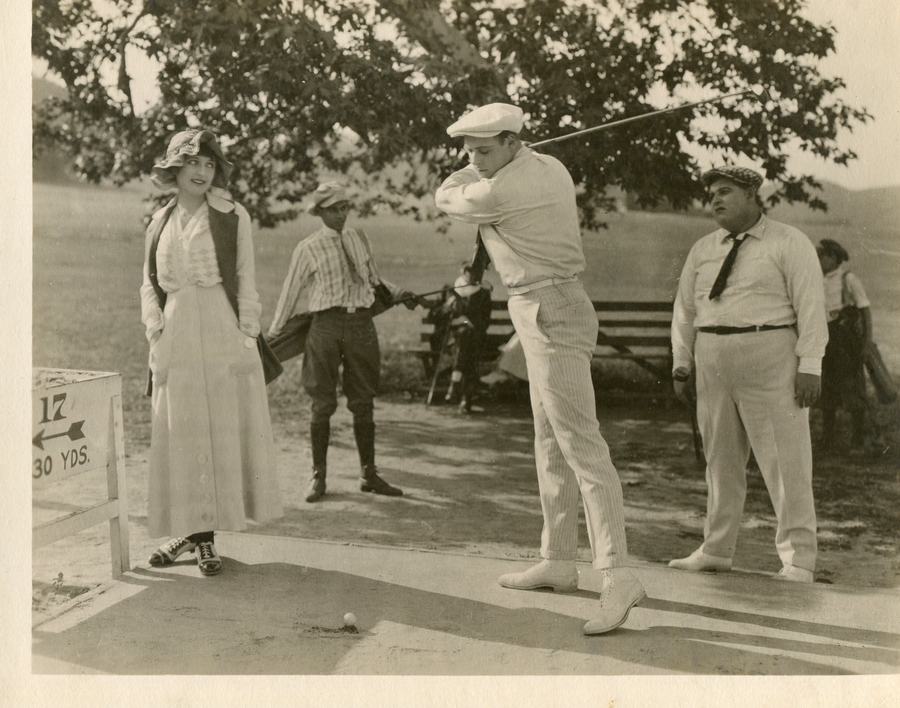
The resolution arrives, as it must, with the timely appearance of Colonel Kirkland, the very friend who initiated this magical chaos by sending the pajamas from China. His arrival serves as the narrative's deus ex machina, finally clearing up the mystery and restoring equilibrium to the lives of the bewildered characters. This conventional wrap-up, typical of many comedies of errors, provides a satisfying conclusion, allowing the audience to exhale after the sustained tension of comedic confusion. The film doesn't delve into the precise mechanics of the enchantment, nor does it need to; the magic is merely a catalyst for the human reactions and interactions, which are the true focus of the story.
In the broader context of silent cinema, The Haunted Pajamas stands as a charming example of the era's willingness to embrace the fantastical and the farcical. It predates more complex special effects films like The Vampires: The Poisoner (1916) in its genre but shares a similar spirit of pushing narrative boundaries. While it may not possess the grand scale of some contemporary epics or the intricate psychological depth of burgeoning dramatic works, its strength lies in its unpretentious commitment to pure entertainment. It’s a film that understands its audience and delivers exactly what it promises: a series of hilarious, increasingly convoluted events stemming from a single, magical object.
Comparing it to other silent comedies or dramas of the period, such as the domestic humor of He Fell in Love with His Wife (1916) or the more adventurous narratives like The Gilded Spider (1916), The Haunted Pajamas offers a unique blend of supernatural fantasy within a domestic comedy setting. It doesn't rely on social commentary or grand romantic gestures, but rather on the sheer absurdity of its premise. This distinct approach makes it memorable, showcasing the diverse range of storytelling prevalent in the silent era. The film serves as a delightful reminder that sometimes, the simplest magical premise can yield the most elaborate and satisfying comedic results.
Ultimately, The Haunted Pajamas is more than just a historical curiosity; it’s a vibrant, engaging piece of early cinema that continues to resonate with its imaginative premise and well-executed comedic timing. It serves as a valuable artifact for understanding the development of film comedy and the evolving techniques used to portray the fantastic on screen. For aficionados of silent film, or indeed anyone with an appreciation for clever, lighthearted storytelling, this film offers a delightful escape into a world where a simple pair of pajamas can turn life wonderfully, hilariously, and utterly upside down. Its legacy lies not in profound statements, but in its ability to elicit genuine laughter and spark the imagination, proving that even in the absence of dialogue, a well-crafted farce with a touch of magic can speak volumes across the decades.
IMDb —
1919
Community
Log in to comment.