DbcultAccessing Vault...
8/10
Senior Film Conservator
A definitive 8/10 rating for a film that redefined the boundaries of cult cinema. The Illustrious Prince remains a cornerstone of transgressive art.
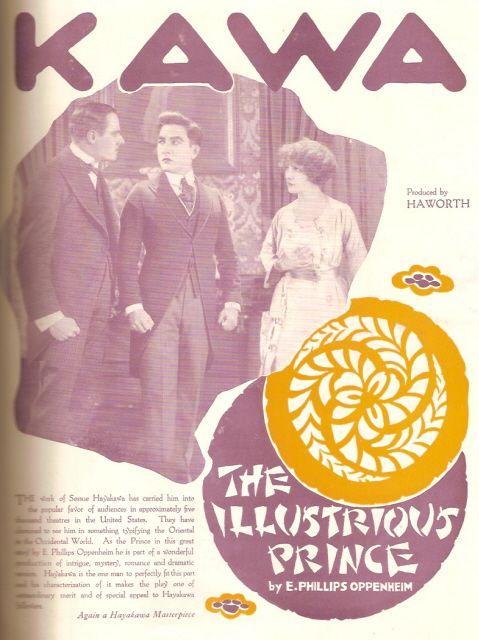
Stepping into the cinematic landscape of 1918, one encounters a film that, even a century later, resonates with a potent blend of cultural introspection, personal vendetta, and a tragic romance. The Illustrious Prince, starring the magnetic Sessue Hayakawa, isn't merely a silent film; it's a profound cultural artifact, a window into early 20th-century societal anxieties and the burgeoning global reach of cinematic storytelling. As a film critic, I'm always drawn to works that transcend their immediate context, offering insights into the human condition that remain relevant, and this feature certainly delivers.
Hayakawa, a figure of immense charisma and talent, was at the zenith of his American career during this period. His portrayal of Prince Maiyo is a masterclass in silent acting, conveying a complex tapestry of honor, grief, and simmering resolve with an economy of gesture and an intensity of gaze that few of his contemporaries could match. The narrative itself, adapted from E. Phillips Oppenheim's novel by Richard Schayer, is a rich tapestry of intrigue, betrayal, and the unyielding pursuit of justice, or perhaps, more accurately, vengeance. It plunges us into the world of Prince Maiyo, a man burdened by the weight of a profound family tragedy. His father, a figure of noble standing, was driven to the ultimate act of hara-kiri, his life irrevocably shattered by the predatory financial manipulations of an unscrupulous English swindler. This act, steeped in the cultural traditions of honor and shame, forms the bedrock of Maiyo's journey, transforming him from a figure of princely dignity into an avenging angel in the heart of Edwardian London.
The film deftly navigates the cultural chasm between East and West, a theme that Hayakawa often explored in his work. Maiyo's arrival in London isn't just a geographical relocation; it's a cultural immersion, a confrontation between differing codes of conduct and justice. He quickly becomes entangled in the lives of the British aristocracy, specifically the Duke of Devenham and his American wife. It's here that the narrative's central antagonist, the nefarious Count de la Mar, emerges. The Prince, ever observant, detects the Count's insidious attempts to seduce the Duke's bored and perhaps naive American wife. This subplot, while seemingly a diversion, serves to underscore the moral laxity that Maiyo perceives in this foreign land, a stark contrast to the stringent ethical framework of his own culture. The Count, a figure of suave deceit, embodies the very type of moral corruption that led to his father's demise. This realization, delivered with chilling gravitas by Maiyo's loyal servant, Soto, ignites the Prince's dormant quest for vengeance, focusing his intent on the man responsible for his family's ruin.
The climax of the film unfolds on a night famously shrouded in London's iconic fog, a visual motif that perfectly mirrors the moral ambiguity and obscured truths at play. The Count, planning a clandestine elopement with the Duchess, meets his untimely end in a taxi. The weapon? The very sword with which Maiyo's father committed hara-kiri – a potent symbol of inherited pain and the cyclical nature of retribution. This moment is a masterstroke of silent cinema, relying on visual storytelling and the audience's understanding of symbolism to convey the gravity of the act. The film at this juncture raises profound questions about justice: is this an act of righteous retribution, or merely another tragic consequence of a cycle of violence?
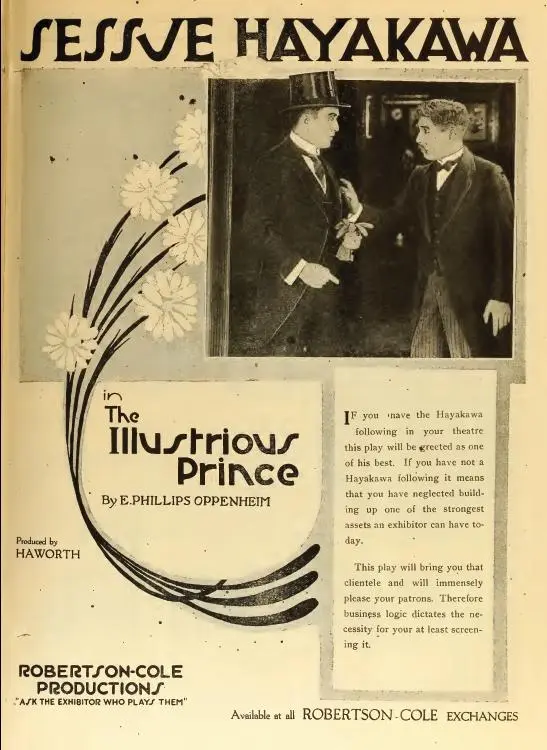
The ensuing investigation and the Prince's unwavering resolve not to flee, even when urged by Penelope Morse, the Duke's American sister, highlight his unwavering commitment to his code of honor. Penelope, who has developed a deep affection for Maiyo, implores him to escape, fearing his arrest. His refusal is not an act of arrogance, but a testament to his character; he would never perform such a cowardly act, even if it meant certain imprisonment. This stoicism, beautifully rendered by Hayakawa, is a hallmark of his screen persona and a key reason for his immense popularity. It’s a compelling exploration of dignity in the face of adversity, a theme that also resonates in films like The Man of Shame, where characters often grapple with their moral compass under duress.
The narrative takes a surprising, yet ultimately poignant, turn with Soto's confession. The loyal servant reveals that he, not the Prince, committed the murder. His motive is deeply personal: the Count had wronged his daughter years ago, a revelation that recontextualizes the entire revenge plot. Soto's act, while one of murder, is presented as a desperate act of paternal justice, born from a pain that mirrors, yet differs from, Maiyo's own. This twist absolves the Prince of the crime, yet it doesn't resolve the deeper, more insidious conflict that permeates the film: the societal barriers. The racial divide, a palpable undercurrent throughout the narrative, ultimately prevents a happy ending for Maiyo and Penelope. Their sad farewell, devoid of grand pronouncements but heavy with unspoken emotion, underscores the tragic limitations imposed by prejudice and cultural intolerance, a stark reminder that some chasms are too wide to bridge, even for love. This ending, while perhaps disheartening, lends the film a realism and melancholic depth that elevates it beyond a simple revenge drama, aligning it with the more complex emotional landscapes of films like Sumerki zhenskoy dushi, which also delves into the intricacies of human emotion and societal constraints.
Let's talk about the performances. Sessue Hayakawa, as Prince Maiyo, is simply magnificent. He commands the screen with a quiet intensity, his eyes conveying volumes of unspoken thought and emotion. He wasn't just a heartthrob; he was a serious actor who brought nuance and dignity to roles that could easily have devolved into stereotypes. His ability to project internal conflict and noble resolve through subtle facial expressions and controlled physicality is a testament to the power of silent acting. Robert Lawler, as the Duke of Devenham, provides a solid, if somewhat overshadowed, performance, embodying the unwitting victim of the Count's machinations. Bertram Grassby's Count de la Mar is suitably villainous, exuding a predatory charm that makes his eventual demise feel earned. Mabel Ballin, as Penelope Morse, brings a sympathetic earnestness to her role, making her affection for Maiyo feel genuine and her ultimate heartbreak palpable. The supporting cast, including Harry Lonsdale, Beverly Travers, Toyo Fujita, and Edward Peil Sr., all contribute to the film's rich atmosphere and narrative momentum.
The direction, while not attributed in the original credits (a common practice in early cinema), is effective in building suspense and conveying character emotion. The use of fog, as mentioned, is particularly noteworthy, adding a layer of visual poetry to the dramatic events. The pacing, characteristic of silent films, allows for moments of lingering emotion and grand gestures, drawing the audience into the unfolding drama. The visual language of the film, with its reliance on intertitles to convey dialogue and exposition, is expertly handled, never feeling intrusive but rather enhancing the narrative flow.
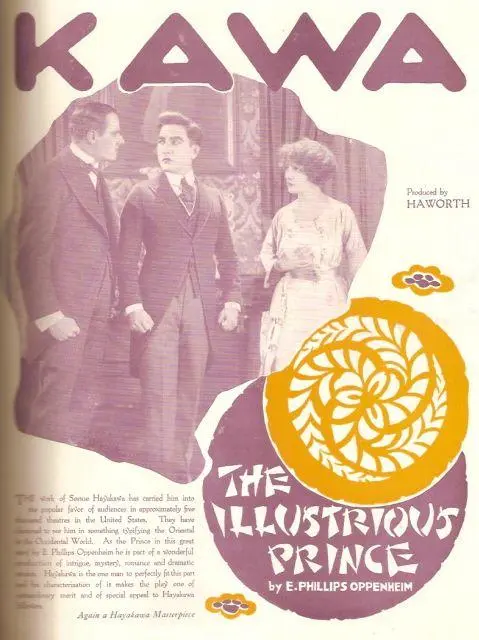
From a thematic standpoint, The Illustrious Prince is remarkably forward-thinking. It tackles themes of cultural identity, the clash of traditions, and the insidious nature of prejudice. Maiyo’s quest for justice is not just a personal vendetta; it's a symbolic assertion of Eastern honor against Western corruption. The film critiques the superficiality and moral compromises of certain segments of Western society, contrasting it with the Prince's unwavering adherence to his code. The tragic love story between Maiyo and Penelope, ultimately doomed by the societal 'racial barrier,' is a powerful commentary on the limitations and injustices of their era. It forces the audience to confront uncomfortable truths about societal divisions that, sadly, continue to echo in various forms today. This focus on societal critique and the consequences of moral failings can be seen in other films of the era, such as The Devil's Wheel, which also explored the darker facets of human nature and societal pressures.
The screenplay by Richard Schayer and E. Phillips Oppenheim manages to distill a complex novel into a compelling visual narrative. They skillfully balance the elements of a revenge thriller with a poignant romance and cultural commentary. The dialogue, conveyed through intertitles, is economical yet impactful, driving the plot forward while revealing character motivations. The structure, with its initial focus on Maiyo's arrival, the gradual reveal of the Count's identity, the dramatic climax, and the subsequent twist, keeps the audience engaged throughout.
One cannot discuss The Illustrious Prince without acknowledging its place within Sessue Hayakawa's filmography. He was a trailblazer, one of the first non-white actors to achieve genuine stardom in Hollywood. His roles often challenged prevailing stereotypes, portraying characters of depth, intelligence, and dignity. This film is a prime example of his ability to elevate material and imbue his characters with a compelling inner life. It's a performance that stands as a testament to his enduring legacy and his significant contribution to early cinema. His nuanced portrayal here, much like in Three of Many, showcases his unique ability to convey complex emotions without uttering a single word, relying instead on the sheer force of his presence and his expressive eyes.
In conclusion, The Illustrious Prince is more than just a historical curiosity; it's a vibrant, emotionally resonant film that offers a captivating glimpse into the silent era's narrative sophistication and the power of a truly compelling screen presence. It's a story that speaks to the timeless themes of honor, vengeance, forbidden love, and the enduring struggle against societal prejudice. While the technology of filmmaking has evolved exponentially since 1918, the core human dramas explored in this film remain as potent and relevant as ever. If you have the opportunity to experience this cinematic gem, do so. It's a reminder of the foundational artistry upon which modern cinema is built, and a testament to the enduring star power of Sessue Hayakawa. The film's conclusion, though melancholic, leaves a lasting impression, much like the profound reflections found in Judge Not; or the Woman of Mona Diggings, where the consequences of actions and societal judgments are explored with unflinching honesty. It is a work that compels us to reflect on the nature of justice, the complexities of cultural identity, and the tragic beauty of a love unfulfilled. It's a journey worth taking, a silent film that speaks volumes.
IMDb 6.9
1931
Community
Log in to comment.