DbcultAccessing Vault...
Cult Review
Senior Film Conservator
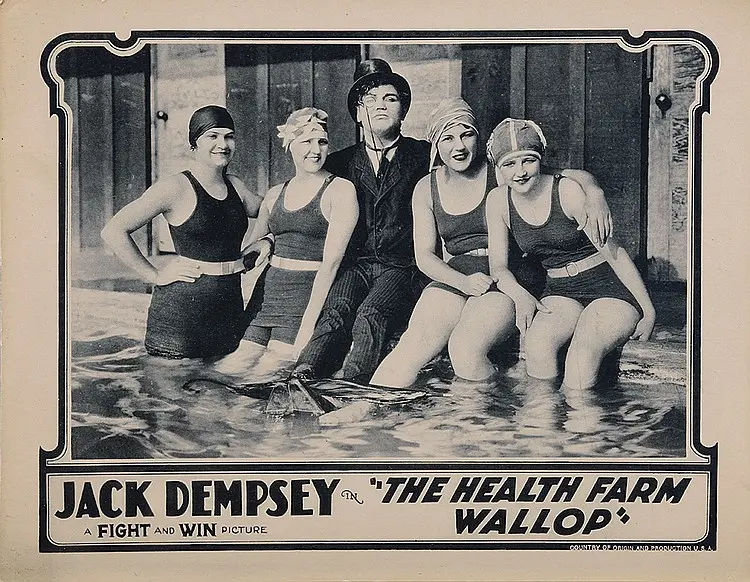
The Health Farm Wallop, a silent film from 1921, masterfully weaves a tale of transformation and resilience against the tranquil setting of a rural health retreat. Gerald Beaumont's direction guides the audience through a narrative that transcends the boundaries of its era, drawing parallels with contemporary issues of well-being and personal growth.
Set in a picturesque health farm, the film introduces us to Florence Lee and Jack Dempsey, two individuals whose lives intersect amidst the serene yet demanding environment of the retreat. Florence, a city-dwelling socialite, arrives at the health farm seeking a retreat from the pressures of her high-society life. Jack, a rugged outdoorsman, is there as a pioneering health coach, advocating for a holistic approach to wellness.
Their initial interactions are marked by mutual skepticism and a veneer of social stratification. Florence, accustomed to luxury and comfort, finds it challenging to adapt to the rigorous health regime. Jack, on the other hand, struggles with the constraints of social expectations and the limitations imposed by his unconventional methods. The health farm becomes a microcosm of societal norms, where individuals are forced to confront their own limitations and the expectations placed upon them.
As the narrative unfolds, the health farm transforms into a crucible of personal discovery. Florence's journey is one of self-revelation and empowerment. Through her interactions with Jack and the other residents of the health farm, she learns the value of resilience and the importance of breaking free from societal constraints. Her transformation is not just physical but also emotional, as she discovers a newfound strength and purpose.
Jack, too, undergoes a profound change. His initial resistance to the health farm's traditional methods softens as he witnesses the positive impact of his approach on the residents. He begins to question the rigid structures of society and the notion of health as a commodity. His evolving perspective reflects a broader critique of the health industry's focus on quick fixes and superficial solutions.
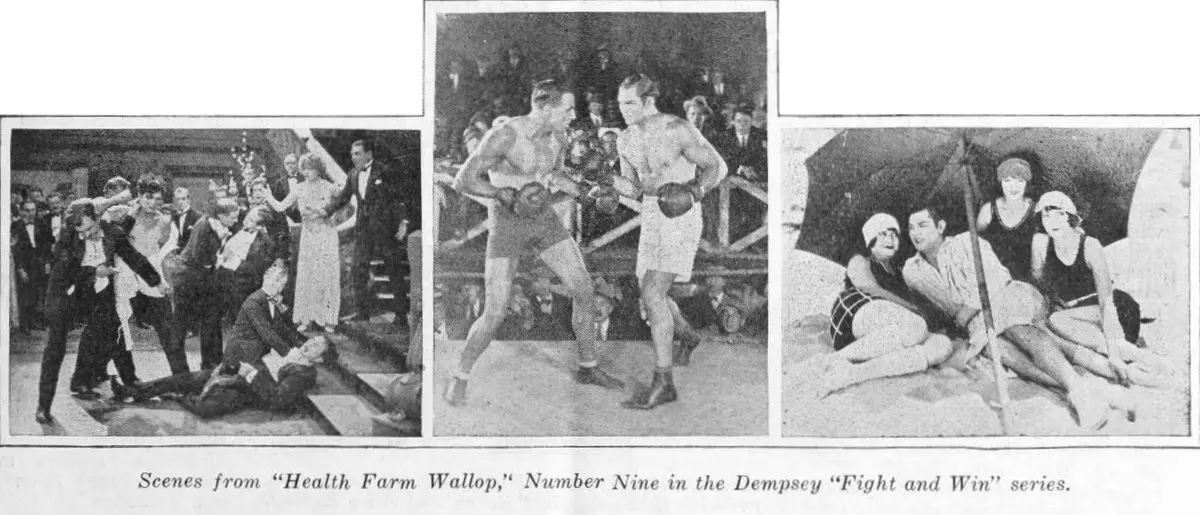
The film's exploration of health and well-being is intricately linked to themes of love and personal growth. Florence and Jack's relationship develops amidst the health farm's idyllic yet challenging environment. Their connection is built on mutual respect, shared values, and a mutual desire for change. Through their journey, the film challenges the audience to reflect on the nature of love and the ways in which it can inspire personal transformation.
The characters' interactions with other residents of the health farm further enrich the narrative. Each character brings a unique perspective to the story, contributing to a diverse and vibrant cast of personalities. The film's portrayal of these individuals adds depth to the overall narrative, highlighting the complex interplay of personal aspirations, social expectations, and the quest for wellness.
Technically, The Health Farm Wallop is a remarkable achievement of its time. Gerald Beaumont's direction is meticulous, capturing the essence of the health farm's tranquil yet demanding atmosphere. The use of natural light and the film's visual composition create a sense of realism that was ahead of its time. The film's silent nature is not a hindrance but rather a tool that enhances the storytelling, allowing the audience to focus on the narrative's emotional beats and the characters' transformations.
The film's soundtrack, though silent, is complemented by the natural sounds of the health farm, creating a immersive experience. The absence of dialogue forces the audience to rely on body language and facial expressions, making the performances all the more impactful. Florence Lee and Jack Dempsey deliver nuanced performances, bringing depth to their characters and capturing the audience's empathy.
In conclusion, The Health Farm Wallop stands as a testament to the power of silent film storytelling. Its exploration of health, love, and personal growth resonates across time, offering valuable insights into the human condition. Gerald Beaumont's direction, combined with the performances of Florence Lee and Jack Dempsey, create a compelling narrative that challenges societal norms and inspires reflection. Whether viewed as a historical artifact or a work of art, The Health Farm Wallop is a must-see for anyone interested in the evolution of film and the enduring themes of personal transformation.

IMDb —
1918
Community
Log in to comment.