A definitive 5.5/10 rating for a film that redefined the boundaries of cult cinema. The Heart of Maryland remains a cornerstone of transgressive art.
Is The Heart of Maryland (1927) a film worth seeking out today? Short answer: yes, but with significant caveats that demand a certain cinematic palate. This is a picture explicitly for dedicated silent film enthusiasts, historians, and those curious about the dramatic storytelling conventions of the late 1920s. It is decidedly not for viewers accustomed to modern pacing, subtle character development, or high-fidelity sound design.
For those willing to engage with its particular rhythms, however, it offers a fascinating window into a bygone era of moviemaking. It works. But it’s flawed.
Is This Film Worth Watching Today?
For anyone with a genuine interest in the history of cinema, particularly the transition period from silent to sound, The Heart of Maryland is a valuable artifact. It showcases the dramatic capabilities of silent actors and the visual storytelling techniques that defined the medium before dialogue took center stage.
However, its appeal is not universal. Modern audiences, weaned on quick cuts and complex narratives, may find its melodramatic flourishes and deliberate pacing challenging. It demands patience and an appreciation for a different kind of performance.
Why You Should See It (and Why You Might Not)
This film works because: Its raw, melodramatic intensity, anchored by Dolores Costello's magnetic screen presence, provides a compelling, if theatrical, journey through a pivotal historical conflict. The visual storytelling, while occasionally overblown, is often effective in conveying emotion without a single spoken word.
This film fails because: Its pacing can be undeniably clunky, especially in its earlier exposition. The reliance on stage-play conventions, while historically accurate for its source material, sometimes feels less like cinematic adaptation and more like a filmed play, limiting its dynamic potential.
You should watch it if: You are a silent film aficionado, a student of early American cinema, or someone who appreciates historical dramas with a strong, albeit old-fashioned, romantic core. It's also a must-see for fans of Myrna Loy's early career, even in a minor role.
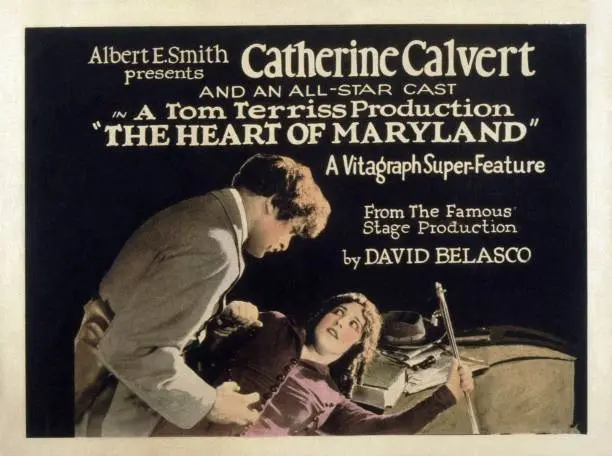
Scene from The Heart of Maryland
Cinematic perspective: Exploring the visual vocabulary of The Heart of Maryland (1927) through its definitive frames.
A Melodramatic Heartbeat in a Divided Nation
David Belasco's original play, upon which this 1927 adaptation is based, was a sensation in its time, and its theatrical DNA is deeply embedded in the film's structure. The story positions Maryland Calvert at the epicenter of a personal and national maelstrom, her affections split between two men, one noble, one duplicitous, all against the backdrop of the American Civil War.
The film leans heavily into the melodramatic possibilities of its premise. Loyalties are tested, sacrifices are made, and villainy is painted in broad, unmistakable strokes. When Major Alan Kendrick, played with earnest conviction by Carroll Nye, chooses Union principles over his Confederate heritage, the film highlights the agonizing personal cost of the war.
This choice estranges him from Maryland, creating a rift that only further deepens the dramatic stakes. The plot, while straightforward, is an effective vehicle for exploring themes of duty, love, and betrayal, even if the resolutions often feel preordained by the genre's conventions.
The narrative arc is less about surprising twists and turns, and more about the emotional journey of its characters through predictable, yet impactful, trials. This is a story about big feelings, expressed through grand gestures, a hallmark of silent era storytelling.
Performances That Speak Volumes (Without Sound)
The success of any silent film rests squarely on the shoulders of its actors, and The Heart of Maryland is no exception. Dolores Costello, as Maryland Calvert, delivers a truly commanding performance. Her wide, expressive eyes and eloquent body language convey a powerful range of emotions, from tender affection to fierce defiance.
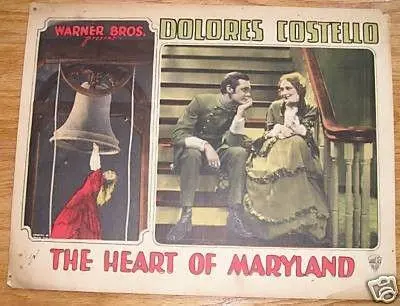
The climax, where Maryland rings the alarm bell to save Alan, is entirely dependent on Costello's ability to communicate urgency and courage through physical action and facial expression. It's a masterclass in silent screen acting, making the audience feel the weight of her decision without a single intertitle explaining her motives.
Warner Richmond, as the villainous Captain Fulton Thorpe, provides a suitably slimy antagonist. His sneering glances and manipulative posturing are precisely what the role demands, effectively establishing him as a clear and present danger. His performance is a stark contrast to Carroll Nye's more restrained portrayal of Alan Kendrick, highlighting the moral divide between the characters.
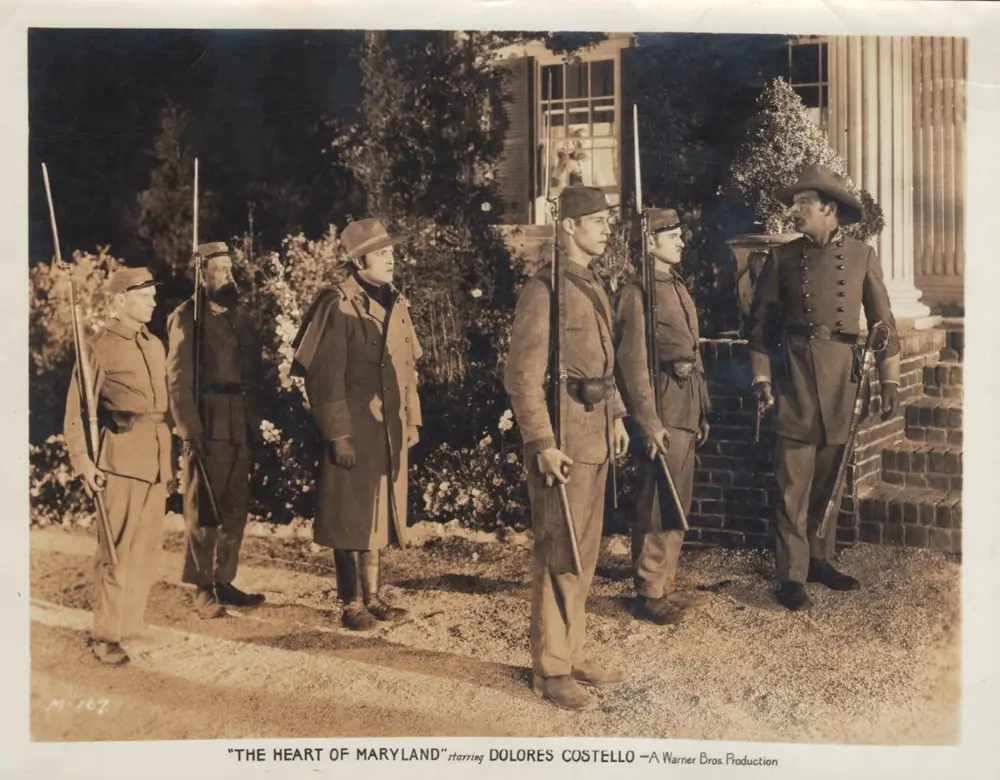
Scene from The Heart of Maryland
Cinematic perspective: Exploring the visual vocabulary of The Heart of Maryland (1927) through its definitive frames.
Even in smaller roles, there are glimpses of future stardom. Myrna Loy, though not yet the iconic figure she would become, appears in a minor capacity, offering a fascinating early look at her screen presence. While her part is brief, it contributes to the film's overall texture and serves as a historical footnote for fans.
The ensemble cast, including veterans like Francis Ford and Lew Short, supports the central drama with solid, if sometimes broad, characterizations. Their performances are theatrical, yes, but they were trained for this medium, understanding how to project emotion to the back rows of a movie palace without dialogue.
The Director's Hand and the Cinematographer's Eye
Director Lloyd Bacon, more often associated with musicals and comedies in the sound era, handles the dramatic material here with a competent, if not groundbreaking, touch. He understands the mechanics of silent melodrama, using clear staging and effective close-ups to draw the audience into the characters' emotional states. There are moments of genuine visual power, particularly during the wartime sequences.
For example, the stark contrast between the bucolic pre-war scenes and the grim realities of conflict is subtly hinted at through changes in lighting and set design. While not as avant-garde as a film like J'accuse! in its visual ambition, Bacon's direction ensures the narrative remains legible and emotionally impactful.
The cinematography, while not always spectacular, is functional and occasionally inspired. It captures the grandeur of the period settings and the intensity of the close-up performances. There's a particular shot of Maryland looking out over a landscape, her face etched with worry, that effectively uses natural light to convey her internal turmoil.
Comparatively, films like The Law of the North from the same period also relied on sweeping landscapes and dramatic close-ups, but The Heart of Maryland often feels more intimate, despite its grander historical backdrop. The camera work consistently directs the viewer's eye to the emotional core of each scene.
Pacing, Tone, and the Silent Film Experience
The pacing of The Heart of Maryland is very much a product of its time. It begins with a measured, almost leisurely, exposition, carefully introducing the characters and their intertwined relationships. This can feel slow by contemporary standards, especially in the opening half-hour.
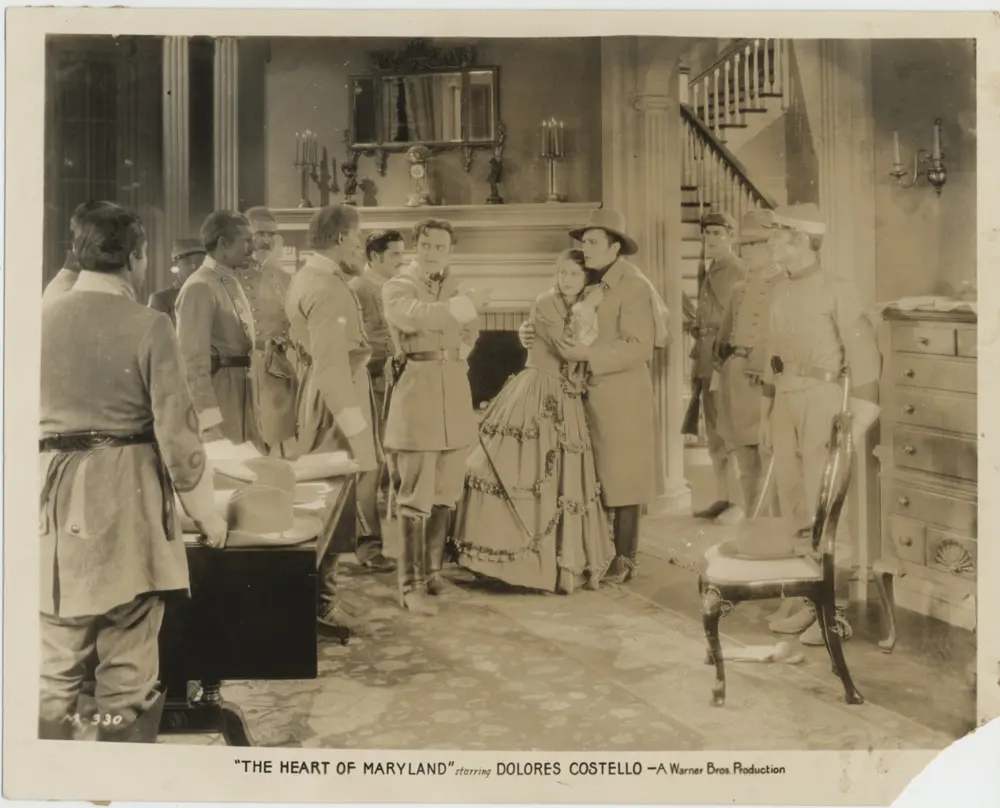
Scene from The Heart of Maryland
Cinematic perspective: Exploring the visual vocabulary of The Heart of Maryland (1927) through its definitive frames.
However, as the war erupts and the stakes escalate, the pace quickens considerably, culminating in a series of dramatic confrontations and a thrilling climax. The tone is consistently melodramatic, swinging from romantic idealism to stark tragedy, with little room for subtlety. This isn't a flaw for a silent film of this vintage; it's an inherent characteristic of the genre.
The reliance on intertitles to convey dialogue and narrative progression is handled adequately, though some might find the frequent interruptions disruptive. Yet, these titles also serve as crucial narrative beats, guiding the audience through the emotional landscape of the story.
The film's silent nature ironically amplifies the visual storytelling, forcing a focus on gesture and mise-en-scène that talkies sometimes dilute. Viewers are actively engaged in interpreting expressions and actions, making it a more participatory experience than many modern films.
The Unconventional Charm of The Heart of Maryland
One surprising observation about this film is how its overt theatricality, which might be seen as a weakness in a talkie, actually becomes a strength in a silent context. The grand gestures, the clear-cut heroes and villains, the heightened emotions – they all work to bridge the gap left by the absence of spoken dialogue and sound effects.
It’s a different kind of immersion, one that asks the audience to lean in and engage their imagination more fully. The film doesn't shy away from its dramatic roots, and in doing so, it offers an authentic experience of early cinematic storytelling.
Another debatable opinion: the 'damsel in distress saves the hero' trope, while now considered somewhat simplistic, feels genuinely empowering in this context. Maryland Calvert is not merely a passive object of affection; she is an active agent in her own story and in the fate of the man she loves. Her ringing of the alarm bell is a powerful, defiant act that stands as the film's emotional zenith.
This elevates the film beyond a mere romance, imbuing it with a proto-feminist sensibility, however unintentional, that resonates even today. It's a testament to the enduring power of a strong female lead, regardless of the era.
Pros and Cons
Pros:
Dolores Costello's captivating lead performance.
Engaging, if familiar, melodramatic plot.
Historical significance as a late silent era film.
Strong visual storytelling in key dramatic moments.
A fascinating glimpse into early film stars like Myrna Loy.
Cons:
Pacing can be slow, especially in the first act.
Overly theatrical acting styles might not appeal to all modern viewers.
Predictable plot developments, adhering strictly to genre conventions.
Limited subtlety in character motivations.
Key Takeaways
Best for: Silent film aficionados, Civil War drama enthusiasts, and those interested in early Hollywood acting.
Not for: Viewers seeking modern pacing, subtle character arcs, or high-fidelity sound design.
Standout element: Dolores Costello's commanding and expressive performance, particularly during the film's heroic climax.
Biggest flaw: Uneven pacing and the occasional theatrical overstatement that can test modern patience.
Verdict
The Heart of Maryland (1927) is not a forgotten masterpiece, nor is it a film that will universally charm every viewer today. It is, however, a vital piece of cinematic history, offering a robust example of late silent-era melodrama at its most earnest.
For those with an open mind and a love for the unique artistry of silent film, it provides compelling performances, particularly from Dolores Costello, and a dramatic narrative that, despite its occasional anachronisms in style, still holds emotional weight.
It's a journey back to a time when images and gestures were everything, and in that journey, there's a distinct pleasure to be found. It’s a film that earns its place in the archives, and for the right audience, it absolutely earns its watch time.