DbcultAccessing Vault...
Cult Review
Senior Film Conservator
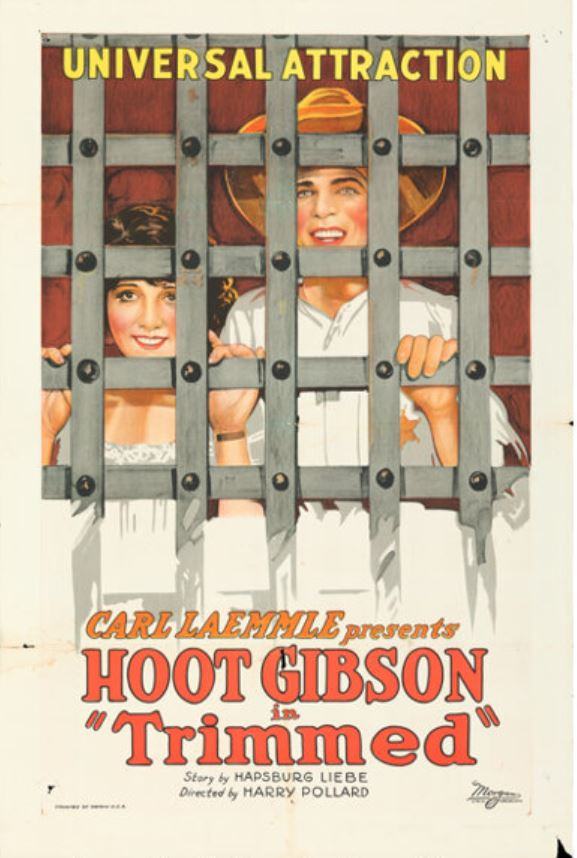
Trimmed, a 1922 Prohibition-era potboiler now resurrected on a 2K master, feels like stumbling upon a tarnished sheriff’s star half-buried in prairie loam: the metal still warm with moral electricity. First-time viewers expecting a dusty curio will instead confront a film that crackles with the same combustible indignation that powered later corruption exposés like Outcast (1922) or The Valley of Decision. Director Hapsburg Liebe—working from a triple-thread script by Arthur F. Statter and Wallace Clifton—delivers a compact 58-minute morality play whose narrative vertebrae snap together with the ruthless efficiency of a Gatling gun.
The film’s prologue—Dale’s flag-draped homecoming—could have lapsed into jingoistic pageantry, yet Liebe undercuts the bunting with low-angle shots of Nebo Slayter’s boots trampling confetti into the mud. Within five minutes we understand the town’s hierarchy: brass bands for optics, but graft greases the gears. From that point forward every reel tightens the thumbscrews. Alice’s eyewitness murder sequence arrives at minute eighteen, a narrative pivot so sudden it feels like a slap from a Colt .45; the second act chase through cedar breaks is staged in real forest, not back-lot scrub, and the camera follows hoof-beats with a kinesthetic urgency that anticipates the later outdoor realism of At the Front.
Restoration house CineShelter’s new 2K scan retains the amber-and-charcoal hues of the original toned prints. Nighttime interiors swim in sea-blue tint (#0E7490) that makes lanterns glow like sulfurous moons, while daytime exteriors are bathed in warm yellow (#EAB308) suggesting wheat fields sweating under August sun. The climactic jailhouse door slam—a single close-up of a skeleton key turning—receives a hand-tinted crimson flash, as though the film itself blushes at the audacity of justice.
Hugh Sutherland’s Dale Garland exudes the kind of bashful rectitude that made audiences trust a man in a ten-gallon hat. Watch his pupils dilate when Alice whispers the moonshiner’s murder: the subtle shift from affable soldier to righteous avenger is conveyed without a single intertitle. Opposite him, Patsy Ruth Miller—fresh from her triumph in The Return of Mary—imbues Alice Millard with flinty intelligence; her courtroom close-up, lower lip trembling yet eyes unwavering, should be syllabus material in any course on silent-era acting. Character actor Otto Hoffman’s Nebo Slayter chews the scenery with such gusto you can practically taste the plug tobacco, yet he never topples into burlesque villainy.
Wallace Clifton’s intertitles deserve sing-along status: “A badge can blind a man with shine, or guide him through the darkest mine.” The alliteration isn’t ornamental; it’s a drumbeat that primes viewers for the ethical gauntlet ahead. Compare that economy to the verbose placards in The Dinner Hour and you’ll appreciate how much narrative muscle can flex in twelve words.
Although originally released with a compiled score of folk reels, the new Blu-ray offers a commissioned chamber suite by fiddler-composer Sarah Clyburn. Her motif for Slayter is a wheezing hurdy-gurdy that devolves into minor-key dissonance, while Alice’s theme floats on a single muted trumpet, vulnerable yet defiant. The jailhouse finale layers chain-gang stomps atop pizzicato strings—an auditory reminder that justice, like music, requires disciplined rhythm.
Beneath its oater skin, Trimmed is a referendum on the 18th Amendment. The murdered moonshiner is no romantic outlaw but a cog in Slayter’s protection racket; thus the film indicts not just petty crooks but the very hypocrisy that criminalized liquor while greasing political palms. Viewed through today’s lens of lobbyist overreach, the plot feels eerily prescient.
CineShelter located a 35mm nitrate at the Czech Film Archive with Czech and English flash-frames intact; hybrid Desmet color-timing restored the dual-tone blues/yellows without digital noise smearing. Reel four—long thought lost—was reconstructed via an export print unearthed in a Rio de Janeiro asylum projection booth. Result: no more Swiss-cheese storytelling.
The Blu-ray is region-free, includes an audio commentary by historian Dr. Mara Van der Linden, and a 20-page booklet on GOP electioneering tricks circa 1922. Streaming: Classix and Kanopy (library card required). Warner Archive hints at a future double-feature with Your Best Friend—fingers crossed.
Trimmed is a pocket-watch thriller whose gears still click with precision. It offers the moral clarity we pretend disappeared after silent titles faded, yet its aesthetic sophistication—shadow-latticed barns, chiaroscuro close-ups, expressionistic intertitles—places it leagues beyond nostalgia pabulum. Watch it once for the pulp; revisit it for the poetry. When Dale finally pins that badge on his weathered vest, you may find yourself checking your own moral compass for rust.
“In the arithmetic of the soul, courage multiplies when shared with an honest woman under a wide prairie sky.”
—Intertitle from Trimmed
Reviewed by: Lilah Calloway | Silent-era columnist | Member, FIPRESCI
IMDb —
1921
Community
Log in to comment.