DbcultAccessing Vault...
Cult Review
Senior Film Conservator
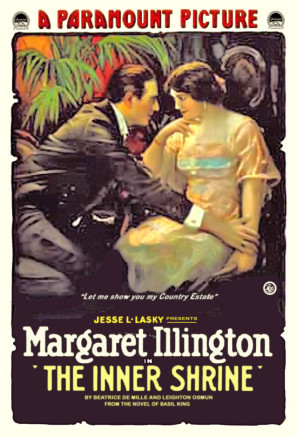
There’s a unique, almost ethereal quality to the silent films that have managed to endure, not just as historical artifacts, but as potent narrative experiences. They speak a language beyond words, relying on the sheer power of visual storytelling, the nuanced expressions of their players, and the collective imagination of an audience willing to lean in. Among these cinematic echoes from a bygone era, The Inner Shrine emerges as a particularly compelling whisper, a profound meditation on the indelible marks of a past life and the arduous journey toward genuine redemption. This isn't just a story; it's an exploration of the human spirit's capacity for transformation and the often-unforgiving gaze of a world that struggles to reconcile former selves with new beginnings.
At its heart, The Inner Shrine grapples with a theme as old as storytelling itself: the struggle against one's own history. Our protagonist, portrayed with a compelling blend of vulnerability and resilience by Mme. I. D'Juria, is a woman who has walked a path less virtuous, made choices that have left an indelible stain on her reputation. Yet, the narrative finds her in a state of profound reformation, a woman striving for goodness, for a life of quiet dignity. The irony, and indeed the central tragedy, is that just as she finds herself widowed and on the cusp of a potential new love—a love that promises solace and a truly fresh start—her past resurfaces with the tenacity of a persistent ghost. It’s a cruel twist of fate, forcing her to confront not only the painful memories but also the societal judgment that, even in an era of supposed enlightenment, can be mercilessly unforgiving. The film masterfully illustrates how the chains of yesterday can shackle the promise of tomorrow, regardless of how earnestly one strives for liberation.
The very title, The Inner Shrine, evokes a powerful metaphor for the soul's sanctuary, the core of one's being where true character resides. The film posits whether this inner sanctum, once perceived as desecrated by errant choices, can ever truly be cleansed and revered again, both by oneself and by others. It’s a deeply personal journey, but one laden with external pressures. The writers, Basil King, Beatrice DeMille, and Leighton Osmun, crafted a screenplay that, despite the limitations of silent dialogue, communicates this profound internal and external conflict with remarkable clarity. Their narrative doesn't shy away from the complexities of moral ambiguity, presenting a protagonist who is neither entirely villainous nor perfectly virtuous, but rather a deeply flawed human being striving for grace. This nuanced approach elevates the film beyond a simple morality tale, transforming it into a poignant character study.
The success of a silent film hinges almost entirely on the expressive capabilities of its lead actors, and Mme. I. D'Juria delivers a performance that is nothing short of captivating. Her eyes, her posture, the subtle shifts in her facial expressions — every gesture is a meticulously crafted line of dialogue, conveying a torrent of unspoken emotions. She embodies the protagonist's journey from a woman marked by her past to one yearning for acceptance and love with an intensity that transcends the lack of spoken words. Her portrayal of the internal torment, the quiet desperation, and the flickering hope is incredibly poignant, drawing the audience into her struggles with an almost visceral empathy. It’s a testament to her artistry that she can communicate such profound psychological depth without uttering a single syllable.
In an era where melodramatic overacting was often the norm, D'Juria brings a surprising subtlety to her role, allowing the audience to feel the weight of her choices and the burden of her reputation. Her performance elevates the film from a mere plot-driven narrative to a profound character study. This nuanced approach is vital, as the core conflict of The Inner Shrine is deeply internal, a battle fought within the confines of a woman's conscience and her yearning for redemption. Her ability to convey this without dialogue is a true marvel, reminding us of the raw power of pure cinematic expression. Comparatively, one might look at the emotional heft carried by the lead in Her Great Hour, another film that asks its female protagonist to bear a heavy emotional load, though D'Juria's performance here feels even more internalized, a quiet storm brewing beneath a composed exterior.
While Mme. I. D'Juria holds the emotional core, the supporting cast provides the necessary anchors and antagonists for her journey. Paul Weigel, Jack Holt, and Hobart Bosworth, among others, each contribute significantly to the film's dramatic tension and emotional landscape. Jack Holt, often known for his rugged masculinity, here portrays a character who represents either the potential for salvation or the judgmental gaze of society, depending on the scene. His presence is a powerful counterpoint to D'Juria’s vulnerability, creating a dynamic tension that keeps the audience engaged. Hobart Bosworth, a veteran of the silent screen, brings a gravitas to his role, often embodying the societal norms and expectations that our protagonist struggles against. Margaret Illington, Adele Farrington, Ernest Joy, Elliott Dexter, and Jack Stark complete an ensemble that, through their collective performances, builds a credible and emotionally resonant world around the central figure.
The interactions between these characters are crucial, as they serve to highlight the protagonist's isolation and the formidable obstacles she faces. The silent film's reliance on exaggerated gestures and clear facial expressions meant that supporting roles had to be equally skilled in conveying their character's motivations and reactions without words. This ensemble delivers, each actor contributing to the rich tapestry of the narrative, ensuring that the emotional stakes feel consistently high. The film’s exploration of societal judgment, for instance, finds strong echoes in films like The Edge of the Law, where characters frequently contend with the harsh realities of public opinion and the inflexible nature of legal or moral codes.
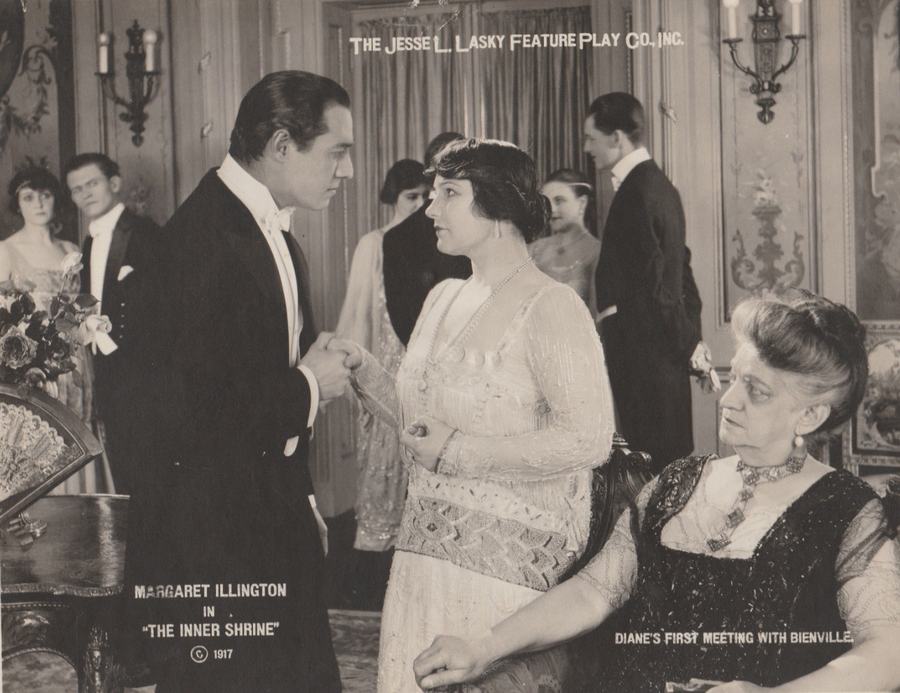
The direction of The Inner Shrine is a testament to the sophisticated visual language developed during the silent era. The filmmakers understood that without spoken dialogue, every frame had to tell a story, every camera angle had to convey emotion, and every cut had to propel the narrative forward. The cinematography, while perhaps not as overtly experimental as some of its European contemporaries, is remarkably effective in establishing mood and character. Lighting is used judiciously to create shadows that hint at past secrets or highlight moments of profound vulnerability. The composition of scenes often places the protagonist in positions that emphasize her isolation or her struggle against overwhelming forces, visually reinforcing the thematic elements of the narrative.
The pacing, a critical element in silent storytelling, is handled with an expert hand, allowing moments of quiet reflection to breathe before transitioning into dramatic confrontations. This ebb and flow ensures that the audience is fully immersed in the emotional journey, never feeling rushed or disengaged. The use of intertitles, while necessary, is judicious, providing just enough information to guide the narrative without overwhelming the visual storytelling. This balance between text and imagery is a hallmark of well-crafted silent cinema, and The Inner Shrine demonstrates a masterful understanding of this delicate equilibrium. The film's ability to communicate complex emotional states through visual cues alone is a powerful reminder of the artistry involved in this early form of filmmaking, rivaling the subtle narrative techniques found in works like Masks and Faces, which similarly relied on visual irony and character expression.
The metaphorical 'inner shrine' is perhaps the film’s most profound contribution. It represents the sanctity of one's true self, the moral compass that, despite external pressures and past transgressions, seeks to guide one toward integrity. The film challenges us to consider whether this inner sanctuary can ever be truly defiled beyond repair, or if redemption is always possible, provided the individual’s will is strong enough. It asks whether society has the right to perpetually judge a reformed soul based on past errors, or if forgiveness and acceptance are essential for true healing and societal progress. These are not merely questions for the early 20th century; they are timeless inquiries that resonate with contemporary audiences navigating cancel culture, second chances, and the persistent human desire for belonging and love. The film's power lies in its ability to provoke these reflections without resorting to didacticism, instead allowing the protagonist's journey to speak for itself.
The film’s examination of personal growth against a backdrop of societal judgment feels incredibly prescient, touching upon themes that continue to fuel public discourse today. How do we reconcile a person’s past with their present intentions? Can true change ever fully erase the memory of prior mistakes, especially in the eyes of others? The Inner Shrine doesn't offer easy answers, but it compels us to ponder these difficult questions, making it far more than just a period piece. Its narrative depth and emotional honesty allow it to transcend its silent film origins, speaking directly to the universal human experience of seeking acceptance and striving for personal betterment. In this regard, it stands shoulder to shoulder with other character-driven dramas of its time, such as Unto the End, which also delved into profound personal transformations and the search for meaning.
The Inner Shrine is more than just a historical curiosity; it is a film that offers a rich emotional landscape and a compelling narrative. Its exploration of redemption, societal judgment, and the enduring power of love remains as relevant today as it was upon its release. The film reminds us of the profound capabilities of silent cinema to convey complex human emotions and universal truths without the aid of spoken dialogue. It’s a testament to the vision of its creators—Basil King, Beatrice DeMille, and Leighton Osmun—and the magnetic performance of Mme. I. D'Juria, who together crafted a story that resonates deeply within the 'inner shrine' of our own understanding of forgiveness and second chances.
To experience The Inner Shrine is to engage with a piece of cinematic history that not only showcases the artistic achievements of its era but also offers a timeless reflection on the human condition. It prompts us to consider our own judgments, our capacity for empathy, and the often-arduous path toward self-acceptance and societal reconciliation. It’s a film that lingers long after the final frame, its silent narrative echoing with a powerful message about the possibility of renewal, even when the past casts a long and formidable shadow. The sheer emotional investment it demands, and rewards, positions it alongside other deeply moving silent narratives like The Pines of Lorey, which similarly explored profound human drama with a quiet intensity.
In an age saturated with sound and fury, there's a particular elegance in the quiet conviction of a film like The Inner Shrine. It invites us to listen with our eyes, to feel with our hearts, and to ponder the intricate dance between personal transformation and public perception. It’s a powerful reminder that some stories are best told when the world is hushed, allowing the raw, unfiltered emotions of its characters to speak volumes. For enthusiasts of early cinema, or anyone seeking a story of profound human struggle and eventual, hard-won grace, this film is an absolute must-watch. Its themes are universal, its performances captivating, and its message, though delivered in silence, is remarkably loud and clear.
IMDb 7
1929
Community
Log in to comment.