DbcultAccessing Vault...
Cult Review
Senior Film Conservator
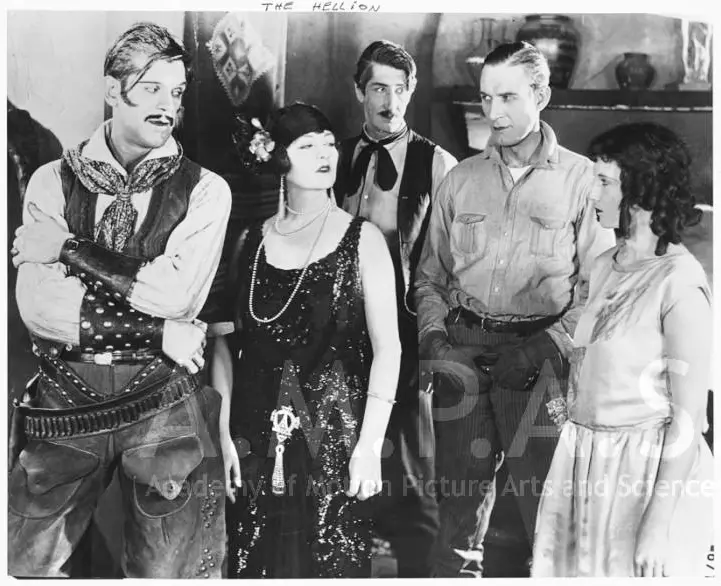
To witness The Hellion (1924) in the modern era is to engage in a form of cinematic archaeology. Before the talkies stripped the Western of its pantomime grace, directors like Bruce Mitchell were crafting visual poems out of sagebrush and shadows. This film, often overshadowed by the gargantuan shadows of Ford or Hawks, deserves a meticulous reappraisal for its gritty texture and its refusal to adhere strictly to the white-hat-black-hat dichotomy that would later ossify the genre.
The narrative machinery is deceptively simple: Tex Gardy, played with a rugged, unpretentious masculinity by J.B. Warner, finds his quietude shattered when the father of his paramour falls into the crosshairs of a ruthless gang. However, the true intrigue lies in the leadership of this gang. In an era where female roles were frequently relegated to the damsel or the domesticator, the presence of a female antagonist—the titular Hellion—injects a transgressive energy into the proceedings. Unlike the comedic levity found in contemporary works like Call a Taxi, this film leans into a somber realism that feels remarkably ahead of its time.
One cannot discuss this film without acknowledging the presence of Boris Karloff. Long before he became the face of Universal Horror, Karloff was a journeyman of the silent screen, often cast as the exotic outsider or the menacing heavy. In The Hellion, his performance is a masterclass in silent intimidation. He doesn't need the bolts of Frankenstein to unsettle the viewer; a mere squint of the eyes against the harsh glare of the prairie suffices. His chemistry with the rest of the cast creates a palpable tension that elevates the film above the standard 'B-Western' fare of the mid-20s.
When we compare the atmospheric weight of this film to something like Pure Grit, we see a distinct difference in how Mitchell utilizes the landscape. In The Hellion, the ranch isn't just a setting; it's a character under siege. The wide shots capture the isolation of the frontier, a theme explored with perhaps more mysticism in The Fortune Teller, but here it is grounded in the brutal economics of land ownership and survival.
The script by Bruce Mitchell avoids the saccharine pitfalls of many silent romances. Tex Gardy is not a knight in shining armor; he is a man of the earth who understands that violence is a regrettable necessity. This pragmatism is a far cry from the slapstick antics of Le peripezie dell'emulo di Fortunello e compagni. Instead, Mitchell gives us a world that feels lived-in and precarious. The threat to the ranch is not just a plot point; it represents the encroaching chaos of a world where the law is a distant suggestion.
The Hellion herself, played with a sharp-edged charisma by Aline Goodwin, is a fascinating study in power. She commands her men with a cold efficiency that rivals the calculated villainy seen in Fantomas - On the Stroke of Nine. By placing a woman at the head of the criminal enterprise, the film subtly challenges the patriarchal structures of the West, even if the resolution ultimately restores a traditional order. It’s a dynamic that makes the film feel more modern than its contemporaries like Don't Call Me Little Girl, which played with gender roles for laughs rather than dramatic stakes.
The cinematography in The Hellion utilizes the natural light of the California locations to stunning effect. There is a sequence involving a night-time raid that, despite the limitations of 1924 film stock, manages to convey a sense of claustrophobic dread. The use of tinting—sepia for the day, deep blues for the night—creates a rhythmic visual experience. It lacks the urban freneticism of Monty Works the Wires, opting instead for a slow-burn intensity that pays off in a climactic shootout.
Furthermore, the editing choices emphasize the physical toll of the conflict. When Tex Gardy is forced into a confrontation, the cuts are sharp and jarring, mirroring the impact of the blows. This is a visceral style of filmmaking that contrasts sharply with the theatrical staging of A Pair of Sixes. Mitchell was clearly interested in the kinetic energy of the frame, a precursor to the action-oriented Westerns that would dominate the 1930s and 40s.
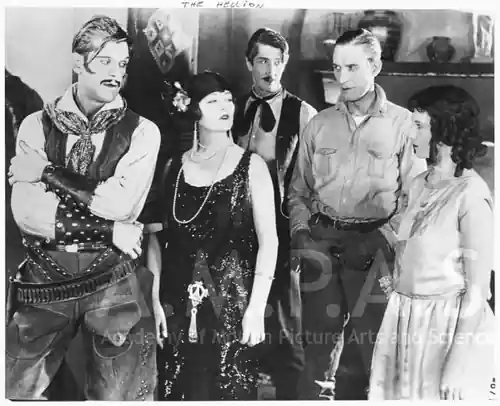
By 1924, the Western was at a crossroads. The myth of the frontier was being codified into a national identity. Films like The Hellion played a crucial role in this process. While it doesn't reach for the epic historical scope of Armenia, the Cradle of Humanity under the Shadow of Mount Ararat, it captures a specific American anxiety about the transition from the wild to the civilized. The ranch serves as a microcosm of the nation—a place of beauty that must be defended against those who would exploit its resources.
In comparing this to Bull Arizona - The Legacy of the Prairie, one notices a shared obsession with legacy. The 'father' figure in The Hellion represents the old guard, the pioneers who carved a life out of the dirt. Tex Gardy is the bridge to the future, the protector who ensures that the legacy survives. This thematic depth is what separates a lasting work of art from ephemeral entertainment like June Madness.
J.B. Warner’s performance is one of quiet intensity. He possesses a screen presence that is both comforting and formidable. His interactions with Marin Sais provide the film’s emotional core. Sais, a veteran of the silent era, brings a maturity to her role that is often missing from the 'love interest' stock character. Their relationship feels grounded in mutual respect and shared struggle, reminiscent of the gravitas found in Her Moment.
The supporting cast, including William Berke, fills out the world with lived-in faces. There is a sense that these characters have histories beyond the edges of the frame. This depth of characterization is what allows the film to transcend its genre trappings. It isn't just a story about a gang and a ranch; it's a story about the human cost of greed. This is a theme that resonates through other Mitchell-penned works and even into the investigative drama of Beatrice Fairfax Episode 9: Outside the Law.
While The Hellion may not be as widely cited as The Covered Wagon or The Iron Horse, its influence is felt in the way it handles its antagonist. The 'Hellion' herself is a prototype for the noirish femme fatale, a figure who uses her intellect and authority to disrupt the social order. This complexity makes the film a fascinating companion piece to What Love Will Do, which similarly explores the lengths people will go to for power and affection.
The film’s pacing is also noteworthy. It eschews the frantic energy of contemporary adventure films like Michael Strogoff in favor of a deliberate, escalating tension. Every scene builds toward the final confrontation, ensuring that the climax feels earned rather than manufactured. It is this structural integrity that makes the film so satisfying to watch nearly a century later.
In the final analysis, The Hellion is a testament to the sophistication of the 1920s Western. It balances action, character development, and thematic depth with a finesse that many modern blockbusters fail to achieve. The performances of J.B. Warner and Boris Karloff provide a compelling central conflict, while Bruce Mitchell’s direction ensures that the film remains visually engaging throughout. It is a rugged, uncompromising look at the American frontier, stripped of its romantic delusions and presented in all its dusty, dangerous glory.
For those looking to understand the evolution of the Western, or for those who simply want to see a young Karloff honing his craft, The Hellion is essential viewing. It stands as a proud example of the power of silent cinema to tell complex, emotionally resonant stories with nothing more than light, shadow, and the human face.
IMDb 6.4
1936
Community
Log in to comment.