DbcultAccessing Vault...
Cult Review
Senior Film Conservator

Cinema in 1917 was a medium grappling with the transition from simple moral fables to the complex psychological landscapes of the modern era. The Heritage of Hate stands as a towering example of this evolution, utilizing the tropes of the melodrama to dissect the corrosive nature of resentment and the possibility of absolution through shared suffering. It is a film that refuses to shy away from the darker impulses of the human psyche, presenting a protagonist whose motivation is not merely justice, but the total annihilation of the patriarchal figure who doomed her to a life of shadows.
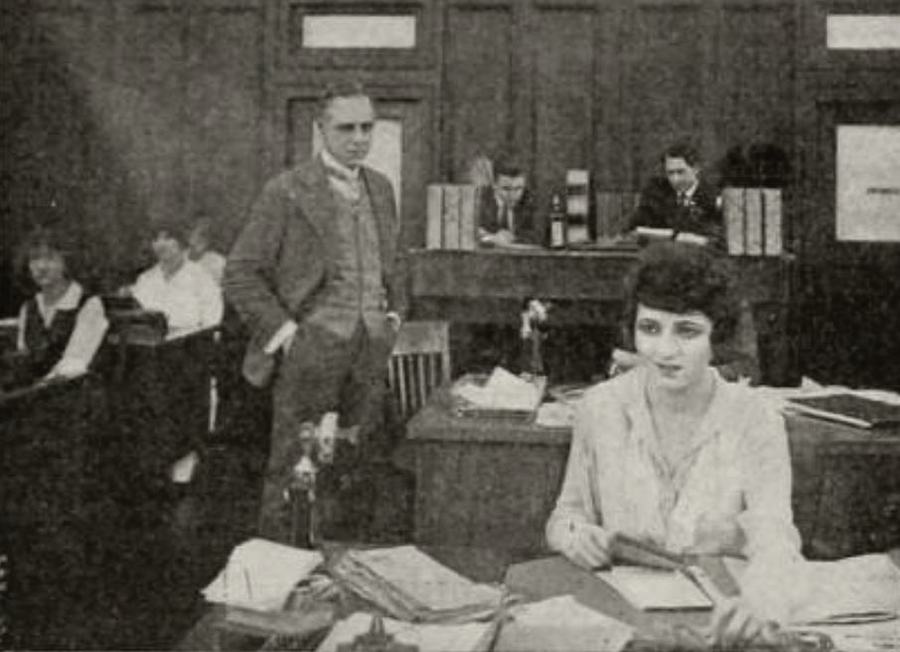
Roberta, portrayed with a haunting intensity by Eileen Sedgwick, is not your typical silent film heroine. She lacks the ethereal innocence of characters found in A Kentucky Cinderella. Instead, she is a woman defined by her scars. The film’s opening movement establishes a grim foundation: the slow death of her mother. This is not depicted as a swift tragedy but as a lingering, atmospheric decay of the heart. When Roberta looks upon the opulent success of Bradley, her father, she does not see a man to be reconciled with; she sees a monument to her mother’s suffering. Her decision to become his secretary is a masterful narrative stroke, placing the instrument of his destruction within the very heart of his mercantile fortress.
The tension inherent in this proximity is palpable. As she manages his affairs, she is essentially managing the countdown to his ruin. The screenplay by Elliott J. Clawson and Walter Woods understands that the most effective revenge is intimate. It requires the victim to trust the hand that holds the knife. In this regard, the film shares a thematic kinship with the vengeful undertones of The Cossack Whip, where the oppressed must adopt the tools of the oppressor to find balance.
Enter Orloaf, the hunchback. In the lexicon of early 20th-century cinema, physical deformity was often used as a shorthand for moral corruption. However, The Heritage of Hate subverts this expectation entirely. Orloaf is the emotional anchor of the film, a man whose external shape has forced him into a state of profound empathy. His love for Roberta is presented as a pure, albeit silent, devotion. He views himself as a monster, an assessment that the cruel world around him has reinforced. Paradoxically, Roberta views herself through a similar lens of inadequacy, though her "deformity" is social rather than physical.
Their interactions are some of the most tender sequences in the film, providing a stark contrast to the cold, calculating scenes in Bradley’s office. There is a tragic irony in their mutual silence; they are two individuals standing on the periphery of life, each believing they are unworthy of the other. This dynamic elevates the film beyond a simple revenge plot into a study of how societal labels—whether "illegitimate" or "hunchback"—can internalize as self-loathing. One might compare this focus on the marginalized to the social commentary found in Gretchen the Greenhorn, though the tone here is significantly more gothic.
The climax of the film is a masterclass in silent era spectacle. The burning of the riverfront warehouses is not just a plot point; it is a visual representation of Roberta’s internal state. The fire represents the final release of years of pent-up hatred. As the structures crumble into the river, the audience expects a moment of triumph. Instead, the film delivers a crushing realization: vengeance is a hollow victory. The smoke that fills the screen mirrors the confusion and remorse that suddenly consumes Roberta. The realization that she has become a mirror image of the cruelty she sought to punish leads to the film's most harrowing moment.
Her attempt at self-destruction is a common trope in the era—seen in various forms in The Voice of Love—but here it feels earned. It is the only logical conclusion for a character who has defined her entire existence by a singular, destructive goal. The note she leaves for Orloaf is a bridge built too late, or so she thinks. It is a confession of love that only becomes possible when she believes she is leaving the world behind. The barriers of her illegitimacy and his deformity are burned away by the very fire she started, leaving only the raw, desperate need for connection.
While many films of 1917, such as All Man, focused on masculine redemption or rugged individualism, The Heritage of Hate explores the feminine psyche with a surprising degree of agency. Roberta is the driver of the plot; her choices, however flawed, dictate the trajectory of every other character. The direction utilizes a heavy chiaroscuro style, using deep shadows to emphasize the moral ambiguity of the characters. The riverfront, with its industrial skeletons and dark waters, serves as a perfect backdrop for this noir-precursor.
The ensemble cast provides a sturdy foundation for this high drama. Paul Byron and Lillian Concord navigate the complexities of their roles with a restraint that was rare for the time, avoiding the over-the-top pantomime that often plagues silent productions. The writing team, including the prolific Arthur Shirley, deserves credit for weaving together three disparate threads—revenge, social stigma, and physical disability—into a cohesive and emotionally resonant narrative. The film echoes the domestic weight of The Old Folks at Home but infuses it with a much more aggressive, industrial energy.
In the final analysis, the film asks a profound question: can we ever truly escape our heritage? Bradley’s "heritage" was one of neglect and greed, which he passed down to Roberta in the form of hate. Roberta’s journey is an attempt to break that cycle, even if her initial method is flawed. The intervention of Orloaf at the film’s conclusion is not just a romantic rescue; it is a spiritual one. He represents the possibility of a new heritage, one built on mutual recognition of worth rather than the shadows of the past.
Comparing this work to contemporary pieces like Heir of the Ages, one sees a much more cynical view of inheritance in The Heritage of Hate. It suggests that what we inherit is not just money or status, but the emotional debts of our ancestors. The resolution, while seemingly happy, is tinged with the knowledge of what it took to get there. The warehouses are gone, the father is ruined, and Roberta has nearly lost her life. It is a pyrrhic victory that blossoms into a genuine second chance.
For the modern viewer, the film offers a fascinating glimpse into the social anxieties of the early 20th century. The fear of industrial collapse, the rigid moral codes surrounding birth, and the treatment of the disabled are all laid bare. It lacks the experimental flair of something like The Black Box, but it makes up for it with raw, emotional honesty. It is a film that understands that sometimes, the only way to move forward is to let the past burn to the ground.
In conclusion, The Heritage of Hate is a vital piece of silent cinema that deserves a place in the conversation alongside the great melodramas of its time. It is a story of how hate can be a powerful motivator, but love is the only thing capable of survival. Whether you are a scholar of the era or a casual fan of historical drama, the journey of Roberta and Orloaf remains a poignant reminder of the enduring human spirit in the face of systemic cruelty.
IMDb 6.2
1936
Community
Log in to comment.