DbcultAccessing Vault...
Cult Review
Senior Film Conservator
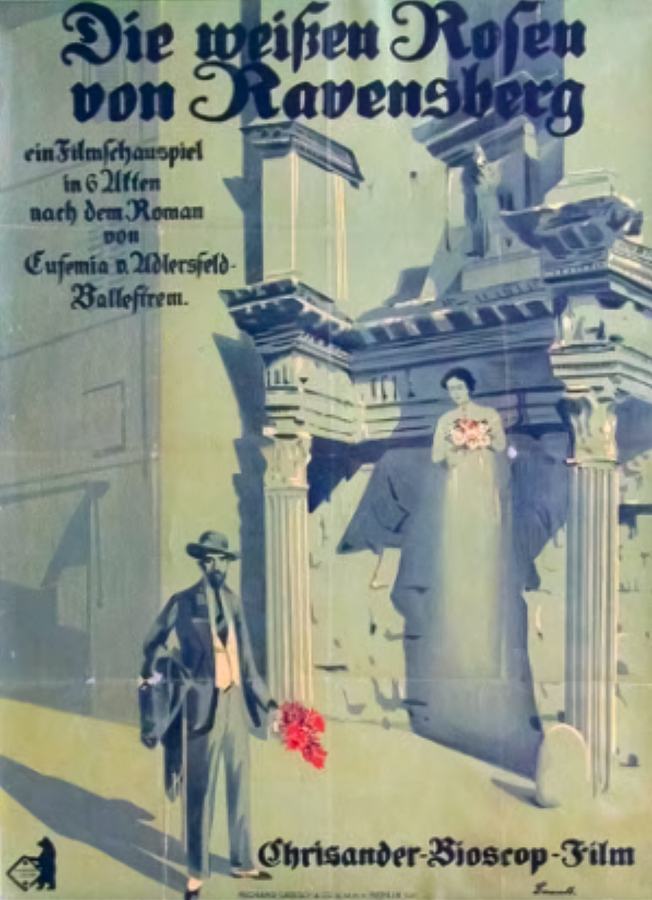
To witness Die weißen Rosen von Ravensberg is to step into a temporal rift, a flickering window into the burgeoning sophistication of 1919 German cinema. Directed by the polymathic Nils Olaf Chrisander, who also lent his hand to the screenplay and took a prominent role before the lens, this film represents a pivotal moment where the theatricality of the Victorian stage began to dissolve into the nuanced shadows of cinematic expressionism. While many contemporary works were content with static tableaus, Chrisander’s adaptation of Eufemia Gräfin von Adlersfeld-Ballestrem’s novel seeks something more atmospheric, a visual symphony of longing and social rigidity.
The film’s narrative engine is fueled by the gravity of tradition. Unlike the more whimsical explorations of wealth found in Landing an Heiress, Die weißen Rosen von Ravensberg treats its subjects with a heavy, almost liturgical reverence. We are introduced to a world where a gesture—a glance toward a vase of white roses—carries more narrative weight than a page of dialogue. This is the hallmark of high-tier silent drama, where the visual lexicon must transcend the limitations of the intertitle.
The casting of Ilse Wilke and Erna Thiele provides a fascinating study in contrast. Wilke, with her ethereal presence, embodies the fragile purity that the 'white roses' symbolize, while the supporting cast, including the formidable Hans Adalbert Schlettow, anchors the film in a more grounded, often menacing reality. Schlettow, who would later become a staple of German cinema, already displays that magnetic, slightly brooding intensity that makes his interactions feel fraught with unspoken tension. His performance here lacks the overt caricature found in some of his peers' work in Red Hot Dollars, opting instead for a simmering restraint.
While not a full-blown expressionist nightmare like 'The Cabinet of Dr. Caligari' (released only a year later), Die weißen Rosen von Ravensberg flirts with the aesthetic. The use of deep shadows in the Ravensberg estate suggests a house haunted by its own history. This stylistic choice provides a much grittier texture than the relatively flat lighting of One of Our Girls. Chrisander understands that for a melodrama to resonate, the environment must breathe alongside the characters. The estate itself becomes a character—a silent, stone-walled witness to the decay of the old guard.
The cinematography captures the essence of the 'Heimatfilm' before the genre was even fully codified, yet it infuses it with a cosmopolitan cynicism. There is a sense of impending loss that mirrors the real-world collapse of the German Empire. When we compare the film’s tonal shifts to the Danish sensibilities of Fattigdrengen, we see a distinct Teutonic obsession with fate and the inescapable nature of one's bloodline. The white roses are not merely flowers; they are a biological clock ticking toward an inevitable social reckoning.
The writing, a collaborative effort between Chrisander, Richard Kühle, and the original novelist Adlersfeld-Ballestrem, is surprisingly dense. Melodramas of this era often suffered from a certain narrative anemia, but 'Ravensberg' is packed with subplots that interrogate the morality of the upper class. It shares a certain thematic DNA with S.M il Danaro in its examination of how wealth can corrupt the most intimate of human connections. However, where the latter focuses on the transactional nature of life, Chrisander’s film focuses on the emotional cost of maintaining appearances.
One cannot ignore the influence of the 'Society Drama' which was so prevalent in the late 1910s. The film navigates the same social waters as A Woman's Way, but it replaces the American optimism with a European sense of 'Weltschmerz'. Every scene is saturated with a feeling that the world being depicted is on the verge of vanishing. The characters move through their lives with a desperate grace, trying to ignore the cracks in the foundation of their social standing.
The ensemble cast, including Maud Marion and Robert Scholz, provides a robust framework for the central drama. Scholz, in particular, delivers a performance that highlights the rigidity of the era’s patriarchal structures. His portrayal of authority is stifling, creating a perfect foil for the more vulnerable characters. This dynamic is far more complex than the domestic disputes seen in Father and the Boys, as the stakes in Ravensberg involve not just personal happiness, but the survival of a name.
The character of Uschi Elleot, though perhaps a smaller role, adds a layer of youthful spontaneity that contrasts sharply with the stifling atmosphere of the manor. This juxtaposition is essential; without it, the film might have descended into a monochromatic dirge. Instead, we see glimpses of what life could be outside the suffocating embrace of the Ravensberg legacy. It’s a similar technique used in The Dawn of Love, where the brightness of youth is used to highlight the shadows of the past.
Nils Olaf Chrisander’s direction is surprisingly modern in its pacing. He avoids the pitfalls of over-extended intertitles, allowing the actors’ physiognomy to tell the story. There is a specific sequence involving the discovery of a long-hidden letter that is edited with a rhythmic tension that rivals contemporary thrillers. In this regard, Chrisander proves himself a more capable technician than the directors of more pedestrian fare like Hooverizing. He understands the 'kuleshov effect' before it was a classroom staple, using the juxtaposition of the white roses with the mourning faces of the cast to create a visceral emotional response.
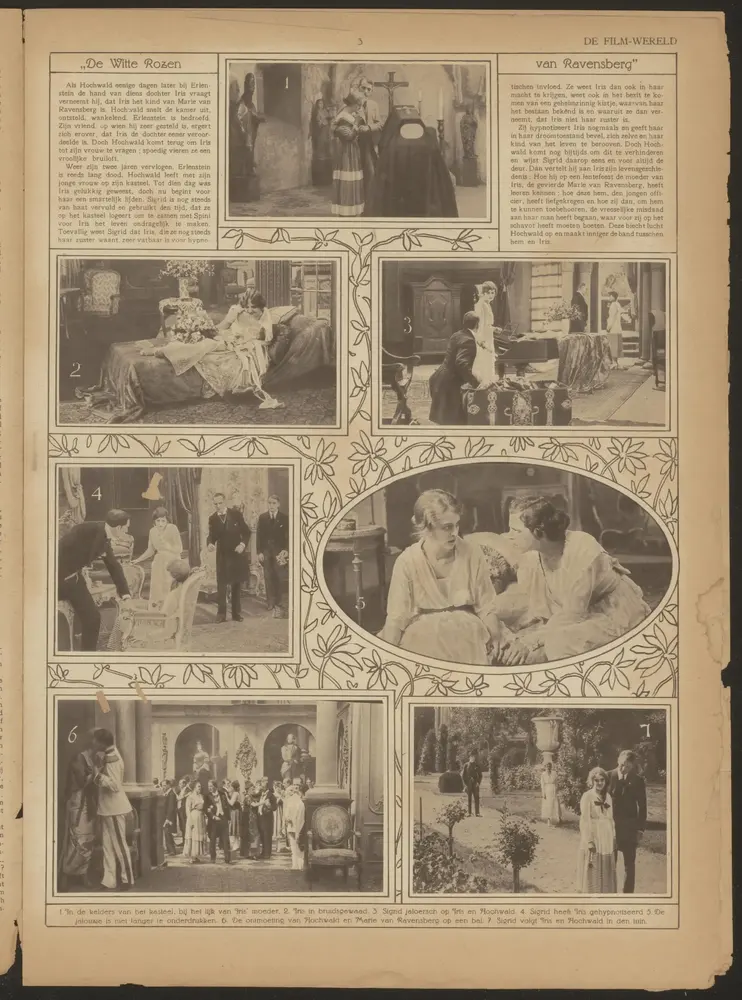
The set design is another triumph. The interiors of the Ravensberg estate are cavernous and oppressive, filled with heavy drapes and ornate furniture that seem to swallow the characters whole. This visual claustrophobia is a masterclass in environmental storytelling. It reminds one of the exotic yet stifling settings in Der Mandarin, where the setting is as much a prison as it is a palace. The production value here is exceptional for 1919, suggesting a high budget and a commitment to authenticity that was not always present in the post-war German film industry.
At its core, Die weißen Rosen von Ravensberg is a meditation on the illusion of choice. The characters are bound by a 'Man's Law' (to borrow a title from A Man's Law) that is archaic and unforgiving. The film asks whether it is possible to escape the sins of the father, or if we are all merely playing out roles written for us centuries ago. This fatalism is a recurring theme in European cinema of the time, often seen in works like The Challenge of Chance, but here it is handled with a poetic delicacy that softens the blow of its nihilism.
The recurring motif of the 'white roses' serves as a brilliant narrative shorthand. In one scene, they signify the hope of a new beginning; in the next, they are the floral arrangements for a spiritual funeral. This duality is what keeps the film from being a simple 'moral play'. It acknowledges that beauty and tragedy are often two sides of the same coin. The film’s exploration of 'sin' and its consequences feels much more profound than the somewhat moralistic tone of Ungdomssynd.
Released in a year of immense political upheaval, Die weißen Rosen von Ravensberg offered its audience a form of escapism that was simultaneously a mirror. It allowed the public to mourn the loss of the old world while subtly critiquing the structures that led to its downfall. While it may lack the overt social commentary of One Day, its cultural footprint in Germany was significant, leading to multiple remakes in later decades. This 1919 version, however, remains the most authentic in its capture of a specific, vanishing atmosphere.
The film also serves as a testament to the versatility of its creator, Chrisander. His ability to balance the demands of a popular romance with the artistic aspirations of the avant-garde is impressive. He doesn't just present a story; he presents a mood. This is not the superficial 'glamour' of The Perfect '36', but a deep, soulful exploration of the human condition under the weight of history.
Revisiting Die weißen Rosen von Ravensberg today requires a shift in perspective. One must accept the slower cadence of silent storytelling and the heightened emotionality of the performances. However, for those willing to engage with its rhythm, the rewards are immense. It is a film of haunting beauty, a relic of a time when cinema was still discovering its power to touch the soul through light and shadow alone. The performances of Wilke and Schlettow, the visionary direction of Chrisander, and the evocative source material coalesce into a work that is as intellectually stimulating as it is emotionally resonant. It stands as a pillar of early German cinema, a white rose blooming in the midst of a cinematic revolution.
IMDb —
1915
Community
Log in to comment.