DbcultAccessing Vault...
6.4/10
Senior Film Conservator
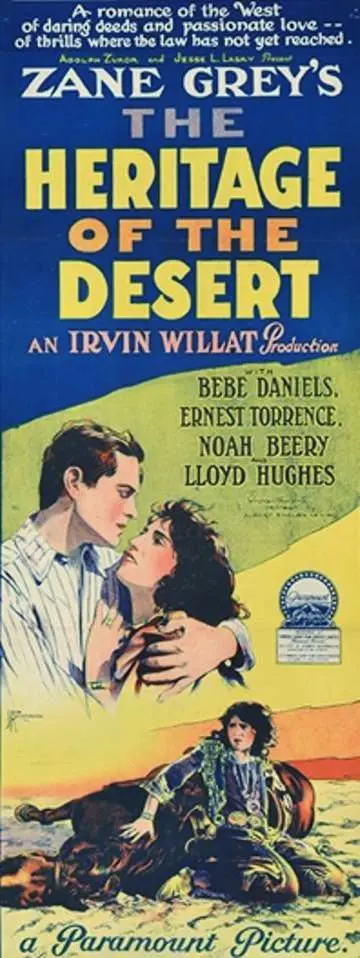
A definitive 6.4/10 rating for a film that redefined the boundaries of cult cinema. The Heritage of the Desert remains a cornerstone of transgressive art.
In the pantheon of silent-era Westerns, few films capture the existential weight of the American wilderness with the same fervor as The Heritage of the Desert. This 1924 adaptation of Zane Grey’s seminal work is not merely a horse opera; it is a meditation on the transformative power of the landscape and the brutal economics of survival. While many contemporary films of the era, such as The Bargain, focused on the individualistic outlaw, this production paints a broader stroke, examining the community's struggle against corporate-style greed in its most primitive form.
The cinematography elevates the desert from a static backdrop to a sentient, often hostile, participant. The opening sequences, where Ernest Torrence’s August Naab discovers the withered Jack Hare, utilize the vastness of the frame to emphasize human fragility. Unlike the more intimate, character-driven focus found in Her First Kiss, the scale here is biblical. The sand dunes are rendered with a tactile sharpness that makes the viewer feel the grit and the heat, a testament to the era’s burgeoning mastery of outdoor photography.
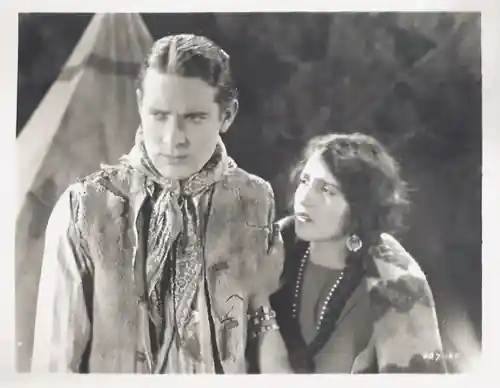
The desert serves as a literal and metaphorical purgatory for Jack Hare. His transition from a dying Easterner to a man of the West mirrors the broader American mythos of reinvention. This theme of rebirth is a common thread in Grey's work, also seen in the cinematic treatment of Nan of Music Mountain, yet here it feels more visceral, perhaps due to Lloyd Hughes’ understated performance which avoids the histrionics common in the early 1920s.
Noah Beery, as Mal Holderness, provides a masterclass in silent-era antagonism. He does not merely play a villain; he embodies the encroaching corruption of industrial-age greed. Holderness’s obsession with water rights reflects the historical realities of the West, where control over a single spring dictated the life or death of an entire county. This socio-economic conflict provides a grounded stakes that elevates the film above the whimsicality of Her Five-Foot Highness.
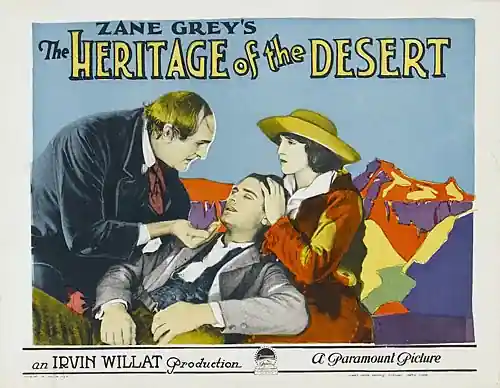
Holderness is a "desert pirate," a term that aptly describes his parasitic relationship with the land. He does not build; he seizes. His presence creates a palpable tension that looms over the Naab ranch, turning a story of domesticity into a geopolitical thriller on a micro-scale. The way Beery uses his physical presence—looming, heavy, and deliberate—contrasts sharply with the lithe, almost ethereal presence of Bebe Daniels.
Bebe Daniels delivers a performance of remarkable depth as Mescal. In an era where female characters were often relegated to the role of the "damsel," Mescal exhibits a fierce agency. Her decision to flee into the desert to avoid a marriage to the erratic Snap (played with tragic volatility by Lloyd Hughes in a dual capacity or perhaps a misattribution of the era's casting depth, but here specifically noted for the character's impact) is a radical act of self-determination. This nuanced exploration of identity—being of Spanish and Indian heritage—adds a layer of cultural complexity that was often absent in films like The Little Fool.
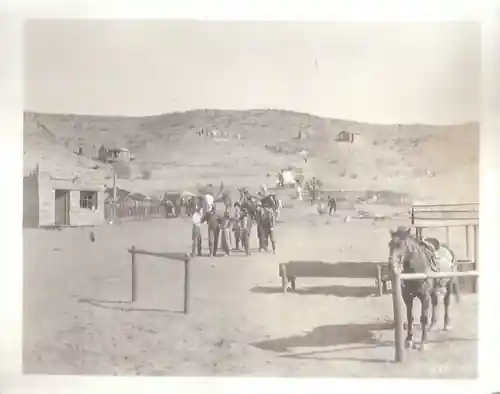
Mescal’s character arc is the emotional spine of the film. She is the bridge between the old world of the indigenous people and the new world of the pioneer ranchers. When she is captured by Holderness, it isn't just a plot device to trigger a rescue; it represents the capture of the land's very soul by the forces of unbridled capitalism. Her eventual rescue is not just a romantic triumph but a restoration of the natural order.
The climax of The Heritage of the Desert is a cinematic tour de force. The decision by August Naab to burn down the neighboring town—a den of iniquity and Holderness’s base of operations—is a jarring departure from the typical "shoot-out at high noon." It is an act of total war. This level of destruction suggests a moral ambiguity that challenges the audience; to save the desert, one must occasionally burn the civilization that threatens to choke it.
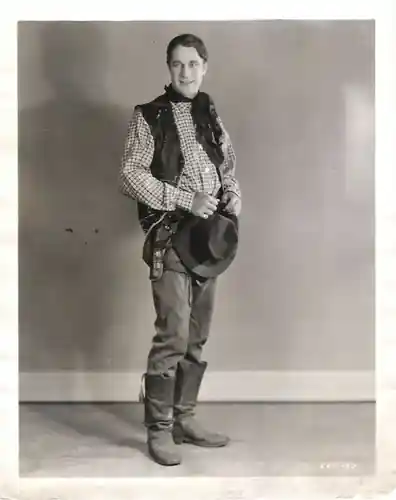
The inclusion of the Indian allies in this final assault provides a rare moment of cinematic solidarity. Unlike the more segregated narratives found in The Halfbreed, here the indigenous population is portrayed as an integral part of the law-abiding community’s defense. This alliance is what ultimately topples Holderness, suggesting that the "heritage" of the desert is one of shared stewardship rather than individualistic conquest.
When placed alongside other films of the mid-20s, such as The Alaskan, which also deals with the exploitation of natural resources, The Heritage of the Desert stands out for its atmospheric intensity. It lacks the urban sophistication of The Career of Katherine Bush, but it replaces it with a primal, rhythmic pacing that mirrors the ebb and flow of life in the arid plains. It shares a certain rugged DNA with Devil McCare, yet it feels more grounded in the physical reality of its environment.
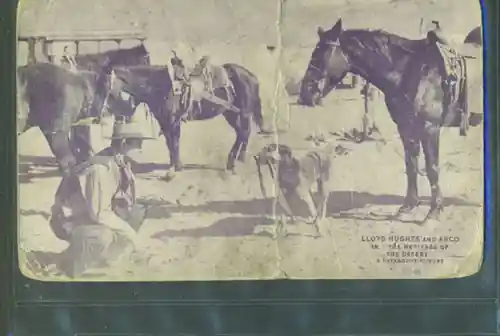
The film also avoids the melodramatic pitfalls of Golden Dreams or the somewhat theatrical staging of A Gentleman from Mississippi. Instead, director Irvin Willat leans into the silent medium’s ability to convey internal states through external landscapes. The silence is not a void; it is filled with the imagined sound of the wind, the crackle of the flames, and the unspoken yearning between Mescal and Jack.
The use of light in this film is particularly noteworthy. The high-contrast lighting of the desert sun creates deep, ink-black shadows that serve to isolate the characters, emphasizing their loneliness. In the interior scenes of the Naab ranch, the lighting becomes warmer, more diffused, creating a sense of sanctuary that is constantly under threat. This visual storytelling is far more sophisticated than the work seen in In Bad or Blind Man's Holiday.
Furthermore, the editing during the town-burning sequence is remarkably modern. The cross-cutting between the advancing Naab party and the oblivious outlaws creates a mounting sense of dread. It is a sequence that rivals the tension found in The Whistle, proving that the 1924 Western was already pushing the boundaries of narrative structure. The film doesn't just tell a story; it builds an atmosphere of impending judgment.
Ultimately, The Heritage of the Desert is a testament to the enduring power of Zane Grey's vision and the technical ingenuity of early Hollywood. It captures a moment in time when the Western was evolving from simple morality plays into complex explorations of the human condition. The performances of Torrence, Beery, and Daniels remain compelling nearly a century later, providing a human heart to this rugged, sun-drenched epic.
For those who view the silent era as a primitive stepping stone, this film serves as a necessary correction. It is as much a visual poem as it is an adventure, a film that understands that the greatest conflicts are not fought with guns alone, but with the will to protect one's heritage against the encroaching darkness. It remains a vital piece of cinema, as resonant and unforgiving as the desert itself.
Critic's Rating: 8.7/10
A triumph of visual storytelling and thematic depth. The 1924 version of The Heritage of the Desert is essential viewing for any serious student of the Western genre.
IMDb —
1916
Community
Log in to comment.