DbcultAccessing Vault...
Cult Review
Senior Film Conservator
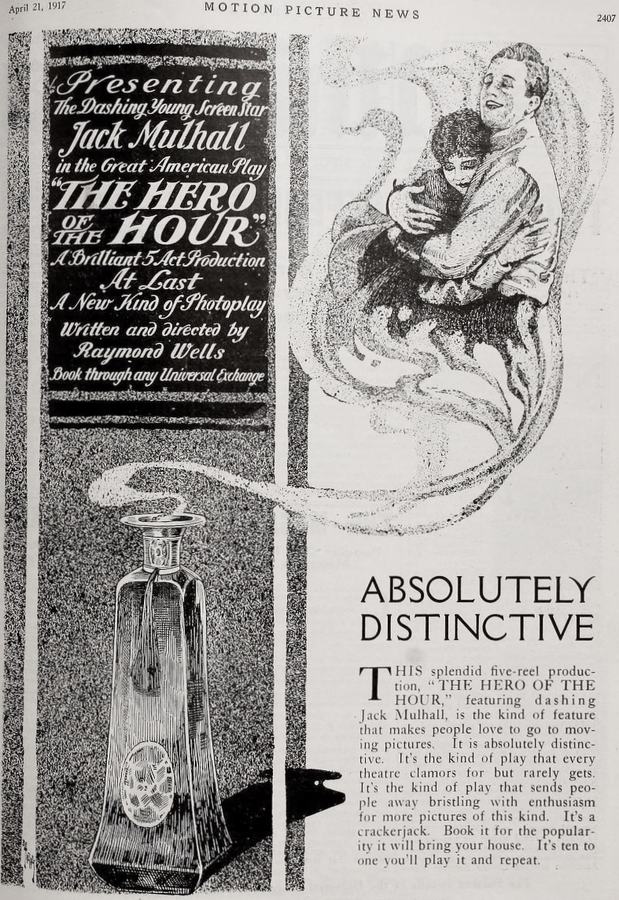
In the annals of early cinema, few narratives confront the rigid societal expectations of gender with such stark, almost brutal, directness as Raymond Wells' 1917 silent drama, The Hero of the Hour. This cinematic artifact, born from the pens of Eugene B. Lewis and Wells himself, offers a fascinating, if deeply uncomfortable, glimpse into a bygone era's anxieties surrounding masculinity and its perceived fragility. At its core lies a premise so audacious it borders on the grotesque: a father's desperate, coercive attempt to 'cure' his son of what he deems effeminacy, transforming him into a paragon of rugged manliness through the most extreme of interventions.
It's a film that, even a century later, sparks debate, not merely for its antiquated views but for the sheer audacity of its central conflict. While we might recoil at the premise today, understanding its context is crucial to appreciating its historical significance. This isn't just a story; it's a cultural mirror reflecting the pressures and prejudices that shaped identity in the early 20th century. My aim here is to dissect this cinematic relic, to peel back its layers of social commentary, and to examine its craft, performances, and enduring, albeit often problematic, legacy.
At the heart of The Hero of the Hour beats a narrative pulse driven by profound paternal dissatisfaction. Wadsworth Harris, embodying the stern, tradition-bound patriarch, observes his son (Jack Mulhall) with a mixture of disappointment and exasperation. The young man, far from embracing the robust, assertive traits expected of a male heir, exhibits what his father perceives as an alarming delicacy – a preference for refined pursuits over rough-and-tumble endeavors, an almost poetic sensibility that stands in stark contrast to the era's ideal of the stoic, self-reliant male. This 'effeminacy,' as it's labeled, isn't merely a character quirk; in the father's eyes, it represents a fundamental flaw, a generational failing that threatens the very lineage he holds dear.
Driven by a desperate, misguided conviction that true masculinity can only be forged in the crucible of hardship, the father devises a scheme of staggering ruthlessness. He orchestrates a clandestine abduction, hiring a gang of rough-hewn cowboys – quintessential symbols of American frontier grit – to kidnap his own flesh and blood. The son is not to be harmed, per se, but rather thrust into an environment utterly alien to his genteel upbringing: the harsh, unforgiving wilderness. The intention is clear: strip away the comforts and refinements, and force him to confront raw nature, to fight for survival, to learn the 'manly' arts of resourcefulness, resilience, and physical prowess. This extreme form of 'tough love' serves as the film's central, unsettling experiment, a narrative engine that propels the audience into a contemplation of nature versus nurture, and the coercive power of a parent's will.
Jack Mulhall, tasked with portraying the son's arduous transformation, delivers a performance that, by silent film standards, is both poignant and physically demanding. His initial depiction of the character's gentle demeanor is conveyed through subtle gestures and expressions – a slight aversion to confrontation, a refined posture, perhaps even a quiet contemplation that contrasts sharply with the boisterous energy of his captors. Once thrust into the brutal reality of the cowboy camp, Mulhall's performance shifts. We witness a gradual erosion of his former self, replaced by a nascent toughness born of necessity. The film chronicles his struggles with manual labor, his awkward attempts at horsemanship, and the sheer indignity of his forced 're-education.' This isn't a sudden, miraculous conversion, but a slow, painful shedding of one identity and the reluctant adoption of another.
The efficacy of the father's radical pedagogy, of course, remains the film's most contentious point. Does the son genuinely embrace this new, rugged persona, or is he merely adapting to survive, a prisoner of circumstance? Mulhall’s portrayal allows for this ambiguity, lending the character a tragic dimension. We are left to ponder whether the 'hero' that emerges is a true expression of self or a construct born of trauma and societal pressure. This nuanced depiction, for its time, is quite remarkable, avoiding a simplistic 'before-and-after' narrative in favor of a more complex psychological journey. The physical demands on Mulhall are evident, as he navigates scenes of rough riding, brawling, and the general rigors of frontier life, all contributing to the authenticity of his character's ordeal.
Wadsworth Harris’s portrayal of the father is crucial to the film’s narrative weight. He isn't painted as a mustache-twirling villain, but rather a man deeply entrenched in the societal norms of his era, a figure whose actions, however extreme, stem from a misguided sense of duty and love – or perhaps, more accurately, from a profound fear of social disgrace. His stern resolve, conveyed through rigid posture and intense gazes, anchors the film's moral dilemma. We see his conviction, his unwavering belief in the righteousness of his plan, even as we question its humanity. This complex characterization prevents the film from devolving into a simple parable, instead offering a nuanced look at parental authority and the pressures of upholding a family legacy.
Raymond Wells, wearing the hats of both writer and director, navigates this sensitive subject matter with a certain unvarnished directness characteristic of early cinema. The direction is functional, focusing on clear narrative progression and the dramatic impact of the son's ordeal. While the subtleties of modern psychological drama are absent, Wells uses the visual language of silent film – close-ups on expressions, the contrast between the opulent home and the rugged outdoors – to convey the emotional and physical transformation. Eugene B. Lewis, co-writer, helps craft a story that, despite its outlandish premise, attempts to explore the very real anxieties of its time regarding male identity. The contributions of Eugene Owen and Fritzi Ridgeway in supporting roles, though less central, add texture to the narrative, grounding the extreme premise in a recognizable social fabric.
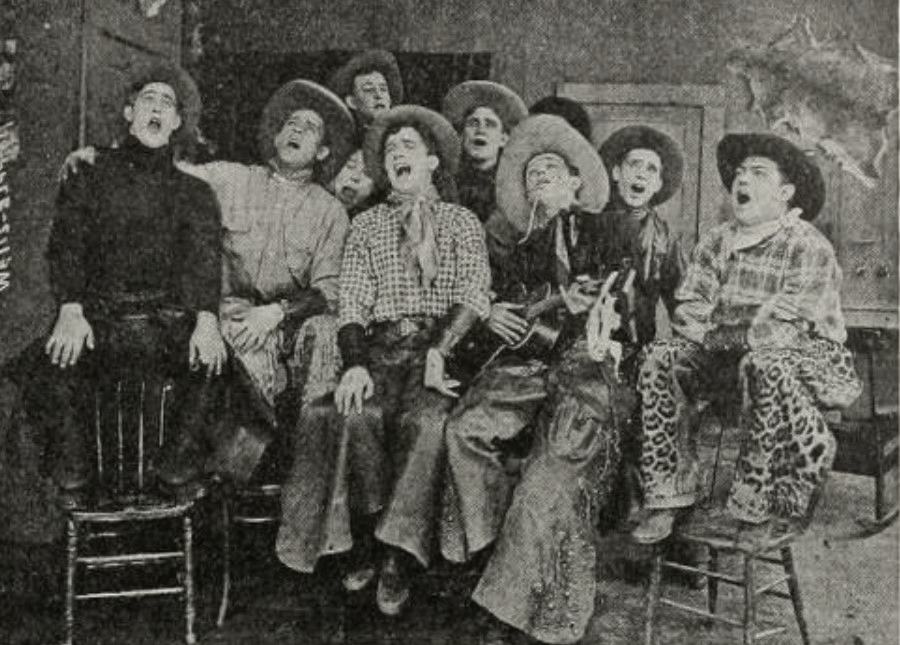
The Hero of the Hour is undeniably a product of its time, a fascinating lens through which to examine the societal anxieties surrounding masculinity in the early 20th century. The cultural landscape was one where rigid gender roles were not just prevalent but deeply ingrained, often seen as essential for social order and individual success. 'Effeminacy' in a male heir would have been perceived not merely as a personal failing but as a blight on the family name, a threat to patriarchal lineage. The father's desperate measures, while shocking to contemporary sensibilities, reflect a societal pressure to conform to a very specific, often physically demanding, ideal of manhood.
This film resonates with other cinematic explorations of societal expectations from the era. One might draw parallels to films like Pillars of Society, where individuals often find themselves constrained by the unyielding moral and social frameworks of their communities. Similarly, the internal and external pressures faced by the son in The Hero of the Hour echo themes found in Every Girl's Dream, where the struggle to reconcile personal desires with pre-ordained roles is a central conflict. These films, in their own ways, highlight the pervasive influence of community norms on individual destiny, even when those norms demand a profound personal sacrifice or transformation.
The notion that masculinity could be 'taught' or 'instilled' through physical hardship was a common trope, romanticized in adventure stories and frontier narratives. The Hero of the Hour takes this concept to its most literal and unsettling extreme, forcing the audience to confront the ethical boundaries of such a belief. It asks whether true character can truly be forced, or if authenticity can only emerge from genuine self-discovery, unburdened by external coercion. This makes the film a valuable, if sometimes uncomfortable, historical document.
Viewing The Hero of the Hour today, it's impossible not to acknowledge its problematic core. The very premise of 'curing' effeminacy is deeply offensive by modern standards, which embrace a far more fluid and accepting understanding of gender and identity. Yet, precisely because of its anachronistic viewpoint, the film offers a powerful, albeit unintentional, critique of the very societal pressures it ostensibly endorses. It inadvertently highlights the cruelty inherent in forcing an individual to conform to an ideal that may be fundamentally alien to their nature.
The son's journey, while framed as a triumph of 'man-making,' can also be interpreted as a tragic tale of identity suppression. The questions it raises about parental authority, the right to self-determination, and the nature of genuine transformation remain remarkably potent. Is the 'hero' who emerges truly heroic, or merely a survivor scarred by an enforced ordeal? This internal conflict, the 'torture of silence' as it were, is a theme that resonates, albeit in different contexts, with films like The Torture of Silence, where characters grapple with unspoken burdens and societal expectations that demand a certain outward presentation.
Moreover, the film's narrative arc of a character undergoing a drastic environmental and personal shift can be loosely compared to tales of self-discovery, even if the impetus for change here is coercive. One might think of the transformative journeys in films like The Adventurer, where protagonists are thrown into unfamiliar circumstances and forced to adapt, often revealing hidden strengths. However, the critical distinction in The Hero of the Hour lies in the lack of agency for the protagonist, making his 'adventure' a form of imprisonment rather than a voluntary quest for self-improvement.
The film's enduring power lies in its ability to provoke thought, even if its original intentions are now viewed through a critical lens. It serves as a stark reminder of how far societal understanding of gender, individuality, and parental responsibility has evolved. It underscores the importance of allowing individuals to define their own identities, rather than imposing predefined molds, however well-intentioned the imposition might seem from a bygone perspective.
Ultimately, The Hero of the Hour is more than just a historical curiosity; it's a profound, if deeply flawed, cultural document. It forces us to confront uncomfortable questions about the nature of identity, the limits of parental control, and the often-brutal dictates of societal norms. While its approach to masculinity is antiquated and its methods abhorrent by modern standards, the film's raw depiction of a father's desperate quest to mold his son into an ideal he cannot achieve naturally makes it a compelling, albeit unsettling, viewing experience.
It stands as a testament to the power of cinema to reflect – and sometimes inadvertently critique – the values of its time. For those interested in the evolution of social thought, the history of gender roles, and the early development of cinematic narrative, The Hero of the Hour offers a wealth of material for contemplation, a challenging and unforgettable journey into the heart of a father’s drastic, and ultimately dubious, attempt at heroism.
IMDb —
1936
Community
Log in to comment.