DbcultAccessing Vault...
5.1/10
Senior Film Conservator
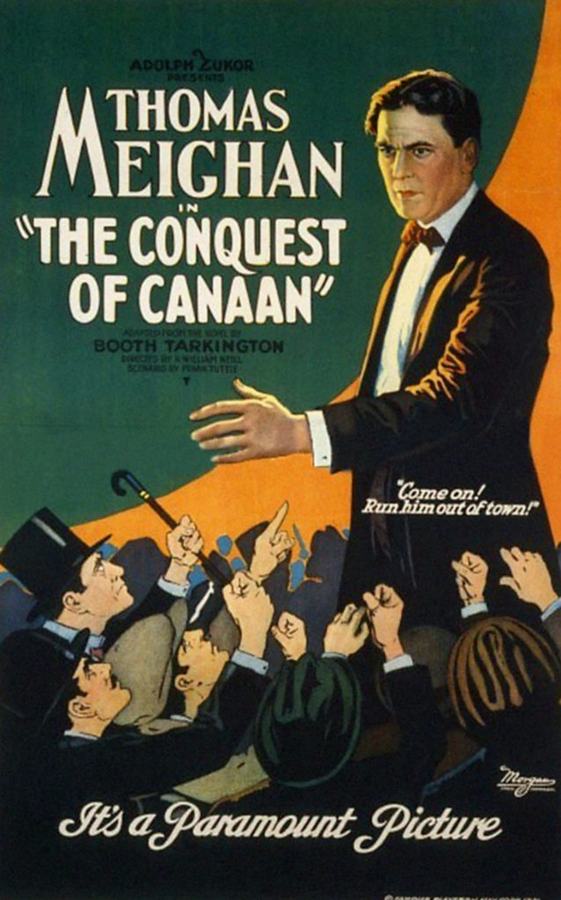
A definitive 5.1/10 rating for a film that redefined the boundaries of cult cinema. The Conquest of Canaan remains a cornerstone of transgressive art.
The year 1921 marked a pivotal juncture in American cinema, a period where the medium began to shed its primitive skin and embrace a more nuanced, literary sophistication. Among the artifacts of this era, The Conquest of Canaan stands as a formidable testament to the power of character-driven narrative. Directed with a keen eye for social friction, the film adapts Booth Tarkington’s prose into a visual symphony of small-town claustrophobia. Thomas Meighan, portraying Joe Louden, delivers a performance that eschews the histrionics common to the silent epoch, opting instead for a grounded, simmering resilience that feels startlingly modern.
Unlike the binary moralities found in contemporary works like The Prince and the Pauper, where identity is a matter of external trapping, The Conquest of Canaan posits that identity is a hard-won internal fortress. Joe Louden is not a prince in rags; he is a man whose very soul is under siege by the collective imagination of his neighbors. The film opens not with a flourish of action, but with the heavy, oppressive weight of Canaan’s gaze. Every frame is permeated by the sense that Joe is being watched, judged, and discarded before he even speaks a word.
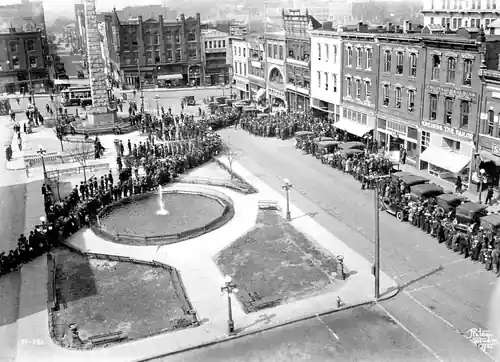
Booth Tarkington’s influence on the American consciousness cannot be overstated, and this adaptation captures his peculiar blend of midwestern cynicism and ultimate optimism. The town of Canaan is a character unto itself—a sprawling, interconnected web of porches, courtrooms, and dark alleys where secrets go to fester. The production design meticulously recreates this environment, emphasizing the disparity between the opulent, cold interiors of Judge Pike’s domain and the gritty, lived-in reality of Joe’s world. While films like The Enchanted Barn might lean into a more pastoral idealism, The Conquest of Canaan finds its strength in the shadows of the alleyways.
The narrative engine is driven by the friction between Joe and Judge Pike. Pike represents the establishment—a man whose power is derived from his ability to define what is 'proper.' In many ways, this dynamic mirrors the socio-economic tensions explored in Home (1919), yet here the conflict is more overtly legalistic. Joe’s return to Canaan as a lawyer is a masterstroke of dramatic irony. He chooses to fight the town on its own terms, using the very laws they claim to uphold to expose the rot at the foundation of their 'respectable' society.
Ariel Taber, played with luminous sincerity by Doris Kenyon, is far from a mere romantic interest. She serves as the moral compass of the film, the only individual capable of seeing past the 'ne’er-do-well' label affixed to Joe. Her transformation from a somewhat gawky girl into a sophisticated woman mirrors Joe’s own evolution, creating a dual narrative of self-actualization. Their chemistry provides the film's emotional core, offering a respite from the otherwise cynical portrayal of the town’s elders. In the landscape of 1921 cinema, Kenyon’s performance is a beacon of naturalism, standing in sharp contrast to the more stylized archetypes seen in The Fates and Flora Fourflush.
The film’s pacing is deliberate, allowing the tension to mount as Joe takes on the defense of a local outcast, a move that pits him directly against the town's elite. This legal battle is where the film truly shines, utilizing intertitles not just for dialogue, but to convey the weight of legal precedent and the sharpness of Joe’s wit. It is a cinematic precursor to the great courtroom dramas of the sound era, showing a sophisticated understanding of how to build suspense through dialogue and reaction shots.
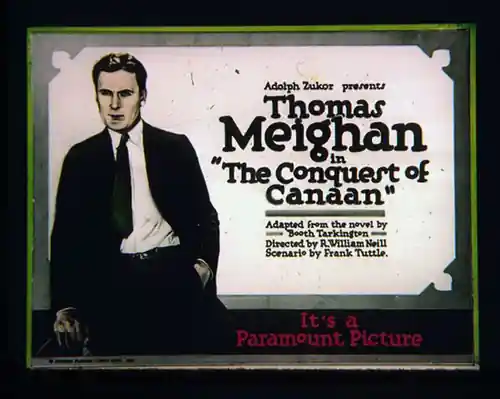
"In Canaan, virtue is a costume worn by the corrupt, while the truly noble are forced to inhabit the rags of the outcast. Joe Louden’s journey is the quintessential American struggle for the right to define oneself."
The cinematography in The Conquest of Canaan utilizes a range of techniques that were cutting-edge for the early twenties. The use of deep focus in several interior scenes allows the audience to observe the reactions of the townspeople in the background while Joe remains the focal point of the foreground. This visual layering reinforces the theme of constant surveillance. Furthermore, the lighting—particularly in the scenes involving the 'scandalous' gatherings at the local tavern—employs a chiaroscuro effect that wouldn't be out of place in a German Expressionist film like Atlantis.
One cannot discuss the technical merits without mentioning the editing. Frank Tuttle’s writing, combined with the rhythmic cutting of the film, ensures that the narrative never feels stagnant despite its 1500-word-equivalent complexity. The transition between the past and the present, the childhood innocence and the adult cynicism, is handled with a grace that avoids the jarring leaps found in lesser works like The Clown (1917). There is a fluidity here that suggests a director and a writing team in complete harmony with their medium.
When we place The Conquest of Canaan alongside Little Lord Fauntleroy, we see two different approaches to the concept of the 'unlikely hero.' While Fauntleroy wins hearts through an innate, almost saccharine goodness, Joe Louden must claw his way back into the town’s graces through intellectual rigor and moral fortitude. Joe’s path is significantly more arduous. He is not a child of destiny; he is a man of grit. This grit aligns him more closely with the rugged protagonists of The Flame of the Yukon, though his battlefield is the courtroom rather than the frozen wilderness.
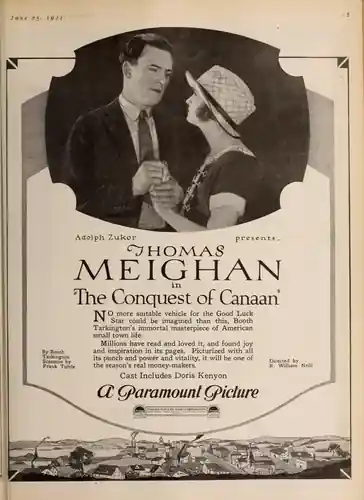
The film also touches upon the theme of inherited reputation, a concept explored in Are They Born or Made?. The town of Canaan has already decided who Joe is based on his youth, and the film effectively argues that character is not a fixed point but a continuous act of creation. This philosophical depth elevates the movie beyond a simple 'local boy makes good' story. It becomes an inquiry into the nature of social forgiveness—or the lack thereof.
There is a biting subtext regarding the American Dream within the film. Canaan is presented as a microcosm of a nation that claims to value the underdog but often does everything in its power to suppress him. The 'conquest' of the title is not a military one, but a psychological siege. Joe doesn't just want to be accepted; he wants to dismantle the false pretenses of the town. This subversive streak is what keeps the film relevant. It shares a certain DNA with Jalousiens Magt in its exploration of how envy and social standing can warp human relationships.
As the climax approaches, the tension between Joe and Judge Pike reaches a fever pitch. The courtroom scenes are staged with a theatrical intensity that highlights the stakes: not just the freedom of a defendant, but the soul of the town itself. When the truth finally emerges, it is not a moment of explosive violence, but a quiet, devastating collapse of Pike’s authority. The film understands that the most effective way to defeat a bully is to remove his mask in front of the crowd he seeks to impress.
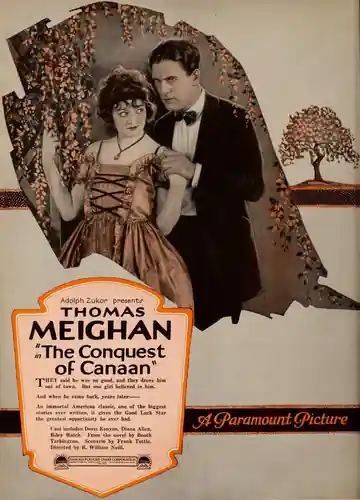
Revisiting The Conquest of Canaan a century after its release reveals a work of surprising durability. While some of the secondary characters remain within the realm of caricature—common for the period—the central performances and the thematic heft remain undiminished. It lacks the supernatural whimsy of Der Alchimist, but it replaces magic with the equally potent force of human will. It is a film that demands to be watched with an eye for detail, as much of its story is told in the flickers of doubt on a juror's face or the defiant tilt of Ariel’s chin.
In the broader context of silent cinema, this film occupies a space between the epic scale of Griffith and the intimate character studies that would define the later 1920s. It is a bridge between eras. For those who appreciate cinema as a tool for social commentary, The Conquest of Canaan is an essential watch. It reminds us that the greatest battles are often fought in the smallest places, and that the conquest of a single heart—or a single town—can be as heroic as any war. It stands tall alongside Sir Arne's Treasure in its ability to evoke a specific time and place with haunting accuracy, even if its resolution is far more optimistic.
Ultimately, the film leaves us with the image of Joe Louden not as a victim, but as a victor who refused to play by the corrupt rules of his environment. It is a story of triumph that feels earned, a narrative that respects the audience's intelligence and the characters' complexity. In the archives of the silent era, The Conquest of Canaan shines with a steady, enduring light, a masterpiece of American storytelling that deserves a place in the pantheon of early cinematic excellence.
IMDb 6.7
1934
Community
Log in to comment.