DbcultAccessing Vault...
Cult Review
Senior Film Conservator
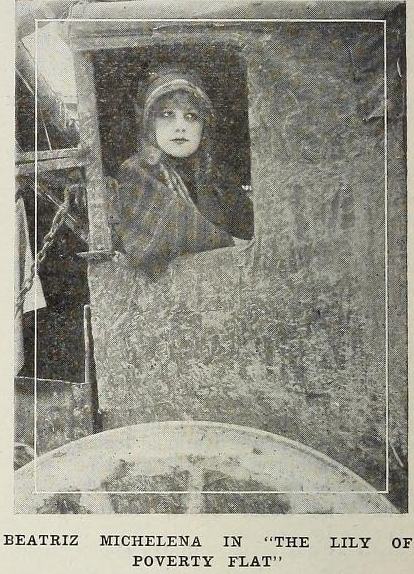
Stepping back into the nascent days of cinematic storytelling, we encounter The Lily of Poverty Flat, a silent film from 1915 that masterfully intertwines the raw ambition of the California Gold Rush with the timeless complexities of love, sacrifice, and social stratification. Directed by Charles Kenyon and adapted from the poignant narratives of Bret Harte, this picture stands as a fascinating artifact, a testament to the era's burgeoning narrative prowess and its enduring fascination with the American frontier spirit. It's a film that, despite its age, still manages to resonate, offering a glimpse into the moral quandaries and emotional rollercoasters that defined a pivotal moment in American history and, indeed, in human experience.
At the heart of this dramatic narrative lies Lily, brought to life with a captivating grace by Beatriz Michelena. Her arrival in the rough-and-tumble environs of Poverty Flat is akin to a delicate blossom emerging from unforgiving earth. Michelena imbues Lily with an innocence that gradually gives way to a more profound understanding of the world's harsh realities and the true value of human connection. Her beauty, while a catalyst for much of the plot's unfolding drama, is secondary to her inner journey, as she navigates the conflicting desires of her father and the genuine affections of two very different men. It’s a performance that, even in the absence of spoken dialogue, conveys a rich spectrum of emotion, from wide-eyed wonder to resolute determination.
Then there is Joe, the earnest young miner portrayed by Nat Snyder. Joe embodies the quintessential hardworking prospector, his hands calloused by toil, his spirit buoyed by the hope of striking it rich. His love for Lily is pure and uncomplicated, a stark contrast to the calculating ambitions of others. Snyder’s portrayal, while perhaps less flamboyant than some of his co-stars, effectively communicates Joe's steadfast loyalty and his vulnerability. He is the everyman, whose trials and eventual triumph (before his abduction) serve as a powerful representation of the American Dream's elusive nature, a theme explored with similar intensity in films like It Is Never Too Late to Mend, where fortune's fickle hand often dictates destiny.
However, the true standout, and arguably the most compelling character in this ensemble, is Jack Hamlin, the gentleman gambler, played with a nuanced complexity by Clarence Arper. Hamlin is no simple antagonist; he is a figure of profound moral ambiguity, a man whose polished exterior belies a tumultuous inner landscape. He is drawn to Lily, not with the simple adoration of Joe, but with a more sophisticated, perhaps even self-aware, affection. His character arc is the most transformative, evolving from a seemingly self-serving figure into a tragic hero whose ultimate act of sacrifice defines the film's emotional zenith. Hamlin's journey reminds one of the morally gray characters found in films like The Cheat, where societal expectations clash with deeply personal codes of honor, leading to unexpected acts of redemption.
Lily's father, John Folinsbee (portrayed with a clear focus on his materialistic aspirations, likely by D. Mitsoras or Frederick Lewis, given the cast structure), serves as a crucial catalyst for much of the film's conflict. His misguided paternal love, conflating his daughter's happiness with financial security, drives her away from genuine affection towards the superficial allure of European aristocracy. His decision to introduce Lily to wealthier suitors, particularly the opportunistic Count De Brie, highlights the pervasive influence of social status and wealth in shaping personal destinies. This tension between love and material gain is a recurring motif in silent cinema, often acting as the primary engine for dramatic progression. The Count De Brie himself, while a minor character, effectively serves as a foil, his interest in Lily quickly dissolving once her family's fortunes appear to wane, underscoring the hollowness of his affections.
Lastly, the villainous Sanchez and his gang provide the necessary external threat, injecting a dose of thrilling peril into the narrative. Their abduction of Joe, after his fortuitous strike, is a classic plot device, designed to test the resolve of our protagonists and provide a clear, tangible obstacle for them to overcome. While perhaps less psychologically complex than Hamlin, Sanchez represents the lawlessness and sheer brutality that often accompanied the quest for riches in the untamed West.
The overarching thematic struggle in The Lily of Poverty Flat revolves around the eternal conflict between love and wealth. Lily's father, blinded by the glitter of gold and the promise of social elevation, attempts to steer her towards a life of material comfort, believing it synonymous with happiness. This misguided paternalism sets the stage for Lily's European sojourn and her courtship by the Count De Brie. However, her heart, once stirred by Joe's genuine affection, cannot be so easily swayed. The film eloquently argues that true happiness stems from authentic connection, not from superficial riches, a sentiment that resonates deeply even today, transcending the specific historical context of the Gold Rush.
Another potent theme is that of sacrifice and redemption. This is most vividly personified in Jack Hamlin. Initially presented as a smooth-talking gambler, a man of questionable repute, his character undergoes a profound transformation. His willingness to risk his life for Joe, and his ultimate, selfless act of uniting Lily and Joe in his dying moments, elevates him to a tragic hero. His journey suggests that even those on the fringes of society, or those who have made questionable choices, possess the capacity for profound goodness and selflessness. It's a powerful narrative of atonement, where past transgressions are overshadowed by a singular, heroic act of love, echoing the complex morality often found in the works of Bret Harte himself, where characters are rarely purely good or evil.
The film also serves as a compelling exploration of the American Dream and the Gold Rush era. Poverty Flat itself is a microcosm of this dream – a place where fortunes can be made or lost in an instant, where hope and desperation exist side-by-side. Joe's initial struggles, his eventual strike, and the subsequent attempt to rob him, encapsulate the volatile nature of this pursuit. The allure of quick riches drew countless individuals to the frontier, fostering both incredible innovation and rampant lawlessness. The film doesn't shy away from depicting either side of this coin, showcasing the stark realities of a society in flux, much like other frontier narratives such as those depicted in Un día en Xochimilco, which also explores the societal impacts of resource-driven ambition.
Social class dynamics are also subtly yet effectively woven into the narrative. The stark contrast between the rough-hewn miners of Poverty Flat and the sophisticated, albeit superficial, Parisian elite underscores the vast social chasm that existed. Lily's journey between these two worlds forces her to confront the differing values and expectations associated with each, ultimately leading her to reject the hollow promises of high society in favor of authentic connection. This theme of navigating societal strata and challenging preconceived notions of worth is a perennial favorite, seen in various forms across cinematic history, including films that explore cultural assimilation and identity like The Melting Pot.
Finally, the film subtly touches upon fate and free will. Are the characters merely pawns in a larger game of chance, dictated by the discovery of gold or the machinations of others? Or do their choices, particularly those made under duress, ultimately shape their destinies? Jack Hamlin's final act, for instance, is a profound assertion of free will, a deliberate choice to transcend his past and ensure the happiness of others. It suggests that while circumstances may be beyond our control, our reactions and sacrifices ultimately define our humanity.
As a product of the silent era, The Lily of Poverty Flat relies heavily on visual storytelling. The performances, particularly from Beatriz Michelena and Clarence Arper, are a masterclass in exaggerated yet effective gestures and facial expressions. Every emotion, from joy to despair, from cunning to devotion, must be conveyed without dialogue, a challenge that these actors meet with remarkable skill. Michelena's wide, expressive eyes and graceful movements articulate Lily's inner world, while Arper's subtle shifts in posture and gaze reveal Hamlin's complex motivations. This reliance on physical performance is a hallmark of the period, demanding a different kind of engagement from the audience, one that relies on empathy and visual interpretation.
The use of intertitles is, of course, critical. These textual inserts not only advance the plot but also convey essential dialogue and emotional context. In The Lily of Poverty Flat, they are employed judiciously, providing just enough information to keep the narrative flowing without overwhelming the visual experience. The pacing of the film, under Charles Kenyon's direction, strikes a commendable balance between moments of tender romance and thrilling action. The sequence involving Joe's abduction and the subsequent rescue mission by Lily and Jack is particularly well-executed, building tension effectively and culminating in a dramatic, emotionally charged climax.
The setting itself plays a characteristically vital role. The stark contrast between the dusty, rugged landscapes of Poverty Flat and the opulent, gilded interiors of Parisian high society is visually striking and thematically significant. The frontier scenes evoke a sense of raw possibility and danger, while the European segments highlight artificiality and superficiality. This visual juxtaposition reinforces the film's central themes of genuine affection versus material ambition. The cinematography, while constrained by the technology of the time, effectively captures the scope of these environments, allowing the audience to feel immersed in both worlds.
The film's literary lineage, stemming from the works of Bret Harte, is undeniably a significant factor in its enduring appeal. Harte was a master chronicler of the California Gold Rush, known for his vivid characterizations and his ability to find nobility and pathos in the most unexpected places. Writers Charles Kenyon and Bret Harte himself (as co-writer, though likely in an adaptation capacity) successfully translate the spirit of his stories to the screen. Harte's tales often featured complex individuals, gamblers, miners, and women of fortune, all navigating a world where conventional morality was often challenged. The Lily of Poverty Flat faithfully captures this essence, presenting characters who are flawed yet ultimately capable of great love and sacrifice, much like the nuanced individuals populating Harte's short stories and novels. The film, in many ways, serves as a visual anthology of Harte's recurring motifs: the sudden shifts of fortune, the moral ambiguities of frontier life, and the unexpected kindness found amidst hardship. This deep connection to a celebrated literary source elevates the film beyond a simple melodrama, imbuing it with a sense of authentic historical and cultural weight.
The film also fits comfortably within the burgeoning Western genre of the silent era, but with a distinct romantic and dramatic bent that sets it apart from more action-oriented contemporaries. While films like The Sky Monster might have explored different facets of adventure, The Lily of Poverty Flat focuses on the internal landscapes of its characters against a rugged backdrop. It’s a Western not just of guns and gold, but of hearts and choices, demonstrating the versatility of the genre even in its formative years. The portrayal of the frontier as a place of both opportunity and peril, where justice is often swift and personal, is a classic trope that is handled with a certain elegance here.
In conclusion, The Lily of Poverty Flat is far more than a mere historical curiosity. It is a compelling cinematic experience that, despite its age and the technical limitations of its time, manages to tell a powerful and emotionally resonant story. Its strengths lie in its well-developed characters, particularly the tragic figure of Jack Hamlin, and its thoughtful exploration of universal themes such as love, sacrifice, and the pursuit of happiness. Beatriz Michelena's performance as Lily is truly captivating, solidifying her status as a significant star of the silent screen. The film's ability to weave together romance, adventure, and social commentary into a cohesive and engaging narrative speaks volumes about the talent of its creators, particularly given the relatively nascent state of film as an art form.
For modern audiences willing to immerse themselves in the unique language of silent cinema, The Lily of Poverty Flat offers rich rewards. It’s a reminder of the foundational narratives that shaped Hollywood and continues to influence storytelling today. It stands as a vibrant testament to the power of human connection in the face of greed and adversity, a poignant drama that transcends its historical context to speak to the enduring complexities of the human heart. The final, bittersweet image of Jack Hamlin uniting the lovers, a final act of profound altruism, leaves an indelible mark, ensuring that this particular lily, blooming in the dust of Poverty Flat, remains a vivid memory long after the screen fades to black.
IMDb —
1919
Community
Log in to comment.