DbcultAccessing Vault...
Cult Review
Senior Film Conservator
Step into the shadowy corridors of early cinema with ‘The Hidden Law’, a compelling narrative that delves into the profound psychological toll of injustice and the intricate, often circuitous, path to redemption. This isn't merely a film; it's a stark philosophical inquiry into the nature of genius, societal indifference, and the unseen forces that govern human destiny. At its core lies the tragic figure of John Carlton, portrayed with compelling intensity by John Oaker. Oaker imbues Carlton with a raw, almost visceral desperation, painting a portrait of an artist whose intellectual brilliance is matched only by his profound naiveté regarding the cutthroat realities of the commercial world.
The film opens with Carlton, a writer of undeniable brilliance, wrestling with the twin demons of poverty and creative ambition. His magnum opus, a play destined for greatness, is finally complete. One can almost feel the exhaustion, the elation, and the fragile hope radiating from the screen as he presents his work to a producer. In a moment of acute financial vulnerability, a mere $100 is offered for his creation – a pittance for what will soon be recognized as a cultural phenomenon. Carlton, perhaps overwhelmed by the sheer relief of any payment, accepts, sealing a pact that will haunt him for years. This initial transgression, the exploitation of an artist, sets the stage for a narrative steeped in moral quandaries and the devastating consequences of unchecked avarice. It immediately brings to mind the struggles depicted in ‘From Gutter to Footlights’, though Carlton's journey spirals into a far darker abyss.
The producer, a character embodying the callousness of industry, played with a sneering indifference that is truly memorable by Fred Montague, taunts Carlton with the legality of his predicament – the absence of a copyright. This scene is a masterclass in psychological torment, as Carlton’s world collapses around him. His artistic triumph, once a beacon of hope, becomes a symbol of his utter powerlessness. The ensuing violence, an impulsive act of desperation as he lunges for the producer's money, is not merely a crime but a visceral scream against a system that devours its creators. His subsequent six-month incarceration is not just a sentence; it is a transformative period that calcifies his spirit. The vibrant genius that once flowed through him dies, replaced by a virulent hatred for humanity. This profound character shift, from hopeful artist to embittered recluse, is handled with a remarkable depth for its era, echoing the moral decay seen in films like ‘Dzieje grzechu’, albeit with a different catalyst.
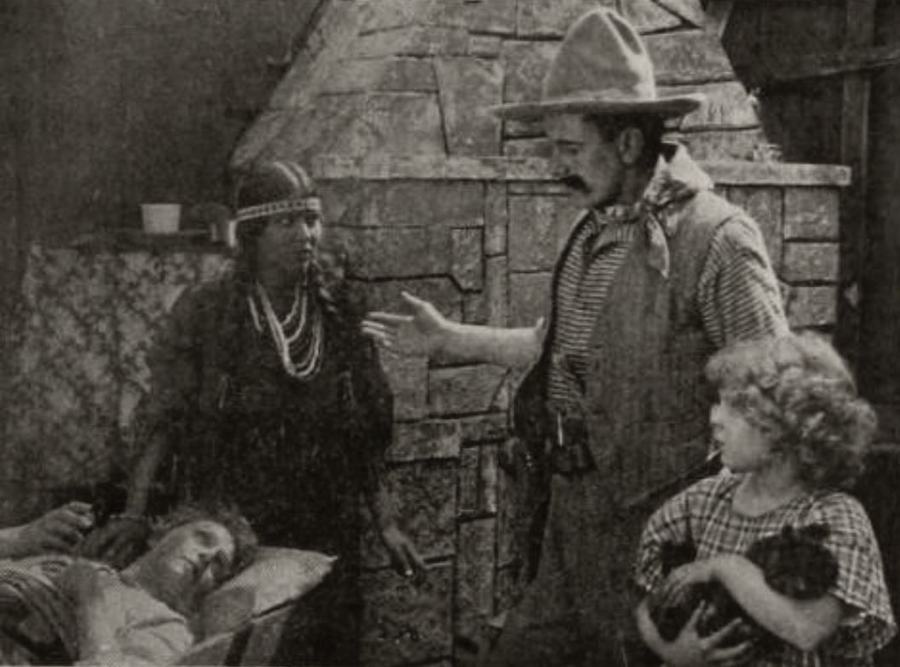
Upon his release, Carlton seeks not solace, but absolute severance from society. He retreats to the remote wilds, a landscape that mirrors the desolation of his soul. Here, the film takes an unexpected turn, shifting from urban drama to a poignant survival narrative. He stumbles upon a tragedy of immense proportions: the death of a mother and father, victims of nature's unforgiving embrace. The discovery of a seven-year-old girl, orphaned and utterly alone save for a loyal squaw, acts as a catalyst for a dormant flicker of his humanity. Doris Baker, as the young girl, projects an innocence that is both heart-wrenching and compelling, providing the perfect foil to Carlton’s hardened exterior. He cannot abandon her. This decision, born not of affection but a strange, almost primal sense of responsibility, sets the stage for a decade of self-imposed exile, where he becomes both protector and prisoner.
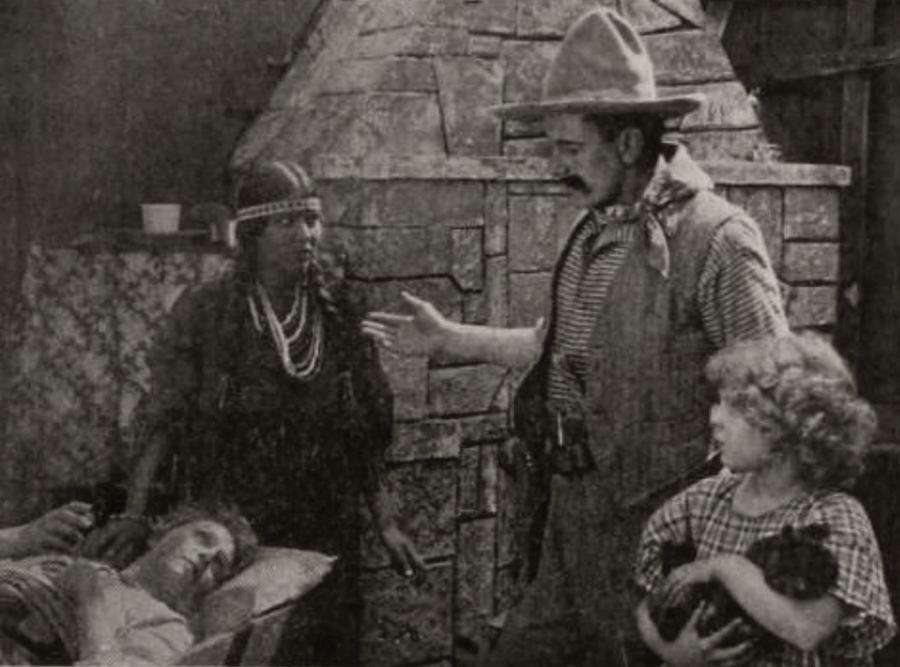
Ten years pass. Carlton has meticulously constructed a secluded paradise, a testament to his refined taste and culture, meticulously brought from the civilization he despises. He guards this sanctuary with a fierce, almost insane possessiveness, ruthlessly breaking any 'laws of man' that threaten its sanctity. This period of isolation, beautifully rendered by the film's cinematography which contrasts the rugged wilderness with the delicate artifacts of Carlton's hut, highlights the paradox of his existence: a man who detests society yet clings to its vestiges. This theme of deliberate isolation and its psychological impact resonates with the solitary existence depicted in ‘Ene i verden’, but with a more pronounced undertone of bitterness and self-exile.
The arrival of a young aristocrat, William Clifford, wounded by a stray shot during a big game hunt, shatters Carlton’s carefully constructed world. Clifford, portraying the dashing yet vulnerable outsider, is rescued from a puma by the now-grown 'princess of the mountains,' the girl Carlton raised. Marie Gavette, as the young woman, embodies a striking blend of wilderness resilience and burgeoning feminine grace, her performance critical in conveying the emotional complexity of her bond with Carlton and her newfound attraction. The squaw, played by Pauline Williams, provides a silent, watchful presence, an anchor to the wild, untamed aspects of their lives.
Carlton returns from one of his mysterious journeys to find not only an intruder but a burgeoning love between the young aristocrat and the woman he has come to covet with a possessive, almost paternal, affection. This development is a crushing blow, reigniting his dormant hatred for mankind, now compounded by the searing pain of jealousy. The internal conflict within Carlton reaches a fever pitch. His initial intent to murder the young man is thwarted by witnessing a tender tryst, where he reads the undeniable truth of her heart in her eyes. It's a moment of profound emotional vulnerability for Carlton, a crack in his hardened exterior that allows a sliver of understanding, however painful, to penetrate. Robert Kenyon and Mae Adams, though in supporting roles, contribute significantly to the emotional landscape, particularly in scenes that highlight the contrast between societal norms and the raw emotions of the wilderness.
In a remarkable act of self-revelation, Carlton discloses his checkered past to the young aristocrat. This confession, a moment of stark honesty, is pivotal. The young man, unable to deny his love for the girl, extracts a promise: Carlton must never see her again once they are married. This is Carlton’s ultimate sacrifice, the relinquishing of the one meaningful connection he forged in his self-imposed exile. The girl, meanwhile, is horrified by the revelation that her idolized foster father is, in fact, a 'bandit and a thief.' Her relief at turning to her lover, William Clifford, to be taken away from this tainted past, is palpable, yet tinged with the bittersweet pain of shattered illusions. Patricia Palmer, in a nuanced supporting role, subtly conveys the societal expectations and moral compass that guide the younger generation.
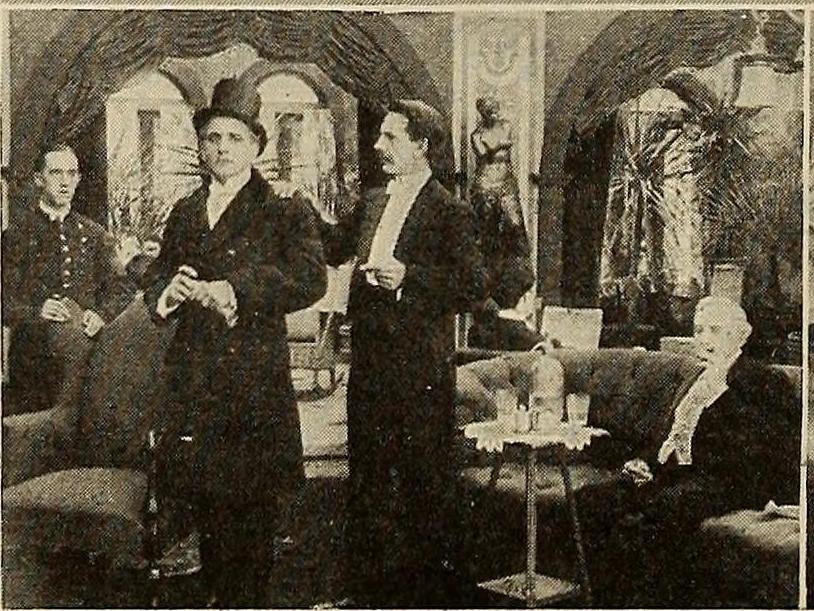
Watching them marry, Carlton retreats to his solitary hut, the light, both literal and metaphorical, extinguished from his life. He believes only death awaits him. This despairing solitude, however, is precisely where the 'hidden law' begins its final, astonishing work. Just as he has paid his toll for his past actions, fate, in its peculiar wisdom, begins to unwind its intricate threads of cosmic justice. This concept of an unseen, overarching force of retribution and reward is beautifully explored, distinguishing ‘The Hidden Law’ from simpler narratives of vengeance like ‘The Count of Monte Cristo’, instead leaning towards a more philosophical exploration of destiny.
In a twist that feels both predestined and utterly surprising, Carlton discovers an old newspaper. The headline speaks of an unwritten genius, whose book has set the world aflame, and whose immense royalties await the author, should he ever be found. This 'strange trick of fate' is revealed to be the act of his former landlady, who, finding the book he believed he had left to burn, submitted it herself, without claiming authorship. Thus, for years, Carlton has unknowingly been in his rightful place in society, celebrated and financially secure, while languishing in self-imposed penury and bitterness. The irony is profound, a testament to Theodosia Harris's ingenious writing, which weaves together disparate plot points into a cohesive, impactful whole. Harris's ability to craft such a layered narrative, with its unexpected reversals and profound thematic resonance, solidifies her reputation as a storyteller of considerable skill.
The film culminates in a powerful act of forgiveness and reconciliation. The young woman, driven by a love that transcends the revelations of her foster father's past, insists on returning to bid him a more loving farewell. This act of pure, unconditional affection is the final catalyst for Carlton’s transformation. In his darkest hour, confronted with the truth of his own success and the enduring power of love, he learns the ultimate lesson of truth and allows himself to be persuaded to return to the world he had so vehemently deserted. It’s a moment of profound emotional catharsis, not just for Carlton, but for the audience, who have witnessed his arduous journey through despair and isolation.
‘The Hidden Law’ is more than a melodrama; it is a profound meditation on justice, fate, and the enduring human capacity for both hatred and love. The film’s strength lies in its ability to navigate complex psychological terrain, presenting a protagonist who is deeply flawed yet ultimately redeemable. The performances, particularly John Oaker’s nuanced portrayal of Carlton, anchor the narrative, allowing the audience to empathize with his suffering and cheer for his eventual enlightenment. The film's thematic depth invites comparison to other introspective dramas of the era, exploring the intricate relationship between individual choice and the larger forces of destiny, much like ‘The Mystery of the Double Cross’ explored layers of deception, but here, the mystery is internal and existential.
The film’s title itself, ‘The Hidden Law’, speaks volumes. It suggests an underlying cosmic order, a principle of reciprocity that operates independently of human legal systems. Carlton’s initial injustice, his subsequent misanthropy, and his eventual, unwitting success all fall under the purview of this unseen law. It's a narrative that reminds us that even in our darkest moments, forces beyond our immediate perception may be at work, orchestrating a larger, more meaningful design. The film, therefore, serves as a powerful allegory for the human condition, urging viewers to consider the broader implications of their actions and the often-unforeseen consequences that ripple through time.
In an era marked by rapid social change and burgeoning cinematic artistry, ‘The Hidden Law’ stands out as a testament to the power of storytelling to explore profound philosophical questions. It’s a film that lingers in the mind, prompting reflection on the nature of genius, the corrupting influence of greed, the transformative power of isolation, and the ultimate triumph of love and truth. A truly remarkable cinematic experience that transcends its historical context, offering timeless insights into the human spirit and the mysterious workings of fate.

IMDb —
1924
Community
Log in to comment.