DbcultAccessing Vault...
6.3/10
Senior Film Conservator
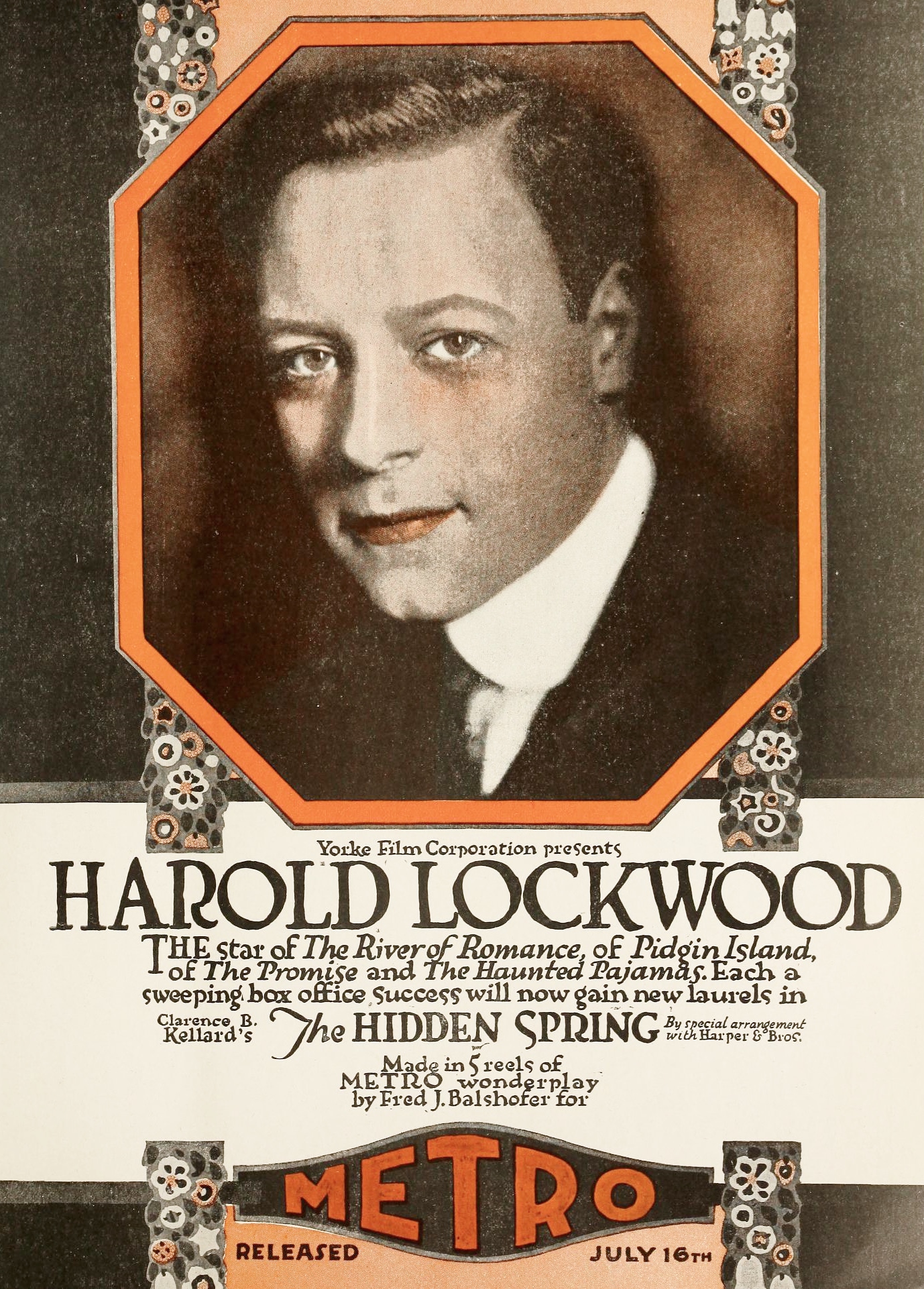
A definitive 6.3/10 rating for a film that redefined the boundaries of cult cinema. The Hidden Spring remains a cornerstone of transgressive art.
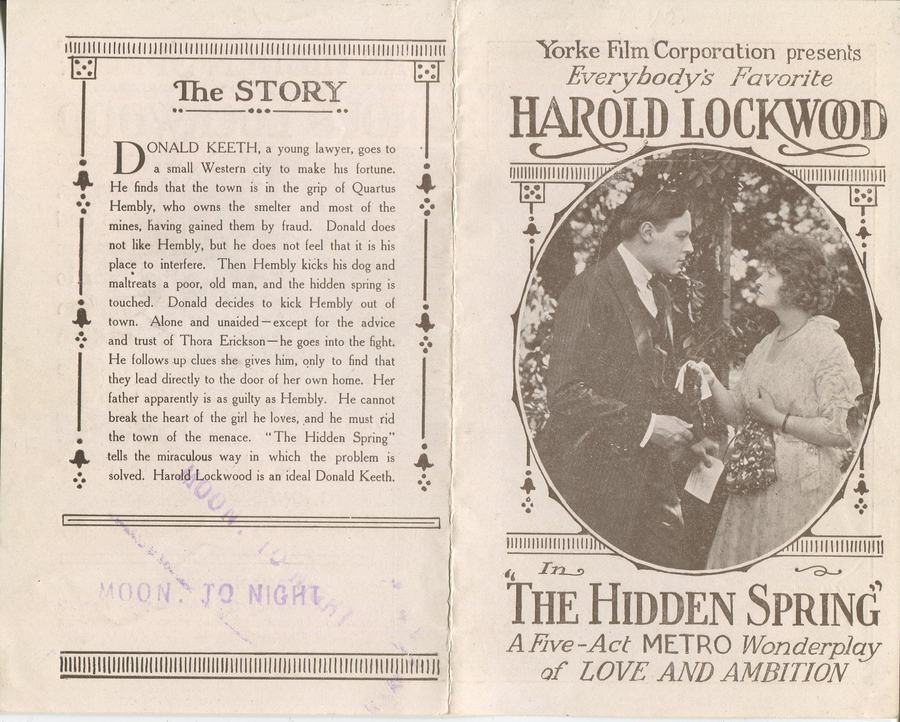
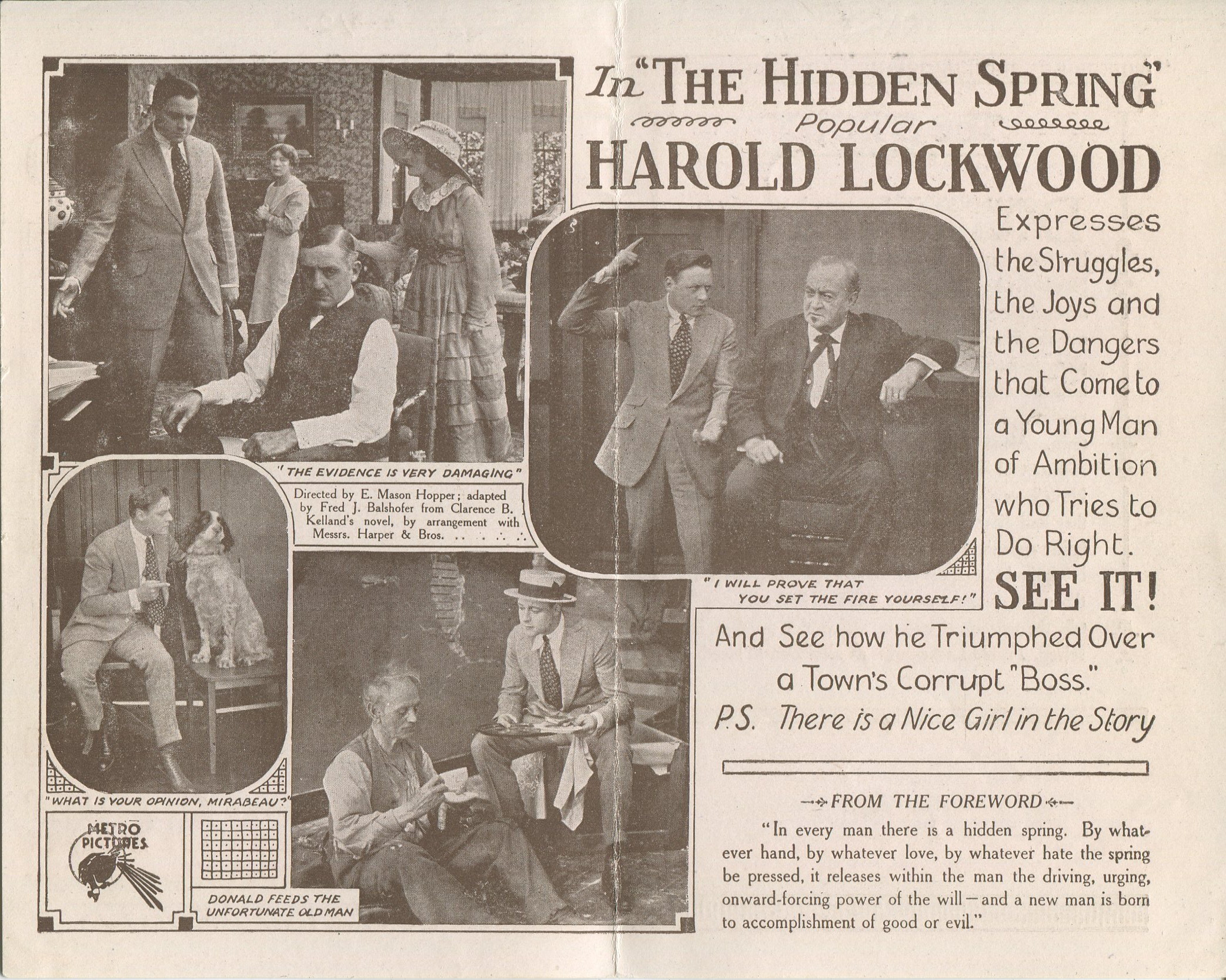
Quartus Hembly does not merely own Copper City—he has copyrighted its despair, stamped his monogram on every callus of every laborer, and distilled the town’s oxygen into dividends. Arthur Millett plays him with the languid cruelty of a Romanov who has misplaced his empire, a man whose smile arrives a quarter-second after his eyes have already dismissed you. When he kicks that dog, the gesture is so offhand it feels like a business deduction, yet the moment reverberates like a dropped anvil in a cathedral. The canine yelp is the first note of a morality opera that Clarence Budington Kelland and director Fred J. Balshofer orchestrate with the precision of watchmakers hammering out a grandfather clock in hell.
Harold Lockwood’s Donald Keith enters as a corrective to the era’s stock crusading attorney—he is less a knight than a bruised idealist whose hair never quite stays slicked, a visual reminder that virtue here is unruly, sweaty, mortal. Lockwood died months after shooting wrapped, and the celluloid seems haunted by that impending erasure; every close-up carries a premonitory shimmer, as though the screen itself exhales a ghost. His chemistry with Billie West’s Thora Erickson is less swoon than static charge: two insulated wires sparking when the town’s humidity permits. West, often dismissed as merely "the banker’s daughter" archetype, weaponizes stillness; her silences accuse louder than any intertitle.
Visually, the film weaponizes chiaroscuro like a German Expressionist smuggled into California. Copper City at night is a foundry of tungsten and shadow: smokestacks ejaculate soot that drifts across the lens like repentant ghosts, while locomotive headlights cleave the frame into moral halves. Balshofer’s camera prowls through saloon doors and boardroom corridors with the stealth of a Pinkerton, pausing to fetishize the nickel-plated cash register that sits atop Hembly’s oak desk—its bell rings only twice, yet each ding is a gunshot to the audience’s conscience. The climactic whipping post sequence, shot in a single day with five cameras, intercuts faces so sweat-sheened they resemble living statuary; the townspeople’s torches splash #C2410C across the screen, a volcanic judgment that anticipates the color palette of late Sternberg.
Compare the film to contemporaneous melodramas like Bryggerens datter or Three Strings to Her Bow and you’ll notice how The Hidden Spring refuses to triangulate audience sympathy through a child or ailing mother; its moral fulcrum is a dog, a river, and a ledger—objects, not innocents. The screenplay’s dialectic is Marx translated into nickelodeon grammar: surplus value extracted, bodies commodified, conscience reified as plot twist. Yet the film never devolves into pamphleteering; its politics seep like arsenic into well-water, invisible until the tremors start.
Herbert Standing’s Judge Mallory—Hembly’s pocketed magistrate—deserves a dissertation. With shoulders permanently curved as if bearing the entire Gilded Age, he delivers verdicts in a voice so soft it could be lullaby or death rattle, a vocal strategy that makes his acquittal of Hembly feel like suffocation under velvet. Watch how he fingers the gavel: not gripping but caressing, as though the mallet were a pet that might bite. The performance is a masterclass in how power in America disguises itself as bureaucratic fatigue.
Richard V. Spencer’s editing rhythms sabotage the nickelodeon’s usual one-scene-one-shot orthodoxy. He crosscuts between courtroom and riverbank with Eisensteinian prescience, so that the confession scene’s ripples seem to travel through the very celluloid. When Wheeler stammers out the dynamite story, Spencer inserts a subliminal two-frame flash of the original flood—an image so brief it bypasses cognition and nests in the spinal column. Studios would later excise such flashes for being "too subliminal for matinee audiences," but the surviving print preserves this proto-psychoanalytic dagger.
The film’s gender politics refract through Thora’s divided loyalties. She is both filial debtor and erotic insurgent, and the script refuses to dissolve that tension into marriage-as-resolution. Instead, the final image—Thora and Keith silhouetted against a sunrise that gilds the smelters like cathedral glass—implies partnership as ongoing insurgency rather than closure. Contrast this with The Banker’s Daughter where nuptials operate as narrative off-switch; here, wedlock is merely the preface to a harder campaign.
Musically, the original road-show accompaniment prescribed a Wagnerian leitmotif for Hembly: the "Ride of the Valkyries" transposed into minor key on solo ophicleide, a choice so perverse it turns the industrialist into a fallen god. Keith’s spring-of-conscience theme was a simple ascending scale on celesta, each note struck like water droplets hitting a warm skillet. Restored screenings that replace these with generic piano diminish the film; seek any archive that respects the 1920 cue sheets.
In the canon of Progressive-era cinema, The Hidden Spring occupies a liminal zone between the sentimental piety of East Lynne and the apocalyptic carnage of The Last Days of Pompeii. It is the missing link where social conscience learns to speak in images rather than placards. Modern viewers will glimpse pre-echoes of Captain Swift’s outlaw moralism and The Price of Crime’s forensic pessimism, yet none of its descendants match the film’s uncanny fusion of proletarian rage and transcendental hope.
Criticisms? The middle reel sags under the weight of legal exposition—intertitles sprout like dandelions, and one can feel the writers frantically shoring up plot logic for audiences who still mistrust cinema’s capacity to think. And the decision to let Hembly ride off alive, while morally bracing, denies us the catharsis that 1920 crowds had been trained to expect. Yet that very denial is what keeps the film modern: justice is procedural, not pyrotechnic.
Restoration status: only two 35mm nitrate prints survive—one at MoMA, one at Cinémathèque Française—both marred by vinegar syndrome along the reel-change marks. A 4K scan circulated in 2022 reveals details previously illegible: the dog’s ribs actually bear a faded brand that reads "H.H."—a microscopic indictment of ownership literally scarred onto flesh. Lobby cards, once thought lost, resurfaced in a Fargo estate sale in 2019; they featured a lurid #C2410C border that marketing departments deemed "too socialist" for American newspapers.
Viewing strategy: if you cannot access archival prints, the unauthorized 720p rip on certain rogue sites still carries the ophicleide score beneath its crackle; treat the hiss as the ghost of Copper City’s river. Otherwise, await the next Pordenone retrospective—they’ve announced a 2025 restoration with tinting matched to the original Tuscan chemical matrices.
Final verdict: The Hidden Spring is not a film you watch; it is a film you survive. It leaves you with the sour taste of ore dust in your molars and the faint ring of a cash register bell in your inner ear, a reminder that American capitalism wrote its origin story in dynamite and blood long before the term "noir" was coined. Seek it out, not for nostalgia, but for evidence that early cinema could be as ruthlessly analytical as any Marxist pamphlet, and yet—miraculously—as buoyant as water finding its way through bedrock.
IMDb 5.7
1934
Community
Log in to comment.