DbcultAccessing Vault...
6.6/10
Senior Film Conservator
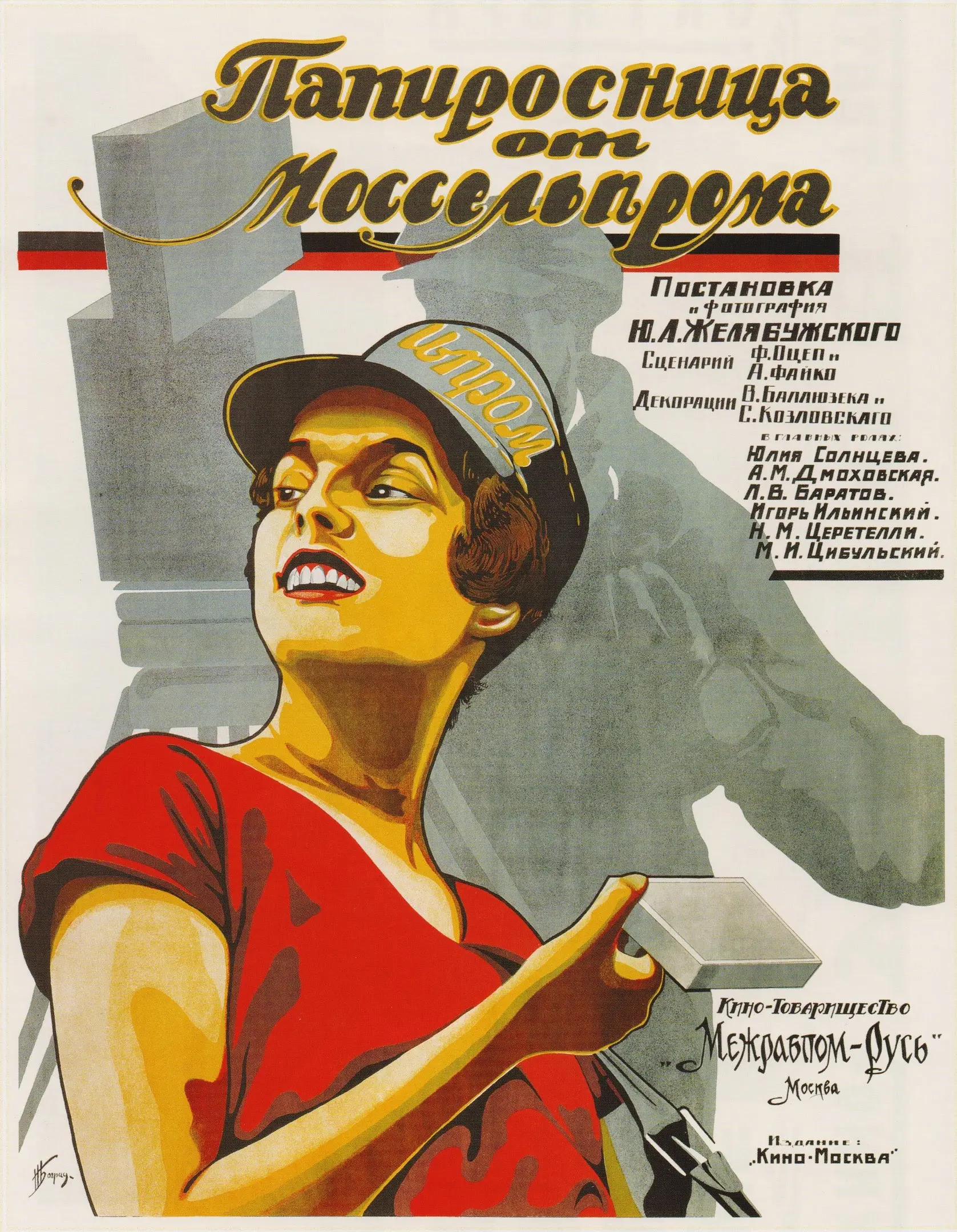
A definitive 6.6/10 rating for a film that redefined the boundaries of cult cinema. The Cigarette Girl of Mosselprom remains a cornerstone of transgressive art.
To inhabit the visual landscape of The Cigarette Girl of Mosselprom (Papirosnitsa ot Mosselproma) is to witness a civilization in the throes of a profound identity crisis, captured through the flickering, high-contrast lens of the 1920s Soviet avant-garde. While contemporaries like Eisenstein were busy codifying the language of revolution through montage, Yuri Zhelyabuzhsky opted for a more subversively playful approach, utilizing the burgeoning urbanity of Moscow as a sprawling stage for a romantic farce that doubles as a critique of consumerist aspiration. The film is a temporal capsule, preserving the ephemeral energy of the New Economic Policy (NEP) era, where the rigidities of the proletarian struggle momentarily softened into a chaotic, jazz-inflected pursuit of individual happiness.
At the heart of this cinematic tapestry lies the Mosselprom building itself—a towering achievement of Soviet Constructivism that serves as both a physical landmark and a psychological totem. It is here that Zina, portrayed with a luminous, almost ethereal vitality by Yuliya Solntseva, hawks her wares. Solntseva, who would later achieve immortality in Aelita, possesses a screen presence that bridges the gap between the terrestrial and the divine. Her Zina is not merely a vendor; she is the manifestation of the 'New Woman,' navigating the precarious intersection of labor and allure. The way Zhelyabuzhsky frames her against the geometric rigidity of the city suggests a tension between the human spirit and the industrial machine, a theme explored with far grimmer results in films like Shattered.
The romantic geometry of the film is intentionally lopsided. We have Nikodim Mityushin, played by the incomparable Igor Ilyinsky, whose physicality is a masterclass in comedic pathos. Ilyinsky’s performance predates the polished slapstick of the West, yet it carries a uniquely Slavic melancholy. His character’s ritual of buying cigarettes—a commodity he fundamentally abhors—acts as a metaphor for the performative nature of courtship in a society where traditional structures have been upended. Every transaction at Zina’s tray is a micro-drama of hope and humiliation, a far cry from the straightforward heroics found in Aladdin and the Wonderful Lamp.
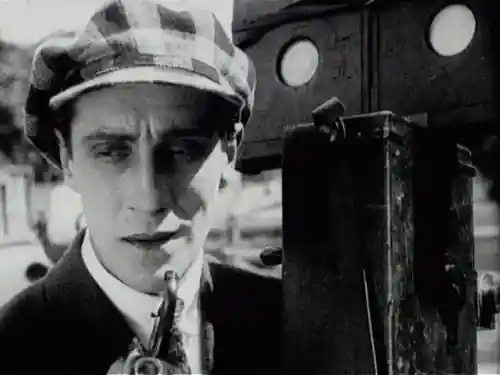
One of the most radical aspects of The Cigarette Girl of Mosselprom is its self-reflexive nature. When Latugin, the cameraman, enters the fray, the film transforms into a movie-within-a-movie, anticipating the postmodern sensibilities of later decades. The act of filming Zina—of turning the 'worker' into an 'icon'—is depicted with a mixture of reverence and skepticism. The camera is portrayed as a transformative tool that can elevate a street vendor to a goddess, yet it also commodifies her beauty, much like the cigarettes she sells. This dualism is a sharp commentary on the burgeoning Soviet film industry’s attempt to create its own stars while remaining ideologically pure.
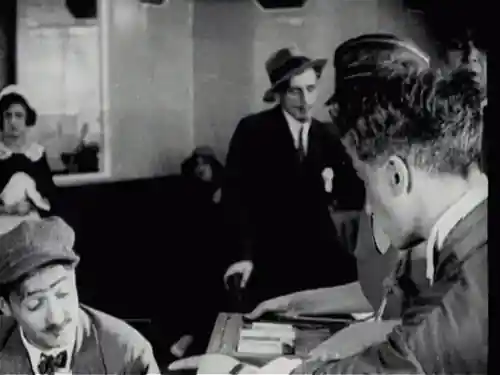
The introduction of Oliver MacBride, the American businessman, injects a satirical venom into the proceedings. MacBride represents the 'Capitalist Other,' a figure of both fascination and ridicule. His pursuit of Zina is framed not as romance, but as acquisition. In this regard, Zhelyabuzhsky critiques the global gaze on Russia, where the country’s culture and people are viewed as exotic resources to be exploited. This thematic layer provides a fascinating contrast to the earnest portrayals of Western struggle seen in The Exiles or the rugged individualism of A Daughter of the West.
Technically, the film is a marvel of its era. The cinematography by Zhelyabuzhsky himself (who wore multiple hats on this production) utilizes the natural light of Moscow to create a sense of 'Kino-Eye' realism, even within the bounds of a scripted comedy. The location shooting provides a documentary-like value that rivals the historical significance of Kitchener's Great Army in the Battle of the Somme. We see the dusty streets, the crowded trams, and the genuine bustle of a city rebuilding itself. This groundedness makes the more stylized, expressionistic moments—such as Nikodim’s fevered dreams of domestic bliss—all the more impactful.
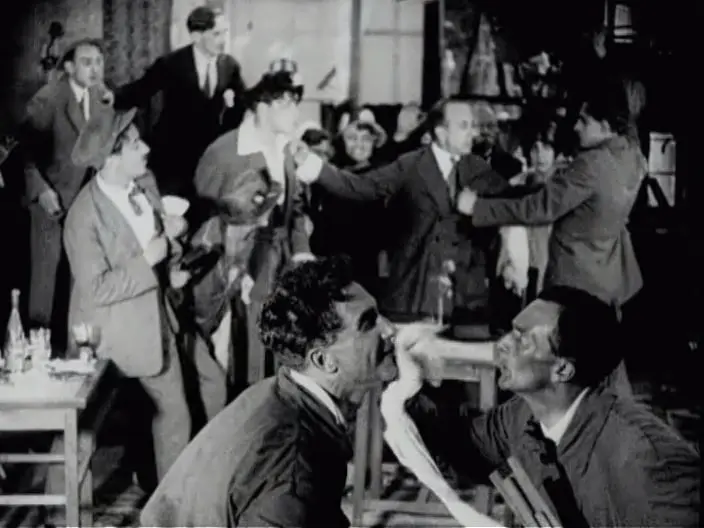
The pacing is brisk, eschewing the turgid melodrama often associated with early silent cinema. Instead, the film leans into a rhythmic editing style that mirrors the heartbeat of the city. The transitions between the cramped, bureaucratic office where Maria Ivanovna pines for Nikodim and the wide-open squares where Zina reigns supreme create a visual dialectic between confinement and possibility. It is a sophisticated use of space that reminds one of the social hierarchies explored in The Sport of the Gods, albeit handled with a lighter, more satirical touch.
It would be a mistake to view The Cigarette Girl of Mosselprom as a mere trifle. Beneath the comedic misunderstandings lies a sharp-edged critique of the 'new' Soviet society. The film mocks the inefficiency of the bureaucracy, the vanity of the artistic elite, and the persistence of bourgeois desires in a supposedly classless society. Maria Ivanovna’s character, often overlooked in favor of Zina’s radiance, is perhaps the most tragic and telling. Her quiet desperation and her adherence to traditional romantic tropes in a world that is rapidly moving toward a mechanized future provide the film's emotional anchor. Her struggle is far more relatable than the exaggerated antics of The Handy Man or the broad humor of Where Is My Wife?.
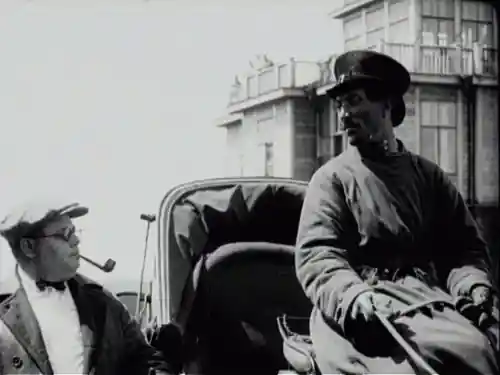
The film also engages with the concept of the 'Americanitis'—the Soviet obsession with American efficiency and cinema. By making MacBride a buffoon, the film attempts to exorcise this influence, yet it simultaneously utilizes the very tropes of American slapstick to do so. This irony is not lost on the modern viewer. It is a cinematic exorcism performed through the medium of the demon itself. This complex relationship with foreign influence is a recurring motif in global cinema of the time, seen in various forms from Oltre l'amore to Az utolsó bohém.
As we look back from a distance of a century, the film stands as a testament to a brief window of creative plurality in Soviet history. It lacks the heavy-handed didacticism that would come to define Socialist Realism in the following decade. Instead, it offers a vision of Moscow that is messy, vibrant, and deeply human. The performances, particularly from Solntseva and Ilyinsky, remain startlingly modern. They don't just act; they inhabit their roles with a psychological depth that transcends the limitations of the silent medium. This is not the simplistic morality play of A Child of Mystery or the gothic stylings of From Dusk to Dawn.
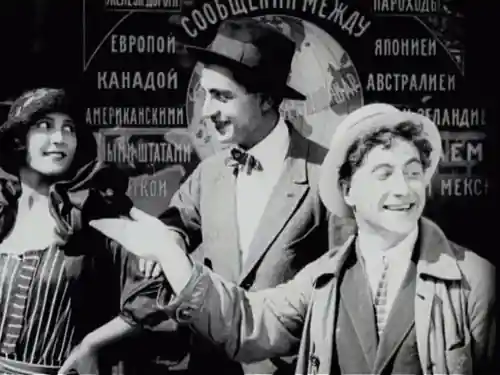
In the final analysis, The Cigarette Girl of Mosselprom is a celebration of the gaze—the way we look at each other, the way the camera looks at us, and the way a society looks at its own future. It understands that while political systems may change, the fundamental human drive for connection, recognition, and perhaps a bit of glamour, remains constant. It is a film about the 'hoarded assets' of the heart, much like the themes in Hoarded Assets, but invested in the currency of laughter and light. If A Perfect 36 was the West's answer to the obsession with physical perfection, this film is the East's answer to the obsession with social transformation.
An essential viewing for anyone interested in the evolution of cinematic language and the social history of the early Soviet Union. It manages to be both a period piece and a timeless comedy, a feat few films from 1924 can claim. It is a shimmering, smoke-filled dream of a city that was, for a moment, the center of the world's radical imagination.
IMDb —
1923
Community
Log in to comment.